Posted in Portuguese

Humberto Delgado

Humberto Delgado

Humberto Delgado foi um marechal da Força Aérea, conhecido como “o general sem medo” por causa da sua coragem na oposição ao regime Salazarista. Mas a sua carreira seguiu um caminho rumo de altos e baixos* da cena política do século XX. O marechal participou no movimento militar de 1926 que suplantou a República parlamentar com uma ditadura militar que daria lugar ao Estado Novo poucos anos depois. Delgado participou neste movimento com entusiasmo, criticando tanto os republicanos quanto os monárquicos, apoiando as políticas do novo estado e escrevendo um livro sobre (A) Pulhice do Homo Sapiens e a necessidade da liderança de Salazar. Elogiou Hitler, não só no início do seu regime, mas durante os primeiros anos da Segunda Guerra Mundial.

Mas, no decorrer daquela guerra, a simpatia do marechal passou para os Aliados. Eh pá, mais vale tarde do que nunca. Apesar do Estado Novo ser neutro durante a guerra, cooperou, até certo ponto, com os aliados. Humberto Delgado representou Portugal em vários projetos, incluindo a instalação das bases áreas nos Açores que ainda existem nos dias de hoje.

Após a guerra, continuou a sua obra em vários cargos no governo, no serviço diplomático e na OTAN.

Em 1958, candidatou-se nas eleições contra o candidato do regime, Américo Tomás, tornando-se o foco da oposição ao Estado Novo. Recebeu um nível esmagador de apoio público, mas surpreendentemente perdeu, tendo recebido apenas 23% dos votos, o que levantou suspeitas de fraude eleitoral. No ano seguinte, Delgado pediu asilo político no Brasil por causa das ameaças dos seus inimigos políticos.

Convencido de que o regime não poderia ser derrubado por meios democráticos, o marechal deu apoio à ação revolucionária, incluindo a Revolta de Beja em 1962. Tentou regressar ao país em 1965 mas foi assassinado pela PIDE perto da fronteira com Espanha**. Foi enterrado em Espanha onde permaneceram os seus restos mortais até 1975, quando foram transferidos para o Cemitério dos Prazeres em Lisboa.

*The highs and lows – this is a fixed expression.

**It was pointed out that, since Portugal only has one country on its border I could drop the “com Espanha” here. I’ve left it though, because I’ve said he was in Brazil. I guess it removed ambiguity about whether he was killed early in his journey, after setting off from a border town in Brazil or something, but this is good advice in most scenarios, I think.
Posted in English

Ana Galvão

Someone told me that, given my proclivity for puns, I should check out Ana Galvão.

There are some videos online of her in a room and they are very dad-jokish, so if you like that, you might like this, but if you don’t, look away now, because this is just raw punnage from start to finish. I’ve put explanations below, partly to make myself understand them and partly for anyone who shares my love of crap jokes but maybe can’t follow what’s being said. I struggled a bit with some of them. If anyone thinks I’ve got any wrong, let me know in the comments!

She’s one of the co-hosts on this show, As Três de Manhã, so she’s not the person in the main frame of the video (That’s Joana Marques – even I know that) but she’s in the bottom-right corner, on the left.

1

Q. What do you call an epic shop that sells persianas (blinds or shutters on a house)?

A. Adamaestores – what? OK, Adamastor is like a giant sea monster who appears in Camões’s epic Os Lusíadas. It’s big, so I guess that explains the “epic” bit. Store explains the shop but but what does adamae have to do with shutters? A da Mãe? Do only mothers like blinds? I don’t get it. Nah, I was really “a bater na porta errada” with this one. Estores are shutters. So it’s just a pun on Adamastor and estores.

2

(Talking about someone called Lady Betty) In this case, I’m an analfabetty. Analfabeta means illiterate.

3

Q. What would the São Silvestre (a running race in Brazil) be called if all the participants were big strong men?

A. São Silvestre Stallone. Easy one.

4

So when you say I drink crazy teas… A crazy tea is a chálupa

Chá is tea of course, and I’ve talked about the word chalupa in a previous post.

5

Q. Do you know what you call someone who writes hate on the Internet and eats minty chocolate?

A. An After-Hater. Probably easy although I didn’t know they sold after eights in Portugal!

6

I want to introduce you to the father of João Paulo Sousa. It’s João “Pai-lo” Sousa, just a splice of Pai with Paulo.

7

“No melhor pano cai a Sancha” As Joana says, this doesn’t make sense but it’s based in an expression: no melhor pano cai a nódoa” Which means The stain lands on the best cloth. It’s a sort of pessimistic phrase like “the toast always lands butter side down”

8

Q. If I had a tea shop that was mine, what would it be called?

A. TisAna Galvão. Tisana is an infusion like a tea or herbal… Concoction.

9

Q. (Talking about the decline in coaching as coaches lose their clients) And do you know where the coaches will go when they no longer have clients?

A. To the museum of coaches.

O Museu Nacional de Coches is a real place, but it displays horse-drawn carriages, not life coaches.

There’s another video here but they’ve disabled embedding so I can’t post the whole thing. Here’s a breakdown:

1

Joana: It’s all dazzling for Emanuel. Now then, Ana, “Deslumbrante”

Ana: “Lumbrante”. (Deslumbrante means “dazzling” but it works as a dad joke because it sounds like “Diz ‘lumbrante'”)

2

Joana: Well, there’s chouriço-flavoured tea

Ana: Chá-riço

3

Caller: It’s a question of character, isn’t it, ending a marriage of 12 years by email

Ana: it’s not about character, it’s about characters.

4

Some slightly confused stuff about “Mick de Câmara Pereira” (pun on Mico de Câmara Pereira, a fadista who comes from a very aristocratic and well-connected family, as far as I can tell. I’d never heard of the bloke before, but that’s what Zé Google tells me, anyway)

5

Q. What do you call the automobile stand of a magician?

A. Car Tola.

A Cartola is a top hat. Car is obvious. Tola can mean a few different things. Usually when you see it it’s the feminine version of “tolo” meaning fool or foolish. It can also mean kinds of wood. Stand de automóveis can be a car showroom, but a stand more generally is usually used for a stand at an expo or a fair so I guess we’re thinking wood, wooden table, dais… Something like that. Oof. Hard work, this one!

6

Joana: He got a hug from Bruce Springsteen

Ana: You’d better believe it! An “Abruce” (just a pun on abraço and Bruce, obviously!)

7

There’s a tea-house in Alentejo. It’s called the Chá-Parro. Chaparro is a kind of small oak. There are restaurants called Chaparro in Alentejo, but I guess just because a lot grow there, maybe farmed for their bark, to use as corks.

Well, you’ve made it to the end. I admire your fortitude.

Posted in English

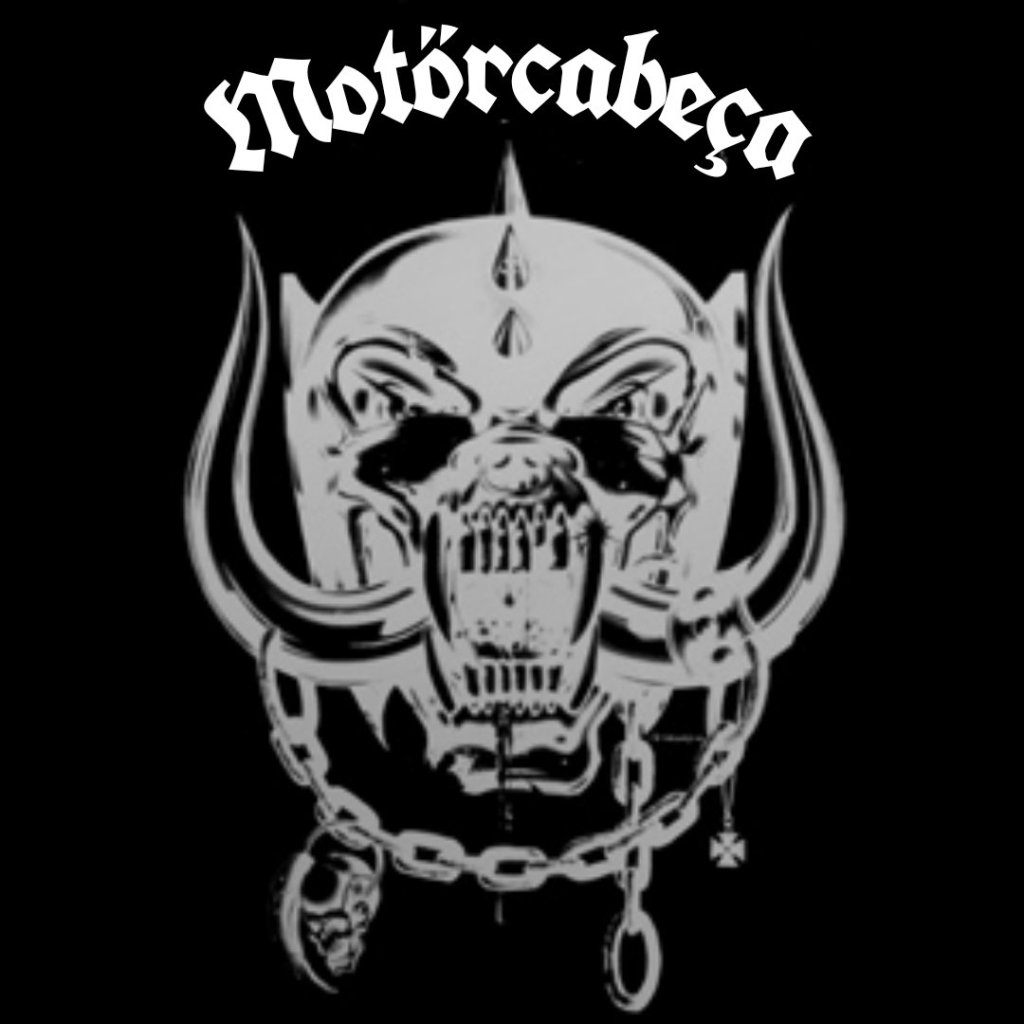
Umlauts

I have a book somewhere around here that is in (Brazilian) portuguese and it has umlauts in it. Actual, honest-to-god, heavy-metal style umlauts.

The Umlaut – or Trema in portuguese – is the pair of dots that appears above some vowels, mainly in germanic languages. They change the sound of the vowel, usually allowing it to be sounded instead of blending into another vowel like a diphthong.

As far as I can tell from the book, the Brazilians mainly seemed to use it in situations where you have a qu sound but you really want to pronounce the u. So there would be a difference between the que in “Freqüência” and “queda”: in the first it would sound like the que in the english word “frequency’, but in the second it’s just more like a standard que. It was dropped from european portuguese orthography in 1945 but the Brazilians kept using it, officially till the most recent acordo ortográfico. Now, I’ll let you speculate about whether Brazil’s decision to hang onto the Umlaut in 1945 might have been related to an influx of new arrivals from an entbusiastic umlaut-using european country at around that time, but I couldn’t possibly say.

Anyway, it’s officially baninated, but you can occasionally see examples in the wild. Here, for example.

Posted in English

The E-Word

Espanha

There’s a proverb in portuguese that goes “De Espanha, nem bom vento, nem bom casamento”. From Spain, neither good winds nor good marriages.

I’m not sure about the winds. Where can a wind come from? Sea breezes off the Atlantic are probably OK but winds coming from from the south must be pretty hot. I doubt an easterly wind is going to be too bad in comparison. As for the marriage bit, I think it mainly refers to marriages between the royal houses. Occasionally they have cast a shadow over Portugal’s independence, but Portugal has been a republic for a century and it still persists. Odd. It’s a good one to throw out if you want to tease someone for their hispanophilia though.

Posted in Portuguese

Caça de Ovos de Páscoa

#UNCORRECTEDPORTUGUESEKLAXON

Todos os anos, arranjo uma caça aos ovos de Pascoa em casa. Consiste numa sequência de pistas. Cada uma aponta à próxima e tem um ovo pequeno. Afinal ela chega ao último ovo o que é maior.

Problematic gif

Estou ligeiramente triste porque a minha filha tem 17 anos e daqui a um ano não irá querer uma caça de ovos. Ainda por cima é possível ela não estar em casa connosco porque será uma estudante numa universidade na Escócia.

Eu e o Coelho de Páscoa passaremos o dia em casa a chorar e a comer chocolate para abafar as dores nas nossas corações.

Posted in English

Why Those Two Things?

Caqui
Khaki

It’s not that unusual for words to have multiple meanings but I came across the word “caqui” today and its two meanings are (1) basically the same as “khaki” in English and (2) a persimmon. I guess I’d assume if a colour is also a fruit you’d expect it to be the colour of that fruit: orange, raspberry, lime green, etc. But caquis aren’t caqui, are they?

Having said that, Khaki is a pretty confusing colour in English too. It has a different pronunciation in Britain vs the US, so when I first heard my dad use it, he was looking for paint for some toy soldiers we were painting and he said he needed “car-key colour” so I wondered why he wanted to paint them silver. Years later, when I was living in Maryland, working with adults with learning disabilities, a psychologist said he was wearing “cacky pants” and I guessed what he meant but it didn’t stop me chuckling childishly.

Posted in English, Portuguese

Canção de Engate

I haven’t done a song translation for while and I fancied having a go at “Cancao de Engate” by António Variações. There aren’t many decent videos of it and anyway he’s a bit hard to follow because of his distinctive singing style so if you don’t know it, try this orchestral acoustic version by Tiago Bettencourt

Cancão de Engate

My sense, going into it, is that it uses a lot of slightly oblique language so this is going to be a tricky one, but here goes…

Tu estás livre e eu estou livre
E há uma noite p’ra passar
Porque não vamos unidos
Porque não vamos ficar
Na aventura dos sentidos
You’re free and I’m free*
And there’s a night to get through
Why don’t we get together
Why don’t we get
Into the adventure of the senses
Tu estás só e eu mais só estou
E tu tens o meu olhar
Tens a minha mão aberta
À espera de se fechar
Nessa tua mão deserta
You’re alone and I’m alone too
And you have caught my eye
You have my open hand
Ready to close
On your lonely hand
Vem que o amor não é o tempo
Nem é o tempo que o faz
Vem que o amor é o momento
Em que eu me dou
Em que te dás
Come, because love is not time
Nor is it time that makes it
Come, because time is the moment
In which I give myself
And you give yourself
Tu que buscas companhia
E eu que busco quem quiser
Ser o fim desta energia
Ser um corpo de prazer
Ser o fim de mais um dia
You who are looking for company
And me who is looking for whoever wants
To be the end of this energy
To be a body for pleasure
To be the end of another day
Tu continuas à espera
Do melhor que já não vem
Que a esperança foi encontrada
Antes de ti por alguém
E eu sou melhor que nada
You keep waiting
For something better that isn’t coming
Because what you hope for has already been found
By someone before you
And I am better than nothing
Vem que o amor não é o tempo
Nem é o tempo que o faz
Vem que o amor é o momento
Em que eu me dou
Em que te dás

x3
Come, because love is not time
Nor is it time that makes it
Come, because time is the moment
In which I give myself
And you give yourself

x3

* I’m sorry, but I am a man of a certain age but I am already reading this in a Mr Humphries voice

Hey, well that wasn’t as bad as I thought it would be. One of the easier ones I’ve done, in fact!

Posted in Portuguese

Vírgulas 3: Vírgulas Furiosas Pontuação Tóquio

Alem das regras positivas e negativas, a página que estou a saquear nesta série inclui algumas dúvidas sobre o uso de vírgula:

The title of the post is playing with the portuguese title of a well-known film starting Víngula Diesel

Antes de “e” , como já disse, basicamente não precisamos duma vírgula (vim, vi e venci) mas existem exceções: (1) quando o sujeito muda: “eu escrevi, errei, tu corrigiste” (2) quando o “e” faz parte duma expressão intercalada na oração: “faço receitas deliciosas, e sempre saudáveis, para a família”

Depois de “mas” a situação é igual: de forma geral, não precisamos duma vírgula, mas às vezes há uma expressão intercalada que precisa de uma vírgula por direito próprio “escrevi um texto, mas, apesar de ter feito um esforço, não foi suficiente para erradicar os erros tolos.”

Antes de “que” precisamos duma vírgula quando o “que” fizer parte duma oração adjetiva, mas não precisamos de usar quando a palavra introduz uma expressão integral. Ou seja, a presença de “que” não altera as regras dadas nos textos anteriores.

Finalmente, deixem-me acrescentar uma nota sobre números. Isto não faz parte da página mas nós anglófonos estamos acostumados a escrever números grandes com vírgulas e a separar as casas decimais com um ponto. Em português o vírgula aparece onde usamos o ponto decimal (π= 3,1415926535blablabla). Às vezes, vejo números muito grandes com pontos a separar os grupos de três algarismos (1.000.000) mas isto é errado, segundo este artigo do Ciberdúvidas: para ser certinho, é melhor usar espaços: 1 000 000.

Posted in Portuguese

Vírgulas 2: Bram Stoker’s Vírgula

Escrevi anteontem sobre as regras de quando usar a vírgula. Roubei-as todas desta página

A página também tem regras de quando *não* usar. Parece-me que isto deve ser óbvio: “quando nenhumas das condições anteriores se aplicam” mas há outras regras, portanto aqui vou eu:

Não se deve usar uma vírgula nos casos seguintes:

Entre o sujeito e o verbo quando juntos: “O presidente de Portugal, é fã dos Abba.”

Entre o verbo e o complemento: “A minha filha está a estudar, francês.”

Entre orações subordinadas adjetivas restritas. Estas frases, embora sejam semelhantes a uns exemplos nos quais a vírgula é essencial, não levam vírgulas porque a oração subordinada acrescenta informações essenciais para o sujeito: “O homem que ganhou a corrida tem uma só perna”. A oração “que ganhou a corrida” acrescenta informações, tal como no exemplo das “orações subordinadas adjetivas explicativas” no texto anterior mas neste caso a oração subordinada é essencial para identificar a pessoa em foco.

Antes de oração adverbial consecutiva: “Ela comeu tanto que as suas mandíbulas ficaram fatigadas”

Para preservar o ambiente, a ONU manda que, a partir de 2025, todos nós temos de restringir o nosso uso de vírgulas, pontos-e-vírgulas e hífenes para não desperdiçar papel nem tinta. Por isso, quer apliquem as regras, quer não, ninguém pode usar mais de 50 vírgulas por semana.

Vou terminar esta série amanhã. Entretanto, desejo-vos um bom fim de semana e um feliz dia das mentiras*.

*O dia das mentiras is April Fools Day. That’s when I wrote this text originally, hence the paragraph about the United Nations (ONU) limiting the use of commas.