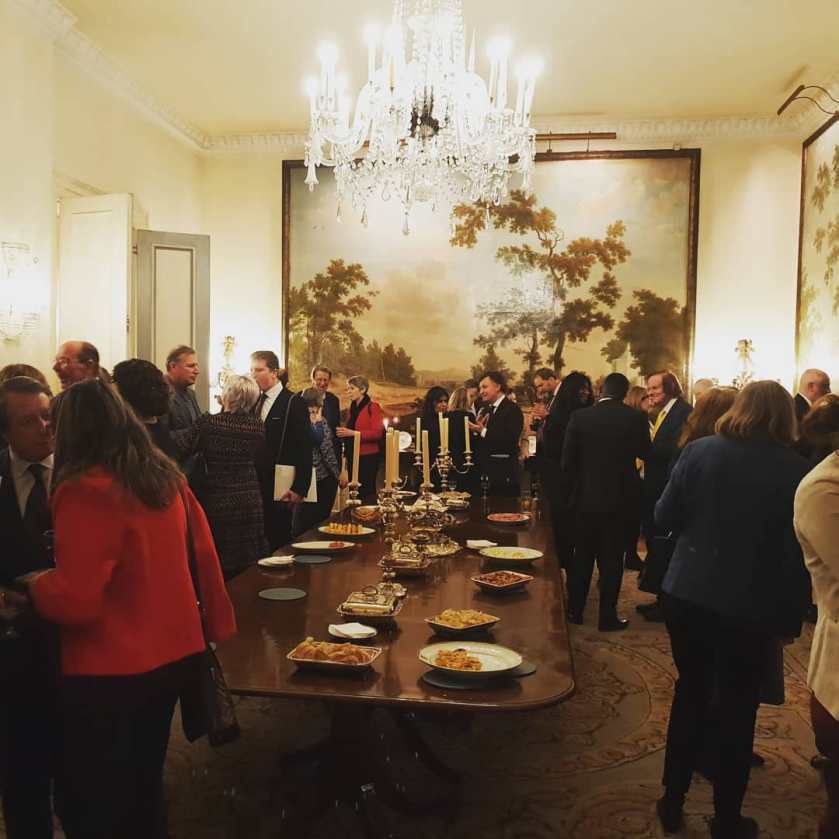
Fui ontem para a residência do embaixador português em Inglaterra, para ouvir um discurso sobre o Festival de música de Setúbal. O director contou a história da origem do festival, o motivo pelo qual foi estabelecido, e descreveu os efeitos benéficos para a cidade. Foi muito um discurso interessante. As escolas participam no festival, o que traz oportunidades para estudantes de música, ainda que alguns tenham deficiências físicas ou mentais. As comunidades imigrantes também fazem parte do projecto, e isso aumentou o seu sentimento de pertencimento. Trouxe benefícios nas áreas de economia, de infraestrutura e de saúde e bem estar.
Uma estudante nativa de Setúbal tocou violino, e depois havia uma recepção com petiscos e vinho.
Last night I went to a meeting of the Anglo-Portuguese Society at the residence of the Portuguese ambassador. There were no Ferrero Rochers but apart from that it was pretty good. I’ll to a texto about it later.
One of the things that interested me was that the guy talked about translating the word “Home” into Portuguese, which they had done, he said, using 7 different words. So – someone asked – what were the words? He couldn’t remember. The obvious ones are casa (house) lar (the word used in the equivalent of home sweet home – “lar doce lar”. Terra de mãe (the town or village you call home) seems like a string contender too. I felt like I’d heard the phrase “no colo da família” (something like ‘in the lap of the family’) too. Then there are more prosaic words like “domicílio”, “residência”, “habitação”.
Hm.
Oh wait, I just had the idea of er… You know… Googling it!
Here’s the site. Judging by the names of the events, it looks like I missed “ninho” (nest) and they mention “palácio” as well, which I suppose could be your home if you were posh…
Um gajo que sigo no Twitter mencionou uma historia do Jornal Público (“Feminismo negro em Portugal: falta contar-nos”) sobre o desenvolvimento de feminismo negro em Portugal. Como muitos países europeus, Portugal tem uma história de colonialismo e escravatura, e isso trouxe muitos novos habitantes que, mais tarde, tornaram-se cidadãos e o artigo descreve as mudanças da população e destaca o papel de mulheres negras.
A história começa no século XVI, muito antes da palavra “feminismo” ser usada, mas era possível encontrar negras a participar politicamente na sociedade portuguesa. No inicio do século XVIII foi apresentado por mulheres uma petição de reclamação contra as perseguições quotidianas da comunidade negra.
Mais tarde, no fim do século XIX, tendo a escravatura sido já abolida, vê-se uma nova oportunidade de participação. Claro que isso não continuou durante o novo estado, enquanto todas as forcas liberais foram subjugadas pelo governo Salazarista.
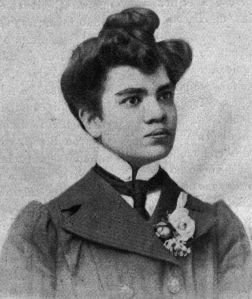
A mulher mais interessante do meu ponto de vista, foi a Virgínia Quaresma, que nasceu em 1882, e viveu uma vida cheia de acção politica até a sua morte com 90 anos. Ela foi uma das primeiras mulheres a licenciar no Curso Superior de Letras na Escola Normal de Lisboa. Tornou-se jornalista (a primeira no país) e redactora duma revista feminista. Foi um membro activo de várias ligas feministas, pacifistas e republicanas durante os anos antes da primeira guerra mundial, e viveu abertamente como lésbica apesar do clima moral daquela época. Foi seleccionada pelo serviço diplomático, e viajou para o Brasil muitas vezes com a namorada dela onde arranjou eventos culturais para cultivar ligações entre os dois países.
Quero agradecer Alisson pela ajuda.
By the way, can we talk about that outfit VQ is wearing? Dapper AF!
Looking at Anglo-Lusitanian clubs and societies in London to see if there are any that might be worth joining. There’s a complete list here of all clubs for lusophones in the UK, but I’m going to list the ones that are most interesting for general interest (ie, not just football of cod-admiration) in London and that don’t look defunct (e.g., if their websites only have events in the past I’m not botherin’.
Off-the-cuff reactions to Portuguese bands I was recommended by a friend of mine.
Ornatos Violeta
Funk/punk in the style of fishbone, maybe chilli peppers at a push, or some of the more grungey elements from the same eta (STP, Blind Melon). Definitely going on my Spotify library anyway.
Mão Morta
Some kind of Doom Metal, I think… Er… Well, see for yourself.
Belle Chase Hotel
Trilingual combo whose name is based on a Jim Jarmusch movie. Musically pretty good and playing in a variety of styles (so much so that at first I wondered if maybe there was more than one band that shared the name) but frustrating if, like me, you only want to hear PT lyrics, because they don’t seem to have many. One of the members is JP Simões who is also a solo artist who sings in Portuguese.
Sean Riley & the Slowriders
What? Dudes, do you even speak Portuguese?
Wray Gunn
Er… Again, struggling to find any Portuguese titles here. Rock ‘n’ Roll of the school of Link Wray. I had a look at the first one in the list and it seems to be about sleeping with his sister. No thank you. Do not want.
Minta & the Brook Trout
Really, really good but disappointingly anglophone
Jerónimo
I can only find three one songs by this lot and all English too
First Breath After Coma
Remind me of the Durutti Column or some of those post-rock bands like Godspeed You Black Emperor. The tracks I listened to were largely instrumentals with maybe some samples voices but not in Portuguese. Interesting and I’ll listen again but not really what I was after…
X-wife
Pretty decent indie dance band but again, not singing in Portuguese
Legendary Tigerman
Rock. Pretty good but English lyrics again.
Dead Combo
I really like this music. It’s quirky and energetic. They have a collab with Marc Ribot, who’s worked with Tom Waits, which should give an idea of the genre. A lot of the track titles are in Portuguese, but they’re not very loquacious and it’s mainly instrumental stuff.
Ornatos Violeta are my pick of the bunch here, being eminently listenable and with Portuguese lyrics, but they’re in no danger of displacing Deolinda in my affections!
Here’s the top Portuguese nugget from today’s conversation with my Brazilian language partner.
While discussing English idioms I mentioned the expression “break a leg” as used by actors and he replied that the Portuguese equivalent is “muita merda” (a lot of shit).
Here’s an interesting snippet: in “Reaccionario Com Dois Cês“, Ricardo Araújo Pererira has someone mocking a football player online after he is the victim of a mugging: “xupa, é bem feita por çeres um ignorante que ço çabe dar pontapés na bola”
I wondered what all the mistakes were all about – was it imitating a regional accent or something? Was the person writing just not very clever? Because the stray Çs didn’t seem like the kinds of typos one would make normally.
Apparently it’s a way of mocking someone’s lack of intelligence. If someone answers a question but you think their point is nonsense, instead of saying “sei” (I know) you reply “çei” , implying that’s the sort of thing only an idiot who can’t even spell “sei” would believe. Or if they write a tweet with lots of errors in it you can say “você çabe falar muito bem português” just as in english you might say “You’re grammer is exelent” or something.
One of the chapters in Reaccionário Com Dois Cês is an obituary for Raul Solnado, who I’d never heard of. He died in 2009 and was recognised as one of the greats of portuguese comedy. Here he is in front of an audience in the sixties or seventies, telling a rambling story of the war of 1908. Top quality R-rolling.
Acabo de ler um artigo velho sobre o uso de bicicletas (ou seja “biclas” que é, se não me engano, uma palavra infantil que quer dizer a mesma coisa). O escritor utiliza o argumento de que andar de bicicleta a caminho da escola. é melhor para crianças Como muitas cidades, Braga tem ruas construídas para facilitar o movimento de carros exclusivamente e por isso, não é sempre seguro para ciclistas mais novos. O escritor aconselha-nos que não deve ser perigoso se os pais acompanhá-las à pé. Por este método, os nossos filhos aprendem habilidades de auto-conhecimento, consciência do ambiente, navegação e sentido de equilíbrio. Além disso, ficam mais saudáveis e evitam os efeitos mais graves do peso e da falta de exercícios. Sobretudo, o escritor espera que o governo autárquica veja estes ciclistinhas e façam mudanças ao sistema de trânsito na cidade para tornar tudo mais seguro e mais fácil para os viajantes mais vulneráveis.