Posted in Portuguese

Bicicleta – uma declaração pelo feminismo – Braga Ciclável

Fiz um marcador no meu telemóvel para ler este blogue que encontrei no Twitter há meses, mas apesar do texto ser curto, adiei até hoje.

The future liberals want

Segundo o título, a autora está a defender o papel do feminismo na política de trânsito na sua cidade, Braga. E é verdade que o argumento é escrito em termos de feminismo mas parece-me que o ponto principal é mais universal e pode ser apoiado até por quem não se identifique como feminista: uma cidade cuja rede de transportes é dominada por carros sofre de um certo desequilíbrio : há mais poluição, há menos segurança para as mulheres sim, mas também para os homens e sobretudo para as crianças, há mais ruído, mais engarrafamentos, enfim a cidade é menos feliz.

O aspeto feminista disto tudo prende-se com a maior relutância das mulheres da cidade em enfrentar os perigos de andar de duas rodas, além do sexismo que existe tanto nas ruas quanto noutros lugares. Tem razão, mas acho que esta mensagem pode ser uma oportunidade para todos os bracarenses e espero que os homens da cidade vejam que também têm um incentivo para melhorar as ciclovias e os transportes públicos de Braga.
Posted in English, Portuguese

Óculos

I used this text to ask a question about a book I’m reading. It’s about the difference between “seu” and “dele” – which are both ways of expressing possession but they’re used slightly differently. Thanks to Butt Roidholds for the correction and to the assembled Reddit multitudes for the answers.

Será que alguém me* pode ajudar? Estou a ler um livro, no qual o protagonista fica obcecado com um músico que se chama Luís Stockman. Na página 91, vai a uma sala de concertos à espera de falar com o Stockman e tem no seu bolso os óculos dele (que foram perdidos num outro concerto e que o protagonista conseguira obter).

Descrevendo a aparência do Stockman o autor diz: “Reparou que tinha uns óculos novos, de armação mais grossa do que a dos seus (ou, no fundo, dos dele), e um cachecol preto em volta do pescoço.”

Custa-me compreender esta frase. Entendo todas as palavras, sem problema, mas o qual é o significado dos parênteses? A diferença entes “dos seus” e “dos dele” neste contexto?

*”que” is attractive so the pronoun has to go first

So I get the general point of “seu” (meaning his, her or its) and dele being a way of saying “of him”. The first one changes with the gender of the owned object (becoming sua for feminine objects), whereas the second changes with the gender of the owner, (becoming dela if it relates to a woman or a girl, say) so it can be useful for making an ambiguous sentence clearer. If a man and a womam go somewhere to get her in “seu carro”, whose car is it, but if its OK “o carro dela” Then you know its the woman’s car.

This one is a little weirder because there no gender problem to untangle but nonetheless the author is trying to be emphatic. He’s saying “He noticed he was wearing new glasses, the frames of which were thicker than his (or rather, of him) and a scarf around his neck.”

Opinion seems to be that it was just underlining the fact that he was referring to the original subject of the sentence – ie, Stockman, not the protagonist.

More about seu and dele on Ciberduvidas

Posted in English, Portuguese

Bandeiras e Mapas

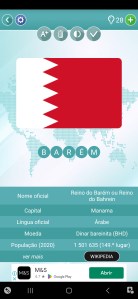
The Flag of Bahrain in Portuguese
Here Comes Bahrain Again, Falling I’m My Head Like A Memory

Ando a jogar “Quiz de Geografia” porque quero saber mais sobre as bandeiras do mundo, mas a língua padrão do meu telemóvel é PT-PT, portanto os nomes dos países têm de ser escritos em português também. É um ótimo método para aprender os nomes portugueses de vários países pequenos que ainda não sei porque raramente penso neles, tal como “Quirguistão”, “Camboja” e “França”.

The name of the app is “Quiz de Geografia” in my phone but I have all its settings in portuguese (as discussed here) so it might present as something else if you haven’t taken this gung-ho approach. As with many things, names of countries and capitals are subject to orthographic reform

Posted in Portuguese

O Mistério do Coelho Pensante

O Mistério do Coelho Pensante

Este livro é um conto infantil escrito pela autora brasileira Clarice Lispector para divertir os seus filhos. Explica a forma de como os coelhos pensam: franzem e desfranzem os narizes rapidamente para “cheirar” uma ideia e assim conseguem imaginar um plano para se safarem da sua gaiola*.

*The word used in the original book is Casinhola but that seems to be a brasileirismo

Posted in Portuguese

More Introvert Whining

Vegan Ice Cream
It’s Milk and Eggs, Bitch… Except when it isn’t.

Texts from a couple of days ago. Thanks as usual to Dani for the corrections.

(15/12) “Valha-me Deus”

Estou a caminho de um almoço de peru vegan com os meus colegas. Rezem por mim!

(16/2) “Não Foi Assim Tão Mau”

O almoço de ontem correu bem. Os meus colegas são simpáticos. Ainda que eu seja introvertido, consegui curtir a refeição. E o restaurante era excelente. Quem teria acreditado que um gelado sem leite seria tão bom?

Posted in Portuguese

Ansiedade de Fim de Ano

Estamos perto do final do ano* e fico sempre com ansiedade para levar ao fim os meus projetos antes da passagem de ano. Todos os dias durante o pequeno almoço, revejo a minha lista de tarefas e escolho 4 ou 5 para completar. “Será que consigo cumprir estas obrinhas?” pergunto… E faço que sim, mas no meu coração sei que estou a sonhar porque não há 65 horas num dia.

*Bit of a treasure trove of article-related mishaps, this. I originally wrote the title as “Ansiedade do fim do ano” – Anxiety of THE end of THE year but it’s more correct to leave out the articles and write it this way which I guess is more like “year end anxiety”. Notice in the body of the text, in the first sentence, we have a couple of “do”s: “we are close to THE end of THE year” because we’re talking about this specific year, but later it’s back to de when we talk about “(a) passagem de ano”. Um… Why though? According to priberam, Passagem do ano is correct.

Apparently the answer is that I’m talking about the concept in general, because i have switched to talking about what happens every year. “Passagem de ano” is a set phrase like “Fim de semana”, and you only use the article if you’re talking about one specific new year. Got it? OK, so do I, I think. Oof. Complicated!

Posted in Portuguese

Ninfas e Adamastors

Ninfas e Adamastores

Ninfas e Adamastores é um conto escrito por Raquel Ochoa que fala sobre uma família judia* cujo pai emigra para a ilha de S Miguel nos Açores deixando a sua mulher grávida para trás no Magrebe.

A história faz parte duma série lançada pelo jornal Diário de Notícias sob a rubrica de “Contos Digitais”. Já li alguns contos da mesma coleção e ainda que este não seja o meu favorito, vale a pena. Não o odeiei!

*Feminine of judeu – which apparently is a very irregular adjective!

Posted in English

Easy as ABC

False friends are always fun to deal with, and I saw a pretty good example today in a social media post by a Brazilian who was trying to translate “Fui alfabetizado nos Estados Unidos” into English. Obviously as an English speaker, you automatically try and englishify it as “I was alphabetised in the United States”, imagining João arriving at the airport and being placed in an ordered list between Joana and Joaquim.

It’s a lovely image but no, it’s not that, obviously. Alfabetizar means to teach literacy – so he was taught to read and write in the United States. It’s not a very common word, but you’ll see a related adjective – analfabeto (illiterate) – quite often when people are criticising each other’s poor grammar online so hopefully it won’t be that hard to remember.

And are you ready for the word to use when you need to put your words in alphabetical order? It’s “alfabetar” without the iz. So not that different, but you probably want to keep them straight in your head or you’ll get funny looks when you explain to someone that you have been procrastinating from study by teaching your CDs to read. In fact, if they’re under 25 you night have to explain to them what a CD is first.