People sometimes say that the coastline of Portugal looks like a face in profile. So when I saw the name and the shape of this river in a portuguese geography quiz on Memrise, I had to laugh
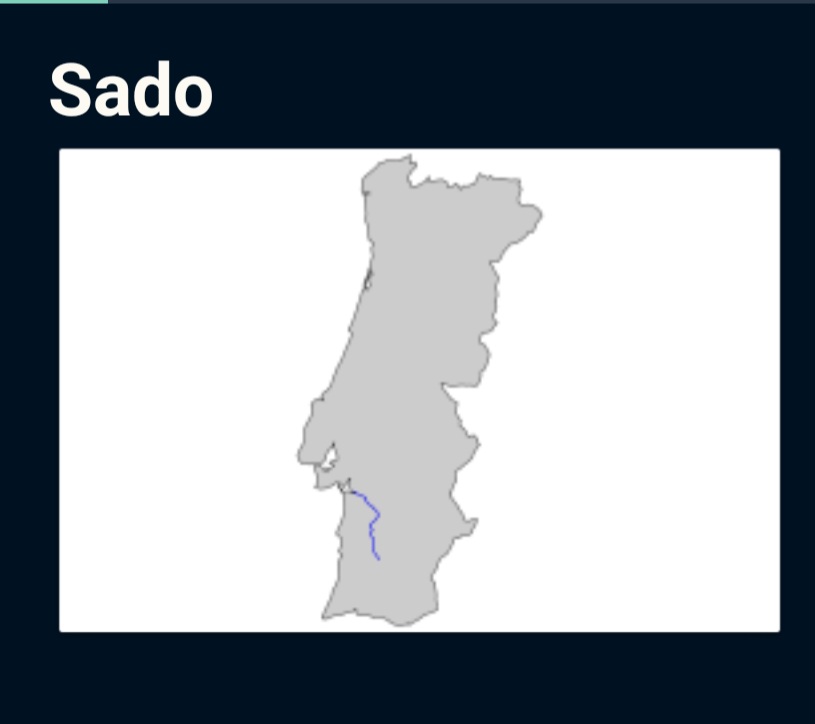
People sometimes say that the coastline of Portugal looks like a face in profile. So when I saw the name and the shape of this river in a portuguese geography quiz on Memrise, I had to laugh
So I decided to dig into this word, desenrascar, found in the book I’m reading. Desenrascar means untangle, and desenroscar is more like uncoil, whereas and you can get the meanings of rasca and rosca respectively from the verbs. Desenrascar also seems to mean to sort something out in general resolve a problem.

Trying to understand this, I came across a site in which someone said this was the best English explanation of “o nosso povo (…) ao mesmo tempo desenrascado e forreta”
I tend to steer clear of the portuguese kids, partly because they don’t sing in portuguese but mostly because Americans can sometimes be a bit cringe when they’re too attached to the old country. Witness how chicagoans die their river green for St Patrick’s day, for example.
But anyway, there you go. They are big on doing stuff for themselves and desenrascar seems to be a key word there.
Incidentally, the only other time I’ve seen that word Berbicacho is in the title of a Deolinda song, which I mentioned a couple of years ago in a post about Viriatus.
Spotted on twitter and laughed my head off.

I think it’s Brazilian, by the way. Not that different though. I think in european portuguese they would have dropped the “eu” in the first cat dialogue and used cão in place of cachorro. Obviously the punctuation is all over the place but that’s memes for you!
I came across this word today and was strangely pleased by it. The root of it is the verb “afogar” whose main meanings are “to drown” or “to submerge”, but which has some related meanings which go along the lines of “to impede” or “to choke”, both of which make sense: you can imagine how being impeded or stifled might feel, figuratively, like being immersed in water, of how being choked or strangled would deprive you of breath just as surely as being drowned would.
So building on “afogar”, or rather its past participal “afogado” we’ve got the prefix “des” making it negative and the suffix “mente” making it an adverb, and we end up with “desafogadamente”, which you could literally render as “undrownedly”, but seems to be used to mean something like “freely” or “without hindrance”. Excellent stuff! Definitely using that at the next chance I get!

Afogar is quite an easy verb to remember if you’re a fan of delicious Italian treats because you’ve probably come across an affogato. If you don’t know it, it’s a dessert consisting of a scoop of vanilla ice cream with coffee poured over it. This combination of cold and creamy with hot and bitter is literally “affogato al café” or “drowned in coffee” and it’s the same word, just italianified.
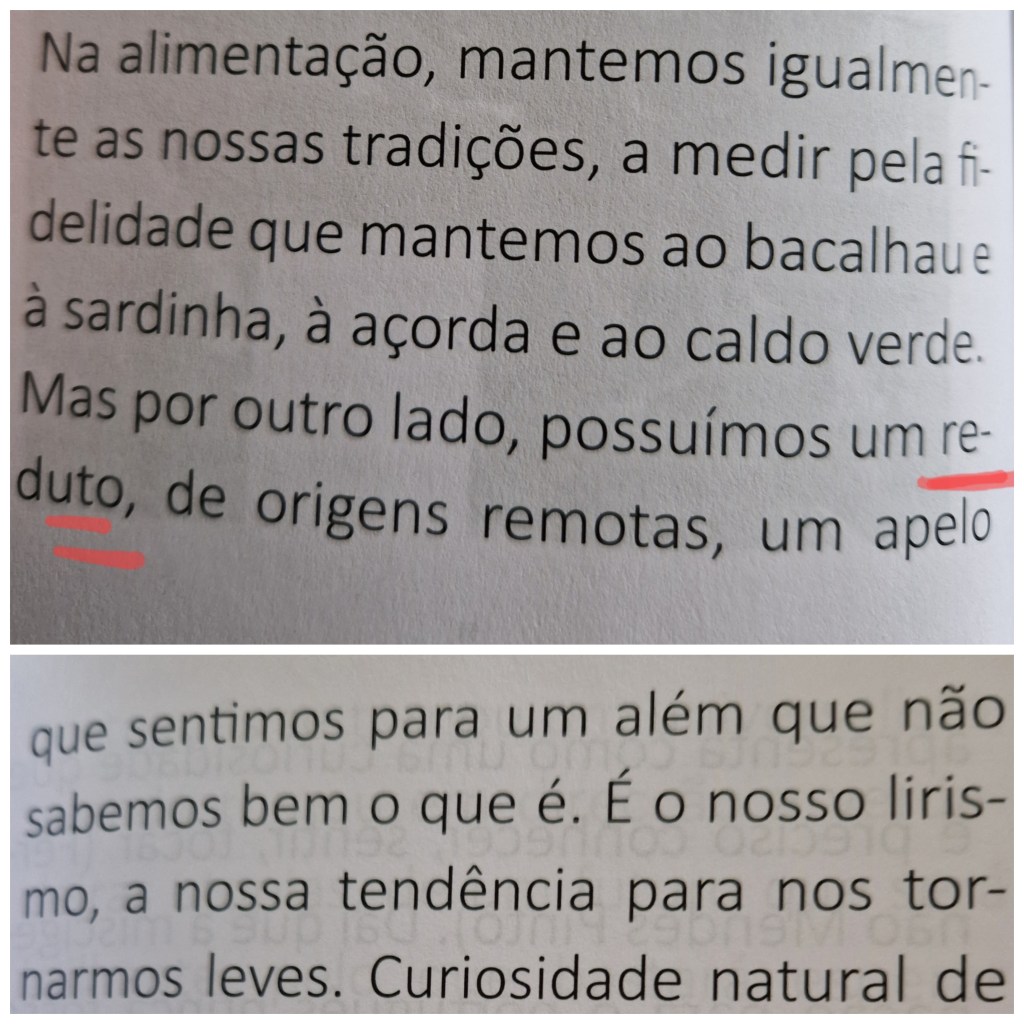
I couldn’t work out what this word was doing here. Reduto is like redoubt, so it’s a kind of fortress… So what’s it doing in this sentence? I didn’t know so I asked.
He’s saying that, despite their natural conservatism, portuguese people have a redoubt – an unvanquished corner of their heart – where they nurture a longing for something else out there.
OK, makes sense. I thought I’d found a typo but instead I found some new vocabulary.
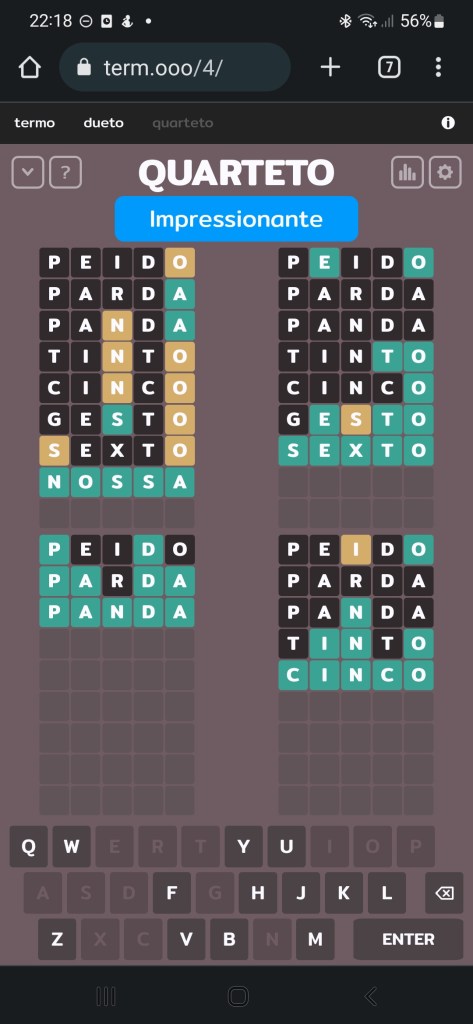
For those of you playing the Quarteto version of Termo, you’d better bring your A game today because the bottom right hand corner is about as obscure as they get!
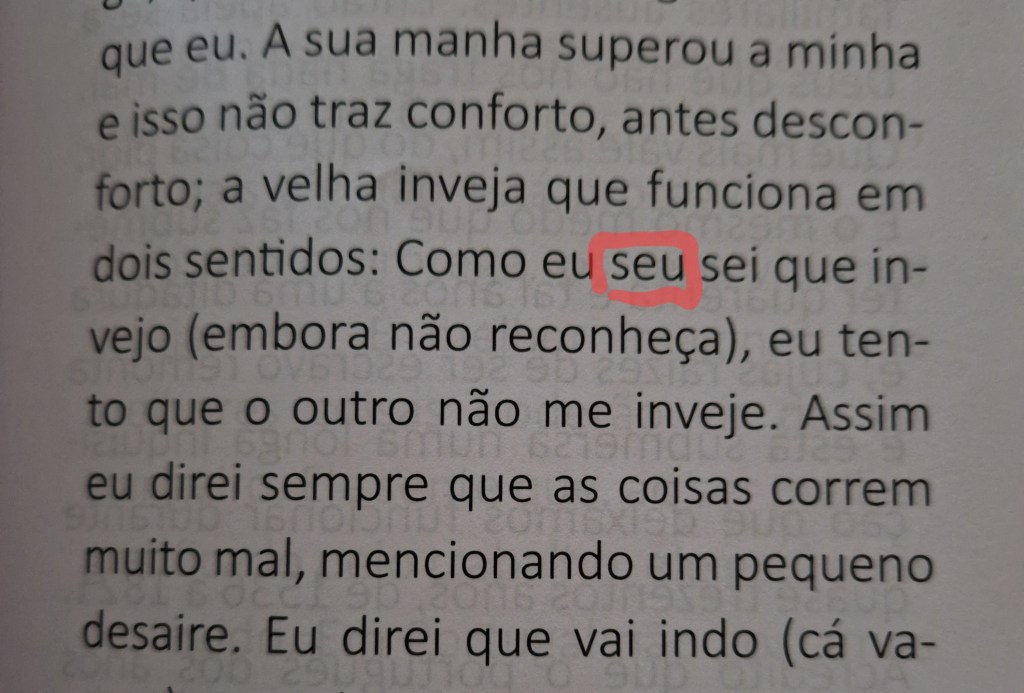
Typos tend to be annoying at the best of times, but they can be super-confusing when they come up in portuguese texts because you don’t know if they are real typos or if it’s just some aspect of the language that you’re not familiar with. I was pretty sure about this one but had to go and ask. It is one of course. The fact that the stray “seu” is right next to the right word, “sei”, makes it obvious how it happened.

I’ve just updated the Graphic Novel and Audiobook Lists with new discoveries in the last few months.
There are only a couple of new additions in the Audiobook page, mainly some new José Milhazes books on Kobo. I’ve read quite a lot of new Bandas Desenhadas though, so the graphic novels page has got about 50% longer, including “Finalmente o Verao”, which I finished today and will probably be reviewing tomorrow, plus a few others I read and reviewed earlier in the year, like Pardalita, Amor de Perdição and Quarentugas.
Remember, the list is sorted in order of how much I like them so you can ave time by starting at the top and stopping when you have reached your threshold if things that don’t seem worth bothering with.
If you’re new to the site, I have five lists: aside from these two, there are some lists with online learning resources, textbooks and language hacks, all of which get updated from time to time. You can access from the menu on the right there (or the bottom if you’re looking at this on a smartphone) but I’ll pin this post for a while to make them easier to find.
I’ve mentioned Termo on here before. I like word games and doing a portuguese version just seemed like too good an opportunity to pass up. But I didn’t realise that there were other versions of it on the same site: you can play Dueto and Quarteto.
This is really exciting. My breakfast brain teaser just got ten times harder!
Ages ago, I booked tickets to a show in London by Guilherme Duarte, and I was really excited because, y’know, how often do portuguese comedians play in London?
Anyway, as the day approached I realised that it fell right on the weekend my project was going live. My day job is helping local authorities to migrate their data to a new database platform, and there’s usually a period of 3 or 4 days around a weekend when all their systems get turned off and I, and a few other people, work frantically to move everything over in the time available. Being away from my laptop in the evening for 4 or 5 hours just wasn’t going to work, so I didn’t go.
The users are testing my work as I speak, but if anyone has a time machine could you lend it to me please, so I can go back to last night and go and see the show? Ah well, let’s hope he comes back, eh? In the meantime, we’ve got tickets to see Dulce Pontes on Wednesday. I’m more of a comedy fan than a music fan, but Dulce Pontes is amazing and I’m really excited for that.

