It often happens that when I learn a new phrase I suddenly notice it popping up everywhere – in videos or in song lyrics that, previously, I had mentally marked as indecipherable. After I wrote the post about Chico-Espertice the other day I spotted it in a Deolinda song (have I mentioned I like Deolinda? I have? Oh!) called Manta Para Dois (“Blanket for two”). I wondered how it had been translated, to see if I’d understood it right.
I found the english lyrics here. They’ve translated
Às vezes és parvo
Gabarola, mal-criado
É preciso muita pachorra para ti
Cromo, chico-esperto
Preguiçoso e incerto
Mas é certo que és perfeito para mim
as
Sometimes you’re stupid
You brag, you have no manners
I need a lot of calmness to deal with you
Silly, fancy and smart
Lazy and uncertain
But it’s obvious you’re perfect for me
Well, that’s not what I was expecting. I think this must be wrong though. I think the translator must live in a region where the expression isn’t used. Everything else in that paragraph is a list of faults the person has, in spite of which she loves the guy anyway, so throwing a couple of compliments in makes no sense, especially if they’re joined together with a hyphen instead of a comma. I think it should say
Sometimes you’re stupid
You brag, you have no manners
I need a lot of patience to deal with you
Silly, a smartarse
Lazy and uncertain
But it’s obvious you’re perfect for me
Or maybe “a pisstaker” or “too clever by half” or something like that.
Video here
By the way, that word “Cromo” is interesting too. It’s translated as “Silly” and Priberam gives it as
Diz-se de ou pessoa que tem um comportamento considerado estranho excêntrico ou ridículo . “cromo”, in Dicionário Priberam da Língua Portuguesa [em linha], 2008-2013, https://dicionario.priberam.org/cromo [consultado em 24-09-2018].
but I’m pretty sure I’ve heard it used to mean “nerd” or “geek”
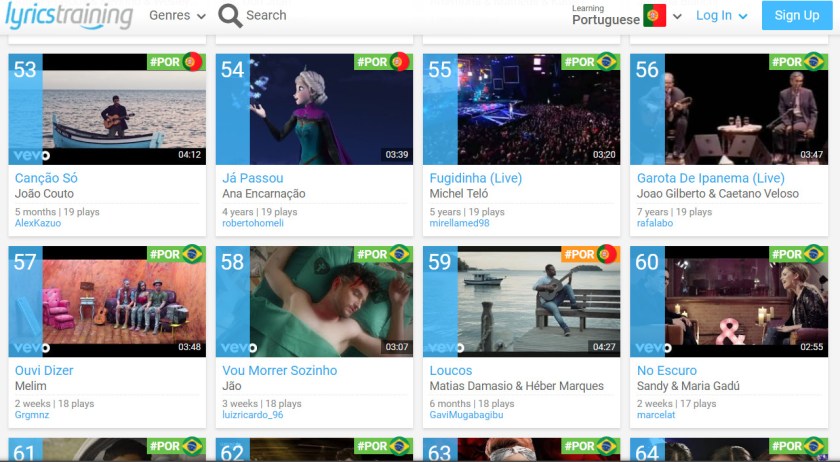
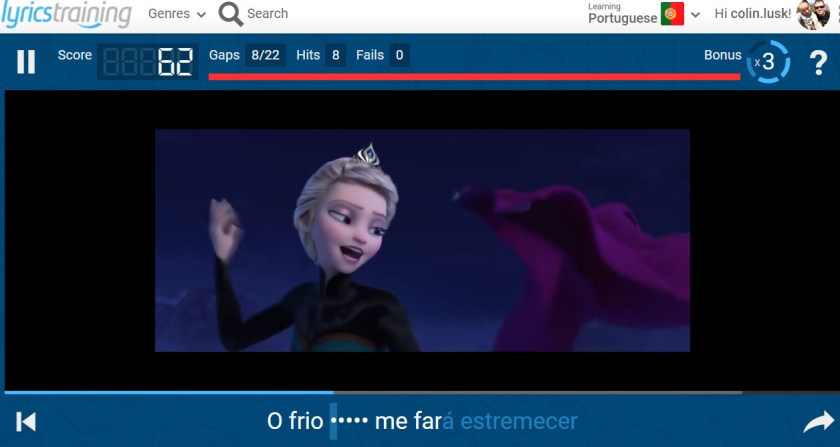
I heard about a site called Lyrics Training from a Brazilian guy I’ve been doing language exchanges with for a while now. It seems opretty useful. The idea is to improve your listening skills by filling in random missing words from a song that plays in a video window. You can select different levels of difficulty and if you can’t get it fast enough it pauses and rewinds to give you a little more time. There are ots of different languages, including both brazilian and portuguese portuguese, but the two are clearly marked with a flag in the corner of each video thumbnail.
So I’m trying to sort out some basic grammar that I probably should have worked out a long time ago. To do this, I’ve been working with a different teacher who lives in the UK, simply because I don’t have the skills to be able to even ask the question in Portuguese and I needed someone who would understand me asking in english
Today: What’s the difference between these ways of exressing possession.
A sua propriedade
Propriedade sua
A propriedade dele
It always seems a bit random and I’ve never quite been able to spot a pattern. The third one is the obvious odd one out because it’s the only one that makes it clear that it’s the property of “him”, whereas the others could all be him, her, them, or, if you’re being formal, the person you’re speaking to, so in a way that helps – you could use when you wanted to be very specific about who it belongs to. In practice, I’m told, it’s also used in less formal, spoken situations.
As for the first and second, the answer seems to be simpler than I thought though: it just depends whether you have a definite article in there. If it’s a specific thing: this is his property, it’s “a sua propriedade”, whereas the second quote, which comes from my review of the film Comboio de Sal e Açúcar is about the subject’s attitude: he treated the passengers as his property.
O livro é de um amigo meu [indefinite article: it belongs to a friend of mine]
O livro é do meu amigo [definite article: it belongs to my friend]
Now, here’s the shock though: I had been thinking of these words – seu, meu, minha, etc as possessive pronouns, but they’re not, they’re determinantes – more like adjectives, really: In “o meu amigo”, “amigo” is the noun and “meu” just determines whose friend he is. Meu can also be a possessive pronoun but only when it stands in for the noun.
“O Donald, as suas mãos são pequenas; as minhas são grandes”. In this sentence, “suas” is another determinant but “minhas” is a possessive pronoun because I’m using it instead of saying the whole noun again “as minhas maãos”. In english it’s doing the job of “mine” instead of just “my”. There are some other examples, explained in portuguese on Ciberdúvidas.
OK, simple, I can understand a couple of simple rules like that. I guess, though, it’s like most rules in english: you obey them only insofar as you can do so without writing something ugly. So I cam across a counter-example within about ten minutes of this conversation happening in the song “Saia Rodada” by Carminho. I’ve pasted the lyrics below and highlighted forms that match in green and the one that doesn’t in red.
Vesti a saia rodada
P’r’ apimentar a chegada
Do meu amor
No mural postei as bodas
Rezei nas capelas todas
Pelo meu amor
Vem lá de longe da cidade e tem
Os olhos rasos de saudade em mim
E eu mando-lhe beijos e recados em retratos meus
Pensa em casar no fim do verão que vem
Antes pudesse o verão não mais ter fim
Que eu estou tão nervosa com esta coisa do casar
Meu Deus
Vesti a saia rodada
P’r’ apimentar a chegada
Do meu amor
No mural postei as bodas
Rezei nas capelas todas
Pelo meu amor
Por tantas vezes pensei eu também
Sair daqui atrás dos braços seus
De cabeça ao vento e a duvidar o que faz ele por lá
I think all that’s happening here is that she’s stretched the normal rules to make the rhyme with “adeus” work in the next triplet. I’ve added it to my list of questions for next time.
Anyway, as a side note, I wondered what a “saia rodada” was anyway. A round skirt? I googled it and saw a load of pictures of… well… skirts. So I asked online and was told it would all make sense if I searched for videos of “saia rodada danca” but it didn’t work because there’s an insupportable brasilian rock band called saia rodada and this is the first video I got.
But then a portuguese guy mentioned that it was “folclorico” so I added that into my search and had more luck. Apparently it’s a long, swishy skirt that is used in a lot of dances because of the way it moves. Here are some people demonstrating. Tag yourself, I’m the guy in the grey trousers.
WHew! It’s been a long time since I wrote this much about grammar and general musings. Well, come for the determinantes possessivos, stay for the grupo folclórico.
Ontem à noite, eu a família fomos ao teatro Victoria Palace para vermos uma apresentação duma peça de teatro chamada “Hamilton”. Para quem não sabe, trata-se de um musical americano que conta a história de Alexander Hamilton, um dos participantes na revolução contra os ingleses*, que passou a primeiro Ministro das Finanças daquele país depois da guerra. Foi escrito por Lin-Manuel Miranda, que também escreveu a música de várias outras obras, incluindo o Moana da Disney. Já conhecíamos todas as músicas da banda sonora e já adorávamos todas mas não estávamos preparados para a maravilha de ver o espectáculo inteiro no palco.
Como devem saber, no elenco da peça, há um único actor branco – o Rei Jorge Terceiro. Todos os outros são negros, hispânicos ou de raça mista. Isto deixa a história tornar-se um veículo para vários pontos políticos sobre a história do país e o seu povo, de imigração e liberdade. É simultaneamente uma crítica ao país, um grande elogio a ele, uma lição de cidadania e muito mais! Aqui em Londres, donde vinham os “vilões” da peça, Hamilton, o herói foi protagonizado por Jamael Westman, um actor bastante novo. Na produção original em Nova Iorque, toda a gente era americana, e o único inglês – o rei – precisou de falar com um sotaque diferente, mas neste caso, Hamilton, Burr e o resto da companhia teve que falar com sotaques estrangeiros, e apenas o Rei pôde utilizar a sua própria voz. Gostei sobretudo do Burr (um dos maiores antagonistas, e também o narrador) e a Eliza, mulher de Hamilton, mas todos representaram muito bem: dançaram, cantaram e fizeram tudo com uma precisão perfeita. Foi tão dinâmico, tão bem feito, que embora conhecêssemos a história e as canções, ficámos boquiabertos. Chorámos, rimos, batemos palmas sem fim. A minha filha apaixonou-se pelo Philip (o filho) e 3481 lençóis de papel ficaram molhados de lágrimas.
Enfim, gostámos do espectáculo.
*=Quando fizeram o terrível erro de sair do nosso império pacífico e benevolente. Não faço ideia porquê. Já que elegeram o Trump, talvez sintam arrependimento. Se pedirem, ainda consideraremos deixá-los entrar novamente. Não é tarde demais para mudarem de opinião.
Muito obrigado pela ajuda Fernanda
In case anyone’s wondering about the title, it’s a pointlessly literal translation of the phrase “I’m not throwing away my shot”, but it’s more like “I’m not throwing my gunshot in the bin” rather than “I’m not wasting my chance”, which would be more like “Não vou desperdiçar a minha oportunidade”
I came across another reference to monkeys and branches in Bruno Nogueira’s Mata Bicho podcast: “Cada macaco no seu galho”. It reminded me of the one I mentioned a few weeks back. I guess Portuguese speakers must really like monkeys because I can think of at least two other monkey-related expressoes: “Vai pentear macacos” and “macaquinhos na cabeça” (here). This new one means “Each monkey on his own branch” or, less literally “people should mind their own business”.
It’s mentioned in a song here (#braziliandialectklaxon)
By the way, I always thought Mata Bicho meant something like “bug killer”, which it kinda does but it’s an expression that can mean a tip (in some places) or a little drink taken at breakfast time. So I guess “hair of the dog” then…?
Having given Eurovision one of its best songs ever in 2017, Portugal seems to have gone for the “My Lovely Horse” option this year, with the blandest, pappiest piece of talent-show fodder ever.
I heard this um… bloke? To be honest, I don’t know, but let’s say bloke because beard. So as I was saying, I heard this bloke on Cinco Para Meia-Noite and I think he has a really interesting voice, quite different from most fadistas, and yet, you know, the same. I can’t seem to find any music online other than on Youtube but I’m definitely adding a few videos to my PT Music playlist.
Hoje, fui até ao Barbican Centre para ver um concerto de música lusófona de Portugal e do Brasil. A fadista Carminho está quase ao fim dum série de concertos nos quais ela canta as obras de Tom Jobim. Lamento que não tenho um grande conhecimento de musica brasileira, mas conheço o nome de Jobim, e dois membros da banda tinham o mesmo nome porque são os netos dele (ou.. Um neto e um filho…? Não sei…) além duma baterista e do violoncelista Jaques Morelenbaum.
A maneira como ela cantou era muito interessante. Não tenho certeza de todo, mas acho que ela tinha escolhido um estilo muito parecido com o estilo nativo de portugal. Ou seja, cantou os poemas num sotaque português, numa maneira típica da tradição do fado, mas com um fundo de música brasileira. Até pediu ao Chico Buarque para mudar umas palavras duma canção que escreveu com Jobim porque a Carminho não teve vontade de cantar um canção de amor com “você” em vez de “tu”.
Também cantou dois fados dedicados ao Jobim e um outro escrito por uma poeta brasileiro, Vinicius de Moraes.
Depois do concerto, comprei um CD e levei-o à mesa onde a Carminho autografou as compras das fãs dela. Falei um pouco com ela em Português e pedi-lhe para escrever “boa sorte no exame” no CD mas ela mudou a frase a “… Para o exame”.
Sabes o que é que isso significa? Sim. Carminho corrigiu a minha gramática. Carminho é a minha professora agora. Adeus italki, a minha nova professora irá ensinar-me tudo!
Este ano, comprámos alguns bilhetes para concertos que queríamos assistir. Por acaso, 3 destes calham esta semana! Na quarta, fomos (ou seja, a senhora 18ck e 18ckinha foram, porque tive que trabalhar) até ao Hammersmith Apollo para ver The National, e no sábado vamos ver Nick Cave num gigante estádio e vamos precisar dum telescópio. Mas o ponto alto da semana foi ontem à noite, quando fomos ao Barbican Centre para assistirmos a um concerto do Miguel Araújo.
De manhã, fiquei preocupado porque havia um problema com os sistemas informáticas em muitos aeroportos, mas o Miguel publicou um vídeo através do Instagram que mostrou a banda segura dentro dum avião da TAP.
Chegámos à sala de concertos para as 19h55. Fiquei surpreendido por ver tantos vazios nas bancadas. Há um monte de portugueses em Londres mas acho que… O quê? Não gostam dele? Ou talvez todos tivessem que acordar cedo na manhã seguinte…? Sentámo-nos na segunda fila, quase ao pé do palco, portanto quando ele chegou com seis outros músicos, tivemos uma boa vista! O concerto foi espectacular, com muitas canções favoritas mas num estilo relaxado: não “partiram a loiça toda”, pelo menos até às últimas canções. Havia uns ingleses na plateia e por isso falou inglês além de português.
Hoje de manhã, o Miguel começou um vídeo em direito através do instagram. Espreitei-o enquanto trabalhava. Pareceu que a banda estavam a tentar recriar a capa do álbum “Abbey Road”. Havia muitas buzinas. Ninguém foi morto mas foi apertado!


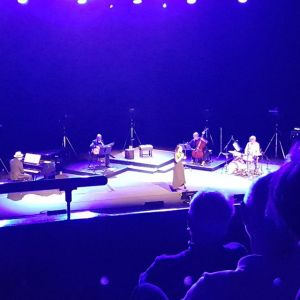 Hoje, fui até ao Barbican Centre para ver um concerto de música lusófona de Portugal e do Brasil. A fadista Carminho está quase ao fim dum série de concertos nos quais ela canta as obras de Tom Jobim. Lamento que não tenho um grande conhecimento de musica brasileira, mas conheço o nome de Jobim, e dois membros da banda tinham o mesmo nome porque são os netos dele (ou.. Um neto e um filho…? Não sei…) além duma baterista e do violoncelista Jaques Morelenbaum.
 Também cantou dois fados dedicados ao Jobim e um outro escrito por uma poeta brasileiro, Vinicius de Moraes.
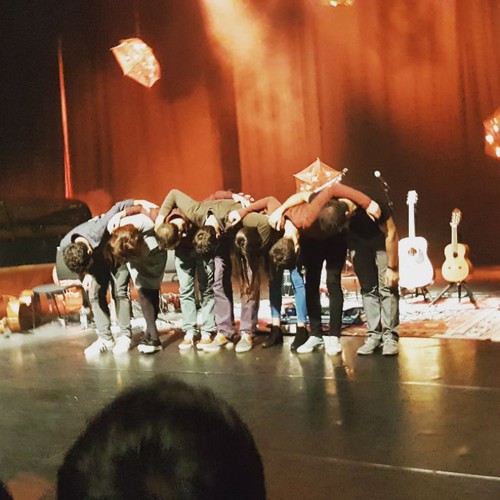 esta semana! Na quarta, fomos (ou seja, a senhora 18ck e 18ckinha foram, porque tive que trabalhar) até ao Hammersmith Apollo para ver The National, e no sábado vamos ver Nick Cave num gigante estádio e vamos precisar dum telescópio. Mas o ponto alto da semana foi ontem à noite, quando fomos ao Barbican Centre para assistirmos a um concerto do Miguel Araújo.
 Luso
Luso 