Posted in English, Portuguese

Da Weasel – Dialectos da Ternura

Another translation today: it’s a rap, but it’s surprisingly easy to translate. Or rather, I didn’t have any impossible slang to deal with. I daresay a professional translator would laugh at it, but that’s OK.

Dialectos de TernuraDialects of Tenderness
Yoo
Ela diz que me adora quando a noite vai a meio
Eu sinto-me melhor pessoa, menos fraco, feio
Passa o dedo na rasta com a mão bem suave
Encosta o lábio no ouvido e diz-me: Queres que a lave?
Vamos para o chuveiro e ela flui com a água
Lava-me a cabeça, a alma e qualquer resto de mágoa
Diz que o meu amor lhe dá um certo calor na barriga
É aí que eu sei que quero ser para sempre aquele nigga
Que lhe mete a rir, rir, quando eu lhe faço vir
Da terra até à lua mano, é sempre a subir
E somos grandes, gigantes com dez metros de altura
Falamos vinte línguas, dialectos da Ternura
Tipo

Uhh, uhh!
Yeah, yeah!
Faz, faz!
Dá, dá
Yo!
She tells me she adores me in the middle of the night
I feel like a better person, less weak, ugly
She runs her finger over my dreadlock* with her soft hand
Puts her lips to my ear and says “Do you want me to wash it?”
We go to the shower and she flows with the water
She washes my head, my soul and any remaining pain
She says my love makes her warm in her belly
It’s then that I know that I want to be that nigga
That makes her laugh, laugh when I make her come
From earth to the moon, man, she’s always rising
And we’re big, giant, ten metres tall
We speak twenty languages, dialects of tenderness.
Like

Uhh, uhh!
Yeah, yeah!
Do it! Do it!
Give it! Give it!
Água morna em pele quente poro aberto não perfura
A minha alma já tá nua e eu faço-lhe uma jura, jura
Para sempre teu depois da noite volvida
Um segundo ao teu lado já preenche uma vida
O conceito de tempo não entra na sensação
Aquilo que vivemos tá gravado no coração
Segura na minha mão e continua a canção
É a melhor que já ouvi reinventaste a paixão
Ela diz que me adora quando o dia vai a meio
O copo passa de meio vazio para meio cheio
A palavra ganha vida e fala à minha frente
Sigo calmo atrás dela deixo crescer a semente

E Diz-me
Uhh, uhh!
Yeah, yeah!
Faz, faz!
Dá, dá
Warm water on hot skin, open pore, doesn’t pierce
My soul is already naked and I swear to her, I swear
Forever yours, after the night has passed
One second by your side is a full lifetime
The concept of time doesn’t enter the senses
What we’re living is carved on our hearts
Hold my hand and continue the song
It’s the best I’ve ever heard, you’ve reinvented passion
She tells me she adores me in the middle of the night
The cup grows from being half empty to half full
The word comes to life and speaks in front of me
I follow her calmly and let the seed grow

Uhh, uhh!
Yeah, yeah!
Do it! Do it!
Give it! Give it!
Em cada beijo há uma frase, em cada frase há um verso
Em cada verso há um lado do lado inverso
De uma história que assombra a memória
Da leveza irrisória de uma conquista notória
Faço V de vitória, porque hoje eu sou rei
Ao lado da rainha com que sempre sempre sonhei
Foi por isto que esperei, em cada noite que amei
Ou pensei que amei porque é agora que eu sei
A razão da palavra consagrada
Que tanta gente dá à toa em troca de quase nada
Ela não tá espantada, pelo contrário, relaxada
Revê-se na expressão da expressão enamorar

E diz-me
Uhh, uhh!
Yeah, yeah!
Faz, faz!
Dá, dá
In each kiss, in each sentence there’s a verse
In each verse there’s another page on the opposite side
Of a story that overshadows the memory
Of the ridiculous lightness of a notorious conquest
I make the V for victory because today I’m the king
By the side of the queen I’ve always, always dreamed of
It was this I was hoping for, every night I loved
Or thought it loved, because now I know
The reason for the sacred word
That so many people give thoughtlessly in exchange for almost nothing
She’s not shocked, on the contrary, relaxed
It shows in the expression, the loving expression

Uhh, uhh!
Yeah, yeah!
Do it! Do it!
Give it! Give it!

According to Priberam, Rasta can be a rastafarian and by extension can also refer to dreadlocks as worn by rastafarians.

Posted in English

Barco Negro

I’m pretty sure I’ve at least mentioned this song before because it’s so great, but I’ve never got around to doing a translation of it. Amália Rodrigues is an interesting character in her own right, and she’s had a huge influence on musicians, both traditional and avant-garde. This song is about a woman who’s lost her husband at sea and she’s sleeping on the beach waiting for him to come home and feeling like he’s still with her somehow even though everyone tells her its hopeless.

Thank you very much, Monsieur Trenet

Barco Negro (Black Boat)

PortugueseEnglish
De manhã, que medo que me achasses feia
Acordei tremendo deitada na areia
Mas logo os teus olhos disseram que não
E o sol penetrou no meu coração
Mas logo os teus olhos disseram que não
E o sol penetrou no meu coração
In the morning, so scared that you’d find me ugly
I woke up shaking, lying on the sand
But then your eyes told me no
And the sun penetrated my heart
But then your eyes told me no
And the sun penetrated my heart
Vi depois numa rocha uma cruz
E o teu barco negro dançava na luz
Vi teu braço acenando entre as velas já soltas
Dizem as velhas da praia que não voltas
Then I saw a cross on a rock
And your black boat was dancing in the light
I saw your arm waving between the loose sails
The old women at the beach say you’ll never come home
São loucas! São loucas!
Eu sei meu amor, que nem chegaste a partir
Pois tudo em meu redor me diz
Que estás sempre comigo
Eu sei, meu amor, que nem chegaste a partir
Pois tudo em meu redor me diz
Que estás sempre comigo
They’re crazy! They’re crazy!
I know, my love that you never even left
Because everything around me tells me
That you’re always with me
I know, my love that you never even left
Because everything around me tells me
That you’re always with me
No vento que lança areia nos vidros
Na água que canta no fogo mortiço
No calor do leito dos bancos vazios
Dentro do meu peito estás sempre comigo
No calor do leito dos bancos vazios
Dentro do meu peito estás sempre comigo
In the wind that throws sand against the windows
In the water that sings, in the dying fire
In the bed of empty benches
In my breast, you’re always with me
In the bed of empty benches
In my breast, you’re always with me
Eu sei, meu amor, que nem chegaste a partir
Pois tudo em meu redor me diz
Que estás sempre comigo
Eu sei, meu amor, que nem chegaste a partir
Pois tudo em meu redor me diz
Que estás sempre comigo
I know, my love that you never even left
Because everything around me tells me
That you’re always with me
I know, my love that you never even left
Because everything around me tells me
That you’re always with me
Posted in English

Pica do Sete

I’ve already done a translation of an Antonio Zambujo song – Flagrante – but it was in the context of a grammar lesson so I thought I’d come back and have a go at one of his others – Pica do Sete. I mainly chose it because it always bothers me. I think he’s singing about a woman who’s punching his ticket but in the video the woman is a passenger and he’s… well, stalking her, really. And at the end there’s a male conductor, so maybe she’s supposed to be narrating? I dunno, maybe spending some time really getting into the lyrics will straighten it out in my mind.

First of all, the title. As far as I understand it, “o Sete” is the number 7 tram. Pica is a bit trickier and I suggest being careful how you use it because it can mean lots of different things including a spliff (in portugal) or a penis (in brazil) so you know… handle the word with care! Anyway, in this context, it’s the ticket inspector. I think it comes from the verb picar which means to puncture something. You can read more about the life of a “pica” on Lisbon trams in this really good blog post written at around the time the song was released.

PortugueseEnglish
De manhã cedinho
Eu salto do ninho e vou pra paragem
De bandolete à espera do sete
Mas não pela viagem
Eu bem que não queria
Mas um certo dia vi-o passar
E o meu peito cético
Por um pica de elétrico voltou a sonhar
Early in the morning
I jump out of my nest and go to the tram stop
Wearing an Alice band, waiting for the number 7
But not for the journey
I didn’t really want it
But one day I saw him pass by
And my skeptical heart*
Went back to dreaming about a tram conductor
A cada repique
Que soa do clique daquele alicate
Num modo frenético
O peito cético toca a rebate
Se o trem descarrila o povo refila e eu fico num sino
Pois um mero trajeto no meu caso concreto é já o destino
Every time the bell rings
When that clipper makes its clicking sound
In a frenetic way
The skeptic heart sounds the alarm
If the tram derails, the people complain and I’m quite happy**
Because, in my case, the route is the destination.
Ninguém acredita no estado em que fica o meu coração
Quando o sete me apanha
Até acho que a senha me salta da mão
Pois na carreira
Desta vida vão
Mais nada me dá a pica que o pica do sete me dá
Que triste fadário e que itinerário tão infeliz
Cruzar meu horário com o de um funcionário de um trem da carris
Nobody believes the state my heart gets into
When the number seven picks me up
Until I think the ticket will jump out of my hand
Because in the path
That this life takes
Nothing pierces me like the conductor on the number 7
What a sad fate, what an unfortunate timetable
To cross my schedule with that of a tram employee
Se eu lhe perguntasse
Se tem livre passe pró peito de alguém
Vá-se lá saber talvez eu lhe oblitere o peito também
Ninguém acredita no estado em que fica o meu coração
Quando o sete me apanha
Até acho que a senha me salta da mão
Pois na carreira desta vida vão
Mais nada me dá a pica que o pica do sete me dá
If I asked him
If he had a free pass for someone’s heart
Who knows, maybe I’ll invalidate*** his heart too
Nobody believes the state my heart gets into
When the number seven picks me up
Until I think the ticket will jump out of my hand
Because in the path
That this life takes
Nothing pierces me like the conductor on the number 7
Ninguém acredita no estado em que fica o meu coração
Quando o sete me apanha
Até acho que a senha me salta da mão
Pois na carreira desta vida vão
Mas nada me dá a pica que o pica do sete me dá
Nobody believes the state my heart gets into
When the number seven picks me up
Until I think the ticket will jump out of my hand
Because in the path
That this life takes
Nothing pierces me like the conductor on the number 7

* The actual word is “chest” (peito) but “skeptic btreast” sounds weird

** Refilar and Sino both have multiple meanings. I originally thought the passengers are leaving the tram and queuing for the next one, but she is staying in, ignoring everything (metaphorically under a glass bell jar) because she wants to stay where she is. That doesn’t seem to case. Refilar usually means to grumble and complain and that’s what it means here. “Estar num sino” just means to be well-disposed and calm, according to this page. It doesn’t seem to be a very well-known expression though, judging by people’s reactions when I asked.

***Obliterar obviously sounds like obliterate and usually means the same but one of the meanings Priberam gives is to invalidate something by means of a stamp or a mark or by piercing it – so basically what a tram conductor does to a ticket then!

OK, well I think we can be pretty sure that the narrator of the song is the female passenger and she’s got the hots for the male conductor. The singer is just voicing her interior monologue, not stalking her. I’ve highlighted the two words that give the clue: she says she’s wearing a bandolete – an alice band or hairband. Well, men can wear those but it’s unusual, and the woman in the video has one but Zambujo doesn’t. Then fuurther down he says “um pica” not uma pica, so it’s a male conductor.

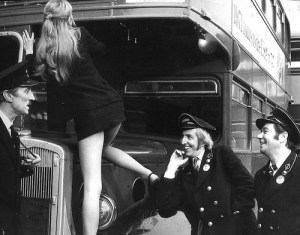
If I were portuguese and wanted to study the equivalent male phenomenon, I guess I’d have to analyse the old sitcome “On the Buses”. Coincidentally, I’ve recently watched my first episode of that. My daughter is obsessed with Reece Shearsmith at the moment and apparently they are planning to do an On the Buses parody in the current series of Inside Number 9. I’m old but even I’m not old enough to remember it when it was first broadcast.

Further musings about the expression “estar num sino”

I gently pointed out in reddit that it was surprising that quite a well-known song had an expression in it that hardly anyone understood and people seemed to be fine with not knowing what he was in about. Obviously there are plenty of songs in English that are the same (try listening to the lyrics of “Whiter Shade of Pale” sometime for example) so it’s not really surprising, but I thought it was fun to ask if people were actually listening to the lyrics.

Fiz uma pergunta ontem sobre a letra de uma música do António Zambujo. Há uma expressão na canção que diz “Fico num sino” que mal entendi*. O que mais me marcou foi o facto de os** respondentes também não saberem o significado da frase. Mas… É uma canção bem conhecida não é? Será que grande parte das pessoas ouviram a música e pensaram “Pois é, está presa*** numa campainha. Faz todo o sentido”

* mal entendi meaning I barely understood it. Maybe should have written “entendi mal” (i misunderstood it) or não entendi (i didn’t understand it) to be more accurate.

**de and os are separate here because “o facto de” is a sort of standalone expression.

*** apesar do cantor ser masculino a narradora da canção não é.

Posted in English, Portuguese

Morena

I did a Tiago Bettencourt translation the other day, so let’s have a go at “Morena” too, not becaue it’s my favourite song of his, but because it has some nice guitar work.

Trigger Warning: Scrabble Crimes

OK, potentially controversial decision: I’m translating “Morena” as “Brunette”, because that’s the closest I can get to a literal translation. It’s not quite right though, for two reasons. Firstly, there’s a sense of the person’s skin being tanned or olive-toned as well as their hair being dark brown; and secondly, I think referring to women as blondes, brunettes, redheads has a slightly disrespectful tone in english (at least in some circles) and I think that’s less true in portuguese. That’s partly a linguistic thing: in Portuguese it’s more usual to use an adjective as a noun – for example “um inglês” not “um homem inglês” – and partly because we have a tendency to overthink things in the english-speaking world, especially a certain very large country situated a few hundred miles north of Brazil. Anyway, with that dislcaimer, let’s crack on.

PortugueseEnglish
Esta morena não sabe
O que o dia tem para lhe dar
Diz-me que tem namorado
Mas sem paixão no olhar
Tem um risinho pequeno
E que só dá de favor
Corpo com sede de quente
Mas que não sente calor

Esta morena não dança
Quando lhe mostro Jobim
Talvez não goste da letra
Talvez não goste de mim
Cabelo negro sem regra
Caindo em leve ombro nu
Feito de morno passado
E amor que nunca cegou

Morena no fundo quer
Tempo para ser mulher
Morena não sabe bem
Mas eu no fundo sei
Que quando o véu lhe cai
Quando o calor lhe vem
Sempre que a noite quer
Sonha comigo também

Há sítios que ela não usa
Por não saber que estão cá
Há mares que ela não cruza
Por não ser eu a estar lá
É de mim que ela precisa
Para lhe dar o que não quer
Talvez lhe mostre caminhos
Onde se queira perder

Esta morena não chora
Com um fado negro de Oulman
Nem com um poema de O’Neill
Na primeira luz da manhã
Sabe de tantos artistas
Canta-me letras de cor
Mas não lhe passam por dentro
Não lhes entende o sabor

Morena no fundo quer
Tempo para ser mulher
Morena não sabe bem
Mas eu no fundo sei
Que quando o véu lhe cai
Quando o calor lhe vem
Sempre que a noite quer
Sonha comigo também

Esta morena não corre
Quando a chamo para mim
This brunette doesn’t know
What the day has to give her
She tells me she has a boyfriend
But without any passion in her eyes
She has a little laugh
That she only gives as a favour
Body that thirsts for warmth
But doesn’t feel heat

This brunette doesn’t dance
When I show her Jobim
Maybe she doesn’t like the lyrics
Maybe she doesn’t like me
Black, unruly hair
Falling on a light, naked shoulder
Made by boredom gone by
And love that never blinded her

Deep down, the brunette wants
Time to be a woman
The brunette doesn’t really know
But deep down, I know
That when her veil falls
When the warmth comes back to her
Whenever the night chooses
She dreams of me* too.

There are places she doesn’t use
Because she doesn’t know they’re here
There are seas she doesn’t cross
Because I’m not there
It’s me she needs
To give her what she doesn’t want
Maybe I’ll show her paths
Where she wants to lose herself

This brunette doesn’t cry
with the dark fado of Oulman
Nor with the poetry of O’Neill
In the first light of morning
She knows so many artists
She sings me lyrics by heart**
But they don’t get inside her
She doesn’t understand their flavour

Deep down, the brunette wants
Time to be a woman
The brunette doesn’t really know
But deep down, I know
That when her veil falls
When the warmth comes back to her
Whenever the night chooses
She dreams of me too.

This brunette doesn’t run
When I call her to me

*= Remember “sonha comigo” might look like “dreams with me” – implying they are sleeping together – but it means “dreams of me”, which is a different kettle of fish! One of those instances where the use of prepositions can give you a slightly different mental image if you’re not careful.

**= Letras “de cor” sounds like it should mean colourful lyrics but there’s an older meaning of cor that is the same as coração, so it’s just like the english expression “knowing something by heart”

Morenas: Expectativas x Realidade
Posted in English, Portuguese

Canção de Engate

I haven’t done a song translation for while and I fancied having a go at “Cancao de Engate” by António Variações. There aren’t many decent videos of it and anyway he’s a bit hard to follow because of his distinctive singing style so if you don’t know it, try this orchestral acoustic version by Tiago Bettencourt

Cancão de Engate

My sense, going into it, is that it uses a lot of slightly oblique language so this is going to be a tricky one, but here goes…

Tu estás livre e eu estou livre
E há uma noite p’ra passar
Porque não vamos unidos
Porque não vamos ficar
Na aventura dos sentidos
You’re free and I’m free*
And there’s a night to get through
Why don’t we get together
Why don’t we get
Into the adventure of the senses
Tu estás só e eu mais só estou
E tu tens o meu olhar
Tens a minha mão aberta
À espera de se fechar
Nessa tua mão deserta
You’re alone and I’m alone too
And you have caught my eye
You have my open hand
Ready to close
On your lonely hand
Vem que o amor não é o tempo
Nem é o tempo que o faz
Vem que o amor é o momento
Em que eu me dou
Em que te dás
Come, because love is not time
Nor is it time that makes it
Come, because time is the moment
In which I give myself
And you give yourself
Tu que buscas companhia
E eu que busco quem quiser
Ser o fim desta energia
Ser um corpo de prazer
Ser o fim de mais um dia
You who are looking for company
And me who is looking for whoever wants
To be the end of this energy
To be a body for pleasure
To be the end of another day
Tu continuas à espera
Do melhor que já não vem
Que a esperança foi encontrada
Antes de ti por alguém
E eu sou melhor que nada
You keep waiting
For something better that isn’t coming
Because what you hope for has already been found
By someone before you
And I am better than nothing
Vem que o amor não é o tempo
Nem é o tempo que o faz
Vem que o amor é o momento
Em que eu me dou
Em que te dás

x3
Come, because love is not time
Nor is it time that makes it
Come, because time is the moment
In which I give myself
And you give yourself

x3

* I’m sorry, but I am a man of a certain age but I am already reading this in a Mr Humphries voice

Hey, well that wasn’t as bad as I thought it would be. One of the easier ones I’ve done, in fact!

Posted in English, Portuguese

Ready (Mulher Batida)

Another translation post. I’m in a translatey mood, I guess. This one is by Orelha Negra with A Garota Não (again!) on guest vocals. Like yesterday’s, it has a strong feminist theme, but whereas that was just calmly wishing for more representation, this one is about domestic violence so it’s pretty raw: far moreso than I would have guessed from the general vibe of the music. Batida can mean beat in the musical sense as well as “beaten” or “beating” in the violent sense, so I think I had an idea that it was jsut a song about making music until I started trying to translate it line by line.

To be honest, it comes across as pretty bleak, but I don’t think it’s *just * that: there seems to be sense of wanting to move beyond the situation and reassert dignity. For a start, you have the dialogue at the beginning and the end of the song in english, talking about being ready for something. Then there’s the woman who does the live painting in the video (below). She’s called Mázinha and she’s obviously got a positive sense of the song being about forgiveness and redemption (quote here) so she’s painted a really upbeat image, indicative of a new start – presumably after leaving the dude. There isn’t much of that in the song lyrics though, as far as I can see!

E tu tás pronto, honey? / And you – are you ready honey?
Estarás pronto para ver / You’ll be ready to see
Como é que a cor da batida fica na mulher / How the colour of a bruise looks on your woman
Ela não é santa / She isn’t holy
Só um santo para o ser / Only a saint for being it
Como é que esses argumentos servem pra bater / How these arguments lead to beating

Cala esses demónios / Silence those demons
Já te podes perdoar / You could forgive yourself
Não levantes essa mão se não for pra lutar / Don’t raise that hand unless it’s to fight
Por um dia mais claro / For a brighter day
Por um tempo mais doce / For a sweeter time
Não trocava um abraço p’la jóia que fosse / She didn’t exchange an embrace for any jewel

O tamanho da mini saia / The size of a mini skirt
É inverso a essa cobardia / Is the inverse of that cowardice
Se não aguentas a mulher que tens / If you can’t stand the woman you have
É porque te fica em demasia / It’s because she’s too much for you

O tamanho do sorriso dela / The size of her smile
Não precisa de autorização / Doesn’t need permission
A liberdade é um barco à vеla / Freedom is a sailboat
E o amor não é uma prisão / And love is not a prison

Liberta logo esse ciúmе amargo / Just let go of that bitter jealousy
Porque o ciúme deixa o Homem bruto / Because jealousy makes a man brutal
Já nem sequer vês o mundo direito / You don’t even see the world clearly
Mas tu és o teu próprio instituto / But you’re your own boss

Quantos deuses / How many gods
É que o medo cria / Does fear create
Semear a morte / To sow seeds of death
Sangue à terra fria / Blood in the cold ground
Desce mais um corpo / Another body falls
A história é igual / The story is the same
Quando os cintos dançam / When the belts dance
Chora a catedral / The cathedral cries

Quantos deuses / How many gods
É que o medo cria / Does fear create
Semear a morte / To sow seeds of death
Sangue à terra fria / Blood in the cold ground
Desce mais um corpo / Another body falls
A história é igual / The story is the same
Quando os cintos dançam / When the belts dance
Chora a catedral / The cathedral cries

Posted in English

Que Mulher é Essa?

Here’s a translation of “Que Mulher é Essa” by A Garota Não, because why not? I think it literally comes out as “What woman is that” but I’ll translate it as “Who’s that woman” because it sounds better in English.

Que Mulher é Essa

Que mulher é essa /Who’s that woman
Que eu vejo na telenovela /That I see in the soap opera?
As mulheres à minha volta /The women around me
Não se parecem nada com ela /Don’t look anything like her.

É só mulher sexy /It’s only a sexy woman
Que desliza quando passa /Who glides by
A coxa* não entra /No lame woman appears
E se entra é pra dar graça /And if she does its only as comic relief.

Que mulher é essa /Who’s that woman
Que eu vejo na publicidade /That I see in the ads
Será que as feias /Do the ugly women
Vivem todas na minha cidade /All live in my town?

Só mulher bonita /Only a beautiful woman
Todas altas e esguias /All tall and slender
E só entra a gorda /And the fat woman only shows up
Para perder calorias /To go on a diet

A preta não entra /The black woman doesn’t appear
A baixa não entra, não /The short woman doesn’t, no
A velha não entra /The old woman doesn’t appear
A torta não entra, não /The disabled** woman doesn’t appear, no
Quanto talento gasto em vão /How much talent is wasted?

Que mulher é essa /Who’s that woman
Que desfila lá na passarela /That parades up there on the catwalk
Nunca há-de entrar na moda / It will never be fashionable
O pé descalço da Gabriela /To have bare feet like Gabriela

Só mulher com estilo /Only a woman with style
Com glamour e muito brilho /With glamour and lots of polish
Toda a roupa assenta /Whose clothes all fit
Só à gente é um sarilho /We’re the only ones with problems

Que mulher é essa /Who’s that woman
Que aparece tanto na revista /Who’s in the magazines so often
Três folhas só de fotos /Three pages of nothing but photos
E um cantinho de entrevista /And a tiny corner for the interview

E o que é que importa..? /And what does it matter?
Quem quer saber do que fala? /Who wants to know what she talks about?
Muito mais importa /It’s much more important
Que vestido leva à gala… /What dress she wears to the gala.

A preta não entra /The black woman doesn’t appear
A baixa não entra, não /The short woman doesn’t, no
A velha não entra /The old woman doesn’t appear
A torta não entra, não /The disabled** woman doesn’t appear, no
Quanto talento gasto em vão /How much talent is wasted?

A Garota Não

*Coxa usually means thigh but I think the sense here is the feminine form of “coxo”, which is defined as “pessoa que coxeia” – a person who limps. So I have opted for “a lame woman” which I hope is what she meant!

**Torta, in this context, is a bit confusing. It means twisted or bent, and priberam gives a few informal meanings including rowdy, cross-eyed, disloyal. I’ve also seen twisted in the sense of having a crooked face after local anaesthetic at the dentist, so possibly someone with an asymmetrical or disfigured face…? I originally published this with the translation as “twisted” but I’ve edited it subsequently because some people I spoke to on reddit indicated that we’re supposed to picture someone whose bones are deformed in some way and who essentially has some form of physical disability or impairment.

Posted in English, Portuguese

Ornatos Violeta – Ouvi Dizer

Here’s another song that keeps coming up in my YouTube recommendations. It’s really popular but it’s never really appealed to me. I think it’s the singer’s voice: it reminds me of a certain kind of American Rock bands the nineties like Alice in Chains, Stone Temple Pilots, Blind Melon: that sort of grumbly, sulky way of singing that I find a bit off-putting. But I also know it’s really popular so I wanted to focus on it and try to understand it better. There are a few versions of it on YouTube, including an official video, a really good live version at the Nos Alive Festival, some audio/lyrics versions and a whole range of covers including this really nice one by Serena Kaos and this Fadofication by Camané but I think the easiest one to follow is probably this one because its pretty clear and has veteran actor/musician Victor Espadinha on guest vocals

Ornatos violeta

Here are the lyrics. I’m not totally sure I nailed the grammar in verse 2. Might ask my wife about that later. I read the third verse to my daughter and she said it was “emo”. Correct. I wonder if the female form of emo is “ema”. Probably not.

Ouvi dizer que o nosso amor acabou /I heard them say our love was over
Pois eu não tive a noção do seu fim / But I had no idea it had ended
Pelo que eu já tentei / As much as I tried
Eu não vou vê-lo em mim / I can’t see it in myself
Se eu não tive a noção de ver nascer um homem / If I had no notion of seeing a man emerge
E ao que eu vejo / And from what I can see
Tudo foi para ti / It was all for you
Uma estúpida canção que só eu ouvi / A stupid song that only I heard
E eu fiquei com tanto para dar / And I had so much to give
E agora /And now
Não vais achar nada bem / You aren’t going to like it at all
Que eu pague a conta em raiva / That I pay the bill with anger

E pudesse eu pagar de outra forma / And could I pay any other way

Ouvi dizer que o mundo acaba amanhã / I heard the world ends tomorrow
E eu tinha tantos planos pra depois / And I had so many plans for later
Fui eu quem virou as páginas / I was the one who turned the pages
Na pressa de chegar até nós / In a hurry to arrive at us
Sem tirar das palavras seu cruel sentido / Without taking from the words their cruel meaning
Sobre a razão estar cega / As for my reason being blind
Resta-me apenas uma razão / I only have one reason left
Um dia vais ser tu / One day it’s going to be you
E um homem como tu / and a man like you
Como eu não fui / Like I never was
Um dia vou-te ouvir dizer / One day I’m going to hear you say

E pudesse eu pagar de outra forma / And could I pay any other way
Sei que um dia vais dizer / I know one day you’re going to say
E pudesse eu pagar de outra forma / And could I pay any other way

A cidade está deserta / The city is deserted
E alguém escreveu o teu nome em toda a parte /And someone wrote your name everywhere
Nas casas, nos carros, nas pontes, nas ruas / On the houses, on the cars, on the bridges, on the roads
Em todo o lado essa palavra / everywhere that word
Repetida ao expoente da loucura / Repeated to the point of madness
Ora amarga! ora doce / Now bitter, now sweet
Pra nos lembrar que o amor é uma doença / To remind us that love is an illness
Quando nele julgamos ver a nossa cura / When we see on it our cure

Posted in English

Latest Musical Obsession

I’ve got obsessed with this song by Márcia (she’s the one in the video I posted a couple of weeks back). I don’t like this one as much, but it has a hidden secret: it has a Spanish pronoun (“Usted”) in it for no reason I can fathom. It isn’t needed for a rhyme, and no other Spanish words appear in it. She uses a more conventional “você” in a different verse. It’s well random. It’s as if an anglophone singer just decided to say… Oh I don’t know – “Though I put you on a pedastal, they put vous on the pill”

Anyway I made a translation (not a good one, I think) to try and get to grips with it to understand why, but I’m none the wiser.

Posted in Portuguese

Random Lyrics Post: Emo De Janeiro

Tristeza não tem fim

Felicidade sim

which means

Sadness doesn’t end

Happiness does

Great eh? It’s from “A Felicidade” by Tom Jobim and it’s got more angst packed into 6 words than the whole MCR back catalogue (but don’t tell my daughter I said so!)