Here’s a corrected review of a book I’ve been listening too lately called A Gorda (The Fat Woman) by Isabela Figueiredo. It has had rave reviews (this guy, for example, names it as his first, second and third best book of 2022) and… Well, it’s not the easiest book I’ve ever read, and I probably didn’t get all the nuance but I hung in there and managed to follow. The vocabulary is passable for upper-intermediate readers. You can buy the book at Bertrand or grab the audio version to listen to on your phone using the Kobo App.
A Gorda é um romance escrito por Isabela Figueiredo, que retrata uma portuguesa da minha geração, que “transporta (…) ou seja arrasta” 40 quilogramas de peso com ela. Ao longo da sua vida, sofre muitos problemas e muitos reveses. Nasceu no ultramar e volta para Portugal nos anos setenta com os outros retornados (se não me engano esta foi a experiência da autora também). Perde os pais e é traída por amigos, colegas e amantes e sente-se constrangida pelos efeitos deste peso excessivo, mas tem vontade de viver a sua vida, portanto recusa soçobrar.
Durante o percurso da história, a autora faz referência aos eventos da época na qual a protagonista se encontra: o Incêndio do Chiado, a crise financeira de 2008-9 e vários outros. Isto situa-nos na história do país e reforça a realidade da protagonista. Lembra-nos que pessoas assim existem mesmo, e a história não é uma fantasia abstrata sem ligação ao mundo verdadeiro.
Yesterday’s post was about the strange case of Fernando Pessoa’s advertising slogan for Coca Cola in 1927. As I mentioned, there seem to be a few different perspectives on the motives of the people involved, but I don’t think the facts of the matter are in doubt.
Anyway, it turns out that there’s a short movie about the incident. It’s made by a French company but it’s in portuguese with English subtitles. Someone’s put it on Facebook. Hurry though, it might not be there forever. It’s a good length and very easy to follow, so I can recommend it even if your listening skills are underdeveloped.
The film has a slightly playful, surreal tone. The name of the drink os given as “Coca Louca” and it translates the slogan as “First you’re surprised, then you’re possessed”, then plays with that idea of possession by showing the minister for health convinced that the drink contains evil demons which need to be cast out by an exorcist with a bottle opener in the shape of a crucifix!
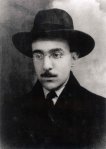
It also depicts the poet not as Pessoa himself but as Álvaro de Campos, one of the heteronyms, who appears in the film as a separate person, looking just like the man himself.
Ontem, escrevi um texto sobre Humberto Delgado, o “General sem Medo”. Na mesma altura, os aderentes da outra ideologia extremista, o comunismo, alcunharam-no de General Coca-Cola, troçando dele por ser um fantoche da OTAN* e dos EUA.
Mas décadas antes disto, tinha havido mais uma história interessante sobre a bebida e a reação portuguesa ao capitalismo americano. A Coca-Cola foi lançada no mercado português em 1927. Naquela altura, Fernando Pessoa era um escritor comercial além de ser um poeta (ou melhor “além de ser muitos poetas”) e escreveu um slogan para a marca: “Primeiro estranha-se, depois entranha-se”**. É um bom slogan, mas implica algo sobre o produto cujo ingrediente principal era basicamente cocaína: era muito viciante. O governo de Salazar já pensava em proibir o refresco, mas o slogan confirmou a decisão. Foi banido durante o resto da época da ditadura e não foi vendido no país até 1977, quando Mário Soares, então primeiro ministro da República, negociou um empréstimo de 300 mil dólares.
A cronologia é confusa: uma página tem uma imagem do Soares a apertar a mão do Presidente Ronald Reagan, mas Reagan passou a ser presidente em 1981. Os motivos também são confusos. Uma página deu impressão de Pessoa ter tentado derrubar o governo Salazarista com o slogan. Duvido disso. Suspeito que a maneira de contar a história depende do escritor e da sua opinião de Pessoa e do capitalismo americano. Pessoa escreveu um slogan para a marca. Então, isto significa que ele gosta da bebida? Ou que foi um ato de sabotagem? Salazar baniu-o porque era anticapitalista e queria proteger as empresas nacionais? Ou porque foi um capitalista que cedeu sob pressão do poeta? Os comunistas falam mal da Coca-Cola porque é uma ferramenta do capitalismo ou porque preferem o Compal?
*OTAN is NATO in portuguese but NATO is often used just because that’s the standard way of writing it and, after all, it’s an international organisation.
**How to translate this? The “-se” pronouns effectively make the verbs able to be used without an object, and the two verbs are cognates of “estranges” and “entrances”. First it estranges then it entrances… Hm, it doesn’t sound idiomatic does it? First it seems weird, then you’re hooked. Something like that is probably better.
Humberto Delgado foi um marechal da Força Aérea, conhecido como “o general sem medo” por causa da sua coragem na oposição ao regime Salazarista. Mas a sua carreira seguiu um caminho rumo de altos e baixos* da cena política do século XX. O marechal participou no movimento militar de 1926 que suplantou a República parlamentar com uma ditadura militar que daria lugar ao Estado Novo poucos anos depois. Delgado participou neste movimento com entusiasmo, criticando tanto os republicanos quanto os monárquicos, apoiando as políticas do novo estado e escrevendo um livro sobre (A) Pulhice do Homo Sapiens e a necessidade da liderança de Salazar. Elogiou Hitler, não só no início do seu regime, mas durante os primeiros anos da Segunda Guerra Mundial.
Mas, no decorrer daquela guerra, a simpatia do marechal passou para os Aliados. Eh pá, mais vale tarde do que nunca. Apesar do Estado Novo ser neutro durante a guerra, cooperou, até certo ponto, com os aliados. Humberto Delgado representou Portugal em vários projetos, incluindo a instalação das bases áreas nos Açores que ainda existem nos dias de hoje.
Após a guerra, continuou a sua obra em vários cargos no governo, no serviço diplomático e na OTAN.
Em 1958, candidatou-se nas eleições contra o candidato do regime, Américo Tomás, tornando-se o foco da oposição ao Estado Novo. Recebeu um nível esmagador de apoio público, mas surpreendentemente perdeu, tendo recebido apenas 23% dos votos, o que levantou suspeitas de fraude eleitoral. No ano seguinte, Delgado pediu asilo político no Brasil por causa das ameaças dos seus inimigos políticos.
Convencido de que o regime não poderia ser derrubado por meios democráticos, o marechal deu apoio à ação revolucionária, incluindo a Revolta de Beja em 1962. Tentou regressar ao país em 1965 mas foi assassinado pela PIDE perto da fronteira com Espanha**. Foi enterrado em Espanha onde permaneceram os seus restos mortais até 1975, quando foram transferidos para o Cemitério dos Prazeres em Lisboa.
*The highs and lows – this is a fixed expression.
**It was pointed out that, since Portugal only has one country on its border I could drop the “com Espanha” here. I’ve left it though, because I’ve said he was in Brazil. I guess it removed ambiguity about whether he was killed early in his journey, after setting off from a border town in Brazil or something, but this is good advice in most scenarios, I think.
Someone told me that, given my proclivity for puns, I should check out Ana Galvão.
There are some videos online of her in a room and they are very dad-jokish, so if you like that, you might like this, but if you don’t, look away now, because this is just raw punnage from start to finish. I’ve put explanations below, partly to make myself understand them and partly for anyone who shares my love of crap jokes but maybe can’t follow what’s being said. I struggled a bit with some of them. If anyone thinks I’ve got any wrong, let me know in the comments!
She’s one of the co-hosts on this show, As Três de Manhã, so she’s not the person in the main frame of the video (That’s Joana Marques – even I know that) but she’s in the bottom-right corner, on the left.
1
Q. What do you call an epic shop that sells persianas (blinds or shutters on a house)?
A. Adamaestores – what? OK, Adamastor is like a giant sea monster who appears in Camões’s epic Os Lusíadas. It’s big, so I guess that explains the “epic” bit. Store explains the shop but but what does adamae have to do with shutters? A da Mãe? Do only mothers like blinds? I don’t get it. Nah, I was really “a bater na porta errada” with this one. Estores are shutters. So it’s just a pun on Adamastor and estores.
2
(Talking about someone called Lady Betty) In this case, I’m an analfabetty. Analfabeta means illiterate.
3
Q. What would the São Silvestre (a running race in Brazil) be called if all the participants were big strong men?
A. São Silvestre Stallone. Easy one.
4
So when you say I drink crazy teas… A crazy tea is a chálupa
Chá is tea of course, and I’ve talked about the word chalupa in a previous post.
5
Q. Do you know what you call someone who writes hate on the Internet and eats minty chocolate?
A. An After-Hater. Probably easy although I didn’t know they sold after eights in Portugal!
6
I want to introduce you to the father of João Paulo Sousa. It’s João “Pai-lo” Sousa, just a splice of Pai with Paulo.
7
“No melhor pano cai a Sancha” As Joana says, this doesn’t make sense but it’s based in an expression: no melhor pano cai a nódoa” Which means The stain lands on the best cloth. It’s a sort of pessimistic phrase like “the toast always lands butter side down”
8
Q. If I had a tea shop that was mine, what would it be called?
A. TisAna Galvão. Tisana is an infusion like a tea or herbal… Concoction.
9
Q. (Talking about the decline in coaching as coaches lose their clients) And do you know where the coaches will go when they no longer have clients?
There’s another video here but they’ve disabled embedding so I can’t post the whole thing. Here’s a breakdown:
1
Joana: It’s all dazzling for Emanuel. Now then, Ana, “Deslumbrante”
Ana: “Lumbrante”. (Deslumbrante means “dazzling” but it works as a dad joke because it sounds like “Diz ‘lumbrante'”)
2
Joana: Well, there’s chouriço-flavoured tea
Ana: Chá-riço
3
Caller: It’s a question of character, isn’t it, ending a marriage of 12 years by email
Ana: it’s not about character, it’s about characters.
4
Some slightly confused stuff about “Mick de Câmara Pereira” (pun on Mico de Câmara Pereira, a fadista who comes from a very aristocratic and well-connected family, as far as I can tell. I’d never heard of the bloke before, but that’s what Zé Google tells me, anyway)
5
Q. What do you call the automobile stand of a magician?
A. Car Tola.
A Cartola is a top hat. Car is obvious. Tola can mean a few different things. Usually when you see it it’s the feminine version of “tolo” meaning fool or foolish. It can also mean kinds of wood. Stand de automóveis can be a car showroom, but a stand more generally is usually used for a stand at an expo or a fair so I guess we’re thinking wood, wooden table, dais… Something like that. Oof. Hard work, this one!
6
Joana: He got a hug from Bruce Springsteen
Ana: You’d better believe it! An “Abruce” (just a pun on abraço and Bruce, obviously!)
7
There’s a tea-house in Alentejo. It’s called the Chá-Parro. Chaparro is a kind of small oak. There are restaurants called Chaparro in Alentejo, but I guess just because a lot grow there, maybe farmed for their bark, to use as corks.
Well, you’ve made it to the end. I admire your fortitude.
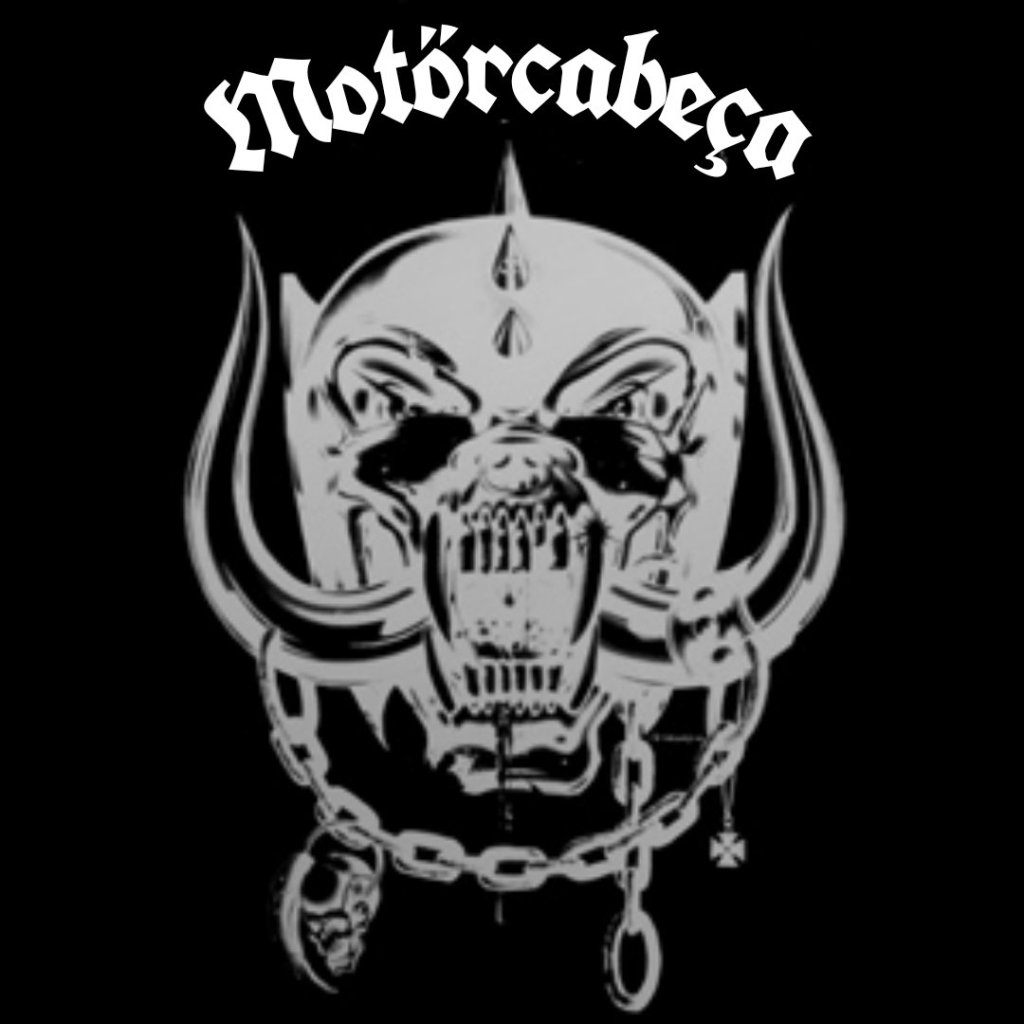
I have a book somewhere around here that is in (Brazilian) portuguese and it has umlauts in it. Actual, honest-to-god, heavy-metal style umlauts.
The Umlaut – or Trema in portuguese – is the pair of dots that appears above some vowels, mainly in germanic languages. They change the sound of the vowel, usually allowing it to be sounded instead of blending into another vowel like a diphthong.
As far as I can tell from the book, the Brazilians mainly seemed to use it in situations where you have a qu sound but you really want to pronounce the u. So there would be a difference between the que in “Freqüência” and “queda”: in the first it would sound like the que in the english word “frequency’, but in the second it’s just more like a standard que. It was dropped from european portuguese orthography in 1945 but the Brazilians kept using it, officially till the most recent acordo ortográfico. Now, I’ll let you speculate about whether Brazil’s decision to hang onto the Umlaut in 1945 might have been related to an influx of new arrivals from an entbusiastic umlaut-using european country at around that time, but I couldn’t possibly say.
Anyway, it’s officially baninated, but you can occasionally see examples in the wild. Here, for example.
There’s a proverb in portuguese that goes “De Espanha, nem bom vento, nem bom casamento”. From Spain, neither good winds nor good marriages.
I’m not sure about the winds. Where can a wind come from? Sea breezes off the Atlantic are probably OK but winds coming from from the south must be pretty hot. I doubt an easterly wind is going to be too bad in comparison. As for the marriage bit, I think it mainly refers to marriages between the royal houses. Occasionally they have cast a shadow over Portugal’s independence, but Portugal has been a republic for a century and it still persists. Odd. It’s a good one to throw out if you want to tease someone for their hispanophilia though.
Todos os anos, arranjo uma caça aos ovos de Pascoa em casa. Consiste numa sequência de pistas. Cada uma aponta à próxima e tem um ovo pequeno. Afinal ela chega ao último ovo o que é maior.
Problematic gif
Estou ligeiramente triste porque a minha filha tem 17 anos e daqui a um ano não irá querer uma caça de ovos. Ainda por cima é possível ela não estar em casa connosco porque será uma estudante numa universidade na Escócia.
Eu e o Coelho de Páscoa passaremos o dia em casa a chorar e a comer chocolate para abafar as dores nas nossas corações.






 Luso
Luso 