Tenho tentado muitas vezes recentemente correr 10 quilómetros dentro de uma hora, mas em corrida após corrida os meus tempos tenho andado do lado errado da hora. Pois, tenho meio século*. Quiçá não deva estar assim tão chocado com** o meu declínio! Mas enquanto há vida há esperança. Ontem finalmente atingi o meu objetivo. Depois de passar 5 semanas a treinar e a evitar hidratos de carbono e de ter perdido quatro quilogramas, fiz mais uma corrida num parque, à*”” chuva e cruzei a meta em 57:05. Muuuuiiito mais rápido do que o normal. Fiquei tão orgulhoso. Ainda há vida nestas pernas velhas.
(quando os organizadores deu me o meu número pessoal, foi 666. Que susto! Espero que a minha vitória não seja devida a Satã)
*=Tenho meio século sounds better than tenho um meio século – I have half century = I’m half (a) century old.
**=chocado com is another of those situations where the preposition isn’t what you expect. It’s “shocked with” not “shocked by”
***=and another! At the rain, not in the rain.
I got my clock time about 5 days later and it was even better! Under 56! Hail Satan!
I’m a 40 days into my long march to C1 proficiency. I’m doing pretty well. Here’s what I’ve been doing in each of the goals:
Make a new Twitter account, tweet only in Portuguese – Done! I’ve been updating daily, trying to pass as an illiterate Portuguese guy. 52 followers so far and nobody has come out and denounced me as an imposter but I daresay they are thinking it. I did have one person – a Brazilian – refer to me a a Tuguinho, which I enjoyed. She was a nutjob though so it probably doesn’t count.
Watch one Portuguese movie or series episode per week. Done! So far, half way through a series called Crónica dos Bons Malandros and I’ve watched one film. I don’t watch much telly generally so this is hard work.
Finally finish “A Actualidade em Português*” Done!
Then do one esercise of Português Atual* C1 or one from this course per day. Done! I’ve hit at least one exercise per day, usually quite a lot more. I’m about two thirds of the way through the book now and I’ll start on the course next.
Only read Portuguese books (exception for work-related books that I need to read for career development). Done. I’ve read no books in English since the start of the challenge apart from a work-related book about spreadsheets.
Listen to mainly portuguese audio. Could probably be better tbh. I’ve listened to quite a lot but it’s still in the minority.
Memorise one Portuguese poem per week. I’ve done four: Coroai-me De Rosas by Ricardo Reis, Segue o Teu Destino by the same author, Flagrante by Antonio Zambujo and Tenho Pena de Quem é o Meu Amigo by Gregório Duvivier. So I’m one short. This is really painful to be honest.
Write something each day on the Portuguese Writestreak subreddit. Done! My streak is up to 40 days now.
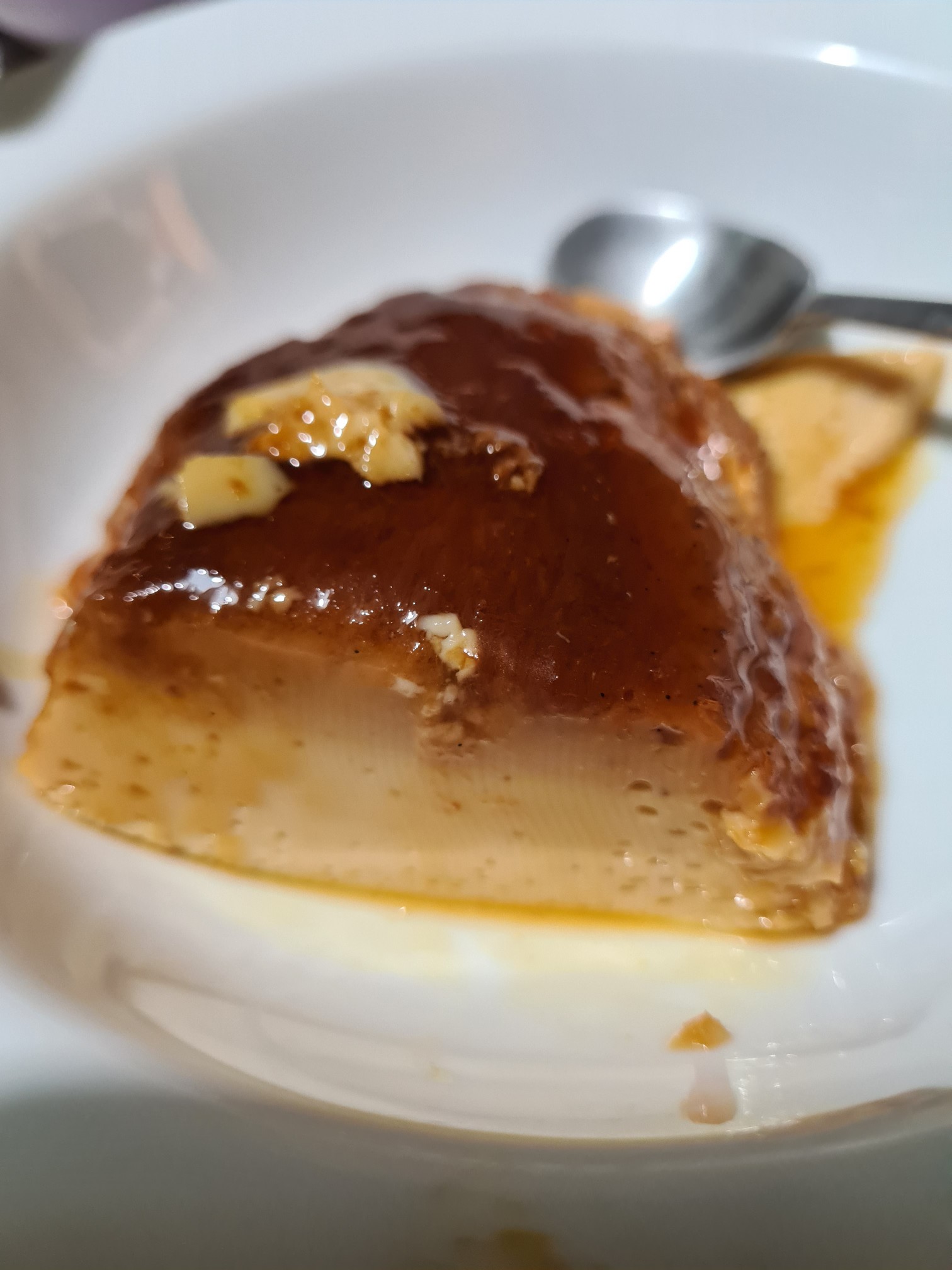
I’ve done some side-quests too! My first one was the project I did to try and understand the outline of Portuguese politics; then I went to see a night of (mostly) Portuguese music and this week I tried my hand at cooking a pudding called Pudim de Leite Condensado from a Portuguese recipe.
Behold its majesty!
Pudim de Leite CondensadoThe goodness within!
So that’s how I’m doing. The schedule is a lot easier than I expected. I’m finding it a faff to fit the weekly goals in, especially now I’m in full time work again, but I’ll keep plugging away!
I thought I’d published this ages ago but then when I went to look for it I couldn’t find it, so here you go, slightly late. It’s a two-parter. I wrote one text before the concert and a second after. There are notes at the bottom about some of the corrections
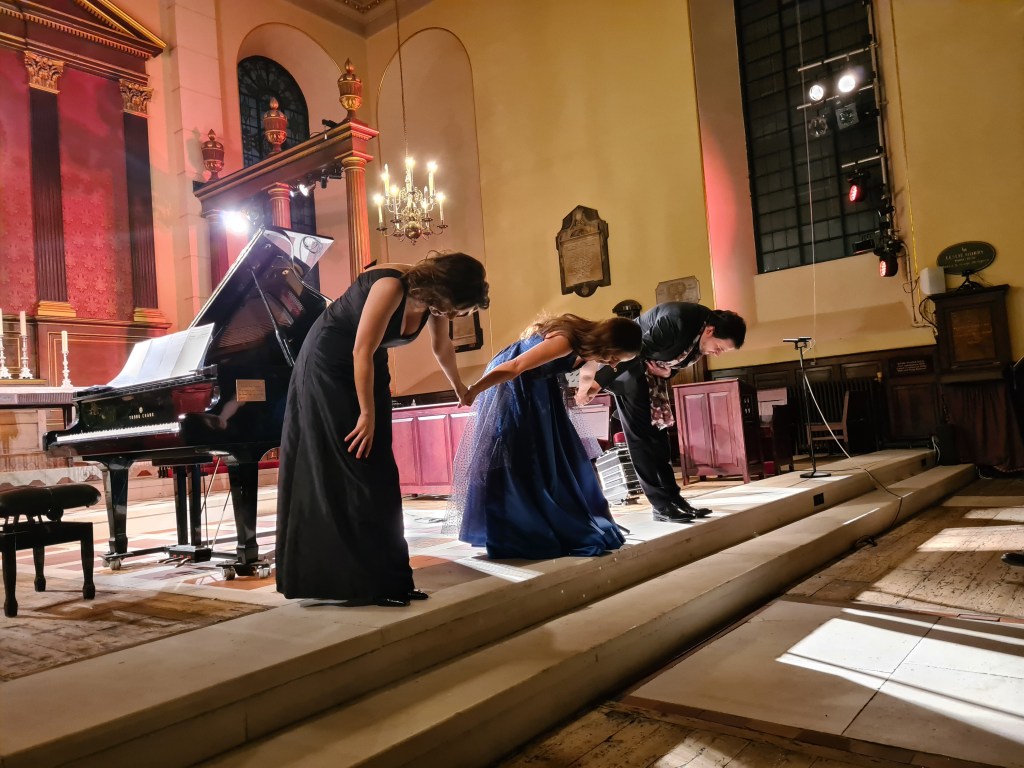
Lara Martins at St Paul’s Church Covent Garden
Hoje à noite (à hora de jantar, especificamente*) haverá um concerto da Lara Martins na igreja de São Paulo em Covent Garden. A Lara é uma atriz e cantora que protagonizou a Carlota no espectáculo The Phantom of the Opera (o Fantasma da Ópera) durante muitos anos. Uma vez que sou membro da Sociedade Anglo-Portuguesa cá em Inglaterra posso entrar sem pagar (mas paguei na mesma com uma doação porque os teatros precisam de dinheiro depois da pandemia) A cantora vai apresentar o seu novo disco, “Canção” no qual ela canta duas músicas de Daniel Bernardes, as Treze Canções de Amor de Camargo Guarnieri (também em português pois é brasileiro) e mais quatro (quatro!!!) em espanhol, escritas por um argentino chamado Astor Piazolla. Vou levar alguns trapos comigo para enfiar nos ouvidos** e tapá-los quando ela cantar noutra língua.
~~~~~~~~~~~~~~~~
Fui ver um concerto ontem à noite. Cheguei cedo ao*** centro da cidade e andei à procura de comida. A certa altura****, durante este processo de obter alimentos, perdi o meu livro mas não me apercebi do vazio no meu bolso até mais tarde. Enquanto um rato ia mordiscando o meu livro perdido num beco qualquer eu cheguei à igreja onde encontrei uma mulher diante da porta. Era a própria Lara Martins! O concerto foi fixe. Ela cantou com o compositor Daniel Bernardes, entre outros. Fiquei tão feliz por estar num evento público assim com outras pessoas (apesar de sermos poucos e estarmos bem separados!) Foi organizado pela sociedade Anglo-Portuguesa. A voz da Lara***** é incrível, a música bonita, e a igreja/sala de concertos lindíssima.
* =Meh, well it was my dinner time, although the corrections pointed out that Portuguese people tend to eat later, and restaurants open later, so if you arranged to meet “at dinner time” you’d probably miss each other by an hour or two.
**=I wrote “nos meus ouvidos” but you have to say “stick them in the ears” not “stick them in my ears” in Portuguese
***=Another unexpected preposition change: I always want to arrive in the centre of town but in Portuguese you arrive at the centre of town.
****=I wrote “algures” like we might say, in a slightly informal style, when describing a series of events “somewhere in there I lost my book”. I should have known this would be wrong.
*****=I wrote “a sua voz” but of course, the way Portuguese possessive work, it sounded like I was saying “the Anglo Portuguese Society’s voice” because it follows straight after a sentence referring to the organisers. I can’t even fix it by saying “a voz dela” because society is feminine and singular too. Gah! I suppose I really should have got my thoughts in better order, but failing that, I just have to be more specific and say “Lara’s voice”
Found our today that the word nora has two meanings. One is Daughter-in-law (I already knew this one) and the other is Waterwheel. Why those two things? I dunno.
Anyway, i was straight in there with a pun. I asked my wife to proof-read it for me to make sure I hadn’t ballsed up the grammar too badly. She’s very patient.
Here’s a confusing instance of double-meanings from the C1 exercises.
The question is to find synonyms for a list of words. One of the words is “Confuso” and the options it gives are (a) desordenado (b) esclarecido (c) desarrumado (d) obscuro.
The answer is obviously (a) right? Right? Well, no, it’s (d) according to the book. I went to the Porto Editora dictionary and it seems to support my claim.
But wait, what’s that in the second row?
Nooooo!
I posted on the Portuguese subreddit in a we-was-robbed-ref kind of way and most people agreed that (d) was the best answer.
Priberam gives the same two definitions but in a different order of precedence.
Bit of a mess really. I don’t think the question is well written but it’s worth bearing in mind that Confuso has a slightly different weighting from its English equivalent.
A review of the book I’ve been reading. Thanks to Dani Morgenstern for the corrections.
Acabo de fechar a capa deste livro juvenil. É um livro daqueles que não tem um enredo muito bem definido mas está cheia de emoção. O narrador é um adolescente cujo avô faleceu recentemente. O rapaz, que se chama Edgar (também conhecido pela alcunha* “Rígel”) está a correr e a pensar. O livro é um registo dos seus pensamentos. Afirma que o dia em questão era simultaneamente o pior e o melhor dia da sua vida. O pior porque o seu avô desapareceu pela chaminé do crematório acima** e o melhor porque a Joana (irmã do seu amigo Júlio) beijou-o. Os sentimentos saltam na sua cabeça, tornando cada vez maior e o próprio Edgar sente-se maior. É o Rígel, uma estrela, uma supergigante azul, 18 vezes maior e milhares de vezes mais brilhante do que o sol. A corrida ajudá-lo a fazer sentido dos seus pensamentos até ao final quando está capaz de falar sinceramente com a Joana.
Supergigante de Ana Pessoa
* I originally used “apelido” here, since that’s the translation gtranslate gives for nickname. At the time I thought this was weird since apelido also means surname. Sure enough, the person marking the work was confused and said Alcunha was the better choice. Apelido is only used that way in Brazil, it seems.
Quite a long text, this. I split my review up over three days. Thanks to Dani Morgenstern for the corrections. I’ve put quite a few footnotes at the bottom where the mistakes were interesting enough to warrant it.
As you’ll see in the text, I had quite a bit of trouble getting hold of a copy due to the only online supplier, FNAC, refusing to guarantee delivery due to the supply chain mess we have referendummed ourselves into, so if you’re in the UK and interested in this, you might have to wait a while.
Tive oportunidade de ver este filme num festival de cinema português há dois anos mas estava doente. Logo depois, chegou a covid e a estreia do filme foi andou adiada*. Finalmente, quando reabriram as lojas online, havia problemas com as encomendas internacionais nesta ilha parva. Enfim, depois de tantos obstáculos, a minha sobrinha (que é muito simpática) entregou-me uma cópia** depois de fazer férias na Madeira. Tenho tantas coisas para dizer! Mas não quero sobrecarregar as professores, portanto irei escrever mais amanhã e provavelmente fico com alguns pormenores até o dia a seguir***!
O filme que mencionei ontem conta a história de um grupo de estrangeiros que chegam a**** Portugal em 1975 para participar na criação de uma melhor sociedade depois da queda do Estado Novo. São marxistas e passam o verão numa quinta cooperativa. Os protagonistas apresentam-se no início do filme. “O meu nome é Mick e tenho 18 anos” diz um idoso de sessenta e tal anos, e os outros também se declaram “jovens” de grande idade. Fiquei curioso, mas acontece que os realizadores tomaram a decisão de usar habitantes da aldeia, agricultores das cooperativas e até uns estrangeiros que realmente fizeram a peregrinação ao centro da ação pós-revolucionária. Portanto, cada pessoa na tela tinha cabelos cinzentos mas protagoniza a um jovem radical e idealista*****. Além disso, utilizam iPhones e não há tentativa nenhuma de recriar o mundo dos anos setenta. É uma ideia gira, com resultados mistos. Mas vou escrever mais amanhã!
A filme tenta esboçar as atitudes dos portugueses e dos estrangeiros e das****** pessoas de diversas gerações em relação ao sexo*******. Naquela época, a Europa estava em plena revolução sexual mas Portugal tinha sido reprimido por um governo conservador e por uma igreja que andava de mãos dadas. Os estrangeiros trabalham nos campos (mesmo que sejam fracas, comparados com os camponeses) e trazem com eles a cultura da igualdade dos géneros e do amor livre. Às vezes, este contraste entre culturas é iluminador ou até engraçado, sobretudo quando o idealismo dos jovens faz parte do diálogo. Por exemplo, há uma cena em que três estrangeiras aparecem num sonho dum jovem marxista (um jovem com barba grisalha!) Afagam os seus próprios seios ao tentar seduzi-lo. “Fumo, Pedro, não só em casa mas na rua e no mercado também.” “Não há melhor método de mudar as relações de produção do que beijar em público e fazer muito amor”. Infelizmente, há cenas um bocado menos efecazes e até embaraçosas, mas isso não me importa muito. Adorei o filme e fico contente por tê-lo visto.
*adiado (delayed) not atrasado (late)
**I used the word “exemplar” which is the word I usually use for a copy of a book but although not fully wrong, “cópia” was given as a suggested improvement in the context of a film.
*** O dia a seguir (the day to come) not o dia depois (the day after)
****They arrive “a Portugal” not “em Portugal”. A good example of an unexpected preposition change between languages. We would definitely arrive in Portugal, not at it.
*****I started off translating, in my head “each one… Had grey hair but they portrayed…”. But in Portuguese you don’t tend to use the “they”, so this shift from singular to plural in the same sentence doesn’t really work, and my “protagonizavam jovens radicais…” got switched to “protagonizava um jovem radical…”.
****** I keep making this mistake. In English we would say “of the Portuguese and the foreigners but in Portuguese it has to be” of the Portuguese and of the foreigners.
******* it would sound weirdly formal in English but the “em relação” is necessary here.
I updated the list of portuguese graphic novel recommendations. I keep seeing peeps on social media asking for decent easy reads, and I find it’s helpful to have a list I can point to. It’s almost twice as long now!
If you look over there on the right 👉 on a laptop or down on a phone 👇 you’ll see there are a few of these resources pages now, covering learning resources and so on.
Here are a few expressions gleaned from the C1 book
Em casa de ferreiro, espeto de pau (In The blacksmith’s house, the skewers are made of wood) People who have skills they use in work don’t use them for their own benefit.
Cada cabeça sua sentença – everyone has their own opinion
Nem tudo o que luz é ouro – all that glimmers is not gold. Easy one, this. The only thing that grabbed my interest was that “luz”. I’d only ever come across this word as a noun so I had a hard time choosing it as an option in the exercise, but it’s actually part of the verb “luzir” in this context.
Quem canta, seus males espanta – is another that threw me since it sounds like it’s saying “whoever sings will shock you with their evil deeds” which is probably right for Michael Jackson, but “espanta” can also mean scare something away or chase it away, and “males” can be a person’s woes or troubles, not actual evils, so it just means if you sing a song you’ll chase your blues away. OK, cool.
Zangam-se as comadres, descobrem-se as verdades – When the godmothers start arguing, the truth will come out. In other words, when people start getting heated they tend to say things they would normally keep to themselves
Ladrão
O ocasio faz o ladrao – the opportunity makes the thief. This seems to be used slightly differently. If you look around various sites, some people take it as meaning that a person driven by circumstances might steal but isn’t to be regarded as a born thief; others take it as more like “if you don’t take care of your stuff someone is bound to nick it”. A middle way seems to be “People might be tempted to steal if there isn’t a strong motivation for them not to”. That seems to be how this guy interprets it anyway,and he mentioned a reference by Machado de Assis who says “Não é a ocasião que faz o ladrão, o provérbio está errado. A forma exata deve ser esta: a ocasião faz o furto; o ladrão já nasce feito”.
It’s definitely a pessimistic expression, anyway!
Em águas de bacalhau – I keep seeing this one and forgetting what it means. Apparently it comes from the fact that cod fishing used to be very dangerous, back in the day, and you were quite likely not to come back from a fishing trip if you went off to the cod fishing waters. So if something “deu/ficou/continuou em águas de bacalhau” then basically it came to nothing and had no result.
Trazer água no bico – bring water in your beak – do or say something sneaky or with a hidden agenda
Dar água pela barba – Give water in the beard (“sweat through the beard, I guess?) If something dá água [pela barba, it’s something very complex and challenging
Here are a few that are easier, because they’re equivalent to english expressions
Fazer crescer água na boca – to make the mouth water
Como peixinho na água – like a fish to water
Enquanto há vida há esperança – where there’s life there’s hope
Em terra de cegos quem tem olho é rei – in the land of the bline, the one-eyed man is king
Cao que ladra nao morde – his bark is worse than his bite (lit “A dog that barks doesn;t bite”)
Quem semeia ventos, colhe tempestades – sow the breeze, reap the whirlwind





 Luso
Luso 