Posted in Portuguese

As Telefones – Djaimilia Pereira de Almeida

Today’s post is a review of “As Telefones*” by Djaimilia Pereira de Almeida.

Este livro deu-me água pela barba**. É fino mas o vocabulário é difícil. Mas, apesar de ser uma leitura desafiante, não fiquei aborrecido porque a autora, Djaimilia Pereira de Almeida, sabe escrever. As frases fluem bem e há momentos de humor, tal como a conversa entre a mãe e a filha na qual a mãe explica que espíritos malignos começam a voar às três de manhã. Afirma que estes espíritos entram pelas janelas abertas e “aproveitam-se das mulheres que dormem sem cuecas”. Acrescenta que essas mulheres dão à luz (ou seja dão à escuridão) bebés que elas amamentam no mundo dos espíritos como amantes do diabo. Quando se acordam nem sequer percebem que já não são elas mesmas, mas estão a viver uma vida paralela no mundo das trevas. Sim senhora.

As telefones de Djaimilia Pereira de Almeida
As Telefones

Mas além destas opiniões malucas da velha, há uma sensação comovente perante a relação entre mãe e filha que se conduz na série de conversas por telemóvel e pessoal.

* Wait, what? Telefone is a masculine word so why isn’t it Os Telefones. I asked about this on reddit r/Portuguese and nobody was very sure, not having read the book, but the popular theory (best explained by u/Uyth) was that it was “Uma Alcunha” – a kind of nickname, usually based on some physical characteristic of a person (think “Blackbeard” in English). Why would that be? Well, sometimes you’ll see a placename like “O Arco do Bandeira” where the article doesn’t match the noun. In this example, Bandeira means flag and it is a feminine word. The reason for the mismatch is because Bandeira isn’t a word as such, it’s someone’s name – a businessman named Pires Bandeira had the arch built in the Baixa Pombalina district and it is still named after him today. If the person has an alcunha, it works the same way. Say if someone has been given a nickname which is a feminine word (say “carica”), but they are male. He would be called “o carica” – the feminine word gets a masculine article because of who the name is attached to. So in the title of the book, maybe the Djaimilia Pereira de Almeida is referring to these women as The Telephones because the book is about their long-distance conversations – and that’s why she used “As” in place of “Os”. Best guess. It isn’t spelled out in the book, but that’s what it seems like.

**Não costumo usar barba mas demorei tanto por causa de olhar no dicionário tantas vezes que a minha barba cresceu e já pareço Moisés.


Posted in English, Portuguese

Expressões

Another batch of expressions from the C1/2 Textbook I’m using

Passar pelas brasas (pass through the coals) =have a little sleep

Dar barraca (give a shed) = provoke a scandal

Surdo como uma porta (deaf as a door) =deaf as a post

É outra loiça (It’s different crockery) =much better (food)

Estar em maus lençóis (be on bad sheets) = be in a sticky situation

Falar de poleiro (speak from a perch) = Speak arrogantly, get on your high horse

Ser um bom garfo (be a good fork) = be a lover of good food

Eira
Eira

Sem eira nem beira (without a floor or a roof*) = very poor

Estúpido como uma porta (stupid as a door) =daft as a brush

Atirar o barro à parede (throw the clay at the wall) = test the waters to see if someone might be receptive to your idea

De cortar à faca (you could cut it with a knife) =same as the English expression – when the atmosphere is so tense or oppressive that you feel like you could cut it with a knife

Cascos de rolha (corked casks) = a long way off.

De fio a pavio (from string to wick) =from beginning to end. (I think we’re supposed to think of a candle burning all the way down)

Entrar em parafuso (go into a screw) = go into a tailspin, panic

*=There was a bit of debate over this one. Eira is a kind of floor or patch of ground in a village, where harvested grain is threshed and sieved ready for storage. Beira is a word we usually hear when talking about the seaside (“beira mar”) but it can be the eaves of a roof. The phrase is sometimes expanded to “Sem eira nem beira nem ramo de figueira”, adding that the poor bugger doesn’t even have the branch of a fig tree.

Posted in English

Obscure Word of the Day

The book I’m reading is pretty hard. I judge these things in how often I have to reach for the dictionary and this one is about three times per page. I’ve just come across a really surprising word: “pechisbeque”.

Duas camisolas de malha iguais, de cores diferentes, um pólo cor-de-rosa, uma caneta, um par de brincos de pechisbeque, dentro de uma caixinha acolchoada, dois perfumes em miniatura

As Telefones – Djaimilia Pereira de Almeida
Pinchbeck jewelry
Pinchbeck / Pechisbeque

Not only is it unfamiliar, but what it’s describing isn’t even something I’ve come across in my half century of life. The English equivalent is Pinchbeck and its an alloy of copper and zinc that resembles gold. Is it just me? I’d never heard of it.

Posted in English

Digital Nobhead

I quite enjoyed the roasting this digital nomad bro got after posting this rant about how old cities are old, and there’s a lack of sausages in Lisbon but at least they speak good English.

Posted in Portuguese

Problemas de Velhos

Hm, well I must have been feeling my age when I wrote this one. Thanks to Patis12 for the corrections

Ao envelhecermos, os nossos corpos traem-nos. Acordamos num dia e reparamos num cabelo cinzento no pente. É depois seguem-se mais.

Para mim, o pior é o modo como o meu corpo está a enfraquecer. Sinto-me sem força e sem capacidade aeróbica. OK, no meu caso não é assim tão surpreendente, mas ainda assim, quem me dera ter desfrutado das habilidades do meu corpo quando tinha mais vigor!

Tento fazer um treino por dia e controlar o que como. Isso não me vai solucionar os problemas todos, mas ajuda-me, até certo ponto e pelo menos não quero piorar a situação por estragar a saúde com falta de exercício!

Posted in Portuguese

Tino de Rans

Here’s a text and some supporting blather about Tino de Rans. Thanks to Dani_morgenstern for the corrections and to about half of Portugal who explained what his name meant.

Falei há uns dias sobre termos ido a um restaurante celebrar o aniversário da minha cunhada. O restaurante chama-se “O Tino*” é, ao que parece, é bastante famoso. Dois dias depois da nossa visita, o Pep Giardola jantou lá. Li a página dele no Facebook e reparei numa foto do dono com o Vitorino Silva, também conhecido por Tino de Rans.

O tipo** em questão é um ex-autarca do partido socialista na freguesia de Rans em Penafiel, a sua terra natal. Ao final de 16 anos, desfiliou-se do partido e concorreu como independente desde 2009 até 2019, (incluindo como candidato nas presidenciais de 2016) e acabou por estabelecer um novo partido, o RIR (“Reagir, Incluir, Reciclar”)

A sua entrada no palco nacional deu-se*** em 1999 quando abraçou o António Guterres (naquela altura, Primeiro Ministro da República, atualmente Secretário Geral das Nações Unidas) depois dum discurso acalorado. Tornou-se uma figura mediática: lançou uma autobiografia, participou em programas de notícias e de entretenimento (incluindo vários “reality shows” como o Big Brother). Até lançou um disco chamado “Tinomania”.

Apesar de não ter ganho mais do que uma fraçãozinha da votação nas presidenciais de 2016 e 2021 e apesar de se ter demitido da liderança do partido há uma semana, o Tino tem uma reputação de ser honesto e simpático.

*I was rightly criticised for not addressing the fact that both the restaurant and its patron are both called Tino, so I’ve rewritten it a bit to clarify. Yes, it’s just a coincidence. He doesn’t own it or anything as far as I’m aware.

**I keep using “gajo” but I think maybe tipo is nicer.

***I just wrote “começou” here but this suggested improvement is nice.

Tino de Rans
Tino de Rans & RIR

I wondered about the guy’s name. Tino de Rans? Wha’? I know Tino is a word so I looked it up and asked the following question on r/portuguese

Tino

Há 3 formas desta palavra.

(1) Juízo /ideia/tacto (2) acto de tinir (3) vaso em forma de pipa cortada pelo meio

Quando o Vitorino Francisco de Rocha e Silva refere-se a si próprio como “Tino de Rans”, o que é que ele quer dizer? Rans é uma freguesia, não é? Então…

O juízo de Rans? (homem sagaz de Rans???)

O som vibrante de Rans?

O meio-pipa de Rans?

(nota bem: esta pergunta não é motivada por odeio do senhor Silva. Não sou TdeRansfóbico)

Of course, this was a stupid question. So much so that someone even thought I was trolling. Tino is just a diminutive name, meaning Vitorino (although it can also be short for Constantino or about half a dozen other names) so he isn’t the wise man of Rans, he’s just Vicky from Rans. Well OK then!

Posted in Portuguese

José Milhazes

Only one correction on this text, which seems a little surprising. When that happens, I always wonder if there might be a couple that the corrector missed. Anyway, caveat emptor as they say in Aberdeen. Thanks to caveat for that correction. I enjoyed writing this one.

Ontem, o jornalista e escritor José Milhazes disse um palavrão em direto nas notícias. Confesso que nunca ouvi falar dele portanto decidi fazer uma breve pesquisa. Regra geral, o jornalista não diz porcarias no ar, mas estava lá para comentar na guerra atual na Ucrânia e parte desta conversa tocou numa manifestação de jovens num concerto na Rússia. Disse “A guerra que vá para o caralho”. A apresentadora, Clara de Sousa gaguejou, espantada, mas o Milhazes explicou que estava a traduzir, literalmente, o que os jovens estavam a gritar. As redes sociais soltaram uma gargalhada coletiva.

The original video. The word “ganda“, by the way, is just a corruption of “grande”. Its used a lot in this sort of situation, when someone is “o maior”.

Milhazes iniciou a sua carreira como tradutor de obras literárias, políticas e cinematográficas russas para português. Passou a residir na URSS em 1983. Depois, em 1989, começou a escrever crónicas e tornou-se correspondente do Jornal Público, logo depois do estabelecimento do mesmo no ano seguinte e continuou neste cargo na Rússia após a queda da “cortina de ferro”. Escreveu vários livros sobre a união soviética e a sua influência na África durante a Guerra Fria. Desde 2015, mora em Portugal e é comentador de política externa, entre outras coisas.

Posted in Portuguese

Tão Frio, o Rio

I’ve written a couple of Portuguese texts recently about the experience of having the book “So Cold The River” my Michael Koryta read to me (in English, natch) by my daughter and then, later, watching the film. Here they are combined, and I’ll put footnotes at the bottom.

O Livro

So Cold The River

A minha filha estava a insistir* em me ler um livro com o qual está obcecada. Não me apetecia mas sempre me persuadiu. É bom. O autor escreve bem. Acho que não é um livro que escolheria, mas gosto do seu entusiasmo portanto não me importa!

Texto ditado pela minha filha

Hoje a minha filha leu-me uns capítulos do seu livro. É o melhor livro que já li. Há uma personagem que foi protagonizada (no filme) pelo Andrew J West**. O homem tirou a camisa e foi o melhor momento da minha vida.

O Filme

Lembram-se que já falei sobre a minha filha que é tão obcecada com o seu livro que insistiu em ler-me a história toda?

Boa. Depois de ter terminado, vimos o filme. Que desilusão! Toda a gente*** já sabe que um filme é sempre pior do que o livro mas neste caso… Eh pá… O realizador mudou a história, trocou as personagens por outras, rescreveu o diálogo numa maneira confusa, para que o argumento não fizesse sentido e cortou a tempestade que é o grande desenlace do enredo. Se não tivéssemos lido o livro não teríamos a mínima hipótese de entendermos o que tinhamos visto.

Sempre conseguimos recuperar do choque da experiência mas no futuro não vamos ver um filme pelo mesmo realizador!

*I feel like I should have just written “insistiu” here but I made a right dog’s breakfast of this sentence so I have gone with the form suggested by the two correctors instead of trying to have my own opinions!

**She only got interested in the book because she saw him in the trailer of the film. Luckily, seeing the film hasn’t put her off him.

***I wrote “todo o mundo” to encompass everyone in the world, but that’s a Brazilianism.

Posted in English, Portuguese

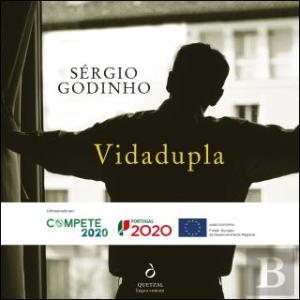
Vidadupla – Sérgio Godinho

Vidadupla de Sérgio Godinho

Here’s a review of the audiobook of Vidadupla (“Double Life”) by singer, poet, author and rennaissance man Sérgio Godinho. I listened to it on the Bertrand “Biblio” app, but as I mentioned before, it’s a bit unreliable in that it seems to pause itself when the screen dims or… Something… Something isn’t quite right, at least in the Android version, so I had to keep pinging it to wake it up. That’s probably OK at home but it’s a bit annoying if you’re gardening at the same time, as I was. If you haven’t already seen it, there’s a whole page about different sources of Portuguese audiobooks here. Thanks to Patis12 and Dani_Morgenstern for the corrections

Acabei de “ler” este Audiolivro do Sérgio Godinho hoje. É uma coleção de contos e o vocabulário é bastante fácil para um aluno do meu nível. Mas tinha uns problemas.

É que… A narradora tem uma voz hipnótica portanto (estou envergonhado por admitir) dei por mim a ficar repetidamente distraído* pelo ritmo da leitura e logo depois perdi o fio à meada. Rebobinei a gravação várias vezes mas afinal não apreciei o livro tanto quanto merece. Ou talvez sou eu que não mereço livros bons.

Bem, de qualquer maneira, gostei do que ouvi. Nem sequer sabia que o Senhor Godinho tinha escrito livros. Já ouvi várias músicas dele. É óbvio que é um homem que sabe criar coisas bonitas.