I have a few portuguese youtube channels about books that I watch on a more-or-less regular basis these days: AOutraMafalda, CreepySantos, TiagosWorld, CatInTheNet and the newest, BooksAndBeers. As I mentioned before, listening to videos and podcasts about a subject you’re interested in is usually more engaging than listening to boring aural comprehension exercises or news programmes or whatever, and I often hear about interesting-sounding books, which is a bonus.
Recently, a couple of them have suggested a tag about endorsing Bandas Desenhadas (comics, graphic novels) and since I haven’t done much speaking lately I thought I’d join in. The result is below. It’s pretty horrible. I had a good feeling about it to start with and thought I’d be pretty fluent but in the end it’s about 50% composed of me going “ummmm… ahhhhh…..” and looking at the cieling. When I do speak, I use the wrong tense, the wrong verb, mismatched adjectives… ugh! It’s a right old mess. I’m going to do more of these though precisely because I am so shit at it.
Mrs Lusk showed me this this morning. The guy doing the voiceover sounds very authentic. I don’t know who they got to do it. (video *mostly* in English with Portuguese subtitles)
I recently changed my Portuguese book tuber of choice. My new favourite is called Cat in the Net. She makes shortish videos (5-7 minutes or so) about books she has read, and that’s perfect for me. She talks at a frenetic pace but I find I can follow her accent well enough, and she is very funny, so I don’t tune out. Her latest video is about a Christmas reading challenge she’s doing with some other youtubers. There are 5 hosts and about 40 people involved on Facebook.
I don’t think I want to join the group itself, partly because I don’t want to get into Facebook (Twitter is addictive enough, thanks) but mostly because they are all in their twenties and I am easily old enough to be their dad. Well, you know, if I’d been a bit of a slag in about 1994. That’s the thing about youtube: the people who make the videos tend to be young and have young person tastes, so as much as I enjoy it as a way of honing my listening skills, I often feel a bit out of place, bordering on creepy. Hi ho.
So anyway, although I won’t be signing up, I might just follow along with the challenge and read five books – two English, three Portuguese – and make my own video (for this blog, not wider consumption) in which I talk about them in Portuguese for the practice. It’ll give me a fun structure for my language learning over the Christmas break.
The challenge is
Ler um livro que te transmita um sensacao de conforto [I thought I’d read The Small Bachelor by PG Wodehouse in English because Wodehouse is totally in my comfort zone]
Ler um livro do teu género favorito [Walking Dead book 6 in Portuguese]
Ler um livro que te faça de alguma forma lembrar o natal [A Child’s Christmas in Wales, by Dylan Thomas, in English]
Ler um livro que te faça lembrar a infancia [Histórias da Terra e do Mar by Sophia de Mello Breyner Andresen]
Ler um livro que te tenha* sido oferecido [Romance da Raposa by Aquilino Ribeiro]
*I’m interested in the use of the present subjunctive here. I wonder why they’ve written it this way. I guess it’s a slightly fancy way of saying it: “read a book that you might have been offered” rather than “read a book that you have been offered”
Li uma notícia hoje sobre o PSD (Partido Social Democrata) que queixou da câmara municipal de Lisboa. Conforme do PSD, eles construíram demasiadas ciclovias e quase nenhuma ciclistas usam-nas.
Conheço bem está acusação. É a mesma queixa usada por condutores em toda parte. Não gostam a mudança da cidade numa época de aquecimento global. Preferem os seus carros e receiam o futuro. Não preocupo-me com eles. A sua página de Facebook afirma “não é sobre bicicletas, é sobre prioridades”. Mas para mim, pareceu que foi sobre bicicletas…
Suponho o PSD preferiria gasta dinheiro em mais caminhos para Ferraris e para burros*.
*=uma piada…
Time is ticking down to the B2 exam in T minus 4 days but I fancied a break from full-on learning so here’s a translation of another song by my favourite Portuguese band, Deolinda. I was really chuffed, on listening to it the other day, to realise it has an expressão idiomática in it that I recognise from the Practice Portuguese Podcast (in this episode). The phrase is “o que tem de ser tem muita força” (marked with *** below) and it means “What has to be has a lot of force”, or more colloquially “You gotta do what you gotta do”.
It also has some fun grammar in it including the contrast between “haver de” (means “to have to” but in a vague, non-specific way as in “you have to come and visit sometime” or “I really have to fix that broken clock” and “ter de” which is much more specific, signifying inevitability or obligation: “I have to do my homework” or “You have to put clothes on, sir, you can’t come to church naked”.
There are some good subjunctives to, most obviously in the title – “Seja Agora” being expression of hope – something like “let it be now”.
Nós havemos de nos ver os dois We have to see each other
ver no que isto dá to see what happens
ficar um pouco mais a conversar stay a while and talk
Ter a eternidade para nós We have eternity to ourselves
Quem sabe, jantar Who knows, maybe have dinner…
Se quiseres pode ser hoje If you want, it could be today.
Tem de acontecer, porque tem de ser It has to happen because it has to be
e o que tem de ser tem muita força*** and what has to be has a lot of force
E sei que vai ser, porque tem de ser And I know it’s going to happen because it has to be
Se é pra acontecer, pois que seja agora And if it’s going to happen, let it be now!
Nós havemos ambos de encontrar We both need to find
um destino qualquer some kind of destiny
ou um banquinho bom para sentar or a little bench to sit on
Vai ser tão bonito descobrir It’s going to be so beautiful to discover
que no futuro só that in future the only thing
quem decide é a vontade that will decide is our own will
Tem de acontecer, porque tem de ser It has to happen because it has to be
e o que tem de ser tem muita força*** and what has to be has a lot of force
E sei que vai ser, porque tem de ser And I know it’s going to happen because it has to be
Se é pra acontecer, pois que seja agora And if it’s going to happen, let it be now!
x2
Que seja agora Let it happen now
Que seja agora Let it happen now
Se é pra acontecer If it’s going to happen
Pois que seja agora Well, let it happen now
….of translated lyrics, you could do a lot worse than have a listen to “Tu Gostavas de Mim” which is by Ana Moura and is sung in a duet with Miguel Araújo on his live album. Araújo is one of the singers in As Azeitonas who I mentioned in the last post and by the way, also the guy singing in “Bitter Portuguese Guy Sings” a few weeks back. I really like the simplicity and the dry humour of it. The whole live album is good, actually.
I couldn’t find a translation of “Nos Desenhados Animados” (“in the Cartoons”) by As Azeitonas so I made one on LyricsTranslate. I like it. It’s soppy and nostalgic and has an overwrought widdly-widdly sax solo near the end but that doesn’t make me like it less.
In the Cartoons
I want to be lucky like a cartoon
in the morning on RTP1
You’re my Tom Sawyer
And my Huckleberry Finn
And you come in a mask and a cape
Up there, there are planets without end
You are my super-hero
Without a cowboy hat
With a galleon and a bottle of rum
I was yours and nothing more
One for all and all for one
In the cartoons
I already know the end
The good pioneer
The swordsmen seizing power
and Prince Charming
Always returns to me
I am Jane and you Tarzan
The Juliet of my Dartagnan
If your horse fails you
I have so much to tell
Of the ghost beneath my sheets
Of the treasures we hide from the Spaniards
In the cartoons
I already know the end
The good pioneer
The swordsmen seizing power
and Prince Charming
Always returns to me
When the ending comes
We can change the channel
In the cartoons
It rarely rains and never – almost never – ends badly
[By the power of Greyskull!]
I enjoyed this because aside from being a good song in its own right, it’s a very rare example of a song in Portuguese that I can understand almost 100% without help
The guy singing it seems a little aggrieved with the views of the ladies in his life. Perhaps not quite ready to order his “Meninist” t-shirt online, but he’s definitely disgruntled. Well, that’s OK, we all have bad days, and he got a good song out of it, so who’s complaining? There doesn’t seem to be a translation online so I’ve done one myself
Os Maridos das Outras / Other People’s Husbands
Everyone knows men are brutes
Who leave beds unmade
And things unsaid
They’re not very astute, they’re not very astute
Everyone knows men are brutes
Everyone knows men are ugly
They leave conversations unfinished
And laundry to pick up
And they’re evasive, and they’re evasive*
Everyone knows men are ugly
But other people’s husbands, no
Because other people’s husbands are
The archetype of perfection
The pinnacle of creation
Docile creatures of a completely different species
Who always make their wives’ friends happy
And everything men don’t do
Everything men aren’t, everything men aren’t
Other people’s husbands are, other people’s husbands are
Everyone knows men are rubbish
They like music nobody likes
And never lay the table
Lower than a beast, lower than a beast
Everyone knows men are rubbish
Everyone knows men are animals
Who smell strongly of wine
And never know which way to go
Na na na na na na, na na na na na**
Everyone knows men are animals
But other people’s husbands, no
Because other people’s husbands are
The archetype of perfection
The pinnacle of creation
Amiable creatures of a completely different species
Who always make their wives’ friends happy
And everything men don’t do
Everything men aren’t, everything men aren’t
Other people’s husbands are, other people’s husbands are
*=”E vem com rodeios” actually means “they come with roundabouts”. I’m guessing the figurative meaning of this but I could be wrong.
So here’s a good example of half-understanding a song and completely missing the point. I always thought this song was about a Moorish (Moroccan, Saracen, Muslim) sorcerer of some kind, but swotting up on my Ana Moura lyrics ahead of next week’s concert, I found out that it’s not that at all. Apparently a Moura is a fairy-tale creature from old Galician and portuguese legends. Reading the description on the Wikipedia page, it sounds an awful lot like a djinn/genie of Arabic folktales, so it’s not wholly fanciful that the moor in the sense of Moorish invaders (Mouros) and the Mouro/Moura of legend are bound up in some way, but it certainly illustrates the point that relying on half-understanding most of the words in a song can be deceptive!
So I’ve finished my reading for this book blogging challenge and it’s been a brilliant source of motivation to read portuguese in massive (for me) doses. I’ve written reviews of all three books on iTalki and I wanted to make a recorded version as well to make some of the vocabulary stick, and my daughter, who is an expert on vlogging, helped me record it. It’s pretty dreadful though, I’m afraid… I’ve put it down at the bottom where it belongs
The Text Versions
I’m indebted to Natan, Wagner, Samuel, Milena, Gabriel, and especially Sophia and Rubens for their excellent corrections on all these reviews
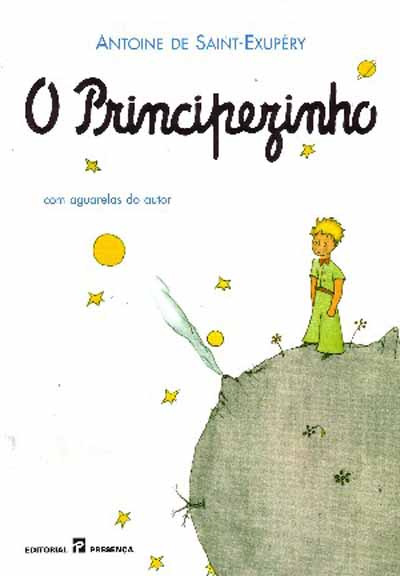
O Principezinho
O Principezinho é um livro de Antoine de Saint-Exúpery, um autor e aviador francês. Li-o em Francês quando era jovem, e mais uma vez em Inglês quando tinha uns vinte anos porque um amigo deu-me uma cópia. Agora que estou a estudar Português, comprei a versão portuguesa e li-o para parte dum desafio de leitura.
O livro é pequeno, com muitos desenhos (aguarelas) e por isso é muito fácil para um aluno com poucos conhecimentos da língua. O argumento consiste num piloto perdido no deserto. Acho que este piloto é o próprio autor do livro. O seu avião não funcionava e ele estava a tentar consertá-lo. De repente, um rapazinho apareceu. Com as suas palavras primeiras, o rapazinho – o principezinho do título – pediu-lhe que desenhasse uma ovelha. Tinha muitas dúvidas sobre a vida na terra e contou uma historia da sua vida num pequeno planeta e da sua viagem através das estrelas. No caminho, encontrou muitas “pessoas crescidas” que tinham atitudes estranhas de adultos em toda parte: interessavam-se apenas por dinheiro, no seu próprio poder e nos seus trabalhos.
No curso da história, o protagonista fez muitas observações sobre as diferenças entre as crianças e os adultos. Aos adultos falta-lhes* de imaginação. Não compreendem nada por causa da sua obsessão com números. Adoro este livro!
*=Woah! This grammar was contorted into a shape I really wasn’t expecting by the people who marked it
O Mandarim
Como disse no registo passado, eu tive vontade de fazer parte dum desafio de leitura, e por isso li dois livros portugueses. Actualmente, estou a ler um terceiro – em inglês – e vou escrever sobre ele em português mais tarde.
O segundo livro foi “O Mandarim” de Eça de Queiroz, um famoso autor português do século XIX. “O Mandarim” é um conto muito curto dum homem que tem a oportunidade, por circunstancias sobrenaturais e esquisitas, matar um imperador chinês e herdar as suas grandes riquezas. A história lembrou-me dos livros “Faust” (de Goethe) e “Doctor Faustus” (de Christopher Marlowe). Confesso que não percebi tudo no livro. Hei de voltar a lê-lo mais tarde quando tiver mais tempo, mas no fim, o homem fugiu duma emboscada e regressou a Portugal.
Dentro da capa da minha copia existe um CD com a gravação duma mulher a ler a história, então posso praticar a compreensao auditiva do texto ao mesmo tempo que leio. Há também um apêndice lexical com traduções das palavras difíceis. Infelizmente, um dos capítulos estava ausente no CD, e as traduções são em espanhol! Ora bem, não faz mal. Tenho um bom dicionário e sou perfeitamente habilitado para ler um capitulo sem ajuda!
The Puppet
“The Puppet” (A Marioneta) é um livro de Ibrahim Al-Koni. Para ser honesto, estou a escrever este comentário antes de acabá-lo por… Por razões, OK, não importa nada o quais são as razões!
Ora bem, este livro é o segundo duma trilogia. É muito difícil mas muito interessante apesar disso. O argumento consiste num grupo de nómadas Tuaregs. No final do livro passado, acabaram a caminhar no deserto e estabeleceram um aldeia acerca dum oásis. No curso deste livro, a sua sociedade mudaram a seguir às ideias do Ibn Khaldun, um escritor árabe do século XIII. Escolheram um líder novo. Esse líder é a Marioneta do título. Os cidadãos mais ricos começaram a persuadi-lo a alterar as regras para deixarem de utilizar o ouro como dinheiro nas trocas comerciais. Estas mudanças, segundo Ibn Khaldun, enfraqueceram o povo que se preparou para o derrubarem por um novo, o mais forte grupo de nómadas. Ups – Spoiler alert! Isto vai demorar até o livro terceiro…
O jantar está pronto. Não tenho tempo para reler isto nem fazer as correcções. Ora bem, provavelmente haverá mais erros do que normalmente…
The Video Version
My daughter made the background and has recorded her own (english) review of the Little Prince, and answered some of the “Top 6” lists on the #HotSummerReading challenge page.
 So I’ve finished my reading for this book blogging challenge and it’s been a brilliant source of motivation to read portuguese in massive (for me) doses. I’ve written reviews of all three books on iTalki and I wanted to make a recorded version as well to make some of the vocabulary stick, and my daughter, who is an expert on vlogging, helped me record it. It’s pretty dreadful though, I’m afraid… I’ve put it down at the bottom where it belongs
 Luso
Luso 