I enjoyed this because aside from being a good song in its own right, it’s a very rare example of a song in Portuguese that I can understand almost 100% without help
The guy singing it seems a little aggrieved with the views of the ladies in his life. Perhaps not quite ready to order his “Meninist” t-shirt online, but he’s definitely disgruntled. Well, that’s OK, we all have bad days, and he got a good song out of it, so who’s complaining? There doesn’t seem to be a translation online so I’ve done one myself
Os Maridos das Outras / Other People’s Husbands
Everyone knows men are brutes
Who leave beds unmade
And things unsaid
They’re not very astute, they’re not very astute
Everyone knows men are brutes
Everyone knows men are ugly
They leave conversations unfinished
And laundry to pick up
And they’re evasive, and they’re evasive*
Everyone knows men are ugly
But other people’s husbands, no
Because other people’s husbands are
The archetype of perfection
The pinnacle of creation
Docile creatures of a completely different species
Who always make their wives’ friends happy
And everything men don’t do
Everything men aren’t, everything men aren’t
Other people’s husbands are, other people’s husbands are
Everyone knows men are rubbish
They like music nobody likes
And never lay the table
Lower than a beast, lower than a beast
Everyone knows men are rubbish
Everyone knows men are animals
Who smell strongly of wine
And never know which way to go
Na na na na na na, na na na na na**
Everyone knows men are animals
But other people’s husbands, no
Because other people’s husbands are
The archetype of perfection
The pinnacle of creation
Amiable creatures of a completely different species
Who always make their wives’ friends happy
And everything men don’t do
Everything men aren’t, everything men aren’t
Other people’s husbands are, other people’s husbands are
*=”E vem com rodeios” actually means “they come with roundabouts”. I’m guessing the figurative meaning of this but I could be wrong.
So here’s a good example of half-understanding a song and completely missing the point. I always thought this song was about a Moorish (Moroccan, Saracen, Muslim) sorcerer of some kind, but swotting up on my Ana Moura lyrics ahead of next week’s concert, I found out that it’s not that at all. Apparently a Moura is a fairy-tale creature from old Galician and portuguese legends. Reading the description on the Wikipedia page, it sounds an awful lot like a djinn/genie of Arabic folktales, so it’s not wholly fanciful that the moor in the sense of Moorish invaders (Mouros) and the Mouro/Moura of legend are bound up in some way, but it certainly illustrates the point that relying on half-understanding most of the words in a song can be deceptive!
So I’ve finished my reading for this book blogging challenge and it’s been a brilliant source of motivation to read portuguese in massive (for me) doses. I’ve written reviews of all three books on iTalki and I wanted to make a recorded version as well to make some of the vocabulary stick, and my daughter, who is an expert on vlogging, helped me record it. It’s pretty dreadful though, I’m afraid… I’ve put it down at the bottom where it belongs
The Text Versions
I’m indebted to Natan, Wagner, Samuel, Milena, Gabriel, and especially Sophia and Rubens for their excellent corrections on all these reviews
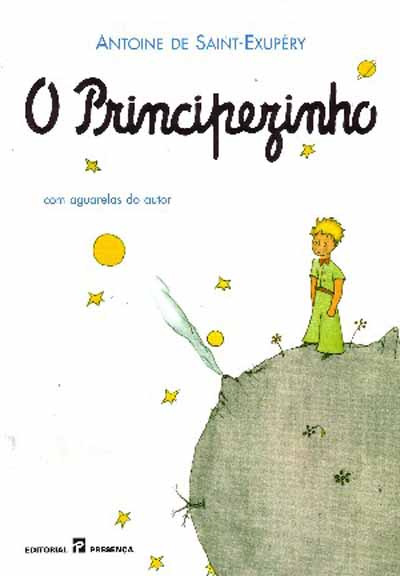
O Principezinho
O Principezinho é um livro de Antoine de Saint-Exúpery, um autor e aviador francês. Li-o em Francês quando era jovem, e mais uma vez em Inglês quando tinha uns vinte anos porque um amigo deu-me uma cópia. Agora que estou a estudar Português, comprei a versão portuguesa e li-o para parte dum desafio de leitura.
O livro é pequeno, com muitos desenhos (aguarelas) e por isso é muito fácil para um aluno com poucos conhecimentos da língua. O argumento consiste num piloto perdido no deserto. Acho que este piloto é o próprio autor do livro. O seu avião não funcionava e ele estava a tentar consertá-lo. De repente, um rapazinho apareceu. Com as suas palavras primeiras, o rapazinho – o principezinho do título – pediu-lhe que desenhasse uma ovelha. Tinha muitas dúvidas sobre a vida na terra e contou uma historia da sua vida num pequeno planeta e da sua viagem através das estrelas. No caminho, encontrou muitas “pessoas crescidas” que tinham atitudes estranhas de adultos em toda parte: interessavam-se apenas por dinheiro, no seu próprio poder e nos seus trabalhos.
No curso da história, o protagonista fez muitas observações sobre as diferenças entre as crianças e os adultos. Aos adultos falta-lhes* de imaginação. Não compreendem nada por causa da sua obsessão com números. Adoro este livro!
*=Woah! This grammar was contorted into a shape I really wasn’t expecting by the people who marked it
O Mandarim
Como disse no registo passado, eu tive vontade de fazer parte dum desafio de leitura, e por isso li dois livros portugueses. Actualmente, estou a ler um terceiro – em inglês – e vou escrever sobre ele em português mais tarde.
O segundo livro foi “O Mandarim” de Eça de Queiroz, um famoso autor português do século XIX. “O Mandarim” é um conto muito curto dum homem que tem a oportunidade, por circunstancias sobrenaturais e esquisitas, matar um imperador chinês e herdar as suas grandes riquezas. A história lembrou-me dos livros “Faust” (de Goethe) e “Doctor Faustus” (de Christopher Marlowe). Confesso que não percebi tudo no livro. Hei de voltar a lê-lo mais tarde quando tiver mais tempo, mas no fim, o homem fugiu duma emboscada e regressou a Portugal.
Dentro da capa da minha copia existe um CD com a gravação duma mulher a ler a história, então posso praticar a compreensao auditiva do texto ao mesmo tempo que leio. Há também um apêndice lexical com traduções das palavras difíceis. Infelizmente, um dos capítulos estava ausente no CD, e as traduções são em espanhol! Ora bem, não faz mal. Tenho um bom dicionário e sou perfeitamente habilitado para ler um capitulo sem ajuda!
The Puppet
“The Puppet” (A Marioneta) é um livro de Ibrahim Al-Koni. Para ser honesto, estou a escrever este comentário antes de acabá-lo por… Por razões, OK, não importa nada o quais são as razões!
Ora bem, este livro é o segundo duma trilogia. É muito difícil mas muito interessante apesar disso. O argumento consiste num grupo de nómadas Tuaregs. No final do livro passado, acabaram a caminhar no deserto e estabeleceram um aldeia acerca dum oásis. No curso deste livro, a sua sociedade mudaram a seguir às ideias do Ibn Khaldun, um escritor árabe do século XIII. Escolheram um líder novo. Esse líder é a Marioneta do título. Os cidadãos mais ricos começaram a persuadi-lo a alterar as regras para deixarem de utilizar o ouro como dinheiro nas trocas comerciais. Estas mudanças, segundo Ibn Khaldun, enfraqueceram o povo que se preparou para o derrubarem por um novo, o mais forte grupo de nómadas. Ups – Spoiler alert! Isto vai demorar até o livro terceiro…
O jantar está pronto. Não tenho tempo para reler isto nem fazer as correcções. Ora bem, provavelmente haverá mais erros do que normalmente…
The Video Version
My daughter made the background and has recorded her own (english) review of the Little Prince, and answered some of the “Top 6” lists on the #HotSummerReading challenge page.
Ana Moura, because she’s coming to the Barbican Centre in September and I’m going with Mrs Lusk. I think a Ana’s possibly a bit uncool, like a Portuguese Mariah Carey, but I’m not bothered and I’m calling it homework
Luisa Sobral, because she seems like fun. I think she does songs in English as well as Portuguese, and for children as well as adults. I would dearly love to know what this is about, for example. Is it educational in some way? Just a fun thing to sing? What? I actually have a podcast of her talking about it so I’ll try and decipher that rather than take the coward’s way out and ask Mrs L.
Beatriz Gosta, because I was told it would be good to mix it up a bit with the podcasts. I listen to a lot of news and serious programming from Antena 1, but of course it’s all in one tone of voice and a narrow vocabulary, so I tried Antena 3 which is a hotbed of filth and depravity and shrieking yoof presenters. Well, it’s broadened my vocabulary, even if none of the words are usable in most conversations I’m likely to have in the queue to see Ana Moura.
I watched the remake of the 1942 classic today. Why? Why did I bother? As far as I can tell, it’s not as funny and not as easy to understand as the original. If you’re considering it, save your money and watch the real thing on Youtube.
The DVD doesn’t have Portuguese subtitles, only English ones. The youtube video has Portuguese subtitles but (my sources inform me) they’re not very accurate. It looked like a much better film though: Better acting, not trying as hard, and they talk at a more manageable pace. I’ll do it properly next time.
This rare example of Cristiano Ronaldo posting something on Twitter that isn’t product placement is a really nice one minute of football (about as much football as I can stand tbh) and some good listening practice into the bargain. As a bonus, he is from Madeira so he even has the same accent as a minha esposa.
I’m 18ck on instagram and my favourite entry so far has been this one on the theme of “flag”. Bandeira is Portuguese for “flag” and for me it’s just a hop and a skip from there to punland.
This morning I stumbled on a series of videos by someone calling herself Marianareads on Youtube, about reading books in English. On closer inspection, it seems she is Brazilian rather than Portuguese, which put me off slightly, and also she seems to have a thing for vampires. She seems very enthusiastic and her massive subscriber list means she must be doing something right, but she’s not for me, so I moved along. Youtube then spent some time trying to interest me in a whole string of brasileiras novas, before I finally hit paydirt in the form of an actual, 100% authentic Portuguese vlogger, discussing easy books for Portuguese readers to improve their English vocabulary. This seemed interesting to me because of course it’s the inverse of what I’ve been doing in some of my posts on here.
Intrigued?
Little House of Books on “Wonder” (which I’ve read) and “A Monster Calls” (which I haven’t read yet and… what’s Portuguese for “Spoiler Alert”? *googles* “alerta de spoiler”, apparently) and some others
Diário da Chris on “A Christmas Carol” (Alerta de Spoiler: he gets a bit nicer at the end) “Wonder” again and “The Fault in our Stars”, to name but three
ACromaDosLivros – I’m not sure but from previous linguistic detective work, I think “Croma” or “Cromo” means nerd, so this must be “the book nerd”. I think. The first video of hers I watched was about The Curious Incident of the Dog in the night Time though, so she’s got good taste.
It’s always a good idea to have some tricks up your sleeve for learning languages when you don’t feel like it, when you want to increase the density of [insert name of language here] in your life, or when you just want a change of pace. Here are a few of my favourites:
Trivia
I found it pretty hard to find good apps for learning European Portuguese, but it’s relatively easy to find good quiz apps and many of them have other language settings. I have a copy of Trivia Crack which I’ve set on Portuguese so I can enjoy farting about playing games and still be learning new words, phrases and pop culture references and (crucially) facts about Brazilian football. It has its drawbacks of course: most of the questions are written by Brazilians so you get quite a lot of Brazilian grammar in there, but still, it’s more educational than Angry Birds.
If you’re feeling feisty, there’s even a “translate questions” feature that lets you translate Portuguese (or whatever) questions into English.
Change the Way You Use The Web.
If you spend a lot of time online (ha ha ha, sorry, I’m kidding – obviously you do! It’s the twenty-first century and you probably haven’t left the house in weeks!) you can massively increase the amount of language in your life by tweaking the settings on your most-used websites. The obvious one for me is my Google Account settings, which affects all my search results, plus the menus in Google Chrome, names of folders etc in Gmail, spellcheck in Google Docs, names of days and months in Google Calendar and half a dozen other things.
I’ve also changed twitter, but that doesn’t do much except teach you some stupid pretend words like “tweetar” (shouldn’t that be “pipiar”???). I daresay if you use Facebook you could get some mileage out of changing the language settings in that. I would love to change Windows and MS Word too but that’s surprisingly hard to do.
Memrise
Memrise is really the only dedicated language-learning app worth having. What makes it different from other apps is that it keeps track of the words you’ve learned and returns to them a short time later, to jog your memory so that they really stick. There’s some science behind it apparently. I dunno. It works pretty well though.
The decks are made by users, so they vary in quality. Some are mildly irritating. For example, they will count something as wrong because you used a lower case letter instead of a capital, then in the next slide you’ll use a capital and it’ll mark it as wrong because now it wants a lower case. That doesn’t stop it being a kick-ass language-learning tool though. I usually have a go on it while I’m brushing my teeth at night and while I’m eating my breakfast in the morning.
As with most things, make sure you specify European Portuguese, not Brazilian.
Podcasts
If you’ve got some mindless task to perform, don’t listen to the new Kanye West album, listen to someone speaking your chosen language instead. Portuguese (as opposed to Brazilian) podcasts are hard to come by but you can find them if you look hard enough. Some of my favourites are:
Practice Portuguese These are produced by a native Portuguese guy called Rui and his Canadian friend Joel. They’re explicitly aimed at developing listening skills for the new learner. Unfortunately it doesn’t come out quite as regularly as I might hope, so I don’t think I can recommend you subscribe to the premium version [* UPDATE here *]
Caderneta De Cromos A series on Rádio Comercial about eighties pop culture, covering Star Trek, Pat Benatar, Ghostbusters, Space 1999, Rocky, Pac Man… What’s not to like?
O Novo Normal Bite-sized morsels of interesting things – you know, productivity tips, brain science and that sort of thing. Possibly not reliable but certainly interesting as a five-minute listen while the kettle boils.
Revista De Semana This is a podcast from RDP International, broadcasting to the Portuguese “Diaspora” and it’s interesting to me because it deals with the issues affecting Portuguese people around the world. The consulate in London comes up a lot (not in a good way) and recently there have been issues with some countries in Europe banning Portuguese children from speaking the language in the playground.
You could also look for “Grande História Universal das Traquitanas” which I’ve heard is very good but it doesn’t seem to be downloading when I try [*Another update: I’ve found a way of getting them: you have to open the page in Internet Exploder, not Chrome. .You still can’t subscribe, but you can download the episodes individually, so that’s my listening for tomorrow sorted out!*]
A lot of podcasts are quite hard to find in iTunes but I’ve found some interesting nuggets by looking on the websites of Portuguese broadcasting companies. Here’s Rádio e Televisão de Portugal’s for example. There is usually enough variety that you’re bound to find something that suits your interests and ability level.
Taking a left-turn at the traffic lights, there are some good, inspirational podcasts for language-learners in general. Have a look at “Actual Fluency” or “Creative Language Learning” in iTunes, for example. Personally, I can only take this kind of thing in small doses, but a little of it now and again is good. It reminds you that you’re not alone and it gives you some ideas from the hardcore language-ninjas.
Music
If podcasts aren’t your thing, there’s always music. I’m a bit ambivalent about music as a learning method. A lot of people recommend it, including my wife, but I often find it’s like watching as a stream of syllables rushes by at speed. I think unless you’ve taken trouble to read the lyrics written down beforehand and compare with a translation, it’s difficult to pick the words out and appreciate them. Of course, you can still enjoy the music, but understanding the music adds a whole other dimension.
If there’s one thing Portugal has lots of, it’s music. I’ve already mentioned (here) my favourite song at the moment is by Deolinda. I also loves me some Mariza
Some of the old Fado music is pretty powerful, especially if you get the right singer, and singers don’t get much more right than Amália Rodrigues
Label Your House
I mentioned, last week, posting post-it notes all over my house with the names of things on them. That’s quite a cleaver way of bumping up your vocabulary a bit without really trying, although with hindsight I wish I’d written the words in larger letters with a big fat marker, as I find myself peering at the post-its instead of having the words thrust in my face.
Lindsay Does Languages has a brilliant variant on this theme. I came across it earlier today and decided to incorporate it in my life as soon as I get a free minute (2019, I think). While you’re at it, have a look at some of the other articles on her site. They’re pretty good fun.
Films
If you’re clever enough to understand films made in your target language, that’s a great way to learn more. Me, I’ve looked at a few – like “A Costa Dos Murmúrios”, “Capitães de Abril” and “Ossos” but I found them too hard to follow.
Easier fare would be an English-Language film you’re seen before, dubbed into your target language. That usually means children’s animated films, since nobody ever dubs live-action movies. If you’re like me and learning Portuguese, try and check that the actors doing the voice-overs aren’t Brazilian. The last thing you want is all that Eejy Beejy Beejy thing that Brazilians do. We have three dubbed films in the house (*points* at the picture at the top of this section) and it’s good because my daughter likes watching them too. Turn on English subtitles if you are very new to the language, or Portuguese subtitles if you just want written clues to help you disentangle the words.
 So I’ve finished my reading for this book blogging challenge and it’s been a brilliant source of motivation to read portuguese in massive (for me) doses. I’ve written reviews of all three books on iTalki and I wanted to make a recorded version as well to make some of the vocabulary stick, and my daughter, who is an expert on vlogging, helped me record it. It’s pretty dreadful though, I’m afraid… I’ve put it down at the bottom where it belongs
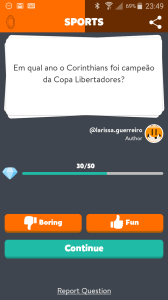 I found it pretty hard to find good apps for learning European Portuguese, but it’s relatively easy to find good quiz apps and many of them have other language settings. I have a copy of Trivia Crack which I’ve set on Portuguese so I can enjoy farting about playing games and still be learning new words, phrases and pop culture references and (crucially) facts about Brazilian football. It has its drawbacks of course: most of the questions are written by Brazilians so you get quite a lot of Brazilian grammar in there, but still, it’s more educational than Angry Birds.
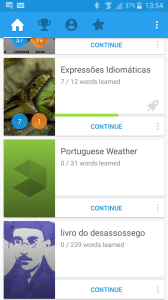 Memrise is really the only dedicated language-learning app worth having. What makes it different from other apps is that it keeps track of the words you’ve learned and returns to them a short time later, to jog your memory so that they really stick. There’s some science behind it apparently. I dunno. It works pretty well though.
 If you’re clever enough to understand films made in your target language, that’s a great way to learn more. Me, I’ve looked at a few – like “A Costa Dos Murmúrios”, “Capitães de Abril” and “Ossos” but I found them too hard to follow.
