Posted in English

Transatlantic Reading

As you’ll know if you were crazy enough to watch the video I posted the other day, I am currently reading a Brazilian book called ‘Jonas o Copromanta’ (Jonas the Copromancer) about a bloke who reckons he can read the future in his toilet bowl. I’m not following the grammar or vocabulary as closely as I normally would, because I don’t want to confuse myself – I’m mainly just trying to practise pronouncing the words and following the gist of the story.

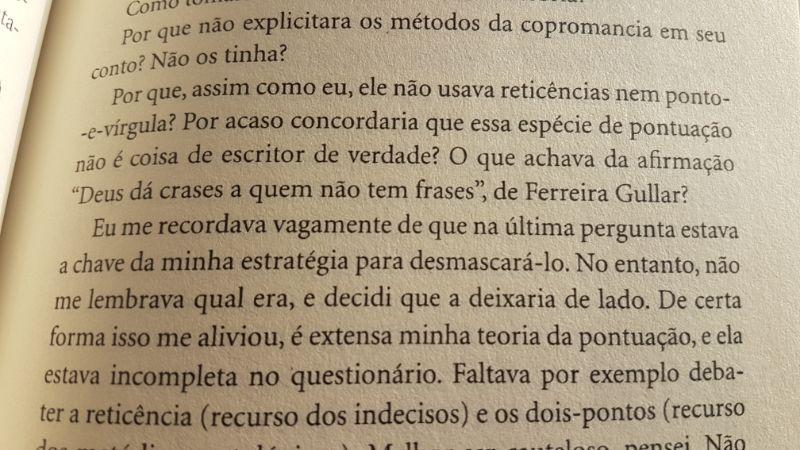
I’ve become obsessed with one line though:

O que achava da afirmação “Deus dá crases a quem não tem frases” de Ferreira Gullar’

I wondered what “crases” meant só I plugged it into gtranslate and the first thing it came up with was “quotations”. God gives quotations to people who don’t have sentences. Considering he’s actually quoting someone at the time, that’s a funny line! But then it changed to ‘sentences’. Well, God gives sentences to people who don’t have sentences is just rubbish, so I looked on the online dictionary, Priberam. Priberam gives four other meanings, none of which make any sense (to me, anyway) when I drop them into the wider sentence.

So now I don’t know what the sentence means and feel vaguely like I’m missing out on something important. If anyone reading this knows, I’d love to hear about it.

Posted in Portuguese

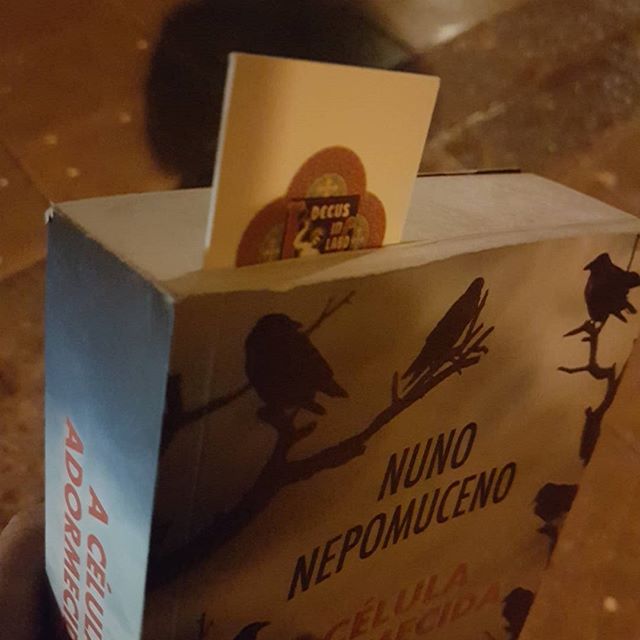
Comentário sobre “A Célula Adormecida” de Nuno Nepomuceno

Finalmente terminei de ler este livro gigantesco. Tem 577 páginas e prometi-me* que leria 20 páginas por dia para ler o livro inteiro dentro duma mês. Falhei. Fiz uma pausa no meio e não recomecei a sério até à semana passada.

O livro é um romance, tipo “Thriller”, mas é diferente duma típica história deste género. Os eventos desenrolam em Lisboa, excepto alguns capítulos que acontecem na Turquia. O enredo tem a ver com um grupo de terroristas do autoproclamado Estado Islâmico. No início do livro, no dia da eleição legislativa, fazem um atentado no centro de Lisboa, detonando uma bomba num autocarro. Depois, levantam a bandeira do Daesh no monumento da revolução de 25 de Abril. No mesmo dia, o vencedor das eleições, o novo primeiro-ministro, suicida-se. Um professor, que conhecia um dos terroristas mortos durante o ataque foi recrutado pelo SIS, para ajudar na caça dos outros antes da cimeira da NATO em Lisboa daí a um mês. Entretanto, uma jornalista começa a investigar o mistério do aparente suicídio, seguindo o pedido da viúva do político que fica convencida que ele fora assassinado.

Ambos têm problemas: o professor é assombrado por um passado escuro e a jornalista tem cancro. Os dois encontram-nos na Turquia e juntam-se para descobrirem a verdade.

O que é impressionante é que durante esta história de atrocidades terroristas, o escritor tentou com muito esforço evitar tratar todos os muçulmanos como terroristas (um problema comum em muitos thrillers). Explicou vários aspectos da sua fé, a cultura e a história do Islão, e a história recente da Síria e do Médio Oriente. Isto parece uma fraqueza no romance porque reduziu o suspense do enredo, mas acho que foi uma decisão do escritor. Hoje em dia há tantos mal-entendidos no mundo, e tanto ódio pela religião que nos forneceu com tantos grupos armados, que penso que é bom lembrar que a maioria das vítimas do terrorismo são muçulmanos, e aqueles muçulmanos de vários países receiam os efeitos da guerra nos seus próprios países ainda mais do que nós temos medo do terrorismo nos nossos países.

A Célula Adormecida: AmazonOfficial SiteBertrand

Thanks Raphael, Hugo, Sofia for the corrections

*=This means “I promised myself”. Someone suggested “Comprometi-me” (“I made a commitment”) which is a good option too. It wasn’t what I was trying to say but maybe “I promised myself” isn’t a phrase that’s used often in Portugal…?

17076540_1785622641765326_3850175912981037056_n
Instagram picture from some time ago when I was still just 90 pages in
Posted in English

Lady Marmalade

Further on in Como é Linda a Puta da Vida and I’ve come across another thing that made me smile: the Portuguese call foreplay Marmalade.

Or rather Mermelada. As you might know, we get the word from the Portuguese. There’s a folk-etymology about the word, involving Mary Queen of Scots but don’t believe the hype – it’s Portuguese, even though their marmalade is a gelatinous substance made from quince, and ours is a delicious orange-based sticky goo.

Anyway, Miguel Esteves Cardoso bemoans the fact that Marmalade (literal and figurative) is less used these days. The modern word is “preliminares” which is drab to the point of sounding like a bureaucratic procedure, so I can see his point. The double-entendre potential alone of Marmalade should make it an invaluable word. Keep it, you fools!

Posted in English, Portuguese

Phrase of the Day

It’s always nice to see a familiar phrase crop up in Portuguese. This is from Miguel Esteves Cardoso’s “Como é Linda a Puta da Vida”

Assim gastei 90 minutos da minha vida que nunca me serão devolvidos.

Which loosely translates as “That’s ninety minutes of my life I’ll never get back”

Posted in English, Portuguese

IGLC

I’m doing the Instagram Language Challenge (#IGLC) in Augsut.  Monday is video day so here’s a video I made, describing a book I bought.

Posted in Portuguese

Três Livros

I’m still writing a lot of Portuguese on Instagram. Here’s one of the larger posts, which I have copied onto iTalki for corrections

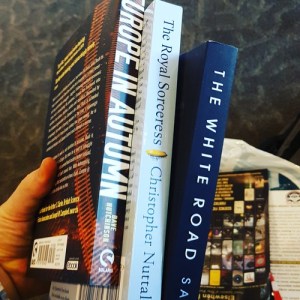
Hum, estou numa reunião de nerds aqui em Londres e parece que, sem tentar, adquiri três livros impressos por editoras** independentes. “The White Road” foi fornecido gratuitamente na mala de boas vindas quando chegámos*** mas li a capa e não acho que terá nada para elogiar. “The Royal Sorceress” tem um enredo interessante mas os comentários e classificações no Goodreads não superam 3 estrelas. Mas “Europe in Winter*” deve ser melhor. Já conheço o autor (apenas através das redes sociais) e creio que escreve bem. O género**** dele é ficção científica que se passa na Europa dum futuro-próximo, depois do desmoronamento da União Europeia e da maioria dos seus países. Desde a publicação temos visto o referendo aqui no Reino Unido, vários partidos de extrema-direita ganharam votos altíssimos nos próprios países e o ressurgimento da Rússia novamente beligerante. Por isso, o livro pode ser um pouco presciente. Hum… Pensamentos sérios. Há algo mais feliz? O autor assinou a capa também. Woo-hoo!

notebook_image_823791*=It’s actually called “Europe in Autumn”. I think I must have been thinking of “The World in Winter” by John Christopher, which is a really nice piece of old-school speculative fiction.

**=I wrote “imprimadores” which is definitely wrong. There is a word “impressora” for printer but of course, even in english, we don’t call a company that produces books a “printer”, we say “publisher” and that tranlates as “editora”

***=All my corrections dropped the acute accent,but I think that’s a Brazil/Portugal thing and it’s OK.

****=Corrections all changed the acute to a circumflex, but I think that’s another Brazilian thing.


Thanks to Danilo, Larissa and Thaís for the corrections

Posted in Portuguese

Tradução

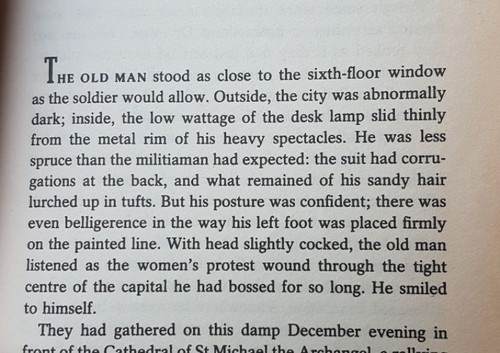
notebook_image_823103I recently tried to translate the first paragraph of “The Porcupine” by Julian Barnes” into Portugese. It was a real struggle because of the high literary style. Anyway, the result was quite interesting because it shows that there’s more to transation than just constructing grammatically correct versions of each sentence in turn. The corrections I got back were all right, in the sense that they were free of errors, but the result was stilted and not really reflective of the original. For reference, Larissa wrote her own translation, in Brazilian Portuguese, to show how a real native speaker would express it.

So here’s the fixed  version of the original

O velhote estava de pé tão perto da janela do sexto andar como permitiu o soldado. Lá fora, a cidade estava estranhamente escura; cá dentro, o poder fraco do candeeiro de secretária deslizou ligeiramente da orla metal dos seus óculos. Era menos elegante do que tinha suposto o militar: o terno dele estava amassado por baixo e o resto dos seus cabelos loiros surgiam de forma duns penachos*. Mas a sua postura mostrou confiança e mesmo havia uma certa pugnacidade na maneira em que o seu pé foi colocado na linha pintada. Com cabeça inclinada, o homem ouviu enquanto a manifestação das mulheres serpenteou pelo centro estreito da capital que tinha liderado durante tanto tempo. Sorriu para si mesmo.

And here’s Larissa’s

O velho permaneceu o mais próximo da janela do sexto andar quanto lhe permitiria o soldado. Lá fora, a cidade estava anormalmente escura; dentro, a luz de baixa voltagem da luminária de mesa refletia fracamente nos aros metálicos de seus pesados óculos. Ele era menos elegante do que esperava o militar: o terno estava amarrotado nas costas e o que ainda restava do seu cabelo cor de areia movia-se em tufos. Apesar disso, sua postura era confiante; havia até mesmo certa agressividade no modo que seu pé esquerdo permanecia firmemente plantado na linha pintada. Com a cabeça ligeiramente inclinada o velho ouviu o protesto das mulheres que seguia pelo apertado centro da capital que ele havia comandado por tanto tempo. Ele sorriu para si mesmo.

And finally, here’s a line-by-line comparison of the two with Larissa’s in red and mine in blue. I’ve italicised the words that I think (I might be wrong) are not generally used in European Portuguese “por padrão”, but the rest should be basically just a more natural, fluid way of describing the scene in the novel.

O velho** permaneceu o mais próximo da janela do sexto andar quanto lhe permitiria o soldado.

O velhote estava de pé tão perto da janela do sexto andar como permitiu o soldado.

Lá fora, a cidade estava anormalmente escura; dentro, a luz de baixa voltagem da luminária de mesa refletia fracamente nos aros metálicos de seus pesados óculos.

Lá fora, a cidade estava estranhamente escura; cá dentro, o poder fraco do candeeiro de secretária deslizou ligeiramente da orla metal dos seus óculos.

Ele era menos elegante do que esperava o militar: o terno estava amarrotado nas costas e o que ainda restava do seu cabelo cor de areia movia-se em tufos.

Era menos elegante do que tinha suposto o militar: o terno dele estava amassado por baixo e o resto dos seus cabelos loiros surgiam de forma duns penachos.

Apesar disso, sua postura era confiante; havia até mesmo certa agressividade no modo que seu pé esquerdo permanecia firmemente plantado na linha pintada.

Mas a sua postura mostrou confiança e mesmo havia uma certa pugnacidade na maneira em que o seu pé foi colocado na linha pintada.

Com a cabeça ligeiramente inclinada o velho ouviu o protesto das mulheres que seguia pelo apertado centro da capital que ele havia comandado por tanto tempo.

Com cabeça inclinada, o homem ouviu enquanto a manifestação das mulheres serpenteou pelo centro estreito da capital que tinha liderado durante tanto tempo.

Ele sorriu para si mesmo.

Sorriu para si mesmo.


*=Penachos might be OK for “tufts” but it seems a bit touch-and-go.

**=Velhote seems to be specific to Portugal. On the other hand, the Brazilian “O Velho” is slightly dismissive in Portugal. Alternative phrases are “pessoa de idade” or “idoso”


Thanks Sofia, Larissa, Andre, Vitor and Natan for help with the corrections
 

Posted in Portuguese

Os Vampiros

30301337Este livro é uma banda desenhada* que fala dum grupo de soldados no exército português, destacados numa missão no Senegal, numa manobra contra os rebeldes nos últimos meses da Guerra Colonial na Guiné. Enquanto que penetram** cada vez mais selva a dentro***, os seus medo e cansaço acrescentam, até atingirem um estado de paranóia. Existem vários episódios que proporcionam alívios cómicos, misturadas com horror. Por exemplo, um soldado raso**** se vangloria da sua grande sorte e imediatamente depois – ele pisa numa mina.
Quase nunca vemos o verdadeiro inimigo – os monstros, pálidos e magros, que se escondem na escuridão. Já têm matado os rebeldes. Enfim, a história é um pouco esquisita. Não segue o caminho dum argumento num livro de vampiros. O medo e as relações entre os soldados são os destaques da história.

*=Apparently this is only a Portuguese expression. In Brazil it’s “Estória em quadrinhos”. Cómico is also used in Portugal, but maybe banda desenhada is equivalent to “graphic novel”? At least, booktubers I watch use BD in preference to Cómico.

**=I used “aprofundam” but meaning “they go deeper [into the jungle]” but Mrs L says you can’t talk about depth in this way, only if you are actually literally plunging down into a pool or a hole or something. It can also be used for feelings getting deeper though.

***=Not “dentro da selva”. This is how you say “into the heart of the jungle”, as counter-intuitive as it seems!

****=I originally wrote “Privado” here. As I explained to a confused Brasileiro: “…a palavra “privado” foi uma tradução da palavra inglesa “private” que significa (no reino unido ou nos estados unidos) um soldado do primeiro… hm… não sei como dizer…. ao fundo da hierarquia? Faz sentido? Um soldado novo o que ainda não passou a sargento. Claro que não é a palavra certa em português mas existe um equivalente? Percebo que andas a estudar inglês também. Espero que o meu erro ajudaras-te aprender!” The Portuguese military hierarchy can be found here if you are interested.

Posted in English, Portuguese

Adventures in Bilingual Instagramming

I’ve been trying to write most of my instagram posts in both english and portuguese recently. It’ a good way of getting some daily practice without feeling the need to write a whole mini-essay in iTalki. Here is a sampling of posts from our recent trip to the Hay on Wye literary festival for example. I usually prefix each section with the emoji flag of the UK and Portugal, which works well on the telemóvel but in a laptop browser it just shows as “GB” and “PT”


Posted in Portuguese

Booktube Roundup

I have a few portuguese youtube channels about books that I watch on a more-or-less regular basis these days: AOutraMafalda, CreepySantos, TiagosWorld, CatInTheNet and the newest, BooksAndBeers. As I mentioned before, listening to videos and podcasts about a subject you’re interested in is usually more engaging than listening to boring aural comprehension exercises or news programmes or whatever, and I often hear about interesting-sounding books, which is a bonus.

Recently, a couple of them have suggested a tag about endorsing Bandas Desenhadas (comics, graphic novels) and since I haven’t done much speaking lately I thought I’d join in. The result is below. It’s pretty horrible. I had a good feeling about it to start with and thought I’d be pretty fluent but in the end it’s about 50% composed of me going “ummmm… ahhhhh…..” and looking at the cieling. When I do speak, I use the wrong tense, the wrong verb, mismatched adjectives… ugh! It’s a right old mess. I’m going to do more of these though precisely because I am so shit at it.