Posted in English

Gender Wars 4: The Pronoun Menace

I’ve been working on this post since I was in primary school and this is now the fourth incarnation. The last version, written 3 years ago, was given the once-over by my teacher (Cristina of the excellent Say it in Portuguese podcast) who has fine-tuned it, adding some tweaks, and suggesting a few exceptions other than the ones on my original list.

OK, so if you’re a new learner, you’ve probably come across a few explanations of how gender works in Portuguese, and how to work out if a given word is masculine or feminine just by looking at it. Different teachers have slightly different rules so I sat down to road-test them and see which versions were reliable and which had so many exceptions that they weren’t worth bothering with. I used a list of the 1000 most popular portuguese nouns (details in Appendix 3 below) and used excel formulae to see what rule *should* apply vs what gender it actually has.

How To Use The Rules

More specific rules nearer the top override more general ones further down. So for example, Avó is feminine because it meets the “Male and Female people” rule even though it ends in an O and “Programa” meets the “Greek words” rule so doesn’t need tobe referred to the ending-in-A rule. Sorry about the colour-scheme, but… well, you know… just trying to harness my cultural stereotypes in a way that makes it easier to follow.

Rule Examples Exceptions
Dependent:
Male and Female animals/people depend on individual’s sex*
  • o touro / a vaca
  • o irmão / a irmã
  • o dirigente/a dirigente
  • o autor/ a autora
  • o rapaz/ a rapariga
  • o socialista/ a socialista
  • o alemão/ a alemã
  • o chefe
Dependent:
Ordinal numbers depend what’s being counted, because they are effectively adjectives!
  • o primeiro (dia)
  • a segunda (noite)
 
Masculine:
Nouns ending in
-o (but not -ão though)
-r
-l
-u
  • o lugar
  • o amigo
  • o chapéu
  • o papel
  • o final
  • a tribo
  • a dor
  • a cor
  • a flor
Masculine:
Names of Lakes, Rivers, Mountains etc
  • o Tejo
  • os Himalaias
  • o Brasil
  • o Atlântico
  • o Tamisa (despite the -a ending!)
 
Masculine:
Compass points
  • O Leste
  • O Oeste
  • O Norte
  • O Sul
 
Masculine:
Car brands** & types of wines
  • o Madeira
  • o Ferrari
  • a Mercedes (but only the brand. The car is “um Mercedes”)
Variable:
The seasons obey their last letter rules o=masculine, a=feminine
  • o verão
  • o inverno
  • o outono
  • a primavera
Variable:
Week days obey their last letter rules o=masculine, a=feminine
  • o sábado
  • o domingo
  • a segunda feira
  • a terça feira
 
Masculine:
Words from greek, usually ending -a: most usually in
-ema
-grama***
-eta
  • o programa
  • o problema
  • o sistema
  • o poema
  • o cometa
  • o planeta
  • o mapa
  • o telefonema
  • o drama

Fake greekery:

  • a gorjeta
  • a gema
  • a alfazema
  • as algemas
Masculine:
Letters
  • o a
  • o p
 
Masculine:
Cardinal numbers
  • o um
  • o cento
  • o milhão
  • a dezena
  • a centena
  • o avo
Feminine:
Words ending in
-ção
-são
-ião
  • a acção
  • a actuação
  • a administração
  • a alteração
  • a aplicação
  • a aprovação
  • a associação
  • a atenção
  • a avaliação
  • a canção
  • a classificação
  • a colecção
  • a comissão
  • a competição
  • a composição
  • a comunicação
  • a concepção
  • a conclusão
  • a condição
  • a constituição
  • a construção
  • a criação
  • a decisão
  • a declaração
  • a definição
  • a designação
  • a dimensão
  • a direcção
  • a discussão
  • a disposição
  • a distribuição
  • a divisão
  • a edição
  • a educação
  • a eleição
  • a emoção
  • a estação
  • a evolução
  • a excepção
  • a expansão
  • a explicação
  • a exploração
  • a exportação
  • a exposição
  • a expressão
  • a extensão
  • a federação
  • a formação
  • a função
  • a fundação
  • a geração
  • a impressão
  • a inflação
  • a informação
  • a instalação
  • a instituição
  • a intenção
  • a interpretação
  • a intervenção
  • a investigação
  • a ligação
  • a manifestação
  • a missão
  • a nação
  • a negociação
  • a obrigação
  • a observação
  • a ocasião
  • a opção
  • a operação
  • a opinião
  • a oposição
  • a organização
  • a orientação
  • a paixão
  • a participação
  • a população
  • a posição
  • a preocupação
  • a pressão
  • a prisão
  • a privatização
  • a produção
  • a profissão
  • a protecção
  • a publicação
  • a reacção
  • a realização
  • a redução
  • a região
  • a relação
  • a religião
  • a representação
  • a resolução
  • a reunião
  • a revisão
  • a revolução
  • a secção
  • a selecção
  • a sensação
  • a sessão
  • a situação
  • a solução
  • a televisão
  • a tradição
  • a transformação
  • a união
  • a utilização
  • a variação
  • a versão
  • a visão
  • a votação
  • o avião
  • o coração
Masculine:
Other words ending in
-ão
  • o alcatrão
  • o algodão
  • o balcão
  • o cão
  • o capitão
  • o cartão
  • o chão
  • o cidadão
  • o escaldão
  • o feijão
  • o órgão
  • o padrão
  • o pão
  • o patrão
  • a gestão
  • a mão
  • a questão
  • a razão
Feminine:
Most words ending in
-a
  • a dúvida
  • a água
  • a palavra
  • a terra
  • o clima
  • o dia
Feminine:
Words ending in -ez
  • a estupidez
  • a gravidez
  • a viuvez
  • a surdez
  • a vez
  • o xadrez
Feminine: 
Words ending
-dade
-ie
-tude
-gem
-ice
  • a cidade
  • a viagem
  • a garagem
  • a juventude
  • a espécie
  • a velhice
  • o índice

Vaguely Feminine:
Cities**** 

  • Londres bela
  • Lisboa antiga
 Places specifically named after things:
  • O Rio de Janeiro
  • O Porto
Feminine:
Names of the Academic Arts and Science subjects*****
  • a medicina
  • a matemática
  • a biologia
  • a física
  • a geografia
 

*=Note that some of these change their endings but some – like dirigente, cientista, keep the same ending.

**= Jeremy Clarkson would love this, I’m sure

***= Some guides say anything ending in -ama, but loads of portuguese words ending in -ama are red herrings and not from greek: chama, cama, lama, fama, ama and on and on.

****= “Vaguely” because they don’t take articles. Some sources say this means they have no gender. At the risk of claiming to know more about portuguese than Ciberdúvidas, or my own teacher, I don’t really agree with this though. OK, I know the lack of article makes it less obvious, but if you have to apply an adjective, you’re going to have to commit to an A or an O on the end of it. As near as I can tell, this usually seems to be an A, maybe because the word “cidade” itself is feminine, and I think if I was in an exam situation I would try and phrase it in such a way that I was saying “Coimbra is a beautiful city” instead of “Coimbra is beautiful” to avoid any ambiguity. 

*****= It might be redundant, this one: virtually all of them end in -a, apart from a  few -ção words, so they would all be feminine anyway.

Rules I Have Deleted in this Version

à – There used to be a rule here about -ã words being feminine, but after seeing a list of exceptions, I did a little digging and I reckon it’s more-or-less fifty-fifty. It might not matter very much because they’re quite rare (there are zero in the top-1000 list) and I think the only reason it’s a rule at all is that most of the words you come across day to day are words like alemã, capitã, irmã, anfitriã, cidadã: in other words feminine forms of words that would normally have -ão on the end and be masculine! I’ve already got this covered with the very first rule in the list so I don’t think the rest of the rule is needed

Countries – Countries are a special case, and rather than list them, it’s probably best to point you to this map on WIkipedia.

Z – Like Ã, Z-endings are fairly rare, but it seems like there are so many exceptions that I can’t really treat it as a reliable rule. 

Appendix 1: Not-So-Easy E

A few of the rules in the table have endings like “-ice” or “-ade”, but what if the word ends in an e and none of the other rules apply?

Some teachers say that nouns ending in E are split between abstract and concrete. However, as you can see, contrary to the textbook rule, it’s mixed pretty evenly on both sides. Conclusion: the rule is bollocks, I’m afraid, and we’ll just have to learn these the hard way.

Masculine Feminine
In theory, these should all be concrete (things you can see and touch) In theory these should all be abstract (ideas, emotions)
o acidente
o ambiente
o ataque
o barrete
o breve
o clube
o combate
o continente
o controle
o corte
o costume
o crime
o debate
o dente
o destaque
o empate
o exame
o filme
o gabinete
o golpe
o horizonte
o instante
o interesse
o legume
o leite
o limite
o mestre
o monte
o nome
o nordeste
o padre
o parque
o peixe
o príncipe
o regime
o romance
o sangue
o telefone
o teste
o transporte
o vale
o volume
a análise
a arte
a árvore
a ave
a base
a carne
a chave
a classe
a corte
a crise
a estante
a face
a fase
a fome
a fonte
a frase
a frente
a gente
a gripe
a hipótese
a mãe
a metade
a morte
a noite
a parede
a parte
a pele
a ponte
a posse
a rede
a saúde
a sede
a sorte
a tarde
a torre
a vontade

(NB Corte appears in both sides because it can mean either “The court” or “The cut”, both reasonably common but having differing genders just to be bloody awkward)

Apprendix 2: Mistakes, Mis-Shapes, Misfits

When I’d counted all the words that fit the rules and the exceptions, there was a short list left over of words that met none of the rules. The majority seem to be masculine, apart from fé, lei, ordem and nuvem.

  • a fé
  • o fim
  • o gás
  • o jardim
  • a lei
  • o mês
  • a nuvem
  • a ordem
  • o país
  • o pé
  • o som
  • o tom

Appendix 3: the List of 1000 Most-used Portuguese Words

I got the list from a site called Hackingportuguese (now defunct) but I took out a couple of words that I saw that were Brazil-specific and a couple that looked like they were (at least in European Portuguese) only used as adjectives, and replaced them with random nouns from a Memrise deck, to bulk it up to a thousand again. I subjected the survivors to extreme torture in an excel spreadsheet in order to see how many exceptions there were, using Excel formulae to check the ending against the supposed rule. My version of the list is available as a spreadsheet here in case you want to play with it and check my work.

Appendix 4: Twinsies

Here are a few words that can have different genders but their meanings change depending on the gender:

o rádio – that device on your kitchen counter 

a rádio – the radio station

o moral – morale

a moral – morality

o capital – the stuff that keeps capitalism working

a capital – where the politicians are busy running capitalism

o polícia – a copper (a female police officer is a mulher-polícia)

a polícia – the cops.

Appendix 5: Notes for People Who Are Insufficiently Confused

There are a few words that are a bit ambiguous and change between regions. I don’t have a definitive list but if you follow the comments under this reddit post you’ll get a few different opinions. Ignore the bloke who says the AO has eliminated all differences between PT-BR and PT-PT, he seems to be high on crack.

Genders can change a little over time. If you ever have an urge to be unhappy, here is a paper you can read about that.

Finally, you might like to check out a series of three texts I wrote about some weird edge-cases for grammatical gender, and especially about gender neutral pronouns. The most recent one is here but it’s a bit short. Probably the best, most informative is this one

Posted in English

Regrouping

I’ve had to rethink my approach to learning, since I’ve got right out of my routine since the holiday in France. I’m not really writing regularly and all the habits I’d got into – tweeting in Portuguese, reading daily, watching films weekly, doing exercises – have fallen into disrepair. So I’ve set myself a more modest goal: back to the writing and do something else daily, but not feel like I have to do everything. Hopefully if I can get back into the groove of doing a daily task, I can ramp it up again. I’ve got all my study materials together and put them in a box next to the sofa so that I don’t have to get over the hurdle of finding them (thus removing a barrier to my motivation!) I’ll probably post less on here too.

Anyone else struggling with motivation?

Posted in English

An Unlesson

I’ve just had a meeting with a Portuguese teacher who I thought was doing something interesting. Her name is Catarina and she runs The Language Unschool.

If you hang around the various online forums where Portuguese learners congregate, you’ve probably come across a lot of teachers looking for new students among the pool of curious, interested, potential learners who are trying to figure out where to start. The teachers usually have YouTube channels with a range of topics new learners are interested in: how to watch subtitled TV, how to use Ser and Estar, how to say the days of the week and so on, and they use that to draw in paying punters.

Catarina was fishing in darker waters though. She contacted me via Reddit after I’d already been writing in WritestreakPT every day for a few weeks and invited me for a free consultation. I liked the sound of the school. The package has a few components: a smartphone app, grammar videos, group sessions activities that aim to draw out people’s Portuguese voice and getting them talking. She seemed very switched on and presented the options well.

She’d really made an effort to demonstrate her personal touch too, because she’d looked at some of my recent posts, where I’ve talked about my January yoga binge and she’d actually teamed up with a local yoga teacher and made a video about yoga in Portuguese, released on the day she contacted me 👇

As a piece of entrepreneurship, it was impressive. I felt like she was making an effort to win me over as a customer: where most teachers aim for broad appeal, she seemed to be aiming for a specific niche. That’s how it felt anyway: the approach, the description, even the pricing structure, all seemed to be tailored to suit people who had already made up their mind to stick at it long term.

Anyway, I tried out the yoga video yesterday morning . I had to turn the subtitles on because I couldn’t hear very well but the inbuilt YouTube subtitles have a black background. That created some unexpected humour, because at one point the teacher got down on the floor and… And then I couldn’t see her any more! It looked like she’d had a sudden attack of shyness and decided to hide behind the subtitles, which made me laugh out loud. Anyway, if you fancy giving it a go, maybe play with the video settings and see if you can change the subtitles so they don’t have a background.

As I’ve said in some previous posts, doing workouts in Portuguese is a good way of learning some of the more niche body vocabulary and you’ll get a decent stretch out of it too, so what’s not to like?

I’m still pondering whether to go for the course. I’ll sleep on it. I definitely like the idea, and I need something to boost me towards spoken fluency, but I’m not sure how it fits into the rest of my life. Also, with the third world war around the corner, maybe nothing matters any more.

Hm, got a bit dark there at the end, didn’t it? I caught a glance at the news. Sorry.

Posted in English

Come+A’s you are

Closely related to the post about vir and chegar: what’s the difference between “vir a saber” and “vir saber”? Well, I’m glad you asked!

Vir a saber, as you’ll know if you read “The Spy Who Chegged Me” is a way of saying that you came to know something, perhaps in a slightly roundabout way, by chance, but the light dawned and then you knew.

Vir Saber is more like “I came to find out”.

This is good because I had been wondering how to interpret a line in one of the poems (it’s a song, actually: Flagrante by Antonio Zambujo) that I learned a week or two back. the people in the next room either “finally got to know about us” or “came to find out about us”. Well, now I know so here we go with a translation of the whole thing

PortugueseEnglish
Bem te avisei, meu amor
Que não podia dar certo
Que era coisa de evitar
I gave you fair warning, my love
That this wasn’t going to turn out well
And it was something best avoided
Como eu, devias supor
Que, com gente ali tão perto
Alguém fosse reparar
Like me, you have to suppose
That with people so nearby
Someone was going to notice
Mas não
Fizeste beicinho
E como numa promessa
Ficaste nua para mim
But no
You made a pouty face
And as if in a promise
Got naked for me
Pedaço de mau caminho
Onde é que eu tinha a cabeça
Quando te disse que sim
Bit of a wrong turn
Where was my head at
When I said yes to you
Embora tenhas jurado
Discreta permanecer
Já que não estávamos sós
Although you had sworn
To remain discreet
Since we weren’t alone
Ouvindo na sala ao lado
Teus gemidos de prazer
Vieram saber de nós
Hearing in the room next door
Your moans of pleasure
They came to find out about us
Nem dei pelo que aconteceu
Mas mais veloz e mais esperta
Só te viram de raspão
I didn’t even know what had happened
But being faster and smarter
They only caught a brief glimpse of you
A vergonha passei-a eu
Diante da porta aberta
Estava de calças na mão
I went through the shame
In front of the open door
With my trousers in my hand

It’s great isn’t it! Lots of really good stuff in there. The one line that I really had trouble understanding was the first line of the last stanza “A vergonha passei-a eu” which seems like he’s saying “I passed her the shame” as if he were trying to blame it all on the girl, but that doesn’t make sense for all sorts of reasons. The “-a” on the end of passei is actually referring to “a vergonha”. So it’s like “The shame, I passed through it”. Normally in conversation you’d say “passei pela vergonha” but poetic license applies. Here’s the full thing. I’ve probably posted it on here before but I just love it so much it’s worth repeating.

Posted in English

The Spy Who Chegged Me

Structures I’ve seen in books and never been quite sure how to parse. According to Ciberdúvidas,

Vir + A + Infinitive

Is a periphrastic form of a verb. Wait, wait, hold it right there, what is a periphrastic form? It just means you use extra words to give the verb a slightly different dynamic or even to change the tense. In english it’s things like “You shall go to the ball” or “I do like chips”. It might change the verb’s tense or it might just make it sound more complete and more dynamic. Maybe like in English: How do you come to be in a place like this? It has the sense of ending up somewhere by chance, and it sounds more interesting than “How did you get here?” or “Why are you here?”

There’s an example in the book I’m reading now. Talking about Bolsonaro’s attempts to blame minorities for everything Ricardo Araújo Pereira says “Acredito que a gente ainda venha a descobrir que há inúmeros gays negros e índios na Lava Jato”.

Chegar + A + Infinitive

“Chegar a”, on the other hand is more like “finally managed to…”. It’s stressing the end of the action coming after a long time or a strenuous effort. Searching for an example similar to the one above, I hit on this one which is from a religious website talking how, after a lot of prayer, the believer can finally come to understand the project that God has laid out:

A oração também se torna caminho para o discernimento vocacional, não só porque Jesus mesmo convidou a rogar ao dono da messe, mas porque é somente na escuta de Deus que o crente pode chegar a descobrir o projeto que Deus mesmo traçou: no mistério contemplado, o crente descobre a própria identidade, «escondida com Cristo em Deus»

Posted in English

Proparoxítono

This 👇

Is exactly the sort of thing I love. The writer is Ricardo Araújo Pereira, comedian, columnist and all round good guy (well, as far as I know) Anyway, in the passage above, he’s describing a song by Chico Buarque and saying that if a foreigner were to hear it, although they would rightly spot that it sounds lovely, they probably wouldn’t understand it and certainly wouldn’t notice that the last word of every line is “proparoxítona”* and nor would they understand that the word “proparoxítono” itself is proparoxítona**. And he’s right: it is a lovely song and when I read this in bed last night I had no clue what Proparoxítono meant but I knew I had to find out as soon as I woke up.

First of all, let’s hear the song

Oh my god, that is the good stuff alright. I know it’s Brazilian Portuguese, not Portuguese Portuguese but Jesus Christ it’s good. Inject it directly into my veins! There is something slightly strange about the rhythm of the verse though isn’t there? And I never would have spotted what it was.

Before I get I to it, let’s lay a bit of groundwork by thinking about where the stress falls in a Portuguese word.

The vast majority of words in Portuguese put the stress on either the final syllable (if the last letter is r, l, z, u or i ) or the penultimate one (basically, all other letters). Any exceptions to the rule need an accent to be added as a hint to the reader. So for example there are a lot of words that end in – ável or – ível that are pronounced with the stress on the a and the i respectively. If the accent wasn’t there you’d have to say incrivEL and confortavEL. But it’s pretty easy and you get used to it, and before you know it, you’re just used to the rhythm of Portuguese speech without even being conscious of it.

Proparoxítono means that the stress falls on the antepenultimate (last-but-two) syllable. These always have to have an accent because they break the normal rules, like bêbado (BÊ-ba-do) and mágico (MÁ-gi-co) and sábado (SÁ-ba-do) and última and único and tímido and… Well, and every other word he finishes a line with in the song, which is why you get this effect that’s really unusual in a Portuguese song, where the last two syllables of every line are unstressed.

Oh my god, that’s so satisfying. I love it! It’s the most value I’ve ever got out of a single paragraph, I think: a new word, a new song and a new way of noticing the rhythm of Portuguese music.

Anyway, if you want to know more, this video has some good analysis. It’s in Brazilian Portuguese too, so be warned if you’re trying to avoid the dialect. It’s worth making an exception for though.

*it has an a in the end here, unlike in the title, because its an adjective and palavra is feminine

**Now I know what you’re thinking: “Isn’t that the stuff Bret Weinstein and Heather Heying think should be used to cure Covid?” Close, but no, it’s not that either.

Posted in Portuguese

Uma Corrida

Tenho tentado muitas vezes recentemente correr 10 quilómetros dentro de uma hora, mas em corrida após corrida os meus tempos tenho andado do lado errado da hora. Pois, tenho meio século*. Quiçá não deva estar assim tão chocado com** o meu declínio!
Mas enquanto há vida há esperança. Ontem finalmente atingi o meu objetivo. Depois de passar 5 semanas a treinar e a evitar hidratos de carbono e de ter perdido quatro quilogramas, fiz mais uma corrida num parque, à*”” chuva e cruzei a meta em 57:05. Muuuuiiito mais rápido do que o normal. Fiquei tão orgulhoso. Ainda há vida nestas pernas velhas.

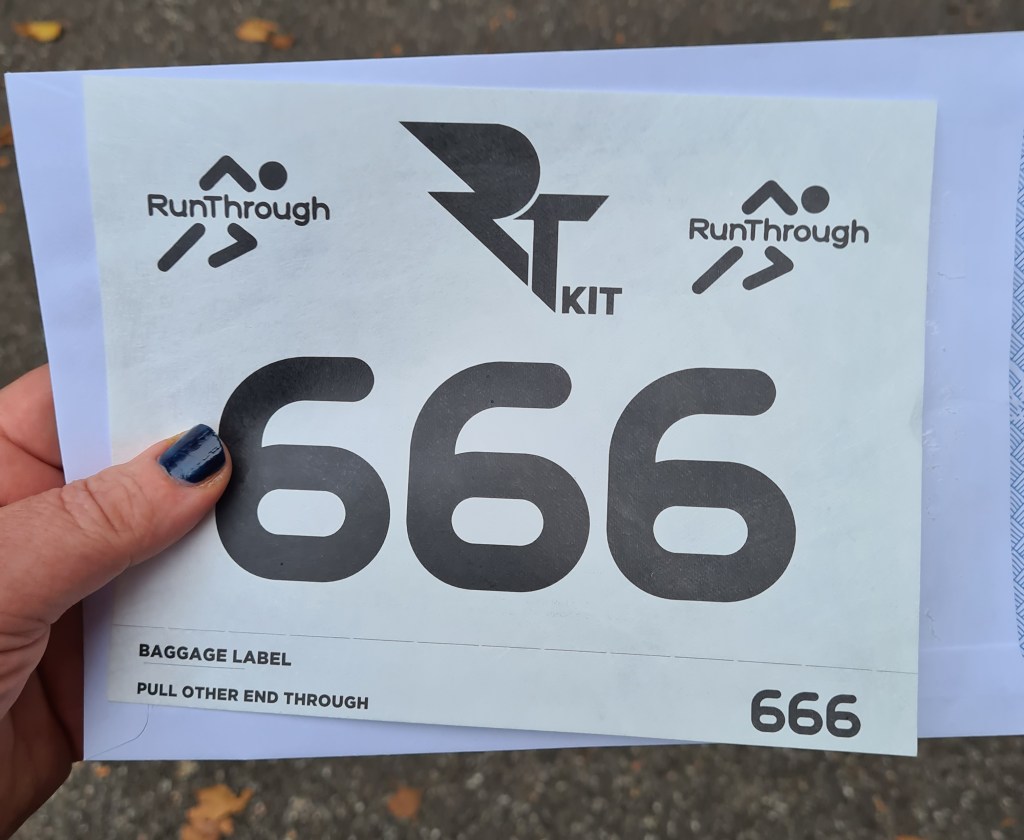
(quando os organizadores deu me o meu número pessoal, foi 666. Que susto! Espero que a minha vitória não seja devida a Satã)

*=Tenho meio século sounds better than tenho um meio século – I have half century = I’m half (a) century old.

**=chocado com is another of those situations where the preposition isn’t what you expect. It’s “shocked with” not “shocked by”

***=and another! At the rain, not in the rain.

I got my clock time about 5 days later and it was even better! Under 56! Hail Satan!
Posted in English

40 Dias and 40 Noites

I’m a 40 days into my long march to C1 proficiency. I’m doing pretty well. Here’s what I’ve been doing in each of the goals:

  • Make a new Twitter account, tweet only in PortugueseDone! I’ve been updating daily, trying to pass as an illiterate Portuguese guy. 52 followers so far and nobody has come out and denounced me as an imposter but I daresay they are thinking it. I did have one person – a Brazilian – refer to me a a Tuguinho, which I enjoyed. She was a nutjob though so it probably doesn’t count.
  • Watch one Portuguese movie or series episode per week. Done! So far, half way through a series called Crónica dos Bons Malandros and I’ve watched one film. I don’t watch much telly generally so this is hard work.
  • Finally finish “A Actualidade em Português*” Done!
  • Then do one esercise of Português Atual* C1 or one from this course per day. Done! I’ve hit at least one exercise per day, usually quite a lot more. I’m about two thirds of the way through the book now and I’ll start on the course next.
  • Only read Portuguese books (exception for work-related books that I need to read for career development). Done. I’ve read no books in English since the start of the challenge apart from a work-related book about spreadsheets.
  • Listen to mainly portuguese audio. Could probably be better tbh. I’ve listened to quite a lot but it’s still in the minority.
  • Memorise one Portuguese poem per week. I’ve done four: Coroai-me De Rosas by Ricardo Reis, Segue o Teu Destino by the same author, Flagrante by Antonio Zambujo and Tenho Pena de Quem é o Meu Amigo by Gregório Duvivier. So I’m one short. This is really painful to be honest.
  • Write something each day on the Portuguese Writestreak subreddit. Done! My streak is up to 40 days now.
  • Follow the Bertrand Portuguese History Course once a fortnight Done! I’ve mentioned this a few times because of the scandal surrounding the teacher. I missed the first session due to senility but that was just before the challenge period so I’m still golden!

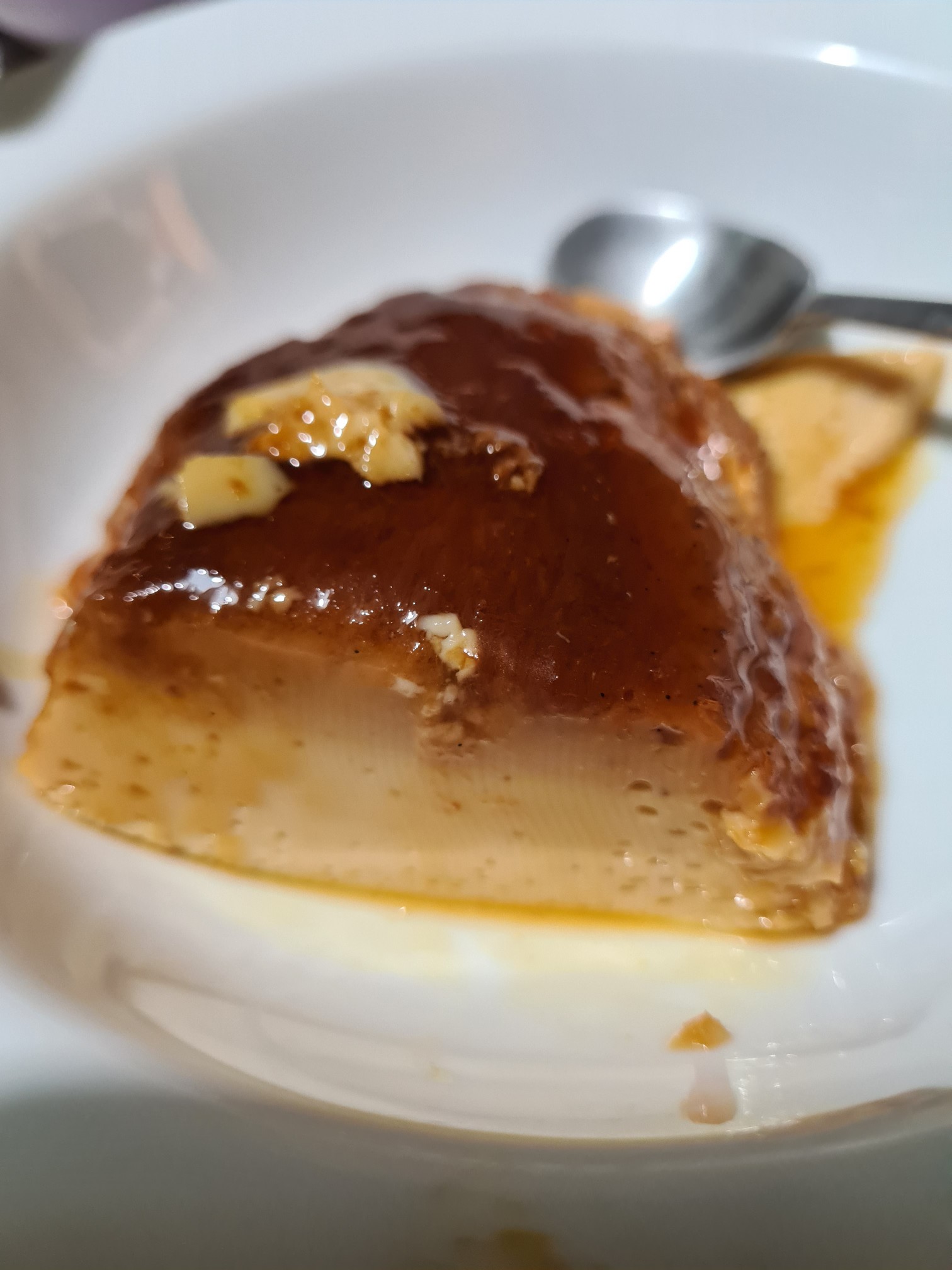
I’ve done some side-quests too! My first one was the project I did to try and understand the outline of Portuguese politics; then I went to see a night of (mostly) Portuguese music and this week I tried my hand at cooking a pudding called Pudim de Leite Condensado from a Portuguese recipe.

Behold its majesty!

Pudim de Leite Condensado
The goodness within!

So that’s how I’m doing. The schedule is a lot easier than I expected. I’m finding it a faff to fit the weekly goals in, especially now I’m in full time work again, but I’ll keep plugging away!

Posted in English

Is This The Most Confusing Verb in the Portuguese Language?

Image of a "Soul Reaver" from some game called Legend of Kain, listed as under a fair use license on Wikipedia. It has nothing whatsoever to do with the article
Frankly, this image is not helping. If anything, it is adding to the confusion.

So I came across this freaky verb today: “Reaver“. No, not rever, reaver. It’s based on the verb “haver” but with the re- prefix. Its h disappears because it would be silent anyway: re+[h]aver=reaver.

Haver is a weird verb to start with because it’s almost always used in the third person singular and it means something like “exists” or “there is”, but it has another meaning, which is “to have” or “to possess” and that’s the sense that’s used with reaver. It means “have again”, “recoup” or “get back”.

Cool, cool, cool, so let’s look for examples of it in use? Most likely form we’ll come across will be re+[h]á=reá, right?

Wrong! Reaver is a defective verb, meaning it doesn’t have a full conjugation. So even though the most-used form of haver is the third person singular present indicative form, that form doesn’t even exist for reaver. The only two forms Priberam’s conjugation allows in the present tense are the nós and vós forms.

Some examples of legitimate use are given in the dictionary entry

  • Ainda não conseguiu reaver o dinheiro que gastou (he still hadn’t been able to get back the money he’d spent)
  • Por duas vezes, eu perdi óculos escuros que nunca reouve (Twice I lost a pair of sunglasses that I never got back)
  • Paradoxalmente, era quando reavia as forças que a certa altura julgava exíguas (paradoxically it was while he was rebuilding his forces that, at some point, he judged them to be too weak)

But if you look at some of the examples Priberam gives of the past-tense use of reaver you come across a citation of a page by Portugal rebelde blog:

  • Cada vez que se reouve uma canção corre-se o risco de reparar em aspetos musicais ou poéticos de que não nos tínhamos apercebido. (Every time one hears a song anew, one runs the risk of noticing a musical or poetical aspects that we hadn’t recognised before)

Well… that’s *not* an example of the past tense of reaver though. That’s the present tense of “reouvir“, meaning to hear again, surely…? And so is this citation from a blog called French Kissin’, also cited by Priberam

  • O disco não tenta sistematizar o tema, muito menos esgotá-lo. Talvez por ser tão despretensioso, ouve-se e reouve-se sem cansar. (The record doesn’t try to systematise the theme, let alone exhaust it. Maybe because it is so unpretentious, one can listen and relisten without getting tired of it)

Googling what I thought would be common forms of the verb, I didn’t really find many examples of it being used in the wild. So… It’s useful to know this exists in case it crops up in books but I don’t think I will be rushing to try and use this one in conversation!

If you’re hungry for more pain and suffering, you can find out more about reaver in this Ciberdúvidas article.

Posted in English

Double Participles

Some verbs have two past participles: one that forms part of compound verbs and one that is used primarily as an adjective

InfinitiveStandard ParticipleShorter Participle
AcenderTens acendido a vela?A vela está acesa
AceitarEle tem aceitado as desculpasAs desculpas foram aceitas
ElegerOs americanos têm elegido TrumpO palhaço cor de laranja foi eleito
GanharEu tenho ganhado muito dinheiroO jogo contra Ucrânia já está ganho
PagarMuito obrigado por ter pagado a contaNão te rales, pai, a contas está paga
ExpulsarO governo tinha expulsado o embaixadorNão trabalhei e acabei por ser expulso