So here’s a good example of half-understanding a song and completely missing the point. I always thought this song was about a Moorish (Moroccan, Saracen, Muslim) sorcerer of some kind, but swotting up on my Ana Moura lyrics ahead of next week’s concert, I found out that it’s not that at all. Apparently a Moura is a fairy-tale creature from old Galician and portuguese legends. Reading the description on the Wikipedia page, it sounds an awful lot like a djinn/genie of Arabic folktales, so it’s not wholly fanciful that the moor in the sense of Moorish invaders (Mouros) and the Mouro/Moura of legend are bound up in some way, but it certainly illustrates the point that relying on half-understanding most of the words in a song can be deceptive!
Reflexive Verbs Latest
Update to the update to the update to last week’s post about reflexive verbs: Camilo Castelo Branco at least knows how to use Suicidar-se
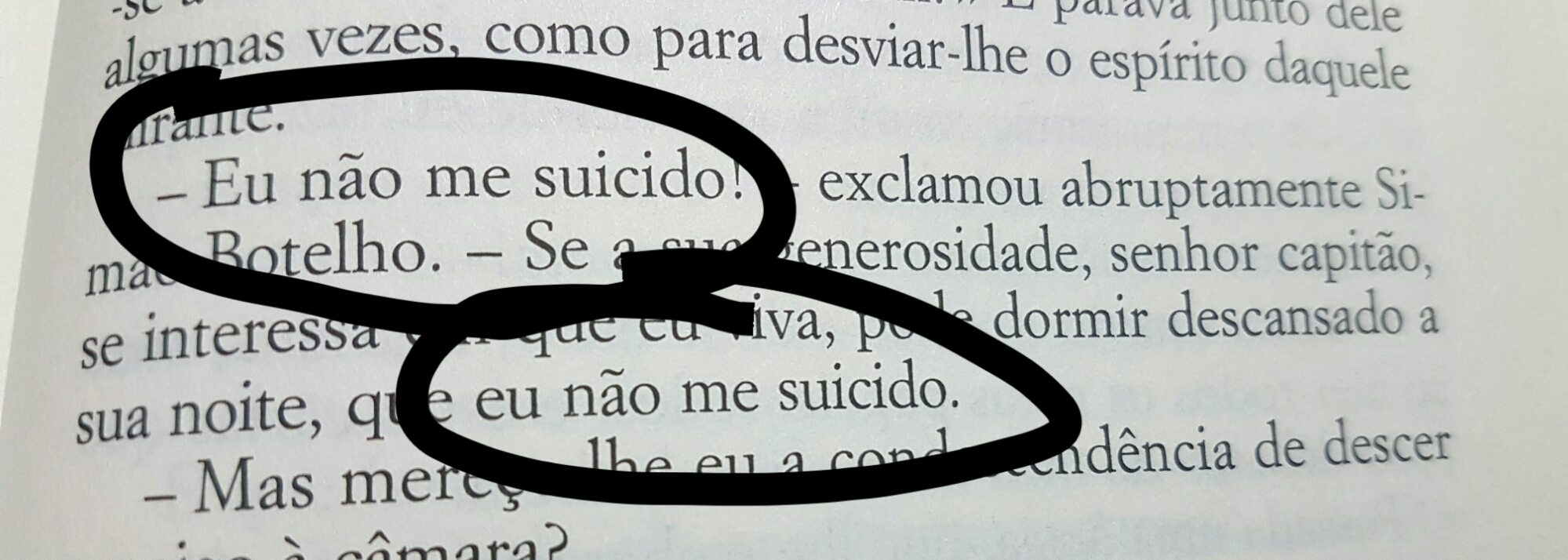
O Consulado.
Fui ao consulado ontem para levantar o meu certificado DEPLE. Os empregados falaram inglês comigo. Senti que devi responder em português mas estava preocupado. Se desse um erro, talvez não mo dariam. Afinal, quando já estava seguramente na minha mão suada, gritei “obrigado” e “até Novembro” e “adeus” e fui-me embora*
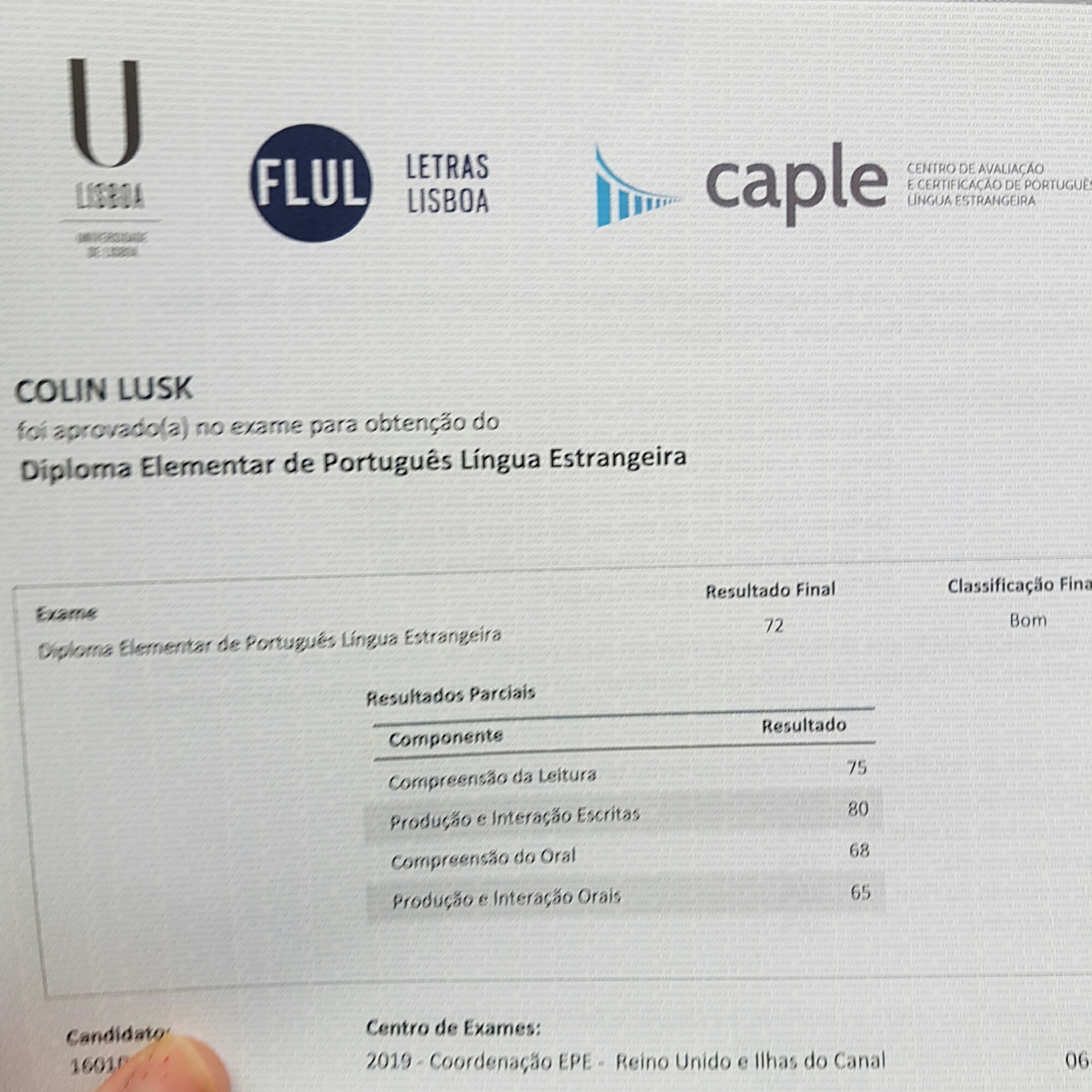

*= or “bazei” is a calão equivalent.
.
As Grandes Mudanças No Estilo de Vida
A semana passada foi cheia de mudanças para a minha família. Desde que a minha filha nasceu, a sua mãe tem sido dona de casa e não voltou ao trabalho excepto durante três meses por causa do seu contrato que tinha com o seu empregador de antes da sua gravidez. Esta semana, afinal, ela recebeu uma oferta e começou a trabalhar num novo escritório no centro de Londres. No mesmo dia, a minha filha começou a sua escola nova. Ela está tão crescida agora! Não posso acreditar! Cada dia da semana, ela organizou um encontro com a sua amiga, e ambas andaram até à paragem de autocarro.
Felizmente, hoje em dia, trabalho a maioria dos dias em casa, e por isso é relativamente fácil arranjar os nossos negócios. A Sra Lusk sai do apartamento às oito menos um quarto de manha, enquanto que a Olivia fica a comer o pequeno almoço. Passado pouco tempo, ela sai também e eu continuo a trabalhar. Às vezes, faço uma pausa, e faço uma tarefa qualquer que precise de ser feita, ou talvez leia um livro ou escutar um podcast português. No fim do dia escolar, a Olivia e a sua amiga regressam ao apartamento e faço-lhes uma sanduíche enquanto que ela me diz sobre o seu dia e sobre as suas amigas novas. Mais tarde, a minha esposa volta também.
Tenho cozinhado todos os dias desde o começo da escola. Gosto deste novo estilo de vida porque posso passar mais tempo com a minha filha e ao mesmo tempo, tenho muito tempo em casa sozinho em que consigo trabalhar muito. Existem outras vantagens também: vamos ganhar mais dinheiro, a Olivia tem mais independência, e ora bem, acho que a minha esposa estava um pouco aborrecida em casa todos os dias, mas agora tem um novo desafio. Sem dúvida, vamos encontrar muitos problemas no futuro porque falar-nos-á tempo fazer tudo que devemos, mas claro que muitos casais em toda parte têm problemas mesmos. Se tivermos problemas, não importa o que, lidaremos. Aconteça o que acontecer, vamos lidar com eles.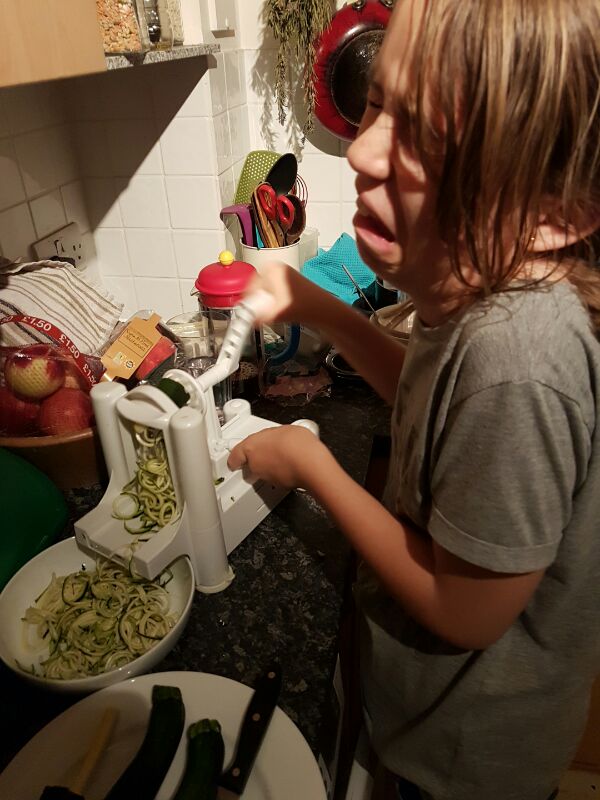
Espere. Um momento. Lembrei-me… Oh meus deuses! Terei de passar a minha roupa a ferro ! Se ela não aceitasse este trabalho, eu não teria de fazer isto! 😦
So I followed my list of gender rules and (bar a couple of occasions when I got it wrong myself) the only one where I applied a rule correctly and it was wrong was “um(a) sanduíche”. It’s a concrete noun ending in – e so in theory should be masculino but it’s not. Well, I said that rule was crap and this certainly seems like a good illustration of the point.
Perdido em Tradução
I put this in Twitter the other day but it seemed relevant to the blog too: I was playing with the subtitle feature on youtube to see if it would recognise what I was saying as actual Portuguese words but I left it on English language, and…
Sauce for the Gender
In the third of what I am now definitely thinking of my Four Evil Exes articles, here’s what I can find on the subject of remembering which nouns are masculine and which feminine. It turned out to be easier than I thought, although I’m sure the exceptions will plague me. I wish I’d done it ages ago, actually, but that’s the trouble with the 4 evil exes: they are boring and difficult and don’t have fun workarounds I can use, so it was just a case of ploughing through the literature – in this case, “Portuguese – an Essential Grammar” by Amélia Hutchinson and Janet Lloyd, with some supplemental examples cribbed from Fun With Portuguese and My Five Romances. I also got some tips from Benny the Irish Polyglot and read an entertaining post on the subject by Lady of the Cakes, whose blog is a great deal prettier and better-written than mine. Her post is a bit more pessimistic when it comes to finding patterns in this mess, but on the plus side does have (a) a picture of some cake and (b) rude words.
As you can see, most of the rules have exceptions, so it’s not as if I can be guaranteed to never screw up again if I learn them but if I don’t happen to know a word, it might boost my hit-rate a few percentage points.In most cases, more specific rules seem to override more general ones. So for example, “milhão” is masculine because it meets the “all numbers are masculine” rule even though it’s an abstract noun ending in -ão.
Oh and sorry about the colour-scheme, but… well, you know…
| Rule | Examples | Exceptions |
|---|---|---|
| Dependent: Male and Female animals/people depend on individual’s sex* |
|
|
| Dependent: Ordinal numbers depend what’s being counted |
|
|
| Masculine: Nouns ending in -o (nb, not -ão though) -r -l -z |
|
|
| Masculine: Concrete nouns ending in -e** -ão*** |
|
|
| Masculine: Names of Lakes, Rivers, Mountains etc |
|
|
| Masculine: Car brands**** & types of wines |
|
|
| Masculine: The seasons***** |
|
|
| Masculine: Weekend days |
|
|
| Masculine: Words from greek, usually ending -a: most usually in -ema -grama -eta |
|
|
| Masculine: Letters |
|
|
| Masculine: Cardinal numbers |
|
|
| Feminine: Most words ending in -a |
|
|
| Feminine: Words ending -dade -ie -tude -gem -ice -ã |
|
|
| Feminine: Abstract nouns ending in -e -ão*** |
|
|
| Feminine: Names of towns & countries |
|
Places specifically named after male things:
Places consisting of a male noun + adjective
|
| Feminine: Names of the Arts and Sciences |
|
|
| Feminine: Names of days during the working week |
|
*=This rule supersedes all others. So “a mulher” is feminine even though it ends with r, for example
**=When looking for samples of nouns ending in -e as examples to use of concrete (masculine) and abstract (feminine) it was striking how many exceptions there were to this rule on the list. I’ve left it in because it’s in the textbook but, at least with the more common nouns, it seems like feminine outnumbers masculine for most -e nouns, even the concrete ones
***=When looking for samples of nouns ending in -ão as examples to use of concrete (masculine) and abstract (feminine) it was striking that the first twenty or so -ão words on this list were all abstract, feminine ones
****= Jeremy Clarkson would love this, I’m sure
*****=one exception out of four words is pretty shonky though. It’s only one away from a 50-50 split! Maybe best remember these by their endings and pretend the rule doesn’t exist!
Oh Se Can You see?
This is the second of my brainstorms about the four intractable problems I identified last week, trying to wrestle with the subject by putting it into a post, because explaining something to someone else is usually a pretty good way of learning it yourself.
Quite often in Portuguese, the word “Se” crops up in unexpected places, hanging around verbs. In some cases, it just means “if” and that’s easy enough to spot, but when it’s acting as some sort of pronoun things get a little weirder. Here’s a breakdown of some of the related grammar:
As a word meaning “If”
As I said, this is the odd one out, really. In this case, the word happens to be hanging around the sentence and maybe the verb will have to change as a result but in this case it’s not really strongly interacting with the verb, so you can just translate it in your had as “if” and move on. If you’re at B2 level and don’t already know about the subjunctive imperfect, go and have a read. Otherwise, forget it.
As a reflexive pronoun
Se is one of the pronouns used in the construction of reflexive verbs. Reflexive verbs. Reflexive verbs are just verbs in which the subject and the object can be the same thing. For example, “I can dress myself”. I am the one who is doing the dressing, and I am the one being dressed, so it’s a reflexive verb. In Portuguese and other romance languages, reflexive verbs seem a bit counter-intuitive.Sometimes they are used in situations you wouldn’t expect and sometimes they mean “each other” instead of “oneself”.
Of course, it’s not always “se”. The complete set of pronouns looks like this:
- me
- te
- se
- nos
- vos
- se
Here are some examples of reflexive verbs:
| Standard | Meaning | Reflexive | Meaning |
|---|---|---|---|
| lembrar | to remind | lembrar-se | to remember |
| amar | to love | amar-se | to love one another |
| apaixonar | to fall in love | apaixonar-se | to fall in love with each other |
| deitar | to lay (something) down | deitar-se | to lie down |
| levantar | to lift | levantar-se | to get up |
| pentear | to comb | pentear-se | to comb oneself |
| banhar | to bathe (someone) | banhar-se | to have a bath |
| chamar | to call (someone) | chamar-se | to be called/named |
| lavar | to wash something | lavar-se | to have a wash |
| sentar* | to put someone in a sitting position? | sentar-se | to sit down |
| sentir | to sense something | sentir-se | to be conscious of something |
| voltar | to turn, return, re-do | voltar-se | to turn around |
| servir | to serve | servir-se | to help oneself to |
| vestir | to dress someone | vestir-se | to get dressed |
| ** | suicidar-se | to kill oneself | |
| cortar | cut | cortar-se | to cut oneself |
*sentar apparently exists but it’s not used often
**suicidar doesn’t seem to exist as a non-reflexive verb, for reasons that are probably pretty obvious….
—update—
Of course, by sod’s law, within hours of publishing this post, I see this:
…and now I’m ready to suicidar(-me) too.
—update to the update–
My teacher says it’s just bad grammar. What lessons do we learn from this? Don’t trust Twitter for lessons in correct use of language.
———————-
————-
And here are a few that need pronouns with them (to call back to this post)
| Infinitive | Meaning |
|---|---|
| aproveitar-se de | to take advantage of |
| convencer-se de | to convince oneself about |
| lembrar-se de | to remember about |
| esquecer-se de | to forget about |
| queixar-se de | to complain about |
| rir-se de | to laugh about |
| decidir-se a | to decide |
| dedicar-se a | to dedicate oneself to |
| acostumar-se com | to get familiar with |
| parecer-se com | to resemble |
| surpreender-se com | to be surprised by |
As some other kind of pronoun
Hm… Now I was going to write a whole section on “se” being used as another kind of pronoun but I had a look at the examples and decided that they were all specimens of either those ones *points up* or these ones *points down*. OK, cool, well that’s one piece of confusion that has been expelled by writing this post, so… bonus!
As part of a sentence in the passive voice
Passive voice is when you use a phrase like “it was done”, “mistakes were made”, “a murder was committed” instead of the more direct “He did it”, “We made a mistake” or “Someone committed murder”. I quite like this form of words and use it in writing but some people find it vague and evasive, and for that very reason it’s popular in political speech and PR briefings.
In portuguese there are two ways of writing the passive voice and one of them looks a lot like the reflexive verbs I mentioned above:
“O livro publicou-se” means “the book was published” but you could equally read it as a reflexive verb “the book published itself” which it didn’t of course, but you can see how the connection is made. Another way of expressing the same thing in Portuguese looks much more like an English construction: “O livro foi publicado”
- Em Portugal bebe-se muito café (A lot of coffee is drunk in Portugal)
- Fala-se Inglês (English is spoken here)
and in the negative…
- Não se fala Espanhol no Brasil
This Week In Teaching
Some news about learning resources I have endorsed on here and some new ones I haven’t:
If you’ve tried the podcast “Practice Portuguese” but didn’t get into it, now might be a time to have another look. Joel is now on it full-time and quit his day-job, so there are longer episodes with a lot more explanation and new features coming out.
Say It in Portuguese has been unavailable to download for a while now but they are expecting to be back online in a few days, so it’s worth checking iTunes if you haven’t already.
A couple of teachers I know have new websites: a good friend of mine, Joana, has started teaching Portuguese face-to-face along with various other things she does, so if you live in West London and are looking for someone to help you sort out your linguistic problems – or even if you know a criança who needs a professora for some out-of-school tuition, you might want to have a look at her site, The Kew Tutor. If you don’t live in West London, Ana, a very reliable and professional iTalki tutor I have been working with on spoken portuguese has a brand new blog which you can find here.
A Música
I’m just putting a list together of Portuguese music that I can listen to on Spotify and I have been looking at lyrics/translations of songs. There are still loads of tracks on my iPod that I can’t quite follow so I have to figure out what the words are. It’s a pretty good way of learning vocabulary. As usual, I am often quite surprised at the humour hiding in what sounds like a fairly straight-faced song. Like this one for example: I had no idea what they were saying, but once I saw the words on the screen this whole world of content poured out of it and now I can enjoy it on a whole other level.
The list is here, by the way. It has a couple of non-European accents – Os Mutantes (Brasil) and Cesaria Évora (Cabo Verde) but apart from that it’s sound.
I think I’m something of a freak for not liking DAMA since everyone asks me if I do. They must be like the Portuguese Coldplay or something – one of those bands that seem to be inexplicably popular despite their overpowering blandness. I only like one song and that has a Brazilian rapper on it so I can’t listen to that either.
#HotSummerReading Wrap-Up
 So I’ve finished my reading for this book blogging challenge and it’s been a brilliant source of motivation to read portuguese in massive (for me) doses. I’ve written reviews of all three books on iTalki and I wanted to make a recorded version as well to make some of the vocabulary stick, and my daughter, who is an expert on vlogging, helped me record it. It’s pretty dreadful though, I’m afraid… I’ve put it down at the bottom where it belongs
The Text Versions
I’m indebted to Natan, Wagner, Samuel, Milena, Gabriel, and especially Sophia and Rubens for their excellent corrections on all these reviews
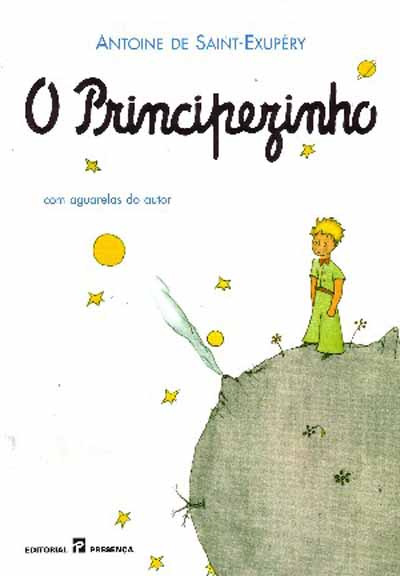
O Principezinho
O Principezinho é um livro de Antoine de Saint-Exúpery, um autor e aviador francês. Li-o em Francês quando era jovem, e mais uma vez em Inglês quando tinha uns vinte anos porque um amigo deu-me uma cópia. Agora que estou a estudar Português, comprei a versão portuguesa e li-o para parte dum desafio de leitura.
O livro é pequeno, com muitos desenhos (aguarelas) e por isso é muito fácil para um aluno com poucos conhecimentos da língua. O argumento consiste num piloto perdido no deserto. Acho que este piloto é o próprio autor do livro. O seu avião não funcionava e ele estava a tentar consertá-lo. De repente, um rapazinho apareceu. Com as suas palavras primeiras, o rapazinho – o principezinho do título – pediu-lhe que desenhasse uma ovelha. Tinha muitas dúvidas sobre a vida na terra e contou uma historia da sua vida num pequeno planeta e da sua viagem através das estrelas. No caminho, encontrou muitas “pessoas crescidas” que tinham atitudes estranhas de adultos em toda parte: interessavam-se apenas por dinheiro, no seu próprio poder e nos seus trabalhos.
No curso da história, o protagonista fez muitas observações sobre as diferenças entre as crianças e os adultos. Aos adultos falta-lhes* de imaginação. Não compreendem nada por causa da sua obsessão com números. Adoro este livro!
*=Woah! This grammar was contorted into a shape I really wasn’t expecting by the people who marked it
O Mandarim
Como disse no registo passado, eu tive vontade de fazer parte dum desafio de leitura, e por isso li dois livros portugueses. Actualmente, estou a ler um terceiro – em inglês – e vou escrever sobre ele em português mais tarde.
O segundo livro foi “O Mandarim” de Eça de Queiroz, um famoso autor português do século XIX. “O Mandarim” é um conto muito curto dum homem que tem a oportunidade, por circunstancias sobrenaturais e esquisitas, matar um imperador chinês e herdar as suas grandes riquezas. A história lembrou-me dos livros “Faust” (de Goethe) e “Doctor Faustus” (de Christopher Marlowe). Confesso que não percebi tudo no livro. Hei de voltar a lê-lo mais tarde quando tiver mais tempo, mas no fim, o homem fugiu duma emboscada e regressou a Portugal.
Dentro da capa da minha copia existe um CD com a gravação duma mulher a ler a história, então posso praticar a compreensao auditiva do texto ao mesmo tempo que leio. Há também um apêndice lexical com traduções das palavras difíceis. Infelizmente, um dos capítulos estava ausente no CD, e as traduções são em espanhol! Ora bem, não faz mal. Tenho um bom dicionário e sou perfeitamente habilitado para ler um capitulo sem ajuda!
The Puppet
“The Puppet” (A Marioneta) é um livro de Ibrahim Al-Koni. Para ser honesto, estou a escrever este comentário antes de acabá-lo por… Por razões, OK, não importa nada o quais são as razões!
Ora bem, este livro é o segundo duma trilogia. É muito difícil mas muito interessante apesar disso. O argumento consiste num grupo de nómadas Tuaregs. No final do livro passado, acabaram a caminhar no deserto e estabeleceram um aldeia acerca dum oásis. No curso deste livro, a sua sociedade mudaram a seguir às ideias do Ibn Khaldun, um escritor árabe do século XIII. Escolheram um líder novo. Esse líder é a Marioneta do título. Os cidadãos mais ricos começaram a persuadi-lo a alterar as regras para deixarem de utilizar o ouro como dinheiro nas trocas comerciais. Estas mudanças, segundo Ibn Khaldun, enfraqueceram o povo que se preparou para o derrubarem por um novo, o mais forte grupo de nómadas. Ups – Spoiler alert! Isto vai demorar até o livro terceiro…
O jantar está pronto. Não tenho tempo para reler isto nem fazer as correcções. Ora bem, provavelmente haverá mais erros do que normalmente…
The Video Version
My daughter made the background and has recorded her own (english) review of the Little Prince, and answered some of the “Top 6” lists on the #HotSummerReading challenge page.
 Luso
Luso 