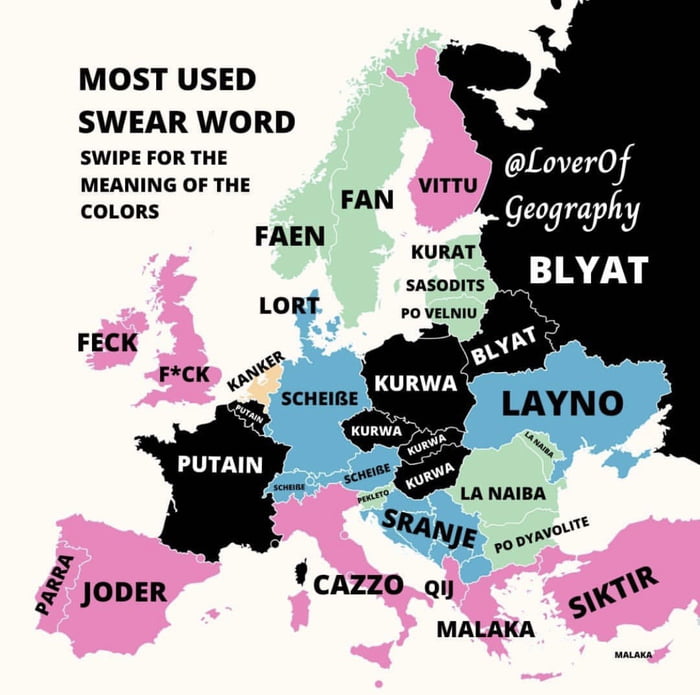
I mentioned the “Parra” map in reddit but in the course of chuckling about someone else’s typo, I typed “mãos” in place of “mais”. Someone replied with “diz o roto ao nu”. Obviously an expression of some sort. Apparently its full version is “Diz o roto ao nu, porque não te vestes tu?” I get the gust if this but wasn’t sure what “Roto” meant because it has a ton of different meanings. In this case, though, it means someone whose clothes are all raggedy. The ragged-clothed guy said to the naked guy, why don’t you get dressed?
Of course, they both need to get dressed but we can’t always see our own faults. It’s a little like the pot calling the kettle black. In fact, there’s an even more similar expression meaning the same thing: “diz o tacho ao sertã, tens o cu preto” where a tacho is a small, cylindrical pan and a sertã is a big, deep pan like a skillet or a casserole dish or something. Both have had their arses blackened by exposure ginthe flame.
Eu a a minha esposa casamo-nos há vinte anos (dia vinte de março 2002)
E ainda não sou fluente. 😕
We had a good day though. Saturday was Portuguese Father’s Day too but it passed by unnoticed. I can’t wait till I get dual citizenship so I can have two father’s days a year. That’s how it works, right?
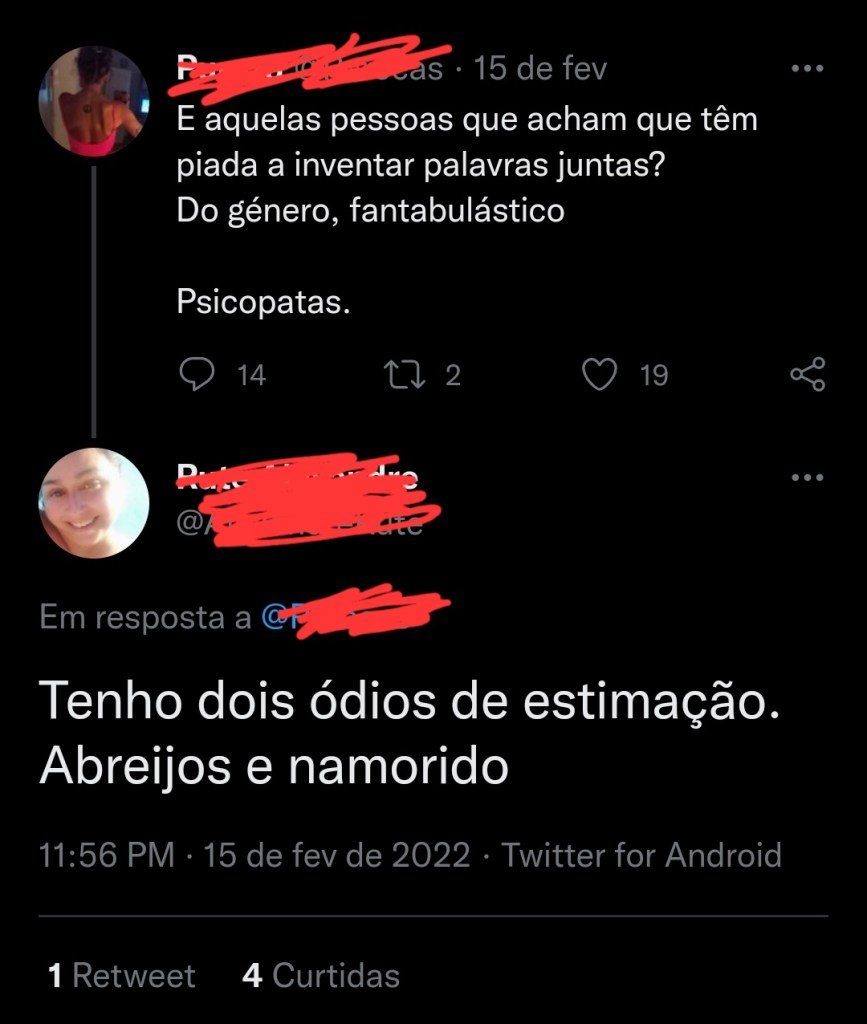
I saw someone on Twitter signing off a tweet with “abreijos” which is obviously a mixture of “beijos” (kisses) and “abraços” (hugs). I love it! I did a post a few years ago about equivalents of “frenemy“, and in general I am very pro-splicing, but this was a new one on me.
Looking around for other examples, I found plenty, including these ladies who were less impressed with the idea of these frankenwords…
But woah, there’s a bonus one in there: namorido, which looks like a mix of “namorado” (boyfriend) and “marido” (husband). Seems to just mean a long-term, live-in boyfriend who hasn’t actually bothered with the whole ring thing. I asked about it on reddit and everyone agrees it’s a neologism from Brazil. True, it looks like everyone using Namorido on twatter is Brazilian, but Abreijos is used widely by Portuguese tweeps, so I am definitely going to pull that one out when I get an opportunity.
Se o mundo de Harry Potter fosse realidade e se o chapéu selecionador fosse colocado na minha cabeça, acho que o seu veredito seria “Hufflepuff” (Lufa-Lufa*). Não tenho o heroísmo que é necessário aos membros da Gryffindor (Grifinória). Não sou racista nem malévolo, portanto não seria bem-vindo na casa Slytherin (Sonserina). Falta-me a inteligência dum Ravenclaw (Corvinal), mas quanto às qualidades da casa Hufflepuff – trabalhador, leal, paciente, gordinho – tenho todos a dar com o pau! Nós Hufflepuffs lemos muito, mas jamais dobramos o canto da página. Bebemos chocolate quente. Aprendemos português, mas fazemos muitos erros de gramática e adoramos trocadilhos.
*I added Portuguese names for the houses because I felt like it was worth knowing them but they’re actually only from the Brazilian version. I’m pretty sure the PT-PT translations use the original names.
A portuguese corrector deals with a misplaced pronoun.
Guerra Civil
(this is me trying to explain the concept of an online knitting community imploding under the weight of its wokeness in one of the posts about knitting that became “This Lã is Your Lã“)
Imaginem* o seguinte: (1) há um site com mil membros (2) um aderente do site um dia escreve um comentário polémico… Sei lã lá, talvez esteja zangado por ver um outro membro a tricotear com uma espécie de lã específica que, antigamente, era usada exclusivamente por um grupo étnico chileno qualquer na sua malha tradicional. (3) outros membros do site concordam. É tão desrespeito para com** aquele povo. Que desgraça! Que safada! (4) A pessoa que mencionou a lã ouve falar da discussão e vem explicar o seu motivo para ter escolhido a lã e os amigos dela apoiam-na. (5) a discussão aquece. Os apoiantes do comentador não gostam da explicação. Alguém tem uma bisavó daquele grupo étnico e na sua opinião, está situação trata-se de racismo….enfim, sabem como estas tempestades correm nas redes sociais. Em breve, uma facção é expulsa. Era isso que queria descrever.
*In English you don’t have to think to much about whether you are addressing one person or many people when you write online but in Portuguese you need to choose an ending for your verb and here I addressed one person “imagina” but I was reminded that since a lot of people might be reading, “imaginem” was better. And further down, “sabem” in place of “sabes”
** “para com” was added by the corrector. I used “a”, and I have to admit I’m shook because I have no idea why the double preposition…
This could have been a footnote to Wednesday’s post, but if I turn it into a pun headline about an indie band from the nineties it’s more likely to stick in my head, so here we are.
I explained that the word “Scoop” wasnt translated literally in the title of Evelyn Waugh’s book because it was a specific journalistic term. Apparently there is an equivalent word though, and that word is “furo”, or more specifically “um furo jornalístico”. According to Priberam, although the primary meaning of furo is a hole (specifically a neat hole made by a hole punch or an awl or some similar tool) one of its meanings is “notícia jornalística exclusiva ou dada em primeira mão”. A Scoop. Beautiful! This is the good stuff, people.
Portuguese twitter is very amused by this Instagram Post from “Lover of Geography”
For those not in the know, the actual palavrão here is “porra“, not “parra”.
Palavrão? Don’t I mean “asneira”? Palavrão is a swear word, whereas an asneira is any bad thing. You can “dizer asneiras” (say bad things) but you can also fazer asneiras (do bad things) so an asneira isn’t necessarily a swear word, it depends on context. The other relevant word is “calão” which just means slang.
By the way, why is Fuck the only one of these considered rude enough to have an asterisk? Or do they mean that English people actually say “Effasteriskseekay”? I wouldn’t put it past some people to be honest.
Today’s text only had one correction. I can’t really believe that and suspect the corrector was being lenient so there might be a few more cock-ups in here. I knew it was too good to be true. I’ve amended it now. Thanks to Dani for the corrections.
Há um livro de Evelyn Waugh chamado “Scoop”. Em português o título é “Enviado Especial” porque Scoop não se traduz bem. Literalmente significa “pegar numa porção de algo com uma ferramenta ou utensílio tal como uma colher de servir ou uma concha” mas também tem um significado figurativo – ser o primeiro jornal/jornalista a anunciar uma notícia super-interessante.
O livro conta a história de um jornal, o “The Daily Beast” (sim, como o website – roubaram o título do Waugh!), cujo proprietário se chama Lord Copper (Senhor Cobre, Dom Cobre*? Eu sei que um nome não se traduz mas diverte-me traduzir na mesma). É uma personagem assustadora. Os seus funcionários não ousam negar nenhuma afirmação que venha dos seus lábios, por muito errado que esteja.
Portanto, se tiver razão, os funcionários dizem “Sem Dúvida Senhor Cobre” (definitely Lord Coooere), mas se estiver errado, só dizem “Até certo ponto, Senhor Cobre” (Up to a point, Lord Copper)
* correct answer for a translation of the English word Lord is Lorde.
Here’s a text from Thursday about how everything is the fault of The Gays.
Na segunda-feira, havia uma notícia sobre o líder da Igreja ortodoxa russa. Disse que os valores liberais do ocidente estavam entre os motivos da invas… hum…peço desculpa… da “operação militar” na Ucrânia, e acima de tudo, citou as “marchas de orgulho gay” por serem “projetadas para demonstrar que o pecado é uma variação do comportamento humano”
Esta não foi a primeira vez que um líder da Igreja culpou os homossexuais pelos problemas do mundo. Nos Estados Unidos, por exemplo, há quem acredite que agitar uma bandeira arco-íris contribui para tempestades e terramotos.
Então, a mensagem é muito nítida: a homossexualidade é mais perigosa do que qualquer outra força no universo. A Ucrânia estava a construir uma reserva de lésbicas termonucleares e Putin foi forçado a intervir. Não havia outra hipótese.
Just after writing this text, someone randomly retweeted this video into my timeline. Woah. Maybe the churches are following the wrong JC: José Cid instead of Jesus Christ.
Quando mencionam o nome de José Cid, nunca penso nas músicas dele. Só me lembro, sim, deste seu momento extraordinário de 2006. Imagine não ser homofóbico, it’s easy if you try. pic.twitter.com/BeS8wtqq1u
Second title in a row that hasn’t had any proper words in it but I think you’ll agree it’s merited: I mentioned a while back that I have been following a “Portuguese History” course delivered by two University lecturers, at least one of whom is also a TV pundit and alleged plagiarist. The course title is a bit of a misnomer because they mostly just deliver sermons on Marxist theory using Portugal as an example, but that’s cool, I don’t mind a little light Marxism.
Anyway, today I came across this clip of her on TV “a papaguear” (brilliant verb meaning “to parrot”) Putinist propaganda. Sigh. I think I might see if I can switch to a different course. I can’t be arsed with this.
Isto é a Raquel Varela, na sexta-feira, a papaguear a propaganda russa de que a maternidade bombeada de Mariupol tinha lá o batalhão Azov, e que não estava em funcionamento normal com civis. Há pessoas pagas para realizar este tipo de comentário. pic.twitter.com/HYOkivI8CQ
I lost my streak in Writestreakpt. I added a text yesterday which was number 181, but I started this daily text on a Monday, so Sunday texts should always divide neatly by 7. In other words, I should have been at 182 😱. I looked back and I seem to have skipped a day in mid-week and now I should be back at about 4 or 5. Frustrating…



 Luso
Luso 