Posted in English, Portuguese

Capitães de Abril (April Captains)

Ontem de manhã, acordei muito cedo.Não pude voltar a dormir mas também não me apeteceu* começar a trabalhar às seis de manhã. E quanto a uma corrida ao amanhecer… Esquece.

Por isso, fiquei cá dentro e vi o filme Capitães de Abril, sobre a revolução dos cravos. Tentei vê-lo muitas vezes anteriormente mas cada vez falhei porque não entendi patavina. Contudo, esta tentativa correu melhor, e consegui seguir o enredo e a maioria do diálogo (embora haja muitos buracos…)

maia
Main picture: the real Salgueiro Maia, and inset, the fictional version played by Stefano Accorsi

Foi muito educativo para mim, porque mostrou o contexto da revolução: as guerras coloniais, claro, e preocupações sobre o que seguiu depois: uma ditadura militar (não: a luta contra o militarismo foi o incentivo maior dos rebeldes) Ou pode ser mais influência da Rússia (claro que não: este foi Portugal nos anos setenta, nem os Estados Unidos no ano 2017). Adorei o filme. Confesso que não sei quão realístico é, mas a história foi bem contada e os personagens parecem credíveis: nem santos, nem “heróis de filme de acção” tipo Hollywood, mas pessoas verdadeiras.

More about Capitães de Abril on Wikipedia in English and Portuguese. If you are interested in watching it, though, all I can say is good luck! I can’t find it on any of the Portuguese sites I usually use, and even on Amazon it’s currently showing as out of stock although when you read this that might have changed, you never know. You could try Youtube. I think that’s where I extracted the digital version I have. Not legal, I know, but believe me, if I could give them my money, I would!

*=I could have used “não tive vontade” here. Vontade seems to be one of those well-used Portuguese words that I keep forgetting exists.

Capitães-de-Abril-DVD

Thanks very much to Daniane and Larissa for correcting my mistakes

Posted in English

1986

I keep seeing Nuno Markl post stills from his new show “1986 A Serie” which looks like a slice of eighties nortalgia set against a backdrop of politics from the day. I hope it’s good and that I am sharp enough to actually understand what’s going on!

Posted in English

Fizeram Alguns Erros

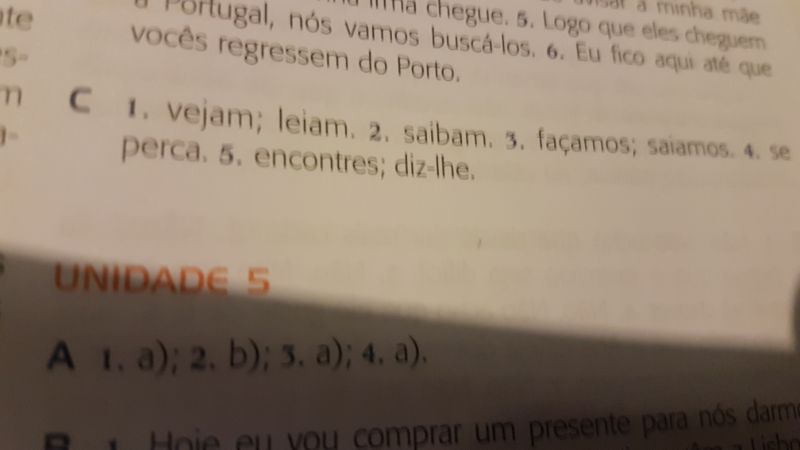
Well, I said the other day I was going to do more grammar exercises and that’s just what I’ve been doing. I’m well into “Gramática Aplicada” and I have found two mistakes in an exercise on subjunctive verbs.

As you can see, I’ve use Infitivo Pessoal in both the first and second sentences. The answers given both use P de C though. It seems to be an error. Both would be right if you chucked a “que” into the original sentences. Worse, the second one is in third person plural instead of second person singular. I checked with two actual Portuguese people to confirm I was right before dashing to social media to brag shamelessly though.

Posted in English, Portuguese

IGLC

I’m doing the Instagram Language Challenge (#IGLC) in Augsut.  Monday is video day so here’s a video I made, describing a book I bought.

Posted in English

Progress half way through the year

I’m getting quite a lot of study time in the bank but still find myself frustrated at the lack of progress. A lot of this is down to the fact that I have a pretty bad memory generally, but I definitely could be using the time better. I’m writing a lot and reading a lot but not putting myself through the hard stuff: learning vocabulary and challenging my grammar with written exercises. I need to do a lot more of both because my written texts are starting to sound like newspeak with the same basic words put together with “not” or “very” instead of using interesting synonyms. I’m still aiming for an exam at the end of the year but can’t decide whether it should be a better B2 or really stretch for the C1, which would need a hell of a lot more work in the next 4 months or so.

Posted in English

Another Crap Joke

I’m ridiculously proud of this even though I know it doesn’t really work. It’s from a twitter game called #nowReading where my friends and I try to make books with authors whose names seem appropriate. The only rule is you have to use real names, not just make up some silly surname. So you could do “Omar Salgado” but not “Anne Dorinhasemvoo” for example. I did one that got RTed at Neil Gaiman and I decided to follow it up with one based on his wife, and do the whole thing in Portuguese.

First of all, the title of the book is “What do you suggest I should buy for my wife who likes banana trees?” The author is Amanda Palmer or “A manda palma” which sort-of means “Send her a palm tree”.

Except it doesn’t. The grammar of “a manda” doesn’t really work – I think it should be “manda-lhe”. “Palma” needs and indefinite article, but even then, it doesn’t mean that kind of palm, it means the palm of a hand. So it should really be something like “manda-lhe uma palmeira”, but I don’t care, it makesme chuckle and that’s all I care about!

Posted in English

Something For Nothing 

I took part in a free seminar today about learning from mistakes in language learning. I’m sorry to say, I wasn’t wildly impressed. It was given by a teacher who is also a member of the online polyglot scene; a great advocate for the joy of languages who has leveraged her videos and general social media charisma to build her brand and gain new customers at a higher premium. In short, someone I admire in many ways.

Screenshot_20170701-170037

I realise of course that a free seminar is bound to include some element of sales pitch but in this case it really swamped the actual educational content which was reduced to a five or ten minute slice between the intro and the epic build up of the self study course. I couldn’t help feeling I’d have been better off reading or writing something.

Ah well, I guess in future I’ll just treat these free things with a bit more skepticism…

Posted in English, Portuguese

Ciúme – Translation

I’ve been trying to translate this new Ana Bacalhau song. It’s pretty difficult. I get the general gist: she’s describing her jealousy as a gift she gives. The actual language isnt easy though and I have probably made a load of mistakes.

Mais que uma rosa
More than a rose
Mais que um perfume
More than a scent
Dou-te uma cena de Ciúme
I give you a sense of jealousy
Faço prova aparatosa
I make a huge proof
Do meu amor por ti
Of my love for you
De peito* aberto
With an open heart
Cabeça ao lume
Head aflame
Mostro-te as minhas feridas de guerra
I show you my battle scars
Gentileza que o peito descerra
Kindness that my heart unlocks
Aceita o meu ciúme
Accept my jealousy
À vista de todos por cortesia
In the sight of everyone as a courtesy
Salta-me a tampa
My lid flies off
Vou ao teto
I’m going to the cieling
Como quem cede um afeto
Like someone who gives affection
Em plena luz do dia
In the plain light of day
Ciúme que não sai do peito
Jealousy that doesn’t leave the heart
É espinho que corta a direito
Is the thorn that cuts right through
E queima como sal
And burns like salt
A ferida onde fermenta todo o mal
The injury where the all the evil lies
Podes soltar aos quatro ventos
You can release the four winds
Podes não contar a ninguém
You can’t count on anyone
Mas toma conta dos meus tormentos
But take account of my torments
Como um presente de quem te quer bem
Like a present from a wellwisher
Guarda esta birra de menina
Keep this temper tantrum
Aceita a minha gentileza
Accept my kindness
Guarda com uma certeza
Keep it as a certainty
De haver quem te queira assim
That someone wants you like this 
E se eu às vezes abuso do meu
And if I sometimes abuse my own
É porque nunca acusas o toque
It’s because you never acknowledge the touch
Ciúme que não sai do peito
Jealousy that doesn’t leave my heart
É espinho que corta a direito
Is the thorn that cuts right through
E queima como sal
And burns like salt
A ferida onde fermenta todo o mal
The injury where the all the evil lies


*=Peito actually means “breast” but “heart” was the only way I could make it sound non-ridiculous in english.

Posted in English, Portuguese

Adventures in Bilingual Instagramming

I’ve been trying to write most of my instagram posts in both english and portuguese recently. It’ a good way of getting some daily practice without feeling the need to write a whole mini-essay in iTalki. Here is a sampling of posts from our recent trip to the Hay on Wye literary festival for example. I usually prefix each section with the emoji flag of the UK and Portugal, which works well on the telemóvel but in a laptop browser it just shows as “GB” and “PT”