In English, as you know, FROL stands for Farting Raucously Out Loud, but I came across the same word in the title of a book I’m trying to read (God the vocabulary though – I don’t know how much more of this I can take!)
The book is Ronda Das Mil Belas em Frol by Mario de Carvalho. Here it is ony my Insta, but obviously the caption is just a silly joke.
Apparently Frol can refer to the foam on a wave: sea-spume, something like that. But it’s also an archaic spelling of “flor”, apparently. So they’re beautiful women in bloom. Makes sense. I find it really odd that the old spelling is so much like a joke, as if someone has deliberately swapped two consonants for a laugh and it caught on.
In the world of social media you’ll occasionally come across the idea of a pinned message or pinned tweet. That’s a message that stays at the top of the page even while new messages are posted.
In Portuguese, this is sometimes described using the word “pinar” which is unfortunate because pinar also means “shag“. I have just made an idiot of myself by suggesting someone shag their message in reddit.
So what’s the right word? Colar? (to glue something) Pregar? (to nail something) no, it’s Afixar (ao topo) apparently. This according to Microsoft’s list of tech terms translated into Portuguese which seems worth bookmarking for later.
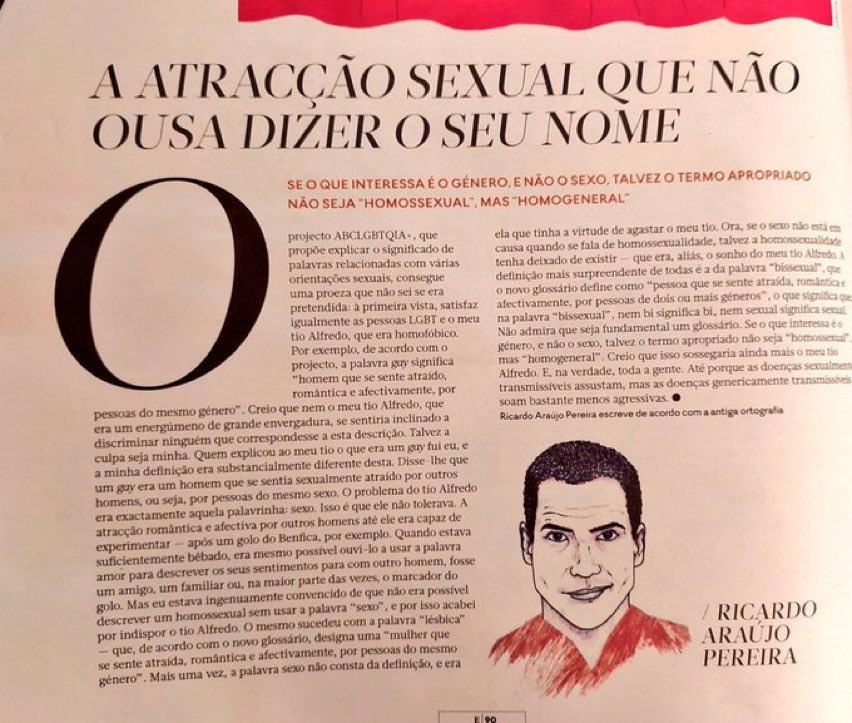
So my previous post was me making a joke about an advert that appeared in Portugal and that seemed to have a fairly terrible definition of the word “bissexual” (sic: it has two esses in Portuguese). Ricardo Araújo Pereira, who is the country’s leading humorist, or one of them anyway, had a pop at the exact same thing in his column in the expresso and now I feel like I might have been outdone in the piss-taking stakes. I think I’m going to make today s text about this on Writestreakpt and then follow up with a book review for Cadernos da Água tomorrow.
I never remember to use idiomatic expressions in the real world but I pulled out “Fazer Ouvidos de Mercador” the other day, while simultaneously making a pun, and I felt like a black belt
E uma bicicleta tem duas ou mais rodas. Expliquei isto à polícia quando fui multado por conduzir na ciclovia mas fez ouvidos de mercador. Acho que era um trânsitofobico.
— Putos e Xontaxés 🇺🇦 (@Explorador1500) July 19, 2022
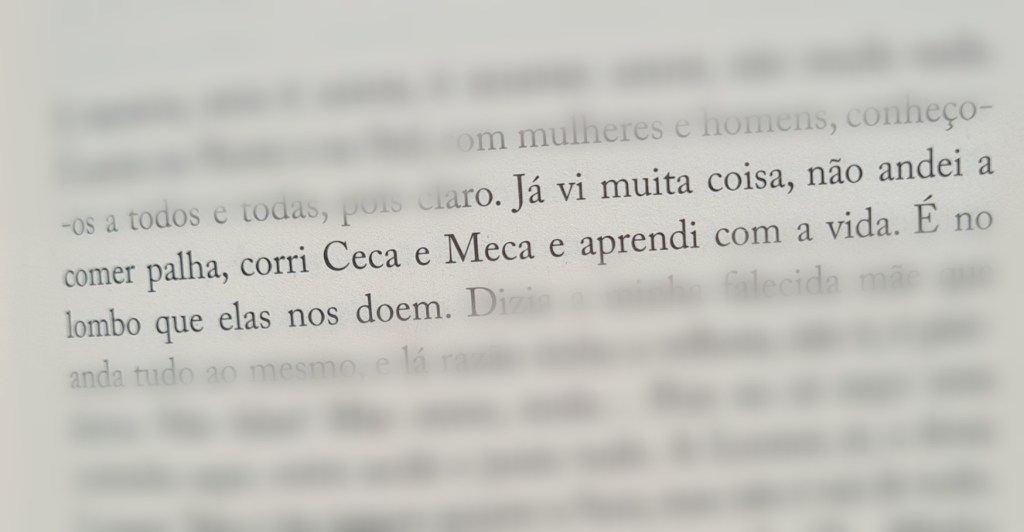
The verdict on the most recent post was that the phrases “É nos lombos que elas nos doem” was referring to things being a wearisome, hard labour. It’s not as violent as my suggested “stab in the back”. Lombo generally gets used for the back of a beast of burden so the mental image is of hard work wearing someone out.
I was intrigued by this sentence. Ceca e Meca? What the heca… um… I mean what the heck’re those?
Meca is easy – it’s just what we would call Mecca. Ceca needs a little more digging: it’s an arab word that means treasure-house, but it was the popular name of the great mosque in Córdova during the muslim occupation of the iberian peninsula. So according to Ciberdúvidas, the expression “correr Ceca e Meca” recalls the pilgrimages made by arabs between the holy places in southern europe and in the middle east itself. In other words, it means you’ve been all over, you’re well-traveled.
What about the rest though? Já vi muita coisa – I’ve seen a lot. Não andei a comer palha – I haven’t just been eating hay (this seems to be related to the expression “todo o burro come palha” – she just means she doesn’t just believe what she’s told). Corri Ceca e Meca e aprendi com a vida – I’ve been all round the world and I’ve learned about life.
I’m not really sure about “É no lombo que elas nos doem”. Lombo is sometimes translated as loin, but it’s really about the area in the upper back, below the shoulder blades, either as a cut of meat or on the human body. So… i think she’s saying something like “They stab you in the back”. Not sure though. Doer means hurt, not stab. Maybe she just means things wear you out and make your back ache…? Hm, I think I might askabout that one. I’ll keep you posted.
This beautiful gift was sent to me on Reddit and I went in search of the original. Its a blog post from a few years ago. As I have probably mentioned before, people who mark language exams live a good idiomatic expression, and the author of this piece has constructed an entire blog post out of nothing but expressions. There’s hardly a single word that isn’t part of one. It’s a magnificent achievement and certainly a lot more fun than the C1/C2 workbook I am ploughing through, where fully one third of the book is about expressions.
Right, I see WordPress have fixed that bug that was causing double posts and it’s now doing triple posts instead. Sorry if you got that last one three times. He is very dishy though, isn’t he. The eighties, man, what a decade.
I used the phrase “Tia Angústia” as the original title of yesterday’s post and that made me wonder if there really was a Portuguese equivalent to the English expression “Agony Aunt”, that would be better than my all-too-literal translation. I asked…
Acabei de usar esta frase no meu texto dia. Foi uma piada, porque aposto que a expressão não existe em português mas “agony aunt” em inglês significa alguém que dá conselho, principalmente sobre amor, por exemplo num jornal ou numa revista. Tipo: “Cara Tia Joana, Amo um rapaz mas é casado com um caranguejo. O que é que devo fazer?” / Já consideraste vestir-se a vermelho e andar de lado para chamar-lhe a atenção? Será que tais pessoas existem/iam lá? E se existem mesmo, qual é a… Sei lá… O título deste cargo…?
Yeah yeah, we believe you, José Nuno Martins
Anyway, it turns out that, no, agony aunt columns were never really a thing in papers, but that seems to have been largely because there was a magazine called Maria, launched in 1978 that absorbed all this action. People would address their letters to “Maria” and so having another personality, an agony aunt figure, wasn’t really necessary. A lot of this is based on people speculating so it’s not an authoritative answer or anything.
Maria still exists but it has modernised and moved on to fashion and lifestyle tips, but you an find old advice from it if you look around. Here, for example. Apparently the letters were real, and the people who answered them were psychologists, according to the magazine’s own account of itself.
So, bottom line, nobody will know what you’re on about if you refer to a Tia Angústia but if you need a cultural reference point in the same sort of area to drop into conversation, a revista Maria is probably the right one to reach for.