Posted in English

A Brief, and Not Very Coherent Rant About Language and Racism

Sorry, it’s in English today.

A man waving a Portuguese flag and awkwardly balancing a Brazilian one. For some reason est understood by AI, his head is in backwards.
I hope the boffins can sort out AI soon. I don’t want to be in my sixties, going in for a hip replacement and the robot doctor decides I am in urgent need of a head reversal procedure at the same time.

After writing yesterday’s blog, I looked at some more posts by the same Instagram account. The guy’s missus, who is Brazilian, has a video here in which she talks about a shitty, racist flyer that was being handed out in downtown Lisboa. She makes a lot of good points, but she seems to have caught some negative attention from social media bottom-feeders, as you can see from the follow-up post here.

In some cases, the critics have dressed up their nonsense as a complaint about non-standard Portuguese, but obviously, the underlying problem here is just straight-up xenophobia. There are racists in every country, of course. This is as true in Portugal as it is anywhere else, and weirdly Portuguese racism even extends to Brazilians, which is surprising when you consider that Brazilians are not natives of a former colonised country, they are largely the descendents of Portuguese settlers (and their slaves). Brazil, as a state, only exists because the territory now known as Brazil was colonised by the Portuguese. In short, they are you, lads! They’ve been away longer than your sobrinha who moved to Luxembourg last year, but it’s the same principle, just with a bigger time lag.

Now, I’m not saying there shouldn’t be an immigration policy that works for the country as a whole, but it has to be one that treats people as people. The minute people get into this kind of hatred, they’re on the road to a very, very bad place.

This is all by way of getting to my main point, which is that I’ve made cracks about Brazilian Portuguese on here a few times and I’ve even shared the odd meme (here for example). But I hope it’s clear that it’s not meant to be hostile. As you know, I mostly try to stick to European Portuguese as much as possible so as not to get confused, so some of the gags are about that desire to keep the other dialect at bay. But there’s also some friendly intercontinental rivalry between Europe and America, which is, at root, born of the inferiority complex of smaller less powerful countries seeing their former colonies doing more business and having more fun than us. Taking the piss out of our erstwhile cousins’ spelling and accent helps us cope with the shame of being efete and irrelevant on the world stage.

Anyway, I thought I’d better get that clear in case anyone thought I was like these pamphlet yahoos. This is a European Portuguese blog, but we love our transatlantic friends too, despite the occasional bit of teasing.

Posted in Portuguese

Racismo Em Português

Racismo Em Português de Joana Gorjão Henriques
Racismo Em Português

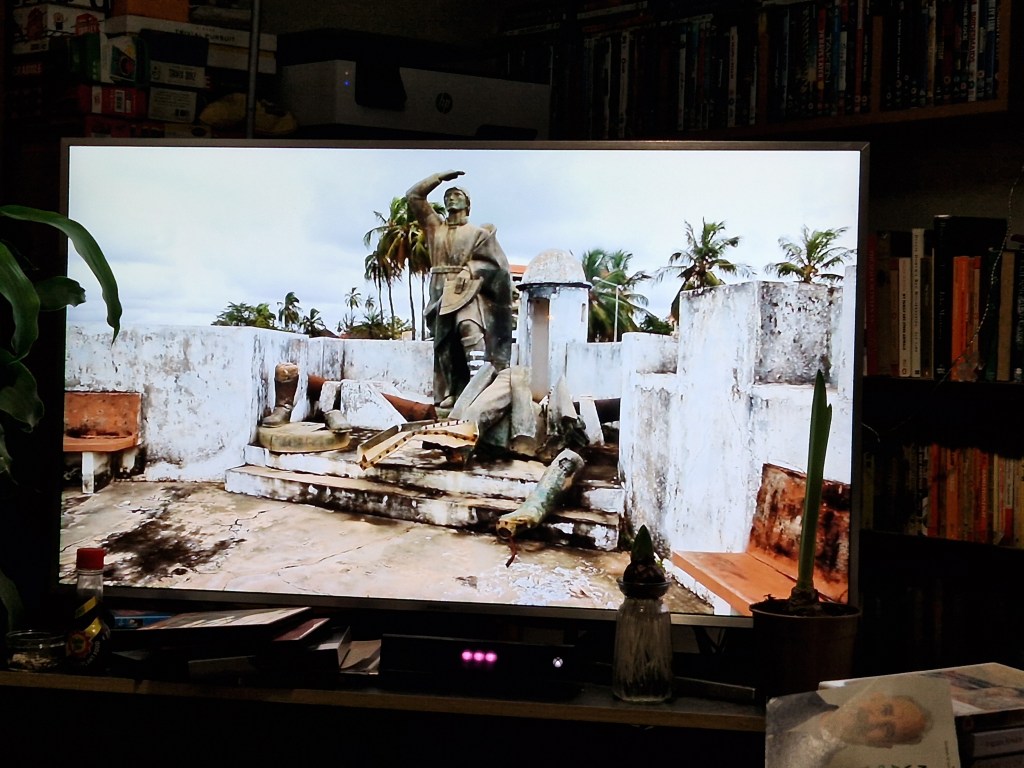
Racismo em Português” é um livro e uma série televisiva criados por Joana Gorjão Henriques, uma jornalista que trabalha no jornal Público. Comprei-o pensando que fosse um documentário sobre o racismo em Portugal mas não é. A jornalista entrevistou várias pessoas – jornalistas, músicos, ativistas – em cada um dos cinco países africanos de língua oficial portuguesa (“PALOP”). O objetivo do documentário é confrontar o racismo do Império português e os efeitos que permanecem nos países ex-coloniais nos dias de hoje. Estou ligeiramente desiludido porque queria saber mais sobre a realidade em Portugal em si, mas não importa muito porque este assunto é fascinante também. Não há narração durante o documentário. A jornalista deixou os entrevistados falarem sem os interromper. Foi interessante ouvir as opiniões deles sobre o seu ambiente, onde tantos edifícios ficam com o estilo do antigo poder colonial, e sobre as atitudes mentais que persistem ainda na vida cultural do povo.

Quanto ao livro, a narrativa é mais estruturada: a jornalista encaixa as palavras transcritas dos entrevistados num contexto que (segundo a sua própria introdução) retira muita inspiração do pós-modernismo que está muito na moda em círculos académicos nos Estados Unidos, que tem uma visão muito simplificada do percurso da história, e uma visão de racismo para com pessoas negras como o pecado original que explica todos os males dos nossos tempos. Isso ressoa em várias entrevistas também, mas parece-me que a jornalista amplifica-o ainda mais. Uma entrevistada fala de “micro-agressões” que faz pouco sentido em geral mas faz ainda menos numa sociedade onde brancos e mestiços de pele clara constituem uma minoria da população. No capítulo sobre a situação em Angola, ela fala de “privilégio branco” ainda que haja poucos brancos para serem privilegiados. Um mestiço (ou seja “produto da miscigenação” 😬) pergunta-se “Será que eu preferiria não existir, será que isso teria tirado algum peso, o não ter havido colonização [….] Então não dá para responder porque eu não estaria cá para responder e não há como comparar porque não há como voltar atrás”. Esta conversa marcou-me muito, tanto no livro quanto no documentário, porque a vida daquele homem é emblemática do estado em que nos encontramos no século XXI. Devemos escolher: ou nós focamos no passado ou no futuro. Ou responsabilizamos as pessoas claras por existirem e por serem ‘privilegiadas’ ou afastamo-nos da ideia de raça e trabalhamos para criar um mundo em que nos tratamos como se fôssemos iguais porque somos iguais mesmo, digam o que os racistas disserem.

The ruins of empire… And whether I’m referring to the image on the TV or the mess that surrounds it, I’ll leave it to you to decide.