Posted in English

Learning from the Brexiteers

I learned a fantastic new word today from Miguel Esteves Cardoso’s piece “Não ao Brexit” in the Portuguese tabloid Publico. In it, he’s describing the contrasting personalities of the two main Brexit advocates, Gove and Johnson. The word is “queque” which I think is pronounced like “cake” with perhaps a bit more tail on the end. It literally means cupcake and he uses it in the sentence “Johnson é simpático e queque.” Johnson is likeable and cupcake. So what does that mean, I ask my wife. Basically it means… well, someone like Johnson – vain, snobbish, wanting public admiration. I guess the closest english equivalent would be “toff”, not that it’s exactly the same word, but it’s in the same area and of course has a link to confectionery (being short for “toffee nosed”).

Johnson doesn’t get off so lightly as this sentence though. All the way through, Cardoso seems to be contrasting Gove’s honest nationalism and intellect with Boris, who he describes as “um  aldrabão” (a crook), “um palhaço esperto, indolente e mentiroso” (an expert clown, lazy and dishonest), and “um traidor e um oportunista” (a traitor and an opportunist). In summary, to contrast the two “Johnson é um Trump educado e europeu enquanto Gove é um Larkin prosaico e incapaz de poesia”, all of which is so close to the English that even if you don’t speak Portuguese, you probably get the gist, but in case not “Johnson is an educated, European Trump, while Gove is a prosaic Larkin, incapable of Poetry”.

Such a great character sketch and yes, I’m definitely saving that word, queque for later.

Posted in Portuguese

Edimburgo

[Este caderno é o meu primeiro escrito em Português desde o exame. Desculpem os meus erros!]

Eu e a minha família passamos uma semana em Edimburgo. Precisámos de algumas férias após da semana anterior: Eu tinha feito o exame “DEPLE” (Português B1), a minha esposa tinha feito a prova final da universidade aberta e a herdeira da minha grande fortuna tinha ido à costa do sul com a sua escola, fazer aventuras ao ar livre e nunca dormiu.
Edimburgo é a capital da Escócia. Fica a quinhentos quilómetros do norte de Londres e por isso o tempo normalmente é terrível, mas durante as ferias, o sol brilhava todos os dias. Entretanto em Londres, foi pior, frio, cinzento… Quando voltamos a casa, estavamos bronzeados.
Durante as férias, ficamos num apartamento acima dum restaurante italiano. Visitamos alguns castelos e um museu, demos um passeio de barco para vermos focas e papagaios-do-mar e fomos a uma festa com alguns amigos. A minha filha fez anos (ela tem onze agora!)
Infelizmente, amanhã tenho de voltar ao trabalho.
:^(

Imagem: A vista do topo da montanha “Arthur’s Seat”

notebook_image_697907

Posted in English

UrbanGay – Portuguese Blog

I came across another site via Twitter and a shared interest in Practice Portuguese. Urbangay covers Portuguese as one of its main strands- along with running and gay culture in general. If you are gay and studying Portuguese, you’ll almost certainly be interested in some of his posts on the history of gay life in Portugal, or on the Lisbon scene (have a look here), but even if you’re not, there are plenty of interesting blog posts, including one about language-learning resources. It covers some of the same ground as my “Language Hacks” post but he has some other ideas and I’ve plundered it for my own study. Go and have a look.

Posted in English

Get on the Membus

Hi all,

And hi, especially, if you’ve arrived via the Practice Portuguese Facebook page  where Joel kindly endorsed this blog the other day. I hope you find some of my burblings useful. Do say hello, won’t you? I’d love to hear from other travellers on the road to lusophone fluency!

I’ve been in a break since the exam and I’ll probably keep a low profile for a few more days while I finish some projects and read some books about the EU Referendum which is coming up in a few days. Then it’s back to the books!

In the meantime, I’ve been keeping myself ticking over with some podcasts,  youtube videos and what-not. The thing I’m most excited about is the Membus Tour. Have you hear of it? There’s a group of people travelling  around Europe in a bus recording native speakers saying words and phrases. I think the idea is to make this a part of the Memrise app so that paid subscribers can get a more immersive experience. They’re currently in Portugal and they keep popping up in my instagram feed and stoking my enthusiasm.
Instagram
More about Membus

Posted in Portuguese

Comentários Sobre Um Filme: Passport to Pimlico

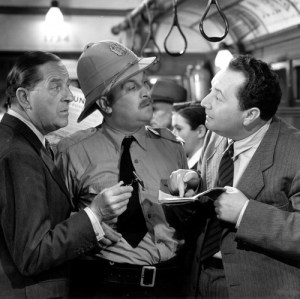
passport-to-pimlico-149-001-stanley-holloway-on-tube-00m-fgqO meu filme favorito é um filme a preto e branco do Estúdio Ealing que se chama “Passport to Pimlico”.

Os eventos do filme acontecem em Pimlico, um bairro de Londres nos anos imediatamente a seguir da Segunda Guerra Mundial. Na abertura, uma velha bomba, enterrada debaixo duma igreja explode e nas ruínas, encontra-se uma caixa com papeis antigas que diziam que Pimlico foi dada* ao duque de Borgonha na idade média. Borgonha ainda não existe, mas os papeis diziam que viva neste pequena área de Londres.
No início, esta informação parece uma piada, mas passado pouco tempo, toda a gente de Pimlico decidiu que eram cidadãos de Borgonha. Não têm de obedecer as leis do Reino Unido, não têm de pagar impostos, e podem vender e comprar à vontade. Em breve, a situação cresce até ao ponto em que o governo construí uma parede em redor do bairro e não deixa ninguém entrar nem sair. Ninguém pode obter comida e os moradores pensam que estão vencidos mas um rapaz fora do muro lança um bombom** por cima do muro para dentro de Borgonha. Os adultos fazem o mesmo. Batatas, frutas, pão, latas, todos voam para dentro e (como se diz “spoiler alert***”?) a Borgonha permanece viva.
É muito engraçado. Também, gosto muito de ver o espírito da cidade a acordar depois de tanta destruição, tanto dificuldade.

*=I think this is right. Some of the corrections seem to be assuming that the box was given to the Duke of Burgundy, but no, Pimlico – or at least that part of it – was.

**=It was a sweet or a lollipop or something, IIRC, and not – as one of the corrections seemed to assume – a balloon.

***=”Alerta spoiler”


Thanks as ever to the iTalkians who helped me with corrections: Sophia, João and Lorena.

Posted in English, Portuguese

As Cartas

Letters are right at the end of the textbook I’m using but they come up in some of the mock exams I’ve looked at so I thought I’d better get familiar with them

1 – Formal

Londres 20 de Maio de 2016

João Imaginário
Faculdade de Letras da Universidade de Lisboa
Alameda da Universidade
1600-214 Lisboa
Portugal

Excelentíssimo Senhor
Desculpa de não ter escrito mais cedo. Tive dores nos dedos por causa de tocar demasiado o violão e por isso não pude usar o teclado.
Fiquei espantado e encantado ao receber a sua oferta de tornar-me Professor de Português. Depois de muita consideração, acho que devo recusá-la neste momento porque preciso de mais pratica. Pode ser no próximo ano?

Obrigado outra vez
Os melhores cumprimentos
18ck

2 – Informal

Londres 20 de Maio de 2016

Caro Jose

Obrigado pelo livro que enviou-me para o meu aniversário. Não tenho lido livros de China Mievile, mas gosto muito de ficção científica e ouvi que é um escritor interessante. Estou contente por saber que a sua equipa ganhou o tri campeonato, seja lá o que isso for.

Um abraço
18ck

So it looks like Caro is the rule for starting letters in informal situations and Excelentíssimo (or “Exmo”) for formal. I have also seen “Prezado” (“esteemed”) but I believe that’s more of a Brazilian thing.

The sender’s address only seems to be the town and date in the format shown. Recipient addresses have the format:n5anuxqrjqjijncdkitgf03dee2

[Recipient Name]
[Housename] (optional)                
[Streetname] [Streetnumber] 
[Locality]
[7 digits] [TOWN]        
[PORTUGAL] (if posting internationally)

Endings seem to be “os melhores cumprimentos”, “Atentamente”, or further down the scale of formality, “um abraço” (seems to be common between men) or something with beijo or beijinho.

Formal letters also seem to use v/ for Vosso and n/ for Nosso. I haven’t seen these anywhere except on the formal letter sample in Lathrop and Dias, which is sort of weird.


Posted in Portuguese

Os Relógios

big-brother-is-watching-youBoa tarde e Força Benfica!*

O meu livro preferido é “1984” de George Orwell. A protagonista chama-se Winston Smith, e vive em Inglaterra no futuro. O livro foi escrito em mil novecentos e quarenta e oito. Naquele ano, Mil Novecentos e Oitenta e Quatro parecia o futuro, apesar de que só tinha quinze anos! É uma “utopia negra” que trata a manipulação da história e do idioma para controlar os cidadãos. Nas páginas dele há muitas frases bem conhecidos por exemplo “Big Brother is Watching You” (“O filho mais velho esta a olhar-te”)
Mas por quê digo-lhe isto? Boa questão.
Hoje, quando estava a falar com a minha professora, ela lembrou-me que os Portugueses usam o relógio de vinte e quatro horas. Por outras palavras, se forem três da tarde, é comum dizer “as quinze”. Agora, em Inglês, isso seria muito estranho. Além disso, é tão estranho que o Orwell utilizou a estranheza como um bom efeito. O livro começa assim:

“It was a bright cold day in April and the clocks were striking thirteen” (quer isto dizer “Estava um dia claro e frio em Abril, e os relógios estavam a tocar as treze”)

Quando um leitor inglês lê isto, os seus pensamentos correm como seguinte:
– Estava um dia claro e frio… [Mm-hm, O clima… bom. É normal. Que mais?]
– em Abril… [a primavera. Que bom. E o que mais?]
– e os relógios estavam [o tempo. O que pode ser mais normal do que o tempo?]
– a tocar as treze [O QUÊ????? Não é possível! Só há doze números num relógio. O que se passou?]

Neste ponto, o leitor deve pegar numa chávena de chá para acalmar-se.
Mas acho que em Portugal, esta frase não parece nada estranha…?
Mais tarde, o leitor descobre que no futuro, muito terá mudado, e uma destas coisas será a medida do tempo.

———————————————————

*=Para ser honesto, não me importa mas estou a tentar parecer como um português autêntico. Por outro lado, se fosse português estaria a ver o jogo, né? Hum.

Posted in English

New Memrise Deck

I’m up to five Memrise decks now. The latest is called the “Heated Debate Toolkit” which has a lot of good “joining” words and phrases useful for having a discussion with another person, introducing arguments, pointing out errors and that sort of thing. It borrows quite heavily from a list put together by… someone… Benny Lewis? I think so… But it has translations attached (because that’s how Memrise works), some new phrases have been added, some left out (mostly because they were too obvious or else too obscure) and I have amended a couple to make them more Portugal-friendly, because a lot of them were written with the grammar of a large country in South America which shall remain nameless.

Posted in English

Practice Portuguese (Again)

I mentioned a while ago that Rui and Joel’s European Portuguese podcast, Practice Portuguese was still a thing and that I was going to sign up for a paid subscription. Well, I’ve been finding it very helpful. I already had all the podcasts on my ipod, of course, but I find it hard, sometimes, to follow everything that’s being said. Being a pro member gives you access to subtitled video versions, with a complete transcription, key vocabulary, and a quiz at the end. Well, there’s a section on the DEPLE exam that involves listening and answering questions, and I’m nervous about it, so this is enormously helpful for me, and I am working my way through them. Once you’ve looked at the video features for an episode, listening again to the audio is a lot clearer and I find my level of understanding goes up a notch the next time I listen to it on the iPod at the gym or while wrestling a filha’s stick insects.

You can try out the subscription service by going to the subs page on their site and scrolling down. No, further than that.Ignore the video of Rui talking to his Avó. Go about half way down. The video is called Diálogo 10 – Encomendar uma Pizza. That. Try that.


Posted in English

Speaking Without Conversing

I eavesdropped on a webinar by Lindsay Dow and Shannon Kennedy in which they talk about how to start speaking and producing language when you aren’t ready to actually go head-to-head with another human yet. It’s something I’ve written about in an earlier post, because there is so much emphasis on speaking straight away in a lot of the language learning advice out there, so it was reassuring that two badass polyglots had dealt with the same issue too. They give some useful tricks for coaxing language out of yourself and developing some confidence.

The seminar is here for now but sadly it won’t be up for very long. Hi ho. You might be interested enough to follow up Shannon’s course on the subject, which is called “Say Goodbye to Shy