Posted in English, Portuguese

The Red Hot Silli Preppersitions

More corrected exercises from Português Outra Vez

Grammar, we love you

Quando elas vierem a casa, lembra-lhes para regarem as flores no rés do chão.

Eu faltei aos ensaios e, por isso, não vou em digressão pelo Canadá. (I actually feel like my wrong answer wasn’t totally wrong: dedicar-se was an option so I put “dedico-me aos”. I feel like that works but the book says no No, apparently not, because the ensaios are rehearsals for the tour. Duh!)

O pai do nosso amigo Charles valeu-se do cargo que ocupa para lhe arranjar trabalho no Ministério dos Negócios Estrangeiros.

O presidente faltou à palavra e adotou essa lei discriminatória

Levantei-me as cinco de manhã; faltou pouco para amanhecer.


Thanks to Cristina for spotting the typos & the misunderstanding in the first version.

Posted in English, Portuguese

Vazios

I did the compreensão da leitura test from the DAPLE (C1) exam yesterday. It’s the one available on the Universidade de Lisboa site at the bottom of the course description here. I did pretty well on most of it but the wheels really came off on the last exercise so I’m going through the answers and trying to work out why it is the way it is.

Complete o texto com as palavras que faltam nos espaços 1-20. A cada espaço corresponde apenas uma palavra. Escreva as palavras na folha de respostas.

André Nave, Diogo Madeira e Bruno Nunes são três amigos que lançaram em novembro passado um sítio na Internet [1] podemos conhecer sugestões diversas sobre a cidade de Lisboa.

O sítio, chamado Onde Lisboa, [2] recordes de popularidade. A ideia surgiu quando os
três amigos [3] a necessidade de criar um espaço virtual onde os estudantes, os
residentes e os turistas pudessem encontrar informação que não [4] dos guias turísticos, por exemplo a questão do estacionamento gratuito.

O sítio dispõe de um separador [5] exclusivamente aos estudantes. Desde locais para
fazer impressões à lista de cantinas [6], os estudantes conseguem aceder a um conjunto de informações úteis em qualquer situação. [7] além disso, há um espaço dedicado ao desporto, à cultura e ao comércio.

O André e o Diogo fazem pesquisa de campo, sendo responsáveis pela [8] de informação e de fotografias que ilustram os artigos. Acabam [9] envolver os amigos nesse processo e estão sempre disponíveis para aceitar sugestões de [10] visita o sítio. Bruno Nunes diz que é comum encontrar espaços que não se [11] referenciados na Internet.

Nesses casos, o Onde Lisboa passa a [12] uma referência na divulgação desses espaços. À [13] que os proprietários do sítio vão fazendo pesquisas, vão descobrindo [14] vez mais coisas e aí constroem novos conteúdos.

O projeto está em permanente autoavaliação e os três amigos não sabem, ainda, [15]
proporções o projeto poderá atingir. [16] que vamos ter, em breve, um Onde Porto ou um Onde Coimbra? O tempo o [17].

Para já, Bruno, Diogo e André, os três mentores desta ideia já considerada genial, [18] as suas atividades profissionais com este projeto. Não têm uma ambição desmedida para o projeto e preferem que ele [19] crescendo aos poucos. Afinal, Roma e Pavia não se fizeram num dia. E é melhor [20] pelo seguro, para não dar razão ao ditado popular “quem tudo quer tudo perde”.

in http://www.ruadebaixo.com/

  1. “Onde” or “Em que” are given as answers, but since the instructions say only one word per space, I am declaring the second one bullshit and the correct answer is Onde
  2. Bateu. It beat the record. Embarrassingly, I got the point of the sentence wrong and thought “recordes de popularidade” was the actual content of the site so I wrote “contem”. This was moronic and I like to think if I’d gone back and checked my answers I’d have spotted the idiocy, but I didn’t
  3. viram/identificaram. Straightforward enough
  4. consta. This word constar has a few different meanings here but I think the relevant one is “to be written in”. Note that it’s folled by “de” and not “em” though. I stuggled to think of a single word that fit here and ended up writing “veio” – the information didn’t came from, the tourist sites. Nope.
  5. dedicado. I wrote “reservado” which isn’t a million miles away but it’s not right
  6. disponíveis. I wrote “baratas” but there’s no need to assume they’re only talking about value for money of course. A lot of people like to travelin luxury.
  7. Para. For some reason, madness seized me and I wrote “por”. Ugh.
  8. atualização. I said “escolha” – the choice of information. Hm… I don’t think this is a terrible answer, but atualização (“update”) definitely sounds better
  9. por. Acabar por means “to end up doing…” so this makes sense
  10. quem. This is a relative pronoun referring to person so it makes sense too
  11. encontram. I didn’t notice the “se” and wrote “for”. Lack of attention there. Always read the question carefully!
  12. ser. Passar a ser means it comes to be, so this makes sense
  13. medida. “À medida que” makes a lot of sense – it means something like “to the extent that…”. For some reason, I blanked and ended up writing “proposita” instead. Wild guess, and it doesn’t even make sense because the a wouldn’t have an accent on it if it was “a propósito” (“By the way”)
  14. cada. Cada vez mais means “increasingly” or “more and more” so this makes sense
  15. que. I wrote “quantas” for reasons which seemed to make sense at the time
  16. Será. “Será que” is a sort of impactful way of leading into questions where you’re maybe a little skeptical or want to build up some expectation.
  17. dirá. the expression is obviously equivalent to “time will tell”, but I used “contar” which is used for telling a story and it should be dizer: O tempo o dirá”. Time will say it!
  18. conciliam. This verb can mean conciliate, and something like “synchronise”, but I think the sense it means here is “combine elements that are apparently divergent or incompatble” according to Priberam.
  19. vá. I wrote Anda, which is on the right lines. According to this Ciberdúvidas page, andar+gerundio is valid (it’s example 5 on the page) but ir+gerundio has more examples and it explains that teh ir+ version is more like a slow development over time, where as andar+ was more like a repetitive action, so that must be ahy anda wasn’t the correct answer
  20. jogar. Jogar pelo seguro: play it safe! Should have guessed that one, although I’d never seen it before.
Posted in Portuguese

Possessivos Alternativos

I was told I used “sua” and “seu” too much when “dela” and “dele” might be better. Dela and dele tell you about the gender if the owner, so it can be useful when you want to emphasise that it’s her sandwich you’re talking about, not his sandwich. If you just say “sua sandes” you can’t tell. Anyway, I wrote a text on which I did it in every case. But… Well, I might have gone too far…

Vamos hoje ao centro comercial fazer as compras. A minha filha vai para universidade daqui a 17 dias…

(pausa para hiperventilação)

…e precisamos de abastacê-la de frigideiras e colheres de chá e blablabla. A sua amiga dela quer ir connosco quando formos à universidade, para ajudar no processo de nidificação mas a sua universidade dela* fica longe daqui e o carro alugado é pequeno. A sua amiga dela é simpática mas não cabe no porta-luvas. Haverá muitas caixas e malas pesadas. Quando as levarmos do carro para o seu apartamento dela, ficaremos completamente suados dela** se usarmos dela** roupas de tecido grosso

O gif lá em cima pode representar eu a pensar na perda da filha, ou o Flip a tentar corrigir esta merda.

*Well, no, because I mentioned the friend most recently, so it sounds like I’m saying the friend’s university.

**obviously replacing sua from suados and se u from se usarmos with dela is just a joke.

Thanks to Cataphract for bravely stepping in to correct this car crash!

Posted in English, Portuguese

Brasuguês Portuleiro

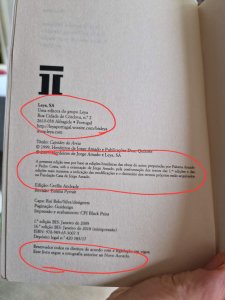
The book I’m reading right now is a classic Brazilian book, “Capitães da Areia” by Jorge Amado, about a group of street kids in Salvador da Bahia in the 1930s. My edition was published by a portuguese company called LeYa, and advertised under the government’s Ler+ initiative. At first, I thought someone at the publishing house had tweaked the language to make it more understandable to portuguese readers. Let me explain why, and why I was wrong.

As you probably know, (check here if you don’t) Brazilians typically address each other as “você” in their conversation and change the verb endings accordingly. “Tu” is more common in Portugal.

What’s weird about this book is, the characters all address each other as “tu”, after the European style, but the verb conjugations all use the você form. This looked like a mistake to me, so I went online to ask if maybe someone had screwed up at LeYa HQ.

Here’s my question in portuguese, and I’ll put a summary of the answer down below in English.

Capitães da Areia - Folha da Guarda

Estou a ler um livro brasileiro chamado Capitães da Areia, mas ao que parece a editora, Leya, mudou determinadas frases para soarem mais naturais a um leitor europeu. O resultado é… Surpreendente. Ou pelo menos eu fiquei surpreendido. Há montes de diálogo onde o pronome é “tu”, como se usa em Portugal, mas o verbo fica na terceira pessoa como se seguisse o pronome “você”

“Tu quer me fazer um favor”

e

“Tu liga para guarda?”

e

“Tu sabe, Sem-Pernas, que ele é um bicho calado”

Isto tudo está errado ou eu estou a enlouquecer? Ou… Talvez haja uma explicação melhor. É normal em PT-BR? A maior parte da história parece-me como o original (calão e vocabulário brasileiros, “trem” em vez de “comboio”, etcetera. Até há um daqueles “us” com hum… Umlaut… (Google) Trema! U com trema, que nem sequer existe em PT-PT, nem antes do AO nem depois.

Many of the replies said yes, this was a horrible disgrace, but there were quite a few brazilians who told me that all this is normal: it’s just a dialect spoken in some parts of southern Brazil. Besides, they added, the street kids haven’t really had the benefits of education, so it’s no surprise that they don’t have immaculate grammar.

There are a couple of ways of approaching the question of how to define good use of a language. The first is prescriptivism, which says there is one correct way of speaking and anything that deviates from it is wrong. The second is descriptivism, which starts from the premise that if people are speaking in a non-standard way and being understood by the people around them then they are just speaking a different version of the language, using different rules, and the linguists’s job is to describe what they’re doing, not to tell them they’re wrong. Most linguists and dictionary writers tend to be descriptivists on principle* with some exceptions**. I tend to be mostly descriptivist until someone tells me that ‘literally’ can mean ‘figuratively’, at which point I reach for my kalashnikov.

So, for example, you could argue that Brazilian portuguese is bad portuguese because it has diverged from the standard form of the language, spoken in Lisbon. But you could equally well say the same about Madeiran portuguese, or. Scouse English. In fact, if you wanted to be very hard-line about it, you could say portuguese is badly-spoken Latin since it has deviated from the language the Romans brought there in the third century BC.

Let’s say, for the sake of argument, that portuguese is it’s own language now, and that Brazilian portuguese is one among many dialects of Portuguese spoken in Portugal and it’s former colonies. But what about within Brazil? Is this Salvador de Bahia variant a separate dialect that has diverged and formed its own rules or are it’s speakers just hicks whose babbling would be scorned by educated people in Rio, let alonwle Coimbra?

The answer probably depends on your personality and your politics, but for me, as a learner, I just have to appreciate the book for what it is: a milestone of literature in portuguese. Let the linguists argue over the details.

If you’re studying a language, you should probably think like a prescriptivist because the people marking your work will be following a standard. If you use a você verb ending with someone you’ve addressed as tu, they won’t treat that as a delightful regional variation, they’ll just deduct marks. I made this point in what I thought was a light-hearted way to a strong descriptivist who told me “right and wrong don’t exist” when it comes to questions of language, but I got downvoted, suggesting most people disagreed. 😂

Cancelled for my prescriptivist tendencies

* If you haven’t read “The Meaning of Everything” by Simon Winchester I can recommmend it, and it addresses why early lexicographers made this choice.

**There have been some famously sarcastic and biased definitions in English dictionaries in the past. More recently, prescriptivist tendencies have come out in attempts by activists to get the meanings of words changed in order to short-circuit debate and bring about social change in a more top-down way. The most famous was this one in the aftermath of the George Floyd murder.

Posted in English

Gente

How singular is “a gente”?

Well, first of all, it can be used as a sort of “we” pronoun as discussed a little while ago. But putting that aside, Gente usually means “the people” and it’s a bit confusing because unlike in English, it’s singular. In English youd say “The people don’t know anything” but in portuguese, “A gente não sabe nada”.

This can get a bit weird though. How long do you carry on this crazy charade that yiure taking about one person when really you might be talking about dozens?

I had an exchange with someone the other day in which I expressed disapproval of people who denounce books without reading them.

“Há gente que não LIU (…) mas DIZ (…)”
**and then in the following sentence, I just had to switch it up. I couldn’t maintain singular verb forms.
“DEVEM ler mais e falar menos.”

I asked around and thank goodness u had done the right thing.

“There is (people) that hasn’t read… but says…” Is OK as far as it goes, but when you pull into the following sentence it’s perfectly fine to treat them as a multitude again and say “They should read more and talk less”.

Posted in Portuguese

May e Might

Nothing makes you realise quite how little you know about your own language like explaining it to someone else. This one wasn’t too bad since I’d at least thought about it before. This is me explaining the difference between the words “may” and “might”. Thanks to Dani for correcting me.

Hoje, expliquei a uma portuguesa como usar estas duas palavras inglesas. Ela pediu-me; não sou um desses homens didáticos que desabafam sobre a gramática por qualquer motivo. Antigamente, achava que compreendia a minha língua toda, mas cada vez que explico os aspetos básicos da língua, percebo que há montes de coisas que não obedecem regra nenhuma. Mas felizmente já tinha explicado may e might a mais alguém, portanto não era assim tão difícil: já tinha um esboço da explicação em mente.

Propriamente, “might” é um indicador de possibilidade e “may” tem a ver com permissão. Porém, no nosso dia-a-dia, usamos os dois de modo errado tantas vezes que esta regra não se aplica. Tenho exemplos mas não vale a pena escrever inglês neste subreddit.

Gostei de ter a oportunidade de falar em português.

Posted in English, Portuguese

Exercises (p60)

Trying the same as yesterday but this time I’m going to list all the verb/preposition combinations out before I start.

(While I was doing this, my sister-in-law, who is madeiran, came over and tried to do one of the questions in the opposite page. She couldn’t do them either, so I don’t feel so bad now)

The verbs to choose from today are

Agir

  • Agir contra = to act against
  • Agir por = to be motivated by
  • Agir segundo = to act in accordance with
  • Agir sobre = to act on something, produce an effect

Falar

  • Falar com =to speak with
  • Falar de = to make criticisms about
  • Falar sobre = to talk about, express opinions about
  • Falar em = to mention, refer to
  • Falar para = to speak on the telephone to someone in another location, to direct your speech toward
  • Falar perante = to speak on front of an audience
  • Falar por = to speak for someone, as a representative

Meter

  • Meter em = to put inside

Meter-se

  • Meter-se a = to dedicate oneself to, to roll up one’s sleeves and start doing something
  • Meter-se com = to direct one’s words at, to provoke, to challenge
  • Meter-se em = to dedicate oneself to something, to shut oneself in somewhere, to interfere in
  • Meter-se por = to go somewhere

Pensar

  • Pensar de = to have an opinion about
  • Pensar em = to reflect on something, to have an intention of
  • Pensar por = to do someone’s thinking for them
  • Pensar sobre = to think about, to have an opinion about

Saber

  • Saber a = to taste of
  • Saber de = to know about

Telefonar

  • Telefonar a = to phone someone
  • Telefonar de = to phone from somewhere
  • Telefonar para = to phone a place

Ter

  • Ter com = to have some relation with
  • (ir) Ter com = to meet with someone
  • Ter alguma coisa contra = to have something against
  • Ter de = to have to do something
  • Ter alguém por = to consider something (tenho-o por boa pessoa means you believe someone is a good person)
Grammar batman
Holy prepositions, Batman

This feels much easier than yesterday’s. The expressions aren’t so similar. Anyway, here we go with the questions.

  • A Isabel é de ideias fixas: há nove meses meteu-se a aprender russo e já fala muito bem ✔️
  • Estamos a pensar em fazer uma viagem à Índia, talvez em Setembro ✔️
  • Na cerimónia académica, o estudante mais velho falou pelos colegas de turma ✔️
  • O José queria ajudar o neto, mas não podia porque não sabia nada de informática ✔️
  • Vais ter com a Ulrike ao Chiado? É um sitio muito bom para passear ✔️
  • O professor de História é “um livro aberto”: consegue falar sobre todos os assuntos com facilidade. ✔️
  • Os meus vizinhos são escandalosos, andam sempre a se metem em complicações ✖️ meter-se em (meh, right verb, wrong tense)
  • A família do homem-bomba declarou que ele agia pelas suas convicções religiosas ✖️ agiu segundo
  • O que é que pensas deste primeiro ministro? Eu acho-o um competente.✔️
  • Tenho a Fernanda por uma pessoa leal e honesta. ✔️
  • A mãe telefonou para o consultório do médico, mas não conseguiu falar com ele. ✔️
  • As alunas chinesas queixam-se e dizem que os portugueses se metem constantemente com elas. Elas acham-nos muito atrevidos*. ✔️
  • O réu, acusado de homicídio, argumentou que agiu por legítima defesa e agiu sobre os interesses da família. ✖️ Agiu em/ agiu pelos
  • Pedro, tens de pensar seriamente no seu futuro, não podes continuar nessa indolência. ✔️
  • Mete o dinheiro no bolso porque podes perdê-lo ✔️
  • Tens de acabar o trabalho quanto antes, já estamos atrasados na entrega. ✔️ (the answer actually gives “temos” but I think this works if you imagine one person’s work holding up an entire project team..?)
  • Detestava ouvir falar de outros pessoas, sobretudo quando era crítica gratuita. ✔️
  • A que é que te sabem essas batatas fritas? Acho-as horríveis. ✔️
  • A nossa filha, no seu doutoramento, teve de falar perante uma audiência de mais de cem pessoas. ✔️
  • Tens de dar a tua opinião, não posso pensar por ti ✖️ falar por
  • É difícil provar que ele não agiu por má-fé. ✖️ Tenha agido de

*nice word: cheeky

Well, that was much better but still left a lot to be desired…

Posted in English

Mansplaining Pronouns to an Actual Linguist

A video drifted into my feed yesterday by someone I’d never heard of before and it looked interesting so I listened to it while I was getting ready to go out. The chap who made the video is a linguist and he decided to weigh in on the controversial topic of pronouns and how they are being used, mainly in English, mainly by younger people in relatively affluent communities. If you don’t know why pronouns are controversial, well, consider yourself lucky, but basically whether we refer to people as he or she or something else, and under what circumstances is currently occupying a lot of social media and traditional media output. Frankly I’m baffled, but middle-aged people being baffled by stuff the youngs are obsessed with isn’t exactly news, is it? 🤷🏼

Anyway, as weird as it is in English, it’s even weirder in languages like portuguese where gender-specific pronouns are ascribed not only to people but to pens, apples, books and the concept of liberty*.

I’ve written a few posts about pronoun shifts a while ago um… Now where did I leave those? I started with this one, and a few people said the pun on the word “neuter” was problematic but that doesn’t seem to have stopped me repeating the crime a few weeks later when I really expanded on the subject here and then for a little reprise here.

Anyway if that kind of thing is something that interests you, I can recommend the whole video: it’s full of thought-provoking stuff. On the other hand, if you’re not, no worries because I only wanted to focus on a few seconds in the middle anyway. So, let me at least tell you why I decided to contradict him despite the fact that he is an expert and I am not.

At around 8 minutes and 25-ish seconds, he is discussing instances of relatively new pronouns that have been drafted into languages, relatively late in their development and he says “Portuguese has the impersonal ‘a gente'”. Except he says it in a Brazilian accent so it’s more like “a Genchee”.

Why, Brazilians? Why?

Gente is a feminine, singular noun that refers to a group of people but it’s true that portuguese speakers do use “a gente” as a stand-in for a group of people in place of “we”. It makes the grammar simpler because you don’t have to wrap your tongue around the nós form of the verb, you can just conjugate it in the third person singular – “a gente fala…” in place of “nós falamos”. It sounds a bit odd to English speakers but it works. As far as I can tell, it’s much more common in Brazil but it does exist in Portugal too. Of course it’s very informal, but I think it’s wrong to say it’s a pronoun. Even though it’s playing a similar role in the sentence – filling in in place of what could be a list of names, you could say the same about other collective nouns. Take “The family” as in “The family are getting together for Christmas” which could easily have been “We are getting together for Christmas”. Or what about “guys” in situations like “It’s just the guys, together again” or “hello guys, and welcome to another video”. Definitely not pronouns, right, but they are really fulfilling the same role as “a gente”.

Using nouns as stand-ins for people happens in formal speech too. You will almost certainly have heard people addressing each other as “o senhor” or “a senhora” or even “o doutor” Again, these are behaving in a fairly pronoun-like way, but they’re both nouns. You’re just talking to the person in the third person. “How is the gentleman?” instead of “How are you?” It’s the same kind of thing.

I felt like I was being a but of a reply guy, challenging someone in their academic discipline. Luckily we are both dudes, so I can’t be accused of mansplaining but even so, it’s a bit… Well, let’s say “hubristic”.

The Results Are In, You Bastards

Mansplaining cat

So, I made a reddit poll to ask native speakers on r/português to tell me if I’m right in my thinking. To my huge annoyance, judging by the early results, ‘yes, it’s a pronoun” seems to be winning over “no, it’s just a noun”. It’s a pretty close result in Portugal but overwhelming in Brazil.

In my defence, democracy is overrated. But if that brilliant argument doesn’t convince you, the explanation someone gave is that although “gente” is a noun, “a gente” os technically known as “uma locução pronomial” with “the same value as the personal pronoun ‘nós'” só it’s not a pronoun per se, but it works like one. Meh, I can live with that form of words, I think.

Finally, a European speaker said he was taught never to use it as a pronoun because it was “extremamente errado” and whenever he used it his grandpa would say “A gente? Agente é da polícia!”

Preach it!


*Respectively: lady, lady, gentleman, lady, if you’re keeping score.

Posted in English

Divided by a Common Language

I wrote something the other day that included the word “ficámos” as a past tense of ficar, meaning “we stayed”, and a Brazilian guy has told me it should be ‘ficamos”. I’ve told him that I am pretty sure this is one of those differnces between PT-PT and PT-BR: Portugal uses an -ámos ending in the past perfect, but in Brazil -amos is used for both present and perfect (lol, no scope for confusion there!) but he’s insisting that no, his way is correct. I feel a little arrogant contradicting someone whose native language is portuguese but I’m pretty sure I’m right on this one so I’m just ignoring the bloke and carrying on regardless.

Priberam (portuguese) on the left vs conjugação.com (brazilian) on the right

As I mentioned a few months ago in my comparison of the two types of Portuguese, Brazil has a larger media and a more powerful cultural impact in the world so they don’t always notice the smaller group of people speaking the European variant across the atlantic. The same is true of the US media hegemony co-opting English. There’s no use complaining (*pauses to wipe away bitter British tears*), it just is what it is. So if you’re asking someone for advice or corrections, it’s best to say what variant you’re learning to avoid misunderstandings, but if someone tries to help and gets it wrong (like this bloke is doing, I think) you have to be sensitive in how you reply. Anyone who honestly tries to help someone online is a good person. If they get it wrong from time to time, that doesn’t make them bad: a gentle reminder should sort things out with no hurt feelings. I used to have a portuguese friend who would absolutely lay into Brazilian teachers who corrected European portuguese learners but I think she was being unreasonable and I’d always try to calm her down because it made me cringe to think that someone had tried to help me and was getting a verbal battering for their troubles. I definitely don’t want to do that, but I’m going to politely suggest that I think he’s mistaken!

Posted in English

Compound Verbs

Hard Mode Homework. From Português Outra Vez: using verbs with prepositions. Often the meanings of the verbs can change so radically with the choice of preposition that it basically acts as a compound verb. The base verbs it offers are these

  • Andar
  • Fazer
  • Ficar
  • Ficar-se
  • Vir
  • Voltar
  • Voltar-se

Each can use a variety of prepositions and I’m using the Guia Prático de Verbos com Preposições by Helena Ventura and Manuela Caseiro to pin down which is which. I often use some of these without quite realising why and it’s useful to spell it out.

Quite often, I’ll come across a feature of Portuguese and think it’s weird and unlike anything in English and then I realise that, no, we do have them, we just don’t notice them because nobody draws attention to their existence. Think of the difference between “Stick to”, “Stick out” and “Stick around” for example – or “Pass by”, “Pass over”, “Pass for” and “Pass out”.

Andar

  • Andar a (+inf) = to progressively achieve something (ando a ler Fernando Pessoa)
  • Andar com = to feel (anda com dor de dentes) OR to live with (ele agora anda com gente muito esquisita) OR to have something with you (ela anda sempre com o telemóvel)
  • Andar de = to use some form of transport (ando de bicicleta)
  • Andar em = to frequent (ela anda na Faculdade de Direito) OR to achieve (ela anda em grandes obras na casa de praia)
  • Andar para = to have an intention to do something (ando para ir ao cinema)
  • Andar por = to approach (o preço do carro anda por dez mil euros) OR to visit, pass through, hang out in (gosto muito de andar pelos parques)
  • Andar sem = to be without something (o Pedro anda sem atenção)

Fazer

  • Fazer com (que) = to force (fizeram com que o ministro aceitasse as reivindicações) OR to have a consequence (a avaria na EPAL fez com que alguns lisboetas ficassem sem água durante muitos dias)
  • Fazer de = to act like (o Pedro fazia de palhaço) OR to transform (os E.U.A. disseram que queriam fazer do Iraque uma pátria livre)
  • Fazer… Por… To do something for (or on behalf of) someone (a Patricia fez o trabalho pelo colega)
  • Fazer por (+inf) to make an effort (ela faz por gostar de bacalhau mas não consegue)

Ficar

  • Ficar a =to be in a place (Lisboa fica a cerca de 300 quilómetros do Porto) OR to stay somewhere (não fiquei a assistir ao espectáculo ao final)
  • Ficar com = to get, or keep hold of (fico com a blusa verde) OR to continue to feel (fico sempre com medo quando ouço barulhos estranhos)
  • Ficar de (+inf) =to promise to do something (ele ficou de passar por minha casa às nove horas)
  • Ficar em = to stay, to be situated – similar to ficar a (o Hospital fica em Lisboa, a atleta Rosa Mota ficou em primeiro lugar)
  • Ficar para =to be destined for something (o colar de pérolas fica para ti) OR to be deferred (a nossa conversa fica para amanhã)
  • Ficar por =to support (nas discussões ela fica sempre pelas mulheres) OR to substitute for someone (o meu colega ficou por mim) OR to cost (o fato ficou por cem euros) OR to remain uncompleted (as camas ficaram por fazer porque ela teve de sair à pressa) OR to stop (hoje ficamos por aqui)
  • Ficar sem =to lose or be deprived (ficamos sem água toda a tarde)

Ficar-se

  • Ficar-se por =to limit oneself to (na reunião com os seus apoiantes, o presidente ficou-se por um discurso breve)

Vir

  • Vir a =to attain an objective (se vice estudar muito, pode vir a falar português corretamente)
  • Vir de =to finally do something (era minha intenção saudar os alunos que vinham de chegar)

Voltar

  • Voltar a =to repeat an action (o telefone voltou a tocar)
  • Voltar para =to turn something toward (voltaram os olhos para o céu)

Voltar-se

  • Voltar-se para =to turn toward (voltei-me para ele e disse-lhe tudo o que oensava

The book lists several other combinations of verbs and prepositions but I don’t think they are different enough from their original meanings to bother defining like this. For example, vir normally means “come” and you can come to, come from, come by and so on. Voltar means return, and you can return to, from, whatever. It’s not rocket science.

OK, here we go… I’ll put my answers in brackets. When I get it wrong, I’ll cross out my answer and replace with the corrected version.

A Teresa (anda para ficou de) passar por minha casa hoje à noite para estudarmos juntas, espero que não falte. [hm, I don’t think my answer was too bad. Maybe not the best one, but doesn’t seem wrong either…]

Após muitos anos no estrangeiro p Zé, cheio de saudades, (voltou para) Portugal

Lisboa (fica a) cerca de 300km

O excesso de açúcar é de álcool (faz com) que as pessoas fiquem obesas

Quando eu morrer, o meu colar de pérolas (fica para) a minha neta Joana*

Para cá chegares mais depressaa, sugiro-te que (vir venhas pela) autoestrada.

De repente (voltou-se para) o chefe e disse-lhe tudo o que lhe ia na alma.

Costumas (andar de vir a) pé ou (andar vir de) autocarro para (andar vir para ) a faculdade? [The word “para”, just after “autocarro” is missing from the book but it doesn’t make any sense without it, so I’m not 100% sure but I think it should be there]

Porto Covo (fica na) costa vicentina, (fica ao no) litoral alentejano

Não gostava de (andar de) transportes públicos sobretudo, detestava (andar de) metro

Se estudares muito, podes (vir a) falar português fluentemente no futuro**

Eles (virão de ficaram de) pagar as dívidas às Finanças no prazo de seis meses, caso contrário vão a tribunal [OK I can see that makes sense]

Eu (ando a) ler um livro de Mário de Carvalho***: “A Arte de Morrer Longe”

Ele (fazia por) agradar ao chefe mas era sempre um esforço em vão.

O ministro, lacónicamente (ficou-se por) um breve discurso na tomada de posse

(Andamos para) fazer um passeio no Douro, já há dois anos, mas ainda não nos foi possível fazê-lo.

Depois da queda do muro de Berlim, muitos imigrantes da Europa de leste (vieram para) Portugal.

A empregada é incompetente: limpou mal a casa e as camas (ficam ficaram por) fazer. [I was umming and ahhing over the tense for ages and it looks like I plumped for the wrong one]

Carlos, (voltou voltaste a) casar? Não desistes, é a terceira vez!

Os lisboetas (ficaram sem) água durante toda a manhã. Foi o caos!

Por vezes, convém-me (fazer de) surda, para não ter de responder a certas pessoas

*Woah, this question from Português Outra Vez is almost exactly the same as the one in a the Guia Prática.

**Another one! Oh right, I’ve just realised Helena Ventura is a co-author of both so she’s probably recycling her own material

***Coincidentally, I have a different book by the same author, Ronda Das Mil Belas em Frol, on the arm of the sofa as I write.