I’m writing this on the way home from the DEPLE (Portuguese B1) exam at the embassy in Knightsbridge, feeling slightly frazzled. I thought I’d jot down what I can remember while I can still remember it because – let’s face it – knowing what I’m like, that won’t be long. Maybe it will be helpful to future students. There isn’t much material out there telling you what it’s like to take the test, after all.
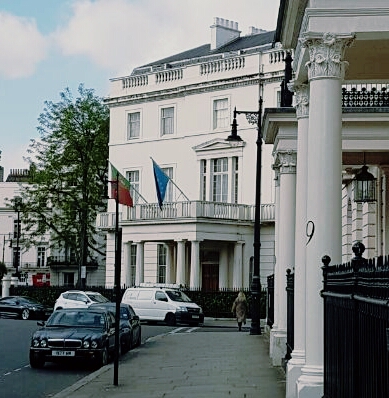
The embassy is an impressive building, as you would expect, with grandfather clocks and all kinds of fancy stuff in the hall and big stacks of Super Bock tucked away in side rooms. The staff are all Portuguese of course, but speak very good English to guests. I had been prepared to speak to the receptionist in Portuguese but he detected my Anglo Saxon demeanour and went straight into English mode.
I wasn’t expecting there to be many fellow students, but I was a bit startled to find I was the only one! I sat in a room, opposite a very friendly and helpful embassy official who handed me the papers and occasional glasses of water. There were textbooks and teaching materials all over the place. I believe they do lessons for expat children, so I guess that’s what those were for.
All the usual exam rules apply: read the question carefully before you start and try not to spill a glass of water on the answer sheet. I stuck to these rules… Mostly.
The first part of the exam was as expected: a series of multiple choice questions based on written texts. Easy enough. I didn’t make great use of my time, unfortunately, and had to rush a bit at the end, but that’s OK. This is by far my best subject.
Next up is a written exercise: write an email and a note based on a scenario they give you. The best technique here is to reuse as much of the question text as possible, just changing the verb endings. They’ve already constructed the sentences for you so why would you want to rewrite it from scratch. Thanks Mr Bennett, secondary school French teacher, for that advice; it got me about 20% of the word limit and then I had to start thinking, and it went reasonably well, I think. One thing to remember is that you don’t really have enough space for the 120-140 words they ask for, so keep your writing small and neat or you’ll end up like me, having to cram the last ten words into a centimetre of remaining space. I’m exaggerating… Actually, no, I’m not. There’s plenty of time though, so don’t forget to use it to go back and check your concordância.
On to part 3. This was the biggest shock for me. Up to now, I had done pretty well in all the “modelos” by allowing myself time to read the questions. Now, in the exam, the first three recordings each allowed one minute for the student to read the questions, but that’s not really enough, and the remaining 5 recordings didn’t allow any time at all. I was trying to read and listen at the same time, got hopelessly muddled and the result was a bit of a mess, I think. If you’re about to take the test, you should consider doing some speed tests, trying to cope with information rushing at you in a flood and strategies for coping with lack of time. Another tip I can give you is to do with the sound quality. The office isn’t noisy but it’s an old building and the acoustics aren’t great. Add to that the traffic noise the general quality of the recordings themselves, and a couple of people wandering in and out and you’ve got a recipe for distraction. When I do the next one, I’m going to ask if I can use headphones to shut out external sounds and see if that helps. I would suggest you consider doing the same if you are planning to take the exam. As for me, in the interval between the third and fourth sections, I went to the casa de banho and cursed the fact that embassies have bars on all the windows so I wasn’t able to escape. When I got back to the room my hands were shaking.
The final section is a ten minute conversation with the examiners. The modelos I’ve done have all had three components to the “expressão oral” but, to my intense relief, in the real thing, they had dispensed with the other two! Yippee!
I had spent the last couple of weeks working on conversation generally, and the last two days cramming intensely for the 1:1 questions, and it paid off in bucket loads. I’m sure I made mistakes but I flew through it, spoke fairly fluently, managed a couple of jokelets and a couple of expressões idiomáticas (examiners bloody love those, whatever the language might be). Best of all, I resisted my natural inclination to improvise and get myself into convoluted subclauses with no way out. I stuck to the sentences I had practised, kept it simple and it went very well indeed.
I must say, the invigilator was really helpful in the conversation. Obviously she didn’t actually help, but she made me feel very at ease and gave lots of positive feedback to let me know that, yes, I was still making sense and not burbling. That sort of thing makes a big difference, because if you lose confidence in that situation it’s quite difficult to get back on track.
All in all, I think I did pretty well,in spite of the setbacks in the third section. I don’t know how picky they are, or what the marking criteria are but I have a good feeling about it. Unfortunately, I won’t find out for sure until September.
September!!!
SEPTEMBER!?!?!
When it was all over, I thanked the invigilator and went to a fancy-schmancy café for a fancy-schmancy sandwich and some well-earned beer*.
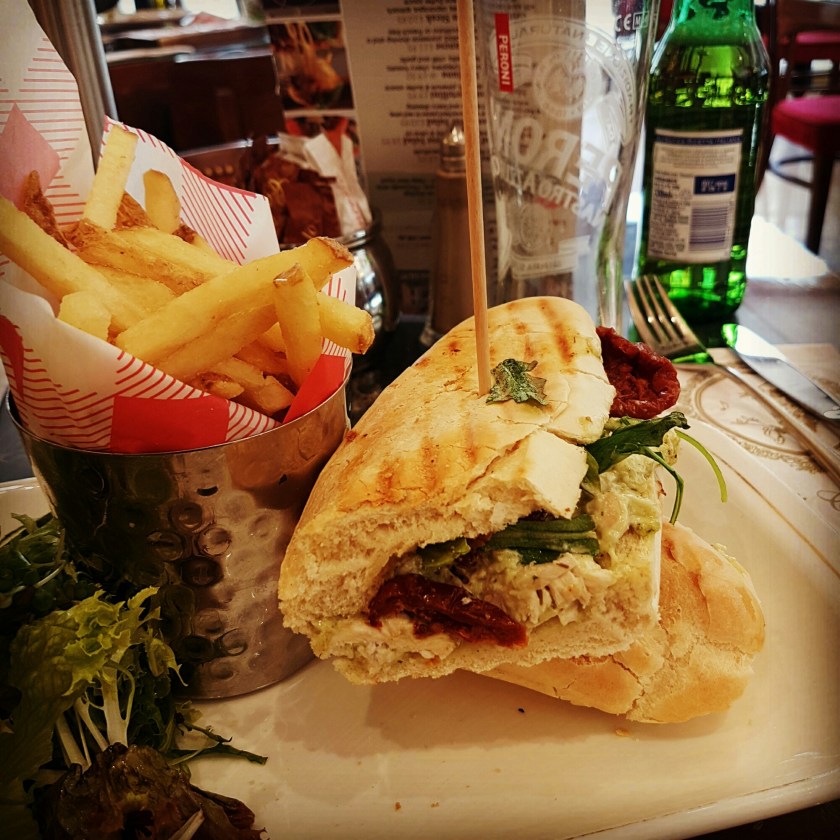
*=Peroni, not Super Bock. Yes, I was tempted but their security was too tight.
51.499671
-0.155373
 Acabo de comprar bilhetes para um concerto da Deolinda no Coliseu do Porto. O concerto está marcado para um sábado, dia quatro de Fevereiro e pretendemos fazer umas mini-férias de fim-de-semana antes de voltar ao trabalho, à escola e à realidade. Infelizmente penso que vai ser difícil ver todas as vistas da cidade em dois dias! Serão um presente para a minha esposa que terá feito anos na sexta anterior, mas confesso que estou a puxar a brasa para a minha sardinha porque sou eu que gosto dos Deolinda. A minha esposa não os conhece bem.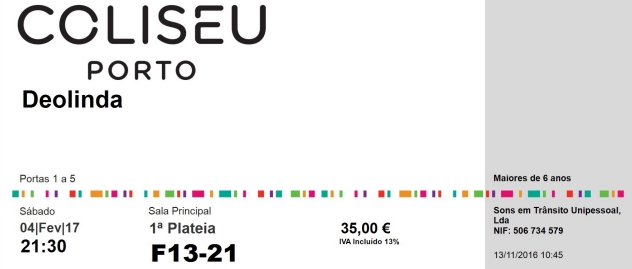

 Luso
Luso 