A única vez na minha vida que comi carne de cabra foi em Coimbra, num restaurante perto do centro comercial. O prato é chamado chanfana, e é uma receita tradicional à base de carneiro ou de cabra.
Chanfana
Se a carne for velha, não importa, porque será assada até se tornar tenra e por isso esta receita é vista como boa opção para carne dura de animais mais maduros. Tradicionalmente, a carne é assada numa caçoila de barro preto com vinho tinto, alho, pimenta e folhas de louro.
A receita é muito antiga mas existem diversas histórias sobre a origem. Como resultado, há duas regiões que disputam a coroa da terra da chanfana. O concelho de Miranda do Corvo é conhecido por ser a Capital de Chanfana. Entretanto, Vila Nova de Poiares é a Capital Universal da Chanfana e tem uma marca registada para demonstrar a sua supremacia no mundo da carne assada.
Quando estudas português durante anos e finalmente chegas na secção C-H-A-N-F no dicionário.
É muito importante não confundir “chanfana” com “chanfrado” porque ninguém quer pedir um prato de carne assada e receber um guru de auto-ajuda, mesmo se for bem passado com umas boas mãos cheias de alho.
I actually made chanfana the day after writing this. It was so bad it almost caused a diplomatic incident between Portugal and Britain. Halved the ingredients but didn’t reduce the cooking time enough and it was very, very dry.
OK, well this is one of the bands I listened to the other day and liked enough to want to dive into their lyrics. It’s not an easy one because a lot of it is lists of things and events, like the lists in “Its the End of the World as we Know It” by REM or “We Didn’t Start the Fire” by Billy Joel and I am pretty sure I am missing some of the references. I’ll put links on the ones I recognise because it’s probably easier than writing 30,000 words of footnotes. Speaking of feet, there’s a really excellent live video out there and teh lead singer has a cast on his ankle, so well done him for not calling in sick that day!
🇵🇹
🇬🇧
Siga em fila vai Nove emprego cinco sai Quinto império do atalho Bomba, escola, pão, talho
Form a line, go Nine employed, five leave Fifth empire by a shortcut Bomb, school, bread, meat
Trívia e televisão Aurora do quadrilião No ar um cheiro a esturro Bom pró esperto, mau pró burro
Trivia and television Glow of the quadrillion In the air a smell of burning Good for the smart, bad for the stupid
Perto, tão perto do oásis no deserto Longe, tão longe de ir lá hoje Mora, demora O que é bom nunca é pra agora Quem me dera ir daqui pra fora
Close, so close to the oasis in the desert Far, so far from getting there today Lay, delay What is good is never for now I wish I could get out of here and away
Trânsito no Jamor A ouvir notícias do terror Troika, bolha imobiliária É cara a vida e a pensão precária
Traffic on the Jamor Hearing news of terrorism The Troika, a property bubble Life is expensive, and pensions at risk
Fraco tão fraco o sol neste buraco Boa, tão boa a vida boa Mora, demora O que é bom nunca é pra agora Quem me dera ir daqui pra fora
Weak, it’s so weak, the sun in this hole Good, so good, the good life Lay Delay What is good is never for now I wish I could get out of here
Mergulhar mãos no volante e adiante Pra qualquer lugar Vidro aberto, rádio alto, no asfalto Sem me apoquentar Saborear o mar, as serras Cobrir-me de pó e geada Roer o osso desta terra Na vida de estrada
Grab the steering wheel and go To anywhere Window open, radio loud, on the asphalt Without fear To enjoy the sea, the mountains get covered in dust and frost Chew the bones of this land In life on the road
Sismo no Japão Zara, nova coleção Espionagem, guerra, muda o tema Woody Allen no cinema
Earthquake in Japan Zara, new collection Espionage, war, change the subject Woody Allen at the cinema
Zapping e jornal Série e logo futebol O vizinho num concurso A fazer figura de urso
Channel-hopping and news Series and then football The neighbour in a competition To act like an idiot
Chato, tão chato papar grupo barato Oco, tão oco o circo louco Mora, demora O que é bom nunca é pra agora Quem me dera ir daqui pra fora
Annoying, so annoying, support cheap group* Hollow, so hollow, the crazy circus Live, delay What is good is never for now I wish I could get out of here
Mergulhar mãos no volante e adiante Pra qualquer lugar Vidro aberto, rádio alto, no asfalto Sem me apoquentar Saborear o mar, as serras Cobrir-me de pó e geada Roer o osso desta terra Na vida de estrada
Grab the steering wheel and go To anywhere Window open, radio loud, on the asphalt Without fear To enjoy the sea, the mountains get covered in dust and frost Chew the bones of this land In life on the road
Onde não há prazos nem obrigações Não há debates nem euromilhões Onde o sol eleva e a frescura acata Sem consulta ao homeopata Onde a cura é sem vacina E a cardina é sem pesar Por lagoas e colinas Vê-se a lágrima a secar Dá o vento na cara E nada nos pára Nada nos pára
Where there are no deadlines or obligations No debates, no euromillions Where the sun lifts you and the coolness follows you Without an appointment with the homeopath Where the cure doesn’t take a vaccine** And the grime doesn’t weigh you down Through lakes and hills Feel the wind in your face And nothing will stop us Nothing will stop us
Perto, tão perto do oásis no deserto Longe, tão longe de ir lá hoje Mora, demora O que é bom nunca é pra agora Quem me dera ir Quem me dera ir daqui Quem me dera ir daqui pra fora
Close, so close to the oasis in the desert Far, so far from getting there today Delay, delay What is good is never for now I wish I could get out I wish I could get out of here I wish I could get out of here and away
Mergulhar mãos no volante e adiante Pra qualquer lugar Vidro aberto, rádio alto, no asfalto Sem me apoquentar Saborear o mar, as serras Cobrir-me de pó e geada Roer o osso desta terra Na vida de estrada
Grab the steering wheel and go To anywhere Window open, radio loud, on the asphalt Without fear To enjoy the sea, the mountains get covered in dust and frost Chew the bones of this land In life on the road
*best guess is that he’s saying you should support independent artsists
**They broke up in 2019, in case you were wondering if this was some sort of covid reference
A tradução de hoje é “Fado Português”. Se Amália cantou alguma canção, acho que convém usar a versão dela como base duma tradução, mas não existe um vídeo dela a cantar esta, e olha, a versão de Sara Correia é ótima, então porquê é que estás a resmungar? Vi-o na app Lingoclip, que estou a usar diariamente. Para ser sincero, é frustrante. Prefiro usá-la no modo especialista porque é mais fácil digitar tuuuuudoooo do que andar de um lado para o outro entre as letras e as opções, mas é preciso ter dedos extraordinariamente rápidos! Mas um fado é mais fácil do que um rap, portanto, se gostares de experimentar, recomendo que comeces com algo deste género.
Português
Inglês
O Fado nasceu um dia Quando o vento mal bulia E o céu o mar prolongava Na amurada dum veleiro No peito dum marinheiro Que, estando triste, cantava Que, estando triste… cantava
Fado was born one day When the wind was barely stirring And the sky held back the sea On the hull of a sailing ship In the breast of a sailor Who, being sad, was singing, Who, being sad, was singing.
Ai, que lindeza tamanha Meu chão, meu monte, meu vale De folhas, flores, frutas de oiro Vê se vês terras de Espanha Areias de Portugal Olhar ceguinho de choro
Oh so much beauty My ground, my mountain, my valley With leaves, flowers and golden fruit See if you see the lands of Spain, Sands of Portugal Vision nearly blind from crying
Na boca dum marinheiro Do frágil barco veleiro Morrendo a canção magoada Diz o pungir dos desejos Do lábio a queimar de beijos Que beija o ar e mais nada Que beija o ar… e mais nada
In the mouth of a sailor Of the fragil sailing boat The tortured song, dying Tell of the torment of desires From the lip burning with kisses That kisses the air and nothing else That kisses the air and nothing else
Mãe, adeus, adeus, Maria Guarda bem no teu sentido Que aqui te faço uma jura: Que ou te levo à sacristia Ou foi Deus que foi servido Dar-me no mar sepultura
Goodbye mother, goodbye Maria Remember what you see and hear* That here I make an oath That I will either take you to the sacristy Or it was God that served me By giving me a grave in the sea
Ora eis que embora outro dia Quando o vento nem bulia E o céu o mar prolongava À proa doutro veleiro Velava outro marinheiro Que, estando triste, cantava Que, estando triste, cantava
Well so it was that the next day When the wind was hardly stirring And the sky held back the sea At the prow of another sailing ship Sailed another sailor Who, being sad, was singing, Who, being sad, was singing.
Ai, que lindeza tamanha Meu chão, meu monte, meu vale De folhas, flores, frutas de oiro Vê se vês terras de Espanha Areias de Portugal Olhar ceguinho de choro
Oh so much beauty My ground, my mountain, my valley With leaves, flowers and golden fruit See if you see the lands of Spain, Sands of Portugal Vision nearly blind from crying
*Not very literal at all but I couldnºt make it make sense if I did it word for word.
Já publiquei uma tradução de outra canção de Chico Buarque, mas ouvi falar desta em relação às comemorações do aniversário da Revolução dos Cravos. Hum… não me sinto grande fã deste artista, mas cada vez que escuto com mais atenção uma música dele, adoro-a e aprendo muito. Acho que chegou a hora de ouvir os seus discos todos.
(Ah ah ah, discos, sim, escute os seus discos, avô, nós estamos a ouvir no Spotify)
“Tanto Mar” é uma música que ilustra certas coisas sobre a época e sobre a relação entre os dois países, Portugal e o Brasil. Existem duas versões na Internet, e eu pensei, “está bem, a segunda é uma gravação nova da mesma canção”. Mas não é! O cantor escreveu a primeira versão em 1975, um ano depois da revolução e dedicou-a ao povo português – ou melhor, à revolução em si. Naquela altura, o Brasil também estava em plena ditadura militar (um governo que permaneceu em vigor desde 1964 até 1985), portanto a revolução no país menor deu motivo para esperança no maior. As letras refletem aquela esperança mas por isso mesmo, foram censuradas pela ditadura brasileira.
A segunda versão foi lançada 3 anos depois, em 1978, mas desta vez com letra atualizada. Existe um sentimento agridoce perante a crise de 25 de Novembro, o enfraquecimento dos objetivos da revolução e a realidade que a passagem dos anos trouxe. Mas apesar de tudo, a esperança é ainda evidente.
Em baixo, traduzi as duas versões. Gosto da simplicidade da poesia. Um escritor menos talentoso teria tentado escrever algo maior, e teria enchido cada verso de sentimentalismo e cliché, mas esta letra é curta e limpa e não tem uma única palavra a mais.
Just a reminder, obviously, this is in PT-BR, so in case anyone is avoiding brazilian accents on their learning journey, allow me to sound the 📢#BRAZILIANPORTUGUESEKLAXON📢 as a warning.
Português
Inglês
Sei que estás em festa, pá Fico contente E enquanto estou ausente Guarda um cravo para mim
I know you’re having a party, man I’m glad And while I’m away Save a carnation for me
Eu queria estar na festa, pá Com a tua gente E colher pessoalmente alguma flor No teu jardim
I wanted to be at the party, man With your people And pick a flower in person in your garden
Sei que há léguas a nos separar Tanto mar, tanto mar Sei também quanto é preciso, pá Navegar, navegar
I know there are miles* between us So much sea, so much sea And I know how much we’d have to Navigate, navigate**
Lá faz primavera pá Cá estou doente Manda urgentemente Algum cheirinho de alecrim
It’s spring there, man Here, I’m sick Send, urgently, some Fleeting scent of rosemary
Português
Inglês
Foi bonita a festa, pá Fiquei contente Ainda guardo renitente Um velho cravo para mim
It was a great party, man It made me happy I still hold stubbornly An old carnation for myself
Já murcharam em tua festa, pá Mas certamente Esqueceram uma semente Em algum canto de jardim
The (flowers) withered at your party man But certainly They left a seed In some corner of the garden
Sei que há léguas a nos separar Tanto mar, tanto mar Sei também quanto é preciso, pá Navegar, navegar
I know there are miles* between us So much sea, so much sea And I know how much we’d have to Navigate, navigate**
Canta a primavera, pá Cá estou carente Manda novamente Algum cheirinho de alecrim
Sing the spring, man Here I am in need Send me again Some fleeting scent of rosemary
* =Léguas is more like leagues but it would sound confusing in english so I fudged it
**Maybe I should have fudged this one too: naveger is much more specifically about travelling in a ship, as opposed to english where it’s more like “finding your way”
It’s been a while since I did a translation. Here’s Madredeus doing “Faluas do Tejo”. I’m not even going to translate the title because Falua is a kind of cargo-boat used on the Tejo and we don’t really have a word for that and I think writing “Cargo Boat Used on the Tejo” in the lyrics would be clunky.
The name comes from the arabic word Felucca, apparently.
Português
Inglês
Faluas, Vaga lembrança Qu’eu de criança Guardei pra mim
Faluas, Vague memories That I as a child Kept for myself
Se as vejo ainda Às vezes no Tejo Revivo a alegria Do tempo em que as via no rio a passar
If I see them still At times on the Tejo I relive the happiness Of when I saw them passing on the river
Faluas do Tejo Que eu via a brincar E agora não vejo No rio a passar Faluas vadias Que andavam ali Em tardes perdidas Qu’eu nunca esqueci
Faluas of the Tejo That I used to see playing And now I don’t see Passing on the river Lost Faluas That used to go around there On lost afternoons I never forgot
E era tanta beleza Que essas velas ao sol vinham criar Belo quadro da infância Que ainda não se apagou
And there was so much beauty That those sails created Beautiful painting of infancy That still hasn’t been wiped away
E eu tenho a certeza Que as Faluas do Tejo hão-de voltar Outra vez a Lisboa
And I am sure That the Faluas of the Tejo will return Again to Lisboa
Vou viver / Até quando eu não sei / Que me. Importa o que serei / Quero é viver
Eu e a minha esposa fomos assistir ao espetáculo de Sara Correia em Cadogan Hall. Foi incrível.
Antes do concerto dela, houve uma meia hora com um jovem que cantou bem acompanhado de um guitarrista. O público estava muito entusiasmado. Houve uma grande salva de palmas após cada canção. Nunca antes vi o primeiro artista a receber uma ovação de pé. Mulheres gritaram “amamos-te”. Havia muito estrogênio na sala, percebem? Perguntamos às mulheres do nosso lado direito quem era aquele rapaz. Foi Luís Trigacheiro, um vencedor do “The Voice Portugal”. Aaahh, percebo!
Sara apresentou o seu novo álbum e uns temas mais antigos tipo “Quero É Viver” (de Pedro Abrunhosa*) e “Estranha Forma de Vida” (de Amália Rodrigues) . A atmosfera na sala de concertos foi mil vezes mais animada do que a da minha última visita. Pessoas na varanda batiam os pés e gritavam “Ah fadista! Bravo! Sa-ra Sa-ra!”
Tinha corrido 10 milhas antes do concerto e estava com dores nos pés e as minhas pernas estavam fatigadas mas consegui estar de pé com os outros. Aí, que chatice.
(Update… er… well, look I’m absolutely sure she said it was one of his but I’ve just looked up the original on Spotify and it seems like it was a track by António Variações, released postumously on an album called Humanos, as part of a project by a group of musicians, including David Fonseca, Camané and some members of Clã. They went on to perform some of his music at a series of tribute concerts, which is available on Spotify. I had no idea this had happened. Very glad to find it though!)
I wrote this a couple of days ago but the mistakes made were quite hard to unscramble because of the way I’ve ordered the examples, so it’s taken a while to lick it back into shape. Thanks to Cristina of Say it in Portuguese for helping me desenroscar esta merda toda, but if I’ve missed anything, that’s my fault, obviously, not hers.
Falhei em aprender a lição deste blog portanto tenho TPC: escrever uma frase com cada expressão. Gramática é chato e estou farto de exercícios. prefiro falar sobre o meu novo programa televisivo mas sou um bom estudante portanto vou resistir a este impulso e aderir ao plano. Vamos a isto.
Finalmente
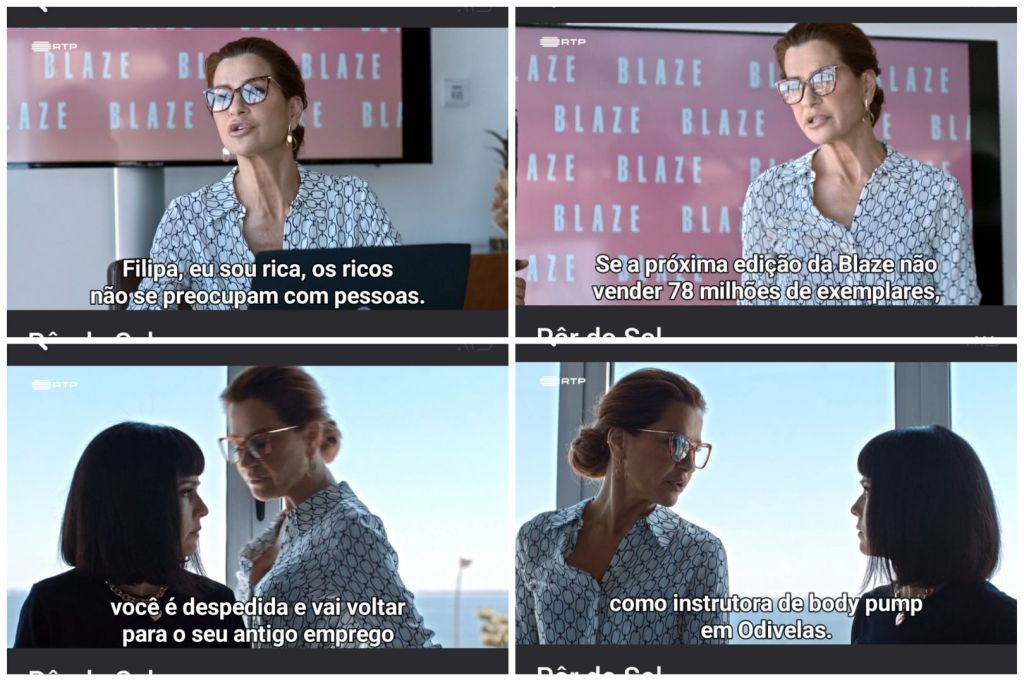
Finalmente consegui encontrar tempo suficiente para ver o primeiro episódio do Pôr do Sol. É incrível!
No fim
A série abre com dois amantes a passear na praia de Santarém e a argumentar, e no fim do seu caminho, chegam a um barco, ao lado do qual há um homem que compra uma das filhas gémeas deles, arranca, e logo depois o barco explode, matando o homem e (aparentemente) a filha.
No final
No final desta abertura, e após uma canção do estimado Toy, retomamos a história 30 anos mais tarde.
Por fim
Tentei seguir o enredo e o diálogo louco mas custou-me e por fim liguei as legendas. Confesso que nem sequer percebi que se tratava de uma comédia no início. Fiquei com a pulga atrás da orelha quando o homem no barco disse que tinha comprado um babygrow de Dulce Pontes. Mas foi a aparência do Toy que afastou as minhas dúvidas!
No fim
Felizmente a bebé gémea não morreu. Protegida pelo berço e o maço de tabaco da mãe(!) a menina flutuou ao longo do rio e no fim chegou a Lisboa onde foi adotada e já está a trabalhar numa revista
No fim
Na superfície, ela é muito bem sucedida mas no fim ela sabe que alguma coisa não bate certo na história do seu nascimento, portanto está muito mal humorada, sobretudo quando a sua assistente fala com ela. A assistente é mais alta que ela, e ela não suporta tal coisa.
Ao fim
Entretanto em Santarém a mãe das irmãs está a beber gin (apesar de não gostar) e a falar com o seu marido, a gémea restante e o caseiro da família (o que, se percebo bem, é o pai das irmãs). Ao fim de trinta anos de mentiras, ela está cheia de arrependimentos.
No fim
O seu marido também tem a sua cruz: o médico o informou que tem uma doença grave e está quase no fim da sua vida.
Afinal
O filho do caseiro namora com a outra gémea. Os pais dele vêm a saber disto e o pai fica zangado porque como já disse, é (acho eu) o pai de ambos. Vivemos numa sociedade muito liberal mas afinal ainda há um tabu contra o casamento com uma meia-irmã. Tanto preconceito*!
Enfim
Enfim, tendo visto o primeiro episodio, adorei. Vou continuar!
No fim de contas
Mas ainda tenho uma dúvida: no fim das contas, porque é que os escritores troçam tanto de Dulce Pontes?
Que acham? Consegui cumprir o meu dever sem ficar distraído?
*Narrowly avoided writing “prejuizo” here. Schoolboy error! One of the best-known false friends, that one!
There are still a few tickets left and they’re pretty cheap if you’re in or around London and fancy a night of Fado on the 17th.
I’m hoping she’ll bring Pedro Abrunhosa with her but it seems like a bit of a long shot. You never know though. When we saw Mariza a few years ago she had a whole host of stars in her retinue.
This song is actually by Maximiano de Sousa (aka “Max”) but I don’t think there’s a video of him performing it so I went with this cover by Raul Solnado instead. Max is from Funchal, and he says his wife is from Ponta do Sol, a few miles up the south coast. Another nearby town – Camacha – is mentioned too.
As you can see – or maybe you can’t – Solnado is wearing a hat that I recognise as a Maderian style, and I think the clothes are specific to the island too. The set shows a traditional house and I’m pretty sure the musical instruments the guys at the back are using are Brinquinhos*. Solnado is a mainlander from Lisbon so this is definitely cultural appropriation and he would be cancelled if he did this today. Quite right too. Throw him in jail!
I am publishing this on the 3rd of February to commemorate the birthday of another island girl – my wife. Since my birthday is on the 6th of May, she is numerically an older woman for the next 3 months. Feliz Aniversário, velha linda!
Portuguese
English
Casei c’uma velha Da ponta do sol Deitei-a na cama e o raio da velha rasgou-me o lençol Tornei-a a deitar Tornou a rasgar Perdi a cabeça e atirei co’a velha de perna p’ró ar
I married an old lady From Ponta do Sol I laid her in bed but that blasted old lady Tore my sheet** I laid her down again She ripped the sheets again I lost my head and threw the old lady and she landed upside down
A tua mãe foi às lapas O teu pai aos caranguejos Ficaste sozinha em casa, fui*** dar-te abraços e beijos Ó menina da Camacha Diz de mim o que quiseres Menos que não tenho jeito p’ra agasalhar as mulheres
Your mother went to the limpets Your dad to the crabs You stayed at home alone, I went to give you hugs and kisses Oh girl of Camacha Tell me what you want from me Unless I’m just don’t have the knack of taking care of women
*More about traditional Madeiran instruments here if you’re interested.
**I had a little trouble following the action here: When he says “rasgou-me o lençol” did she actually make a hole in the sheets or just tear them away from him? I checked on r/portuguese just to be sure and it’s the former. And then how am I supposed to understand “atirei (com a) velha“? Is he throwing himself on her? No, apparently not. “Atirar com” isn’t in my handy guide to verbs with prepositions, but “atirar-se a” is, and that means to throw yourself at someone in an attack. No, my informant told me atirei com means that he just threw, shoved or otherwise propelled the old lady away. The “com” emphasises the force and “brusquidão” of the “sova” or “arremesso” he gave her (3 new items in the word hoard!), so she ended up “de pernas para o ar” – upside down. Probably not literally, but it wasn’t a graceful landing. Hmm… I think it’s one of those songs that’s really fun to listen to but just try not too hard to think about what it is he’s actually describing.
UPDATE – Well, i was joking about the violence and really imagining it as a kind of slapstick scene, but I am told I should consider it might be much more suggestive. That the legs in the air and the ripping of sheets and the warming up of the women could all be interpreted as taking about his sexual prowess, broadcast in an age when you couldn’t really say this sort of things directly. OK, well, that gives a whole new spin on things!
***Online lyrics say “foi” but I think that’s a typo because it doesn’t make any sense. Oh wait, it says fui in the subtitles doesn’t it! Oh well, glad to know I was right about that!