Acho que já escrevi várias vezes sobre o meu amor pelos Deolinda. Desde a dissolução da banda, a voz dela, Ana Bacalhau, aparece frequentemente nos órgãos de comunicação social com um penteado que não lhe fica bem na minha opinião, mas não sou o pai dela, portanto não é comigo!
Gosto da música da Ana, mas não chega aos calcanhares da obra dos quatro integrantes quando estavam juntos. Fiquei com a noção de que o espírito criativo da banda está associado, de algum modo, com o letrista, Pedro da Silva Martins. Martins, tem escrito canções para outros artistas, como por exemplo Lena d’Agua mas até hoje, eu não sabia que tinha voltado a gravar músicas com um novo grupo de músicos. Mas a banda existe mesmo, e o nome dela é “Cara de Espelho”. Ao contrário dos Deolinda (que eram basicamente uma família: dois irmãos, Pedro e Luís, a sua prima, Ana, e o marido dela, o contrabaixista, José Pedro Leitão), este grupo é composto de ex-membros de outras bandas, incluindo os Ornatos Violeta sobre quais já escrevi há algum tempo. Ouvi umas músicas da banda e confesso que não me agarraram tanto quanto a primeira vez que ouvi o “Musiquinha” dos Deolinda, mas o estilo é invulgar, e acho que a minha apreciação irá crescer ao longo dos próximos dias.
Uma entrevista com a letrista no Podcast Blitz Posto Emissor. Tem ar de professor de geografia sexy não tem?
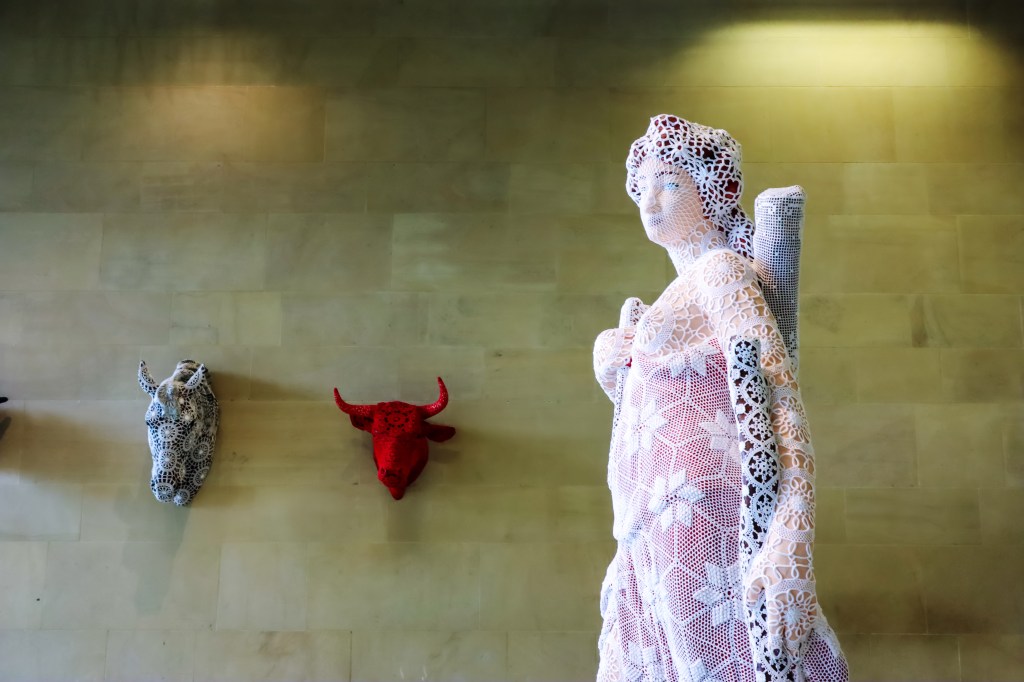
Ouvi falar desta artista recentemente (Onde? Quando? De quem? Nem sequer me lembro!) e decidi fazer uma pesquisa. Não estou a par das correntes do mundo artístico: poucas vezes entro numa galeria e se, por acaso, ouvir algo sobre a arte moderna os factos entram por um ouvido e saem por outro. Mas o site da artista impressionou-me muito: ela oferece um vasto leque de competências na criação das suas obras: há estátuas de ferro forjado, corações de Viana construídos de talheres de plástico, um carro enfeitado de ouro, um helicóptero com penas cor-de-rosa e brilhantes por todo o lado no exterior (o transporte pessoal de Elton John?) e algumas esculturas tão extensivas* que parecem cenários de filmagem! Além da arte, está a utilizar uma espécie de engenharia.
Até certo ponto, lembra-me a obra do Bordalo II, cujas esculturas alegram as ruas de Portugal. Ambos produzem obras de tamanho impressionante e cores marcantes, mas enquanto as dele são feitas de materiais reciclados, como garrafas, pneus e embalagem, dando um ar improvisado e bruto aos seus animais fofos, as obras de Joana Vasconcelos são compostas de materiais requintados; brilhantes e limpos; mesmo que os materiais escolhidos sejam frequentemente fora do normal (por exemplo “a noiva”, feita de milhares de tampões), o objetivo é tornar o quotidiano belo, quase o oposto do outro artista.
As obras de Joana Vasconcelos podem ser encontradas neste canto da Internet**. É deslumbrante, até na ecrã. Numa galeria, hão de ser ainda melhores!
Some of Joana Vasconcelos’s artworks
*This is probably a weird choice of adjective for a sculpture but there are some that really spread out over a wide area of ground which is why I’ve said they remind me of a film set in some sort of Sci-fi scenario, but you’d normally want something more like “gigante” or “imenso”, I think.
**Another daft choice of words. Why “corner of the Internet”? Well, that’s just what we used to call a website when I was into amateur web design in the early 00s. “Welcome to my corner of the Internet”. I won’t change it here, but it’s a good reminder that if you choose to express yourself in interesting, colourful ways like this, your audience might not think “gosh, how quirky and charming” they might just think “you have clearly made a mistake and we won’t know what you’re taking about” so maybe sometimes it’s better to stick to taking like a sensible person.
Então, ainda não falei da rainha, Cesária Évora? Tive a sorte de assistir a* um espetáculo dela em… hum… 2001, se não me engano. Naquela altura, não falava nem uma palavra de português mas mesmo se falasse não me teria ajudado porque a maior parte da obra dela está em Crioulo Cabo-Verdiano. Fomos com a tia da minha esposa. A minha esposa nasceu no Cabo Verde e viviu lá durante os seus primeiros anos, antes da família dela ter voltado para a Madeira. A cantora tinha uma maneira muito relaxada de se apresentar na sala de concertos. Não parecia ser muito animada. Só cantou de pés descalços**. Havia uma mesa no centro do palco e, durante o seu intervalo, a banda continuou a tocar enquanto ela sentou-se numa poltrona, acendeu um cigarro, deitou um pouco de vinho num copo*** e ficou tranquila, nem sequer olhando o público durante 3 ou 4 minutos até à abertura da próxima música.
Queria fazer uma tradução da sua canção “Angola”, que é empolgante, mas claro que preciso da ajuda de um português que entenda o crioulo. Roubei as letras deste site, mas acho que o homem que fez esta tradução parafraseou um pouco. Por exemplo, aquela primeira linha tem uma conjugação do verbo “viver”, sem dúvida. Acho que ela diz “Essa vida boa que os senhores estão a viver”. Existem vários sites online onde se explicam estas línguas parecidas com o português padrão – por exemplo, aqui está a descrição de “nhôs” no Infopedia . E tenho as minhas dúvidas sobre a interpretação de “Ami nhos ca ta matá-me” porque parece-me tão descabido no contexto… mas tenho de confiar no tradutor porque ele afirma que é fluente!
A música é linda. Eu não sei nada de teoria da música e se calhar, estou completamente errado, mas parece-me influenciado pela música do Brasil, com um ritmo sincopado que me lembra o**** Samba, mas é mais do que só uma cópia: muito mais. Tem um som único, e a voz dela é… Ouso dizer “ouro sobre azul”? O efeito da voz e da música é esmagador!
*I need to smack myself in the head with a frying pan a few times till I remember to put the “a” after “assistir”
**I’m only talking about the concert but I could easily have said the same about her career.
***I really screwed this sentence up – I tried to use the verb “derramar”, which isn’t even the right verb (it means spill) but then I managed to get it even wronger and wrote “derrubar”. I think deitar is the right verb even though it sounds weird – I usually associate it with laying something down or chucking it away. I also wanted to express the idea that she poured out a few sips worth, but that didn’t go any better. Hopefully this works. the easy way would be to say “encheu um copo” because why wouldn’t you want to fill it all the way up? But I was trying to be more specific than that. Sigh. This seems like a very basic thing to be confused about when I’m meant to be at C1 level.
****Not “do Samba”: “it reminds me of” doesn’t have de, whereas “i remember” does – so the preposition use is pretty much the opposite of english, really!
Crioula
Português
Inglês
Ess vida sabe qu’nhôs ta vivê Parodia dia e note manché Sem maca ma cu sabura Angola angola Oi qu’povo sabe Ami nhos ca ta matá-me ‘M bem cu hora pa’me ba nha caminho Ess convivência dess nhôs vivência Paciência dum consequência Resistência dum estravagância
Essa vida boa que vocês têm Paródia dia e noite até de manhã Sem mágoas, com alegria Angola, Angola Oh que povo alegre A mim não me matam Venho com hora para partir A convivência na vossa vivência Paciência duma consequência Resistência duma extravagância
That good life you’re living Parodies, day and night, until morning Without pain, but with happiness Angola, Angola Oh what a happy people They don’t kill me I come when it’s time to be on the way The way living together is a way of life Patience of consequence Resistance of extravagance
Thanks to Cristina of Say it in Portuguese for correcting the text description above the video.
I was bowled over by Jéssica Cipriano’s version of Madredeus’s O Pastor when I watched it the other day, shortly after hearing her version of Olá Solidão. It’s so, so good. When she really cuts loose at around 4.20, my eyes were filling up and my soul left my body. I think the pianist, David Antunes, was right there with me too. Holy shit! How is this woman not a million times more famous? How do I not even see an album of hers on Spotify? How is she not smashing Eurovision? It’s some sort of conspiracy to hide her from the ears of foreigners, I reckon.
Here’s the original from the 1990 album, Existir. You can see it’s got a richer musical arrangement, and the singer’s voice is beautiful in an ethereal way. but it’s too ethereal for me, and the band has never really grabbed me for that reason, even though they were the first portuguese band I ever listened to. They remind me of bands like Clannad, the Cocteau Twins and Enya. I feel like the voice is being used as a musical instrument; there’s not much emotion there and the words don’t really matter so much so it’s hard to get into.
Português
Inglês
Ai que ninguém volta Ao que já deixou Ninguém larga a grande roda Ninguém sabe onde é que andou
Oh, nobody goes back To what they left Nobody lets go of the big wheel Nobody knows where they’ve been
Ai que ninguém lembra Nem o que sonhou Aquele menino canta A cantiga do pastor
Oh nobody remembers Not even what they dreamed That child sings The song of the shepherd
Ao largo Ainda arde A barca Da fantasia O meu sonho acaba tarde Deixa a alma de vigia Ao largo Ainda arde A barca Da fantasia O meu sonho acaba tarde Acordar é que eu não queria
In the distance It’s still burning The boat Of fantasy My dream ends late Leave your soul on guard In the distance It’s still burning The boat Of fantasy My dream ends late Waking up is what I didn’t want
Today’s translation is from Os Quatro e Meio. Why are they called that? You’d think, wouldn’t you, that maybe there were 5 of them but one was a dog so they only count him as half because he can’t play the mandolin. But no, there are six of them. So… what, are three of them dogs? How many mandolins do they need in one band? I’ve googled it but I’ve no idea how to account for the numerical disparity* Anyway, they hail from Coimbra and they are alumni of the student music scene down there but they branched out and found themselves a following in the country as a whole. They seem very earnest young men and you can see how they’d appeal to people who like easnest young men, preferably with eyebrows and suits, and it’s a good pop song: simple, catchy and with plenty of scope to let loose on the vocals In fact, here’s Jéssica Cipriano absolutely singing the hell out of it with a very minimal musical accompaniment and it’s even better than the original. I’d never heard of her before but she has an absolutely phenomenal voice.
The translation is mostly pretty easy, although I struggled a bit with “Fiz bandeira de um velho ditado / Melhor só que mal acompanhado”. Nothing hard about it, but when I translate it the two lines didn’t seem to fit together which made me think I’d missed something and I tried experimenting with alternative meanings of “acompanhar”. For example, it’s the verb Google Mail uses when it asks if you want to follow up an email that you’ve sent and not had a reply. So I was thinking maybe “it’s only better than barely following things up….” Desparate stuff. Anyway, the punctuation makes the difference because of course “Melhor só que mal acompanhado” is the ditado mentioned in the first line. He decided to live by the idea that it’s better to go alone than in bad company
Português
Inglês
Eu já fui assim Tão focado em mim Sem querer conselhos De ninguém Fiz das nuvens lar Saltei sem olhar Crendo que no fim sairia tudo bem
I used to be like that** So focused on myself Without wanting advice From anyone I made a home in the clouds I jumped without looking Believing in the end it would be fine
Fiz bandeira de um velho ditado: “Melhor só que mal acompanhado” Nem pensava em apoiar os pés no chão Olá, solidão Olá, solidão
I made a flag of an old saying: “Better alone than in bad company” I never thought of keeping my feet on the ground Hello solitude Hello solitude
Eu tinha um lugar Com vista pra o mar Que ninguém chegou a conhecer Voei rente ao céu Tudo era só meu E o que ainda não era Iria ser
I had a place With a sea view That nobody ever got to know I flew close to the sky Everything was all mine And whatever wasn’t yet Was going to be
Olho em volta, agora estou sozinho Não liguei às placas do caminho Nem parei pra perguntar a direção Olá, solidão Olá, solidão
I look around, now I’m alone I didn’t pay attention to the road signs I didn’t stop to ask directions Hello Solitude Hello Solitude
Fiz bandeira de um velho ditado: “Melhor só que mal acompanhado” Nem pensava em apoiar os pés no chão
I made a flag of an old saying: “Better alone than in bad company” I never thought of keeping my feet on
Olho em volta, agora estou sozinho Não liguei às placas do caminho Nem parei pra perguntar a direção Olá, solidão Olá, solidão
I look around, now I’m alone I didn’t pay attention to the road signs I didn’t stop to ask directions Hello Solitude Hello Solitude
Eu já fui assim Tão focado em mim Sem querer conselhos De ninguém
I was always like this So focused on myself Without wanting advice From anyone
* EDIT: A helpful reader has suggested this web page as the source of the name: “Começámos por ser só cinco. Salvo seja, já que o Rui [Marques, contrabaixista] não tem dimensão para isso. Não é que o valor dele ano seja igual ao dos outros mas a estatura dele deixa um pouco a desejar” – I assume that “ano” is a typo for “não” or possibly “anão” heh heh
** Thanks to Liliana for suggesting I tweak the tense here (see comments below 👇)
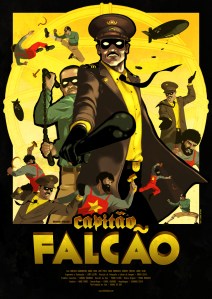
I’ve been trying to find a copy of Capitão Falcão on DVD for a while now but I’ve just found a free copy for download on the Internet Archive*. That’s a pretty respectable site, not a nest of pirates, so it appears to be legit. Anyway, can’t get it anywhere else, so I downloaded it. I couldn’t quite believe my luck. I’d have happily paid a hefty pile of cash for this but nobody wanted my money, apparently.
Anyway, here’s my review:
Este filme é incrível. Ouvi dizer que é um dos filmes portugueses mais engraçados de sempre e não mentiram. O protagonista é um militar (protagonizado por Gonçalo Waddington da série Odisseia) que é selecionado pelo General Gaivota para um novo cargo de super-herói e defensor do estado. O seu nome é Capitão Falcão e o seu auxiliar chinês é conhecido por Puto Perdiz. Os dois usam máscaras à moda antigo: ou seja, são máscaras que escondem a parte superior do rosto, não dessas máscaras cirúrgicas que cobrem a fuça.
Mas porque é que os protagonistas têm nomes de aves? Suponho que é uma referência aos super-heróis do passado. Quanto ao Puto Perdiz, a sua alcunha é parecido com a do Robin (o “Boy wonder”), da série Homem-Morcego. Mas existem ainda mais paralelos porque sem dúvida este filme trata-se de uma sátira daquele género de super-heróis. Os vilões riem-se em voz alta de modo exagerado, como o Doutor Evil do “Austin Powers”, por exemplo, e os métodos de interrogação gozam com as séries policiais duras.
Mas acima de tudo, acho que há duas personagens nas quais este filme é baseado: Primeira: O Besouro Verde** uma personagem americana que também usava mascara e também tinha um ajudante chinês (protagonizado pelo lendário Bruce Lee!). É óbvio que o seu “vibe” (como dizem os jovens) é cem por cento o do Besouro Verde. Mas mencionei a série no Insta e a minha amiga Olga respondeu com uma segunda personagem: “Major Alvega!”
“Hum, o quê? Diz lá, quem é esse Major?”
Major Alvega, também conhecido por “Battler Britton” era um piloto da RAF (Força Aérea Britânico) que estreou na revista Sun*** em 1956 e depois mudou-se para Portugal mas naquela altura a ditadura nacionalista exigiu todos os heróis terem nomes portugueses, e foi assim que nasceu o Major Alvega****. Este vídeo dá mais informações. É evidente que o escritor do diálogo é consciente do legado do Major Alvega porque há uma cena numa prisão onde Capitão Falcão perguntou a um homem como se chamava. O homem respondeu que antes de ser preso tinha sido um major. “Major Al…. ah ah ah… Major Alberto”
Enquanto o Major Alvego assumiu um nome Salazarista, Capitão Falcão é um servidor do próprio Salazar, porque o filme tem lugar nos anos sessenta e os criminosos são liberais, ateus e comunistas. Pior ainda, “São comunistas e ninjas…. Comuninjas”
This should give you a pretty good flavour of it! (Don’t worry though, that blaring music doesn’t play all the way through – it’s much easier to understand than this!)
**Green Hornet in english, but Besouro means beetle, not hornet
***Yes, a now defunct magazine, not the still existing paper
****Confusingly it seems that when Major Alvega was turned into a TV series it was sold back to anglophone audiences with a totally different name: Ace London!
Once again I’m indebted to Cristina of “Say it in Portuguese” for correcting the errors in the original draft
Fazendo os exercícios lacunares no livro “Qual É a Dúvida”, deparei com uma palavra desconhecida que me atrapalhou. O objetivo desta questão especifica era decidir se o substantivo precisa, ou não, de um artigo indefinido (um, uma):
“Tenho ______ Malhoa e…. (blábláblá)”
Acabei por deixar vazio o espaço porque achava que “Malhoa” era uma doença qualquer. Confundi-o com maleita, apesar da letra maiúscula. Mas a resposta certa é “um” porque Malhoa era um artista, portanto “um Malhoa” é um quadro pintado por aquele artista. Igualmente em inglês, os ricos dizem “I have a Picasso on my yacht” ou não sei o que é, não sou Jeff Bezos, mas o importante é que “🇬🇧 a Picasso” e “🇵🇹 um Malhoa” têm a mesma forma portanto não é nada difícil!
Mas quem é este gajo, Malhoa?
Segundo a Wikipedia, o artista nasceu em 1855 e começou a sua formação com 12 anos. Fez parte de uma tertúlia de artistas portugueses chamada “O Grupo do Leão”. Apesar de ser pioneiro do movimento naturalista, a sua obra era reconhecida como sendo muito parecida com a corrente artística impressionista que estava muito a moda naquela altura.
Faleceu em 1933 e foi sepultado no Cemitério dos Prazeres. Existe um museu dedicado à sua memória.
Once again I’m indebted to Cristina of “Say it in Portuguese” for correcting the errors in the original draft
I’m in a translation mood again, and this one is a more traditional number: Lisboa, Menina e Moca by legendary fadista Carlos do Carmo. It’s pretty well known, and I hear it very often, so this is one of those songs to be aware of. The title is literally “Lisbon, Girl and Young Woman”, and he’s basically talking to the city as if it it was a girl and he was trying to – as the young folk say – rizz it up. It strikes me as a tiny bit cringe, but maybe that’s my cultural perspective. Let’s dive into the lyrics and see what it’s like. The version I’ve chosen is from an appearance on The Voice Portugal, and it’s notable because he breaks off part-way through to tell the young people in teh audience to stop clapping because it’s fado, not rock, which is a classic old dude move. That’s enough of your malarkey, Jack!
Portuguese
English
No Castelo ponho um cotovelo Em Alfama descanso o olhar E assim desfaço o novelo de azul e mar Á Ribeira encosto a cabeça Almofada da cama do Tejo Com lençóis bordados à pressa na cambraia dum** beijo
I put one of my elbows on the castle I rest my gaze on the Alfama And like that, I undo the knot* of blue and sea I lean my head on the Ribeira The pillow on the bed of the Tejo With hastily-embroidered sheets, in the cambric of a kiss
Lisboa, menina e moça***, menina Da luz que os meus olhos vêem, tão pura Teus seios são as colinas, varina**** Pregão que me traz à porta, ternura Cidade a ponto-luz, bordada Toalha á beira-mar, estendida Lisboa, menina e moça, amada Cidade mulher da minha vida
Lisboa, girl and woman, girl By the light my eyes see, so pure Your breasts are he hills, sea lady The call that brings me to the door, tenderness CIty with points of light, emroidered Towel by the seashore, stretched out Lisbon, girl and woman, loved City, woman of my life
No Terreiro eu passo por ti Mas na Graça eu vejo-te nua Quando um pombo te olha, sorri, és mulher da rua E no bairro mais alto***** do sonho Ponho um fado que soube inventar Aguardente de vida e medronho******, que me faz cantar
On the Terreiro, i pass by you But in Graça, I see you naked When a pigeon sees you, it smiles, you are a woman of the road And in the highest suburb of the dream I give you a fado that I knew how to invent Brandy made of life and fruit that makes me sing
Lisboa no meu amor, deitada Cidade por minhas mãos, despida Lisboa, menina e moça, amada Cidade mulher da minha vida
Lisboa on my love, laid City by my hands, undressed Lisbon, girl and woman, loved City, woman of my life
*Novelo usually means a ball of thread or a cotton reel, but can mean a complicated thing, so I’m thinking he’s talking about a knot that he’s undoing, rather than a cotton reel – it just seems to make more sense in the context but I could be wrong.
**I couldn’t make any sense of this and thought he was saying “dei um beijo”, but that ain’t it chief! He’s just comparing the lightness of a kiss to the lightness of the material. There’s an explanation of all this needlework metaphhor here if you want to know more.
***I’m, translating moça as woman, not young woman, because I think it sounds better. FIght me! By the way, Menina e Moca is also the name of an early portuguese novel by Bernadim Ribeiro. Maybe there’s a link?
****Eesh! How to translate this? I think he’s saying she’s a woman who lives by the side of the sea – the second meaning given on Priberam – and that woudl make a certain amount of sense.
*****Referring to the Bairro Alto neighbourhood, of course, a wretched hive of wine and fadory if ever there was one
I posted a rap featuring Sam the Kid a while ago, but I need to prove I’m down with the kids, so here’s another! I think last time I used too many asterisks, so I’ll try and use links where I can this time.
This one is called “Também Faz Parte”. The first verse, by Sam the Kid himself, is really hard and I suspect I am getting quite a bit of it wrong. Mundo Segundo’s verse is much easier to follow.
Portuguese
English
(Sam the Kid) Quando a vida ficar vazia, faz ela virar poesia O passado passou ‘pa trás, o teu prazo passou num dia O fracasso tá ali na porta, quase dormiu na merda Ele passa uma vida morta, e abraça que é o fim da meta É o massacre que só humilha, cansado que o sol não brilha Arrasado e ele só dormia a pensar abraçar a filha E os homens levam-me os tropas Boy, na zona é só desfalques Paka limpa só funciona noutros palcos Gravatas invisiveis não querem mais milionários E tornam impossíveis cenários imaginários Mas não tiram minha mística, sou atração turística Desmistifico quem pensa que em bairros só há marginais, todos iguais Por mais que inoves, a tua sina é ser da mesma escória E putos trazem uma visão nova para a mesma história Pais falidos fazem mais bandidos Quem patrocina agora a casa é o filho de pais maridos Um gajo na boa vem Ramona, a gente “esfaina” Na estrada, a gente espalha a zona, a gente “shaina” A judiciária que espreita por ‘tar na área É suspeita a missão diária para ver toda a nossa área desfeita Novas doutrinas, que alteram rotinas à procura de vidas londrinas Um boy obrigado a ter emigrado e o bairro ainda é unido e bravo Onde eu gravo o meu vídeo, agrado o passado p’ra no futuro ser lembrado Esse é o meu fado
(Sam the Kid) When life is empty, turn it into poetry The past is gone behind, your goal passed in a day Weakness is there at the door, almost asleep in the shit He lives a dead life and embraces the end It’s the massacre that only humiliates, tired because the sun isn’t shining Devastated and he was only asleep, dreaming of hugging his daughter And men bring their crew to me Homeboy, in the neighbourhood, there’s only the hustle Too clean only works on other stages Invisible neckties don’t want more millionaires And make imaginary scenarios impossible But they don’t take my music, I’m a tourist attraction I demystify anyone who thinks that in the neighbourhood there are only marginalised people, all the same No matter how much you innovate, your destiny is to be the same scum And kids bring a new vision for the same story Skint parents make more criminals The person protecting the house now is the child of married parents A cool guy, here comes a police car, the people “It’s fine“* In the street, the people spread out, the people “Shine!” The Judicial Police that look to be in the area It’s suspicious , the daily mission to see our whole neighbourhood pulled apart New doctrines, that alter routines, in search of London lives A homey forced to emigrate and the neighbourhood is still united and brave Where I’m recording my video, I thank the past to be remembered in future That’s my fate.
Também faz parte Pensei num péssimo indício e disse-o P’ra vir encarar à pressa ou começa no sacrifício Em cada fim há um início, em cada início uma história É hipótese duma nova trajetória, porque a glória (x2)
It plays a part too I thought of a bad sign and said it To come face to face with it in a hurry or start with sacrifice In every end there is a beginning, in every beginning a history It is the chance of a new direction, because of the glory (x2)
(Mundo Segundo) Também vim do bairro mas não do bloco, eu cresci na ilha Onde a miséria aponta o foco mas onde há fome há partilha Onde um prato dá para quatro, um quarto p’ra família inteira Duas camas, berço, terço na mesa de cabeceira Um ordenado, uma pensão, rendimento de inserção Uma criança como um dom num castelo de papelão Um futuro que não sorri numa bela face trancada como Um livro que não li com informação que faltava Mas não deixei de ser eu, fui do breu ao apogeu Fui do meu pequeno quarto aos palcos do coliseu Tudo faz parte, eu luto. Dizem que a vida é prostituta Mas apaixonei-me por ela a ver se a relação resulta Num certo ponto de vista, podem me chamar masoquista Mas não sou apologista de vitórias sem conquista Tenho sonhos numa lista, mais uma linha que se risca Na verdade só se despista aquele que se faz à pista Porque eu corro por desporto mas não me alimento de vento Fiz muito trabalho à borla, respeita o meu orçamento Direto sem ornamento, não político de parlamento Lamento não minto em detrimento que sinto por dentro Do ventre até ao jazigo, imperfeito assim prossigo Se partir, digam ao mundo “fechei a página deste livro” Em cada fim há um início, em cada início uma história É hipótese duma nova trajetória, porque a glória
(Mundo Segundo) I come from the hood too, but not the block, I grew up on the island, Where misery directs your focus, but where there is hunger there’s sharing Where a plate is enough for four and a bedroom for a whole family. Two beds, a crib, a rosary on the bedside table A wage, a pension, a social security payment A child like a king in a cardboard castle A future that doesn’t smile on a beautiful face, locked like A book I didn’t read, full of information I need But I didn’t stop being me, I went from the darkness to the heights I went from my little bedroom to the stage of the Coliseu Everything plays a part. I fight. They say that life is a prostitute But I fell in love with her to see if the relationship is a success From a certain point of view, you can call me a masochist But I’m not an apologist for victories without conquest I have a list of dreams, one more line gets crossed out In truth, only the person who stays on track loses the track Because I run for sport but I can’t eat the wind I did a lot of work for free. Respect my budget Straight up, without ornament, not a politician in parliament I’m sorry I don’t lie to the detriment of what I feel inside From the cradle to the grave, imperfect, I do it like that If you’re leaving, tell the world “I closed the page of that book” In every end there’s a start, in every start there’s a history It’s a chance of a new direction because of the glory
Também faz parte Pensei num péssimo indício e disse-o P’ra vir encarar à pressa ou começa no sacrifício Em cada fim há um início, em cada início uma história É hipótese duma nova trajetória, porque a glória (x2)
It plays a part too I thought of a bad sign and said it To come face to face with it in a hurry or start with sacrifice In every end there is a beginning, in every beginning a history It is the chance of a new direction, because of the glory (x2)
* This is possibly fanciful. Nobody I spoke to knew what this word and the quoted word at the end of the following line mean. The best guess was that they were portuguesified versions of english words If you want a more chilled version of that to cleanse the pallet, you could try this acoustic version by A Garota Não. The lyrics are heavily cut to make it fit the format but it’s really nice, as most of her stuff is.
I had one of those moments on social media where I see something I don’t really understand and I have to go off and unravel the mystery and learn something along the way. It started with this Instagram post from Cinema São Jorge:
I guessed the origin, although I haven’t seen it for years. It’s from the pinnacle of the Manic Pixie Dream Girl movie era, 500 Days of Summer:
And I guess they’re excited because it was July the 31st, the day Quim Barreiros, accordionist and master of Música Pimba has decreed to be the best day to get married. Why? Because “depois entra agosto” (then comes August). It’s explained in this Sapo article but they’re not explaining it quite well enough for a non-native, so let me unravel the pun in all its corny glory.
“A gosto” is used in recipes in the way “to taste” is used in English recipes. Season to taste =Temperar a gosto, or you could just have “(a gosto)” in place of a specific quantity after the name of the ingredient (see this absolutely disgusting recipe, for example), meaning as much or as little as you like. So when he says “depois entra a gosto”, he’s just saying after you get married you can enter (nudge, nudge, wink, wink) whenever you please.


 Luso
Luso 