Posted in Portuguese

Livros da Piça

In which, in honour of the new pope, I make a rare mention of Fátima, and try not to get murdered by JD Vance.
CW: Orgãos sexuais masculinos

Entre os diversos podcasts na aplicação do meu telemóvel, existe um chamado “Livros da Piça”. Como é óbvio, é um podcast sobre livros, e os anfitriões são Sergio Duarte e Bruno Henriques, dois humoristas ou satiristas ou sei lá o quê, que também produzem o podcast “Jovem Conservador de Direita”. Só ouvi poucos episódios porque alguns deles durem mais do que duas ou até três horas, mas o último é um bom exemplo da espécie de livro sobre qual gostam de discursar: “As Aparições de Fátima e o Fenómeno OVNI” de Fina d’Armada e Joaquim Fernandes. Para quem não entenda este título, Fátima é uma cidade em Portugal onde a Nossa Senhora apareceu em 1917 e falou com três putos de lá por motivos que são opacos para nós seres humanos. É um dos lugares mais sagrados no mundo católico, tipo Lourdes em França, Mejugorje na Bosnia ou Craggy Island na Irlanda. E um OVNI? Então perdeste este texto? Por favor, presta mais atenção ao meu blogue.

Segundo o autor do livro, os milagres testemunhados pelos Pastorinhos de Fátima não foram exemplos do poder de Deus, claro que não, que noção rebuscada. Não, foram evidência de alienígenas. Como disse um dos humoristas, isto é um raro exemplo de uma teoria de conspiração com extraterrestres que chega a ser mais credível do que a alternativa. Mas ainda assim, é bastante estúpida.

De vez em vez, publicam um episódio sob a rúbrica “Livros do Caralho”, no qual os dois conversam sobre um livro de que gostam, como interlúdios no seu fluxo interminável de leituras execráveis. A diferença entre Livros do Caralho ou da Piça interessou-me muito. Obviamente, Caralho e Piça significam a mesma coisa: O orgão sexual masculino. Então, porque é que um Livro da Piça é péssimo mas um Livro do Caralho é ótimo? Pela mesma razão que “It’s shit” significa o oposto de “it’s the shit”, ou “absolute bollocks” não é igual a “the dog’s bollocks”. O calão de qualquer idioma é infindavelmente flexível e quase impossível de explicar.

Posted in English, Portuguese

Chakras

After looking at that Da Weasel rap the other day, I thought maybe I’d try another so here we are. I returned to this video which I mentioned in passing a year or so ago. I thought the song was called Classe Crua, but Classe Crua is the name of the band, which is composed of Sam the Kid (he’s the white guy) and Beware Jack (tall hair). This song has a “feat” on it – with a guy called Chullage (woolly hat, big beard) (feat is short for “featuring”). Chullage is a form of Chulagem, the quality of being a Chulo: a pimp or a vulgar person.

It’s a challenging translation. It’s got crioula, french, english and street slang all the way through it, mixed together like a big old liguistic stew.

PortugueseEnglish
Marés Frias, vento Forte, balançam o meu suporte
Mas ganho equilíbrio na balança!
Já não escrevo só reporto fotografias no meu bloco
Imagens são a melhor referência
Bad feeling não me move
Só balança o meu suporte
O beat entra, o flow cospe
Cold seas, strong wind, shakes the ground I’m standing on
But I gain stability from the instability
I don’t write, I only report photographs of my block
Images are the best reference
Bad feeling doesn’t move me
Just shakes the ground I’m standing on
The beat enters, the flow spits
Velho mar, barcos novos, velhos jogos, novos modos
Velho passaporte, novo avião, nova escala
Velho mapa, novas rotas
Dou a volta ganho pernas como centopeias
Descansa, tenho o nirvana nas veias
Tiro-te as teimas, a cena é phat como Baleias
Palavras bem usadas são uma Uzi, uma arma
Calma, a nova expressão apaga o velho trauma
São chagas da nossa Aura, mágoas da nossa alma
Chakras do nosso karma
Não há vivalma
Que fique indiferente e se ficarem indiferentes
Dá-me tempo “deixa-me rir” como o Jorge Palma
O Sociólogo da nova escola, com a velha guarda
A criar modas por aí a fora
Com a velha fórmula na nova montra
Keep it real p’ra zona aos que trocam sprints por maratonas
Old sea, new boats, old games, new styles
Old passport, new plane, new scale
Old map, new routes
I go far a walk I get legs like centipedes
Chill, I have nirvana in my veins
I’ll take away your stubbornness, the scene is phat like whales
Well used words, I’m an uzi, a weapon
Calm down,the new expression wipes out the old trauma
They are wounds on our aura, injuries on our soul
Chakras of our karma
There’s no living soul
That will be indifferent, and if they’re indifferent
Give me time, “let me laugh” like Jorge Palma*
The sociologist of the new school with the old guard
Creating methods out there
With the old formula in the new shopfront
Keep it real in the sone for people who swap sprints for marathons
Marés Frias, vento Forte, balançam o meu suporte
Mas ganho equilíbrio na balança!
Já não escrevo só reporto fotografias no meu bloco
Imagens são a melhor referência
Bad feeling não me move
Só balança o meu suporte
O beat entra, o flow cospe
Cold seas, strong wind, shakes the ground I’m standing on
But I gain stability from the instability
I don’t write, I only report photographs of my block
Images are the best reference
Bad feeling doesn’t move me
Just shakes the ground I’m standing on
The beat enters, the flow spits
Beware!
I wanna be there
Onde toda a gente é gente, e o que é bom é freeware
Mas buéda** gente ’tá a ver magenta, a follow the líder
Buéda gente vive à tangente
A swallow o que houver
Nhãs*** brodas usam a cabeça só p’ra por new wear
E dizem-me “Chullage é uma new era” (Chulagi dja bu era)
Deixam links, fazem clicks
Bebem pink, fazem pics
E mandam comments
‘Pa que te piques e o views atinjam peaks
Na broda, been there
Coolest monkeys in da jungle
HM ou Pull And Bear
Broda couldn’t bear
Muita câmara
Muito filtro, muito share, muito flair
Tanto fait-divers****
Teresa May ou Tony Blair
Same old same old, nique sa mere*****
Novos governos, mesmo xaxos******
Novos alunos, as mesmas praxes
Novos beats, os mesmos baixos
Novos mc’s os memo chachos*******
Tudo a tentar o encaixe
Mas já nada sai da caixa
Tudo tão aprumado que parece tudo
Tão saído do terceiro Reich
Versos controversos
‘Pa poder dar nas views
Essa medalha tem reverso
Tudo o mesmo point of view
Buéda flow mas não é diverso
Trágico como em Lampedusa
Brodas acabam imersos
Há uma festa no terraço
Duma casa sem alicerces
Fuck’em
Fecho a matraca********
E alinho os chakras
Escrevo linhas sacras
Cansado de tantos wankers
Galinhas e bácoras
Meu pensamento entra no train
A curtir Coltrane
E mando rimas só por treino
Giants steps
A love supreme
Estou fora do frame
Ponho os fones, subo o gain, expulso o pain
E mando um grito
Tenho buéda fantasmas e por eles não tenho escrito
Tens buéda fantasmas daqueles que te têm escrito
Estás tipo Mc’Donalds
Já vens da América feito
Aqui só foste frito
Digo o que sinto
Novo ou proscrito
E não preciso de ser seguido nem subscrito
Já não rappo
Só vomito
Nunca omito
Meu commitment
Quando debito
Foda-se Sam granda beat
Foda-se Beware obrigado pelo convite!
Beware
I wanna be there
Where everybody is us and what’s good is freeware
But a lot of people are seeing magenta to follow the leader
A lot of people live at a tangent
And swallow whatever there is
And the brothers only use their heads to put on new wear
And they tell me, “Chullage, it’s a new era” (Chulagi dja bu era)
They post links, they make clicks
They drink pink, they take pics
Why do you bite, and your views hit peaks
No brother, been there
Coolest monkey in the jungle
H+M or Pull and Bear
Brother couldn’t bear
Lots of camera
Lots of filters, lots of shares, lots of flair
Lots of other stuff
Teresa May and Tony Blair
Same old same old. fuck their mother
New governments, same assholes
New students, same hazing rituals
New bears, same baselines
New MCs, same guys
Everything trying to fit in
But now nothing gets outside the box
Everything is so polished it all seems
To have come from the Third Reich
Controversial verses
To be able to get views
This medal has another side
All from the same point of view
Lots of flow, but it isn’t diverse
Tragic like in Lampedusa
Brothers end up immersed
There’s a party on the terrace
Of a house with no foundations
Fuck ’em
I’m shutting my mouth
And aligning my chakras
I write sacred lines
Tired of so many wankers
Chickens and piglets
My thought gets on the train
Enjoying Coltrane
And rap some rhymes just for practice
Giant Steps
A Love Supreme
I’m outside the frame
I put on my headphones, turn up the gain, expel the pain
And I let out a scream
I have so many ghosts and because of them, I haven’t written
You have so many ghosts the kind that write you
You’re like McDonalds
You came from America, ready made
You were fried here
I say what I feel
New or forbidden
And I don’t need to be followed or subscribed
I don’t rap
I just vomit
I don’t omit
Mu commitment
When I debit
Fuck it, Sam, great beat
Fuck it, Beware, thanks for the invitation
[Refrão: Beware Jack]
Marés Frias, vento Forte, balançam o meu suporte
Mas ganho equilíbrio na balança!
Já não escrevo só reporto fotografias no meu bloco
Imagens são a melhor referência
Bad feeling não me move
Só balança o meu suporte
O beat entra, o flow cospe
[Refrain by Beware jack]
Cold seas, strong wind, shakes the ground I’m standing on
But I gain stability from the instability
I don’t write, I only report photographs of my block
Images are the best reference
Bad feeling doesn’t move me
Just shakes the ground I’m standing on
The beat enters, the flow spits

* Reference to this song

** Lots of english in this verb, but lots of slang too. Buéda gente seems to be “bué da gente. Bué is slang derived from africa. I think it’s maybe not that new. I think bué fixe (“very cool” dates back a while, but bué is generally a reinforcer so it indicates a lot of something or very much something

***Crioulo Cabo Verdiano – short for minhas/meus

**** Dammit, this is french!!!

***** Dammit, so is this!

******Not sure abot this one but basing it on this.

********Seems to be short for the spanish word “muchachos”

********This word can have a lot of meanings. I’m assuming he’s talking about his mouth since none of the other options make much sense.

Posted in English

Confusing Swears

This post is going to be very sweary, so if you don’t like that, maybe give it a miss.

I’m watching this Netflix series, Rabo de Peixe and I’m hexed, vexed and perplexed by the weird contradictions in a line of dialogue from near the end of episode 5:

“O Universo não julga, não dá premios, é pura indiferença e acaso. Por isso se te calha a sorte de uma segunda oportunidade, caralhos me fodam, se não a agarras com unhas e dentes.”

Here’s how I translate it (keeping the commas intact)

“The universe doesn’t judge, it doesn’t give prizes, it’s pure indifference and randomness. So if you’re lucky enough to get a second chance, dicks fuck me, if you don’t grab it with your fingernails and teeth.”

It’s a bit of a mess as far as I can see. I think I get the gist of what he’s saying overall, but it’s that weird, sweary tree-word clause in the middle of the second sentence that doesn’t seem to fit: why does he switch from the second person to the first for that bit? It just sounds like the clause is an exclamation that has nothing to do with the wider sentence, which is why it’s surrounded by commas. But if you imagine the sentence without the clause, the remainder makes no sense at all.

The best explanation I’ve had is that it is not an exclamation at all, it’s a legit part of the sentence. So he’s saying “you” in the sense of “any person”, and he’s so sure that any random person would grab the second chance that he’s willing to call down all the fodando of all the caralhos if he’s wrong.

It’s a bit hmm, though. For a start, for that to be true, the comma before and after the clause would have to be a mistake. Ugh, it gives me a headache!

Posted in English

Uma Maria-Rapaz

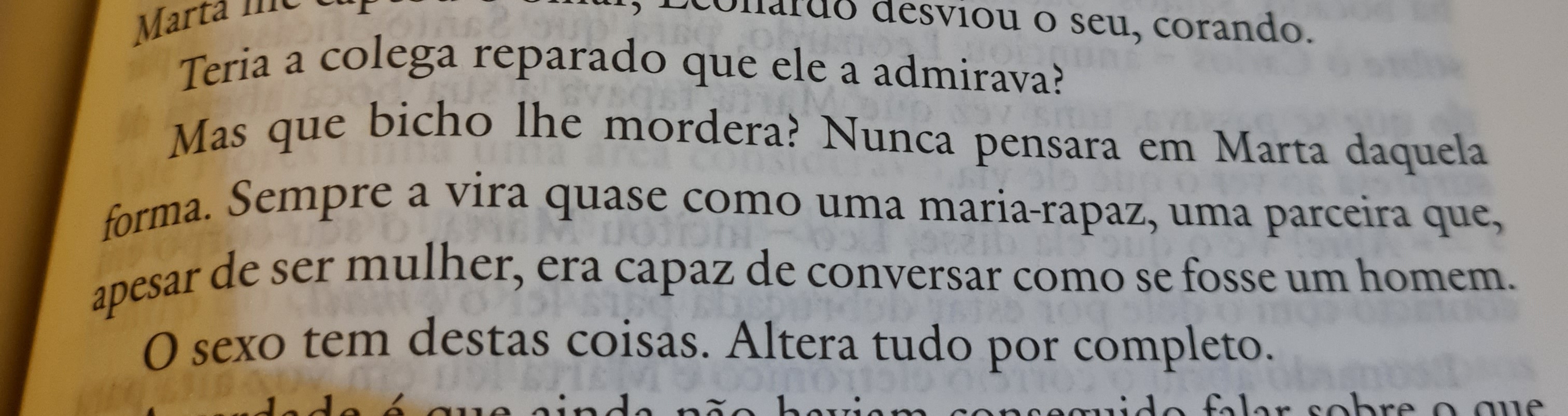
Ooh, I was intrigued by this passage in the book I’m reading. Are you ready for a couple of new expressions and some incoherent ramblings about gender? You are? Then come with me!

Had his colleague noticed that he admired her?

But what creature had bitten him? He had never thought about Marta that way. He had always seen her as like a Maria-rapaz, a partner who, although she was a woman, was able to talk like a man.

Sex is like that. It changes everything completely.

There are a couple of cool new things here. First of all, “que bicho lhe mordera” (“what beast had bitten him”) could be taken literally – there are certainly sites online that use some version of that as a headline to inform readers of how to figure out the origin of an insect bite or sting. In this case, though, it’s figurative. It just means something like “what had got into him?” or “why was he acting so strangely”.

The second phrase is even better. “Maria-rapaz”, as you can probably guess from the context, is a tomboy. According to the Wikipedia entry, there are quite a few different versions of this idea in popular usage, such as “moleca” and “maria-homem”. The meaning of it seems pretty congruent with the English equivalent. The Portuguese article is mercifully straightforward (at the time of writing), in contrast with the English version which has been larded with gender-studies buzzwords because, obviously, girls can’t just play with skateboards without well-meaning adults sticking labels on them. Ugh.

As the article says, the feminine male equivalent – “maricas” is much more likely to be seen as implying that the person is gay, which isn’t present in the idea of a tomboy, and – male gender stereotypes being more rigid – it’s generally seen as a more negative, derogatory word. There isn’t a Wikipedia page for maricas but Priberam sets out the different meanings pretty clearly.

I think that’s all for today. I had an extended side-note about that word “bicho” in the first expression, that was going to unpack the beastliness but I think I’ve decided it needs a blog post of its own so I’m going to do part 2 in this discussion tomorrow.

Posted in English

Don’t Risk it for the Biscate

Episode 8963 of the series “words that mean wildly different things on different sides of the Atlantic”

Biscate seems like a useful word to have in your back pocket, but use it with care. In Portugal it refers to a side job, side huddle, or short term job. In the world of the gig economy, it seems like a good one to know.

Olha, aquele é mecânico nos estaleiros, mas faz uns “biscates” de electricidade por fora!

https://www.dicionarioinformal.com.br/biscate/

When this came up in online discussion, some Brazilian contributors found this funny because that’s not what it means in Brazil at all. Over there it refers to a woman who has lots of sexual partners – so equivalent to slut or slag or other derogatory terms.

A menina que ficava com todos garotos do colégio era chamada de biscate.

https://www.dicionarioinformal.com.br/biscate

Navigating slang is more complicated in Portuguese than in English because there seem to be quite a lot of examples of differences like this.

Posted in English

Abreijos

I saw someone on Twitter signing off a tweet with “abreijos” which is obviously a mixture of “beijos” (kisses) and “abraços” (hugs). I love it! I did a post a few years ago about equivalents of “frenemy“, and in general I am very pro-splicing, but this was a new one on me.

Looking around for other examples, I found plenty, including these ladies who were less impressed with the idea of these frankenwords…

Abreijos - screenshot from Twitter

But woah, there’s a bonus one in there: namorido, which looks like a mix of “namorado” (boyfriend) and “marido” (husband). Seems to just mean a long-term, live-in boyfriend who hasn’t actually bothered with the whole ring thing. I asked about it on reddit and everyone agrees it’s a neologism from Brazil. True, it looks like everyone using Namorido on twatter is Brazilian, but Abreijos is used widely by Portuguese tweeps, so I am definitely going to pull that one out when I get an opportunity.

Posted in English

Aparrantly This Is Swearing

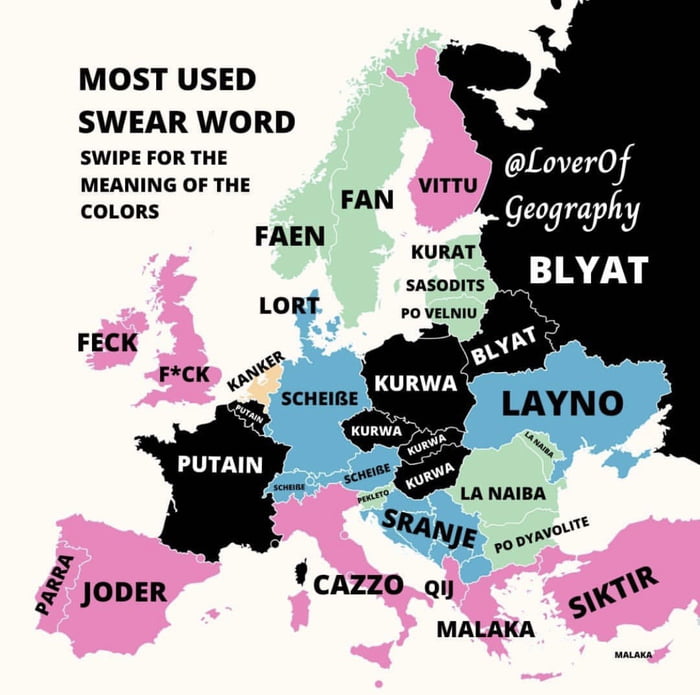
Portuguese twitter is very amused by this Instagram Post from “Lover of Geography”

For those not in the know, the actual palavrão here is “porra“, not “parra”.

Palavrão? Don’t I mean “asneira”? Palavrão is a swear word, whereas an asneira is any bad thing. You can “dizer asneiras” (say bad things) but you can also fazer asneiras (do bad things) so an asneira isn’t necessarily a swear word, it depends on context. The other relevant word is “calão” which just means slang.

By the way, why is Fuck the only one of these considered rude enough to have an asterisk? Or do they mean that English people actually say “Effasteriskseekay”? I wouldn’t put it past some people to be honest.

Posted in English

Trolling Mark Zuckerberg

Just to demonstrate the incredible educational potential of social media, how else would I have learned this new word?

mei·ta

(origem obscura)
nome feminino

[Portugal, Calão]  Esperma.


“meita”, in Dicionário Priberam da Língua Portuguesa [em linha], 2008-2021, https://dicionario.priberam.org/meita [consultado em 29-10-2021].

Selada De Fruta had a take on it too, but I already knew this word so it wasn’t as useful

Posted in Portuguese

A Semiótica Do Palavrão

(Description of an article about swearing in Porto: there are some grammar and vocab pointers down at the bottom for anyone who needs them. The portuguese is uncorrected and might contain errors but hopefully not many! Thanks to Dani and “Iznogoud” of the r/WriteStreakPT subreddit for helping me tidy up a few errors in the original text)

Acabo de ler um artigo no site do jornal Público intitulado “A Semiótica do Palavrão“. O autor, Paulo Moura, defende que a língua do Porto é rica porque a gente de lá usa muitas expressões com palavrões. Estas expressões não se trata de insultos como seria noutras regiões, mas sim de uma filosofia da vida. Acho que ele está a brincar, ou pelo menos está a escrever numa maneira ligeira. Parece que ele tem muito carinho pelos cidadãos daquela cidade e a sua maneira de falar. Apesar das obscenidades, acha-os acolhedores e simpáticos.

Já ouvi falar desta tendência portuense de usar palavras feias. Tenho uma amiga lisboeta que considera os portuenses bárbaros por isso mesma! Fica escandalizada quando vê vídeos online ou programas televisivas de tripeiros e o seu calão.

Notes on the text.

I’ve referred to Porto residents in three different ways

  • “a gente de lá” (the people from there). Gente is a collective noun so it’s treated as a singular (“a gente… usa” instead of “a gente… usam”)
  • “portuenses” is just a standard adjective meaning “from Porto”
  • “tripeiros” means tripe sellers, and has a couple of origin stories, both dating back about 600 years into the early history of portuguese navigation. You can read more about the most common version here

If you’re reading the article, hopefullly you’ll realise that the missing words are all rude

  • c=cu in every case, meaning “arse”. There are ruder c words in Portuguese like “caralho” (cock), “cagar” (verb meaning to shit) or “cona” (cunt) but I don’t think any of these are the c in any of the expressions on the page
  • p=puta which is a word for a prostitute. You occasionally see the abbreviation pqp online, meaning “puta que pariu” or “puta que te pariu” which is the whore who gave birth to you
  • b= I’m less sure about this one. “Bico” possibly? That just means beak but has a lot of alternative meanings, one of which is “Prática sexual que consiste em estimular o pénis com a boca ou com a língua. = FELAÇÃO”

Checking the theory in the last post, dealing with gender of – ão nouns, just to make sure it isn’t leading me astray:

  • Palavrão (swear-word) – masc: fits the rule
  • Expressão (expression) – fem: fits the rule
  • Razão (reason) – fem: doesn’t fit the rule, but it’s listed as one of the exceptions in the article so that’s no surprise
  • Regiao (region) – fem: fits the rule
  • Cidadão (citizen) – masc: fits the rule
  • Calão (slang) – masc: fits the rule
  • Felação (fellatio) – fem: fits the rule

Posted in English

Leftards

Quite interested to see this word “esquerdoide” or “esquerdoido” pop up a few times on Portuguese language twitter on both sides of the Atlantic. It seems to be the equivalent of the word “leftard” used by obnoxious maga types. It’s used in more-or-less the same way: identify some stupid thing said or done by one person or a small group of people on the other side. If it’s apocryphal or even if you just made it up, it doesn’t matter much. Then generalise that to characterise everyone in the other party as sharing the same opinion and being a bunch of leftards /esquerdoidos who aren’t smart like what we is. Sad.

The guy in the original tweet here is some Bolsonaro fartcatcher, so in American terms, this is like – I dunno – Stephen Miller, or Zac Goldsmith in the UK, mouthing off and one of their supporters jumping in and going “Yes, yes, they are all crazy aren’t they! Shit in my mouth please” or whatever people say when they wholeheartedly support the government in the face of all the evidence and are willing to let them get away with absolutely anything.

Side-note. “Coringa vírus” is presumably a reference to the movie Joker which is called Coringa in Brazil.