Então é por isso que a definição de “equipa” fez tão pouco sentido (neste blogue). Andava com modo Brazuca* ativado!!!
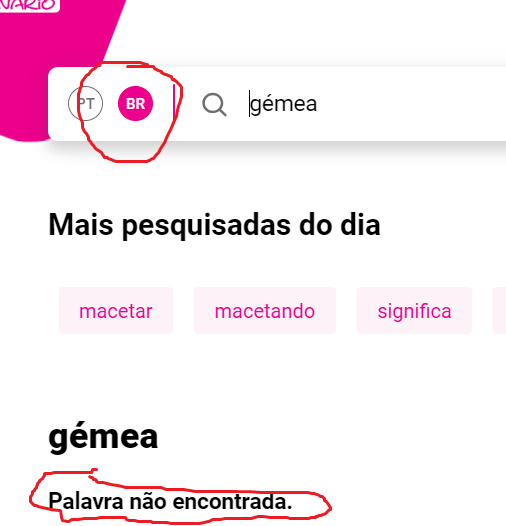
*Não acho que esta palavra seja ofensiva mas peço desculpa se estou a dizer asneiras
Então é por isso que a definição de “equipa” fez tão pouco sentido (neste blogue). Andava com modo Brazuca* ativado!!!
*Não acho que esta palavra seja ofensiva mas peço desculpa se estou a dizer asneiras
O blogue de hoje é mais uma tradução. O título não segue o acordo ortográfico mas não me importa. A palavra “efe(c)tivamente” é cognata com a palavra inglesa “effectively” mas tem um valor ligeiramente diferente porque é usada muitas vezes em situações nas quais usamos “really”. Lê a segunda definição nesta página para mais informações.
| Portuguese | English |
|---|---|
| Adoro o campo as árvores e as flores Jarros e perpétuos amores Que fiquem perto da esplanada de um bar Pássaros estúpidos a esvoaçar Adoro as pulgas dos cães Todos os bichos do mato O riso das crianças dos outros Cágados de pernas para o ar | I love the field, the trees, the flowers Jugs and everlasting loves That are close to the tables of a bar Stupid birds, fluttering I love the dogs’ fleas All the woodland creatures The laugh of children and others Terrapins with their legs in the air |
| Efectivamente escuto as conversas Importantes ou ambíguas Aparentemente sem moralizar | Effectively, I listen to important and ambiguous conversations Apparently without moralising. |
| Adoro as pegas e os pederastas que passam Finjo nem reparar Na atitude tão clara e tão óbvia De quem anda a enganar Adoro esses ratos de esgoto Que disfarçam ao pilar Como se fossem mafiosos convictos Habituados a controlar | I love the whores* and the pederasts who pass by I pretend not to notice In the clear, obvious attitude Of one who is being deceptive I love those sewer rats Who hide behind the pillar As if they were convicted mafiosos Used to being iin control |
| Efectivamente gosto de aparência Imponente ou inequívoca Aparentemente sem moralizar | Effectively I like imposing or unequivocal appearance Apparently without moralising |
| Efectivamente gosto de aparência Aparentemente sem moralizar Aparentemente escuto as conversas | Effectively I like appearance apparently without moralising Apparently I listen to conversation |
| Efectivamente sem moralizar Efectivamente, sem moralizar Aparentemente, sem moralizar Efectivamente | Effectively without moralising Effectively, wothout moralising Apparently, without moralising Effectively |
*This could be translated a few different ways but I guess this is the one he means, unless the paedos were chasing a magpie!
Claro que, como estudante desta língua, não tenho tempo para praticar a arte de sedução e ainda por cima a minha esposa não me permitiria, mas o Dia dos Namorados está quase a chegar e achei que alguns de vocês, os meus caros leitores, podiam gostar desta lista de frases de engate que roubei desta página do Observador de há oito anos.
Confesso que gosto muito da terceira (ah ah, soou como um daqueles anúncios de Clickbait “A terceira vai te chocar!”) mas concordo com o cabeçalho; são mesmo horríveis. Este julgamento não visa criticar o machismo implícito nas frases. Isso seria aceitável se fossem engraçadas mas…. eh pá… “Posso pagar-te um copo ou preferes dinheiro?” Boa sorte em limpar a Sagres da tua camisa depois de dizer essa merda!
Vou explicar cada uma em inglês para quem não sabe, mas estou demasiado constrangido para pedir ajuda de um professor , portanto pode haver alguns erros. Desculpem. (Obrigado pela ajuda, Cristina)

Writing this lot out so I remember it.
Niche point about the difference between planning to do a thing and intending to do a thing. I recently had an exercise to paraphrase the following snippet
“visa colocar o país”
It’s obviously not a full sentence so it’s a little difficult to do. “Visa” here doesn’t mean a visa you use to get into a country, it’s part of “visar”, which means “aim”, either literally (aiming a weapon) or in the sense of intending or having an objective.
So a good translation would be something like “intends to put the country” (in the original, it was followed by something like “…on a path toward sporting success”). Well, I suppose I was thinking something like that needs a long term strategy, or, if you like, a plan, so the word I used in place of “visa” was “planeia”. That’s not precise enough though. Planear is about the journey to get to your objective, and visar is more to do with your intention.
Better synonyms of visar would have been “pretender”, “tencionar” or “objetivar”
I also had to come up with a synonym for “o papel absorvente”. You’re obviously supposed to think of aborbent paper like kitchen towel (as opposed to papel higiénico, which is toilet paper), but it’s a trick! Papel can also mean “role”, and in the context “a escola assume um papel muito absorvente na vida deles” (from here) it was saying that school occupied a role in their lives that absorbed a lot of their attention and free time.
I said something about “estado social” intending to say “social status”, but it means “social state”. The word for status is actually “status”, which is weird becuse you don’t get many words in portuguese that start with st-. But there you have it: status social.
I knew “equipe” was a “francesismo”*, but I was a bit thrown by seeing it used in the wild so I looked up both equipe and equipa in Priberam. The lexicographers haven’t really been very helpful in explaining it, but the TL;DR is that yes, equipa is the preferred spelling. It’s just that the frenchified version is allowed and is sometimes used. I suppose it’s like cafe/café in english. É doesn’t really exist in our alphabet, so cafe is the closest standard english spelling but nobody is going to have an aneurism if you bust out an accent.
Homem Rico vs Rico Homem; Velha Casa vs Casa Velha
Um rico homem seems to mean “a good/valued man” as opposed to just a rich man. It’s the eighth definition on Priberam, although they use it for netos rather than homens. A question on Wordreference Forums refers to a blog (sarcastically?) asking of José Socrates is “um rico homem ou um homem rico” but I can’t find the original.
There’s also an old-fashioned expression “rico-homem“. with a hyphen, which seems to mean a member of the nobility.
Velha casa seems to be more deprecative, meaning outmoded or old fashioned, as opposed to simply old. This meaning of velho is the fourth one in Priberam, but they use it with technology rather than houses. My sense is that this one isn’t as clear-cut. I don’t see many references or explainers, and it’s translated all sorts of ways in Linguee.
*Which sounds like it should mean “earthquake in Paris” but actually just means a word or phrase borrowed from french, just like anglicismo means a word or phrase borrowed from english.
Estávamos no centro de Londres para assistir a uma peça de teatro. Como o teatro fica perto da livraria Foyles, entrámos para que eu pusesse vasculhar nas estantes portuguesas. Antigamente, esta livraria era a melhor fonte de livros portuguesas, mas a secção portuguesa tinha encolhido ainda mais desde a minha última visita. O Império francês devorou mais estantes e sobram três e meia. 😢

Escrevi um texto na segunda-feira, que terminou com “tinham batido a bota longe antes”. Infelizmente esta frase está errada porque “longe” é uma palavra que descreve distâncias físicas. Por exemplo, a Ilha da Madeira fica longe de Portugal continental.
A substituição sugerida foi “no tempo da Maria Cachucha”. Quem é, ou quem foi, esta senhora? Ninguém! Ou seja, “ela” não era um ser humano, mas sim uma dança (igual ao corridinho! Que maravilha que quase todos os mistérios da língua portuguesa se resolvem da mesma maneira: “é uma dança”!
A cachucha era oriunda da Espanha mas segundo o Ciberdúvidas “teve uma certa voga na França” e depois, em Portugal, foi escrita uma letra gracejadora e zombeteira, a Maria Cachucha para acompanhar a música. Portanto, no século XIX, as pessoas dançavam os passos espanhóis ao seu som. Daí “no tempo da Maria Cachucha” significa muitos, muitos anos atrás.
I’m going to make more of an effort to work on my spoken Portuguese, probably adopting some of the tips on this guy’s video, to work on my listening comprehension and my accent & rhythm of speech.
I occasionally tune in to what Internet polyglots are saying. Some of it is a bit wanky but sometimes they have really good ideas to give my routine a bit of a shake-up, and this video has lots of stealable material in it.
Important note to self: do it with portuguese though, not Swedish.
I’m still watching videos from the occasionally excellent improv music show, Canta-me Uma História.
One of the things they often say during the live shows is “Não Mandem Bocas”. It’s used in the theme song and in the host’s t-shirt. So what does it mean? Don’t send mouths? Eh?
A boca, in this context, is a criticism. Specifically, a low-effort, smartarse remark. It’s the eleventh definition on Priberam – “comentário provocatório ou crítico”. So basically, a heckle. The audience has access to a big screen at the back of the stage and they can use it for requests and messages, so it seems they have a rule not to spoil the vibe by shit-talking the performers while they’re half way through some parody number they’ve written.
I made what I thought was a good pun today and then I realise that it was a variation on one I’d already heard and now I feel like a fraud.

I don’t know how this song by Fábia Rebordão ended up on my playlist, but Spotify is convinced it’s something I should listen to. Good shout, Spotify, it’s pretty good. The theme is not wanting to listen to malicious gossip. It’s light and fluffy and fun to listen to.
| Portuguese | English |
|---|---|
| Não ouço essas conversas Isso é banal Por serem tão perversas Fazem-me mal | I don’t listen to those conversations That’s boring By being so perverse They make me ill |
| Falem agora Que eu estou por fora, e até já Não se incomodem, deixem lá Que eu já estou fora | Speak now I’m outside and for the time being Don’t bother, it doesn’t matter Because I’m outside |
| Conversas de café Não quero ter Falar de outros não é Só mau dizer | Conversations over coffee I don’t want to have To talk about others, it’s not Just nasty talk |
| Falem agora Que eu estou por fora, e até já Não se incomodem deixem lá Que eu já estou fora | Speak now I’m outside and for the time being Don’t bother, it doesn’t matter Because I’m outside |
| Quem diz que viu, quem mente Essas coisinhas Nas costas de outra gente Eu vejo as minhas | Whoever said they saw, whoever lied Those little things Behind other people’s backs I watch mine |
| Falem agora Que eu estou por fora, e até já Não se incomodem deixem lá Que eu já estou fora | Speak now I’m outside and for the time being Don’t bother, it doesn’t matter Because I’m outside |
| Um caso mal contado E outros que tais Desligo passo ao lado Leio jornais | A badly explained case And so on I switch off and step aside I read the newspapers |
| Falem agora Que eu estou por fora, e até já Não se incomodem deixem lá Que eu já estou fora | Speak now I’m outside and for the time being Don’t bother, it doesn’t matter Because I’m outside |

