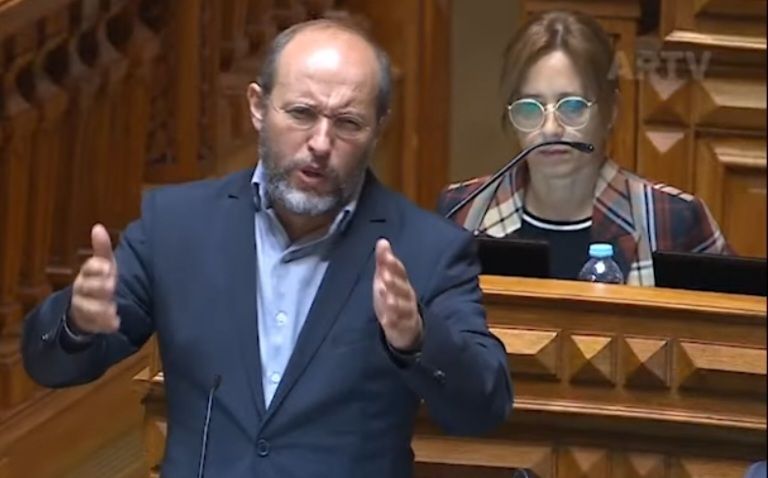
Espero que estejas a gostar da semana política. Acabo de ver este génio que nem sequer sabe o nome da ponte principal de Lisboa. Sabes por que é que ele fez este erro básico? A resposta está sob o vídeo.
Propriamente dito, não é um erro mas sim uma escolha. Para quem não saiba, a Ponte 25 de Abril foi construída antes da revolução dos cravos e naquela altura foi nomeada Ponte Salazar. Insistir em usar aquele nome é um bom indicador de que o orador sente uma nostalgia para a época da ditadura. O seu nome é José Pinto Coelho e é o presidente do partido Ergue-te. Já adivinhaste onde este partido se situa no espectro político? Dou-te uma pista: não é social democrata moderado.
(Thanks again to Cristina for pointing out the errors in the first version. This was post number 1666 on this blog so in honour of the Great Fire of London I should have burned it to the ground, really, but hi ho)
Escrevi há pouco sobre o movimento Próxima Geração, cujo objetivo é revitalizar a democracia portuguesa, desenvolvendo as capacidades e as consciências dos jovens-adultos. A sua porta-voz, Adriana Cardoso, falou dos desafios específicos aos trabalhadores mais novos que são “A geração mais preparada, a geração mais qualificada de sempre” mas que têm poucas oportunidades para utilizar a sua formação devido ao tecido empresarial ser 99.9% composto de PMEs (Pequenas e Médias Empresas) sem quadros adequados aos talentos e às ambições dos empregados. Portanto, os jovens mais trabalhadores e mais ambiciosos têm um dilema: ou ficar no seu próprio país e ganhar pouco ou ir embora, levando a sua formação com eles.
Acho que a sua descrição do problema é correta até certo ponto: segundo um artigo no jornal Expresso, a frequência de ensino superior aumentou durante a década passada e as taxas de abandono escolar descem todos os anos (embora as estatísticas sejam questionáveis: mais estudantes nas escolas em 2020 e 2021 durante os piores meses da pandemia? Improvável!). O texto aponta uma deficiência na formação profissional e de competência geral relacionado com a transição ao mercado de trabalho. Jovens portugueses têm níveis muito acima da média de aprendizagem de línguas estrangeiras mas paradoxalmente isso é provavelmente um dos fatores que possibilita a transição a outros países!
Claro que estas dificuldades afetam os jovens de todos os países, e a situação piora devido aos efeitos da tecnologia e da globalização do mercado laboral, mas é provável que seja mais acentuado em Portugal por razões históricas.
E daí vemos um desafio para os partidos políticos: como podem falar aos cidadãos mais novos? Há um ditado em inglês: um conservador é um socialista que passou a pagar impostos. Noutras palavras, um cidadão que trabalha e que vê um futuro na sociedade virá a confiar naquela sociedade e a apoiar as suas instituições. E se milhões de jovens nunca chegam a atingir um nível de segurança fiscal? Se não conseguem comprar uma casa ou arranjar emprego digno da sua inteligência? Que espécie de futuro terá o país?
Qualquer partido que queira ganhar poder (e assumo que todos querem porque se não, porque é que estão a desperdiçar tanto tempo em campanhas políticas?) precisa de explicar como as suas políticas possibilitarão uma vida melhor para a próxima geração.
O exercício de hoje é transcrever um discurso de Rui Tavares, um dos porta-vozes* e um dos fundadores de um partido pequeno chamado Livre. Livre é o partido do qual Joacine Katar Moreira (mencionada neste blogue) era membro antes de se demitir. Tanto quanto sei, ela passou a deputada não inscrita e ainda é membro da câmara, mas não conheço os pormenores de como ou de porquê. Hum… enganei-me, li na Wikipédia que ela perdeu a sua cadeira em 2022.
Eu disse num blogue de uns dias atrás que penso nele como um “pai centrista” (em inglês, “centrist dad”) porque fala contra o extremismo e a favor de as instituições, mas na verdade, o deputado não é nenhum centrista. O seu partido é pouco convencional mas é indiscutivelmente situado à esquerda do espectro político, só que fica nem perto do PCP nem dos outros partidos… hum… esquerdoidos**. Por falar nisso, antes de saber quem era, li um livro de Rui Tavares que fala sobre a divisão entre as duas alas políticas. Muitas pessoas gostam dele, mas, como observou o streamer Tji Pereira, “toda a gente gosta de Rui Tavares mas ninguém vota no Livre”
Enfim, escrevi a minha transcrição e depois liguei as legendas para verificar tudo. Infelizmente, acho que o texto das legendas foi gerado por um IA! Sublinhei os meus erros a laranja e as palavras que (na minha opinião infalível) não batem certo nas legendas e que (também na minha opinião) eu ouvi corretamente, em cor-de-rosa***. Finalmente cinzento significa que não há legendas.
Eu achei curioso que no debate de hoje foi o proponente que falou várias vezes em fascismo e fascistas porque normalmente é uma palavra que se usa pouco nesta câmara porque há uma espécie de receio em utilizá-la. Há muita facilidade a utilizar extrema-esquerda, comunistas, isso mesmo para quem não é do Partido Comunista Português
Senhor deputado, oiça, até agora conseguiu ouvir, conseguirá mais um minutinho. E curiosamente, sobre a tema essencial da história das democracias no nosso espaço geográfico, na Europa ocidental, foi como é que**** os regimes democráticos caíram. E caíram nos nossos países perante os fascismos.
Acerca disso, nunca falamos. Pois eu digo-vos… Não não, esquece… queria, queria o senhor deputado que esquecêssemos, mas não esquecemos porque esse é o tema fundamental. E sabe como é que caíram? Caíram quando as democracias não souberem cuidar de si, não souberam aplicar a lei, não souberam fazer leis que fossem compreen…
Eu compreendo o nervosismo, compreende-se tão bem o nervosismo, de um partido que nunca esclareceu de onde veio o dinheiro da primeira campanha, que foi legalizado com assinaturas falsas no Tribunal Constitucional, que vinha [???] de declarações… Compreendo muito bem que ainda ontem surgiu uma notícia que nos dias que as… Que o conselho consultivo que houve é de financiadores do próprio partido. Não vem falar disso? Saiu na Sábado*****, de ontem, compreendo tão bem o nervosismo. É que vocês ficam nervosos quando se fala daquilo que importa, que é a democracia defender-se…a democracia saber defender-se. Porque reparem numa coisa. Para a democracia (…senhor deputado tem de concluir… ) Concluirei muito rapidamente. Porque para a democracia se defender e ter futuro, ela precisa saber fazer funcionar as instituições. Para a democracia… Para a democracia se perder, é muito simples: perante precisamente partidos como os vossos, basta não fazer nada e eu espero que não seja aí que nós caimos.
*I had to check it wasn’t “portas-voz”!
**I’d almost forgotten this word. It doesn’t actually fit here but I’m leaving it in because I love knowing about terrible internet slang because it makes me feel like an anthropologist or something. “Esquerdista” might make more sense, or “extremista” or a range of other things, I suppose, depending on your point of view.
***I originally wrote “cor de laranja” but was glad to change it because every time I see cor de laranja and cor-de-rosa in the same sentence it reminds me how infuriating it is that one has hyphens and the other doesn’t but eu não faço as regras.
****Worth pointing out that some of the sentences he’s saying don’t seem to be grammatically correct: if you try and parse them out, you know what he’s driving at but the beginnings and endings of the sentences don’t always quite match up as far as I can see. This is an example.
*****I thought this was him mis-speaking but it’s the magazine (revista = feminine) called Sábado and it comes out during the week, not at the weekend, which is why he says it came out in yesterday’s Saturday!
Thanks as ever to Cristina of Say it in Portuguese for helping me sort this lot out.
Há dois anos, criei um blogue intitulado Fight for Your Right to Partidos com um documento no qual juntei tudo o que sabia e tudo o que encontrei sobre o sistema político em Portugal. Mas uma semana é muito tempo na política e dois anos são ainda mais tempo. O país está a preparar-se para uma nova eleição legislativa, portanto chegou a hora de atualizar a descrição.
Os dois principais partidos no sistema português são o Partido Socialista, fundado em 1973 por Mário Soares, que evoluiu ao longos dos anos de um partido revolucionário a um partido democrático do centro-esquerda semelhante ao partido trabalhista britânico antes da época de Tony Blair, e o Partido Social-Democrata, que nasceu logo depois da Revolução dos Cravos e foi fundado por Francisco Sá Carneiro, entre outros. No espectro português, situa-se ao lado direito, mas sem dúvida seria considerado esquerdista se fosse um partido americano! O antigo partido da direita, o CDS-PP, fundado por Diogo Freitas de Amaral, o antagonista de 1986, a série, quase não existe; apesar de ter 79000 membros, ficou sem representação parlamentar nas últimas eleições. No seu lugar, surgiu o Chega, que tinha 1 deputado em Setembro de 2021 mas já tem doze. Vou falar mais neles num outro blogue.
Uma vez que não consigo resumir a plataforma eleitoral de todos os partidos, foquei-me nos mais importantes (os que têm representação parlamentar) e coloquei uma ligação ao manifesto de cada um para quem quiser saber mais.
OK, having had that confusion about the authorship of “Quero É Viver”, I might as well do a translation of it. This version, by Humanos, is absolutely amazing! I love Sara’s too, but this is a real contrast in the tone. It’s much more in-your-face, more defiant and less dreamy. I’d always thought of it as sounding like someone just wanting to survive something, but with this arrangement it sounds more like someone trying to squeeze every last drop of life. Well, I think a lot of Variações’s songs are like that (check out “O Corpo é que Paga“, for example!), so that shouldn’t surprise me.
Camané is a great choice of vocalist too, because his voice has that same wobble in it as Variações, but he’s a better singer than (Sorry, I know Variações is a god, but it’s true).
Also, Camané’s eyebrows are always on fleek.
OK, Let’s do this! Headphones all the way up!
Portuguese
English
Vou viver até quando eu não sei que me importa o que serei quero é viver Amanhã, espero sempre um amanhã e acredito que será mais um prazer
I’m going to live Until when, I don’t know What does it matter to me what I’ll be I want to really live Tomorrow I always look forward to another tomorrow And I believe it will be Another pleasure
e a vida é sempre uma curiosidade que me desperta com a idade interessa-me o que está para vir a vida em mim é sempre uma certeza que nasce da minha riqueza do meu prazer em descobrir encontrar, renovar, vou fugir ou repetir
And life is always a curiosity That opens my eyes with age Interests me in what is to come Life in me is always a certainty That’s born of my abundance From the pleasure I take in discovery Find, renew, escape or repeat
Oh God, that’s good. It’s making me want to go and listen to more Clã and more Camané.
Vou viver / Até quando eu não sei / Que me. Importa o que serei / Quero é viver
Eu e a minha esposa fomos assistir ao espetáculo de Sara Correia em Cadogan Hall. Foi incrível.
Antes do concerto dela, houve uma meia hora com um jovem que cantou bem acompanhado de um guitarrista. O público estava muito entusiasmado. Houve uma grande salva de palmas após cada canção. Nunca antes vi o primeiro artista a receber uma ovação de pé. Mulheres gritaram “amamos-te”. Havia muito estrogênio na sala, percebem? Perguntamos às mulheres do nosso lado direito quem era aquele rapaz. Foi Luís Trigacheiro, um vencedor do “The Voice Portugal”. Aaahh, percebo!
Sara apresentou o seu novo álbum e uns temas mais antigos tipo “Quero É Viver” (de Pedro Abrunhosa*) e “Estranha Forma de Vida” (de Amália Rodrigues) . A atmosfera na sala de concertos foi mil vezes mais animada do que a da minha última visita. Pessoas na varanda batiam os pés e gritavam “Ah fadista! Bravo! Sa-ra Sa-ra!”
Tinha corrido 10 milhas antes do concerto e estava com dores nos pés e as minhas pernas estavam fatigadas mas consegui estar de pé com os outros. Aí, que chatice.
(Update… er… well, look I’m absolutely sure she said it was one of his but I’ve just looked up the original on Spotify and it seems like it was a track by António Variações, released postumously on an album called Humanos, as part of a project by a group of musicians, including David Fonseca, Camané and some members of Clã. They went on to perform some of his music at a series of tribute concerts, which is available on Spotify. I had no idea this had happened. Very glad to find it though!)
I wrote this a couple of days ago but the mistakes made were quite hard to unscramble because of the way I’ve ordered the examples, so it’s taken a while to lick it back into shape. Thanks to Cristina of Say it in Portuguese for helping me desenroscar esta merda toda, but if I’ve missed anything, that’s my fault, obviously, not hers.
Falhei em aprender a lição deste blog portanto tenho TPC: escrever uma frase com cada expressão. Gramática é chato e estou farto de exercícios. prefiro falar sobre o meu novo programa televisivo mas sou um bom estudante portanto vou resistir a este impulso e aderir ao plano. Vamos a isto.
Finalmente
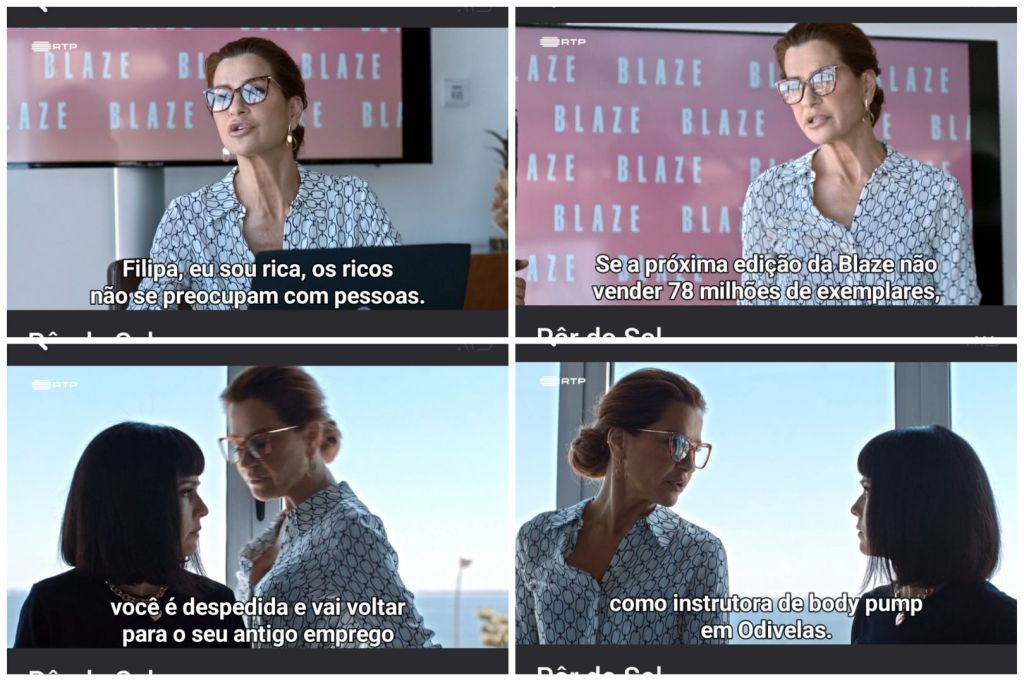
Finalmente consegui encontrar tempo suficiente para ver o primeiro episódio do Pôr do Sol. É incrível!
No fim
A série abre com dois amantes a passear na praia de Santarém e a argumentar, e no fim do seu caminho, chegam a um barco, ao lado do qual há um homem que compra uma das filhas gémeas deles, arranca, e logo depois o barco explode, matando o homem e (aparentemente) a filha.
No final
No final desta abertura, e após uma canção do estimado Toy, retomamos a história 30 anos mais tarde.
Por fim
Tentei seguir o enredo e o diálogo louco mas custou-me e por fim liguei as legendas. Confesso que nem sequer percebi que se tratava de uma comédia no início. Fiquei com a pulga atrás da orelha quando o homem no barco disse que tinha comprado um babygrow de Dulce Pontes. Mas foi a aparência do Toy que afastou as minhas dúvidas!
No fim
Felizmente a bebé gémea não morreu. Protegida pelo berço e o maço de tabaco da mãe(!) a menina flutuou ao longo do rio e no fim chegou a Lisboa onde foi adotada e já está a trabalhar numa revista
No fim
Na superfície, ela é muito bem sucedida mas no fim ela sabe que alguma coisa não bate certo na história do seu nascimento, portanto está muito mal humorada, sobretudo quando a sua assistente fala com ela. A assistente é mais alta que ela, e ela não suporta tal coisa.
Ao fim
Entretanto em Santarém a mãe das irmãs está a beber gin (apesar de não gostar) e a falar com o seu marido, a gémea restante e o caseiro da família (o que, se percebo bem, é o pai das irmãs). Ao fim de trinta anos de mentiras, ela está cheia de arrependimentos.
No fim
O seu marido também tem a sua cruz: o médico o informou que tem uma doença grave e está quase no fim da sua vida.
Afinal
O filho do caseiro namora com a outra gémea. Os pais dele vêm a saber disto e o pai fica zangado porque como já disse, é (acho eu) o pai de ambos. Vivemos numa sociedade muito liberal mas afinal ainda há um tabu contra o casamento com uma meia-irmã. Tanto preconceito*!
Enfim
Enfim, tendo visto o primeiro episodio, adorei. Vou continuar!
No fim de contas
Mas ainda tenho uma dúvida: no fim das contas, porque é que os escritores troçam tanto de Dulce Pontes?
Que acham? Consegui cumprir o meu dever sem ficar distraído?
*Narrowly avoided writing “prejuizo” here. Schoolboy error! One of the best-known false friends, that one!
Estou a perceber que estou numa fase de preguiça: escrevi muitos blogues nas semanas passadas que tratam de aprender português, mas são escritos neste idioma feio chamado “inglês” que nem sequer distingue entre “estar” e “ser”. Chegou a hora de escrever mais na língua de Camões* e menos na língua do Shakespeare.
Na próxima semana, pretendo fazer um projeto sobre a política portuguesa. Vem aí umas eleições legislativas. Planejo escrever um texto por dia. Esbocei uma agenda:
Ouvir uma debate entre dois líderes dos partidos principais (escolhido de modo aleatório desta série) e tomar notas durante a conversa
Discutir os problemas dos jovens em Portugal, segundo este artigo.
Discutir uma política menos central à agenda nacional, mas que tem paralelos com outros países ocidentais – identidade de género – porque estou interessado no atual formulação do género e o seu progresso dos EUA para o resto do mundo e há um novo decreto-lei que é semelhante a um lei proposto pelos nacionalistas escoceses no meu país
Transcrever um breve discurso de um líder dum partido menor: estou a pensar em Rui Tavares porque li um livro dele e imagino-o como um “pai centrista” português. Encontrei um vídeo dele a falar sobre a democracia. Dois minutos. Vamos a isto!
Atualizar este blogue de 2019 dando mais informações sobre os partidos principais e falar sobre o aumento de poder dos partidos populistas ou simplesmente esquisitos que estão a explorar a crise política
E quem sabe, se calhar, pode continuar após o fim de semana
*De vez em quando, acho que estou quase a ficar acostumado a este teclado mas acabo de passar um minuto a tentar escrever Camões com o til no E. Ainda bem que não me permitiu porque o meu pedido de dupla cidadania teria sido cancelado!
Estou a ver um vídeo antigo de Rui Tavares a falar na Assembleia da República mas há uma espiã* por trás do deputado. Passou despercebida porque andava disfarçada, com óculos escuros e um bigode falso.
*It’s a weird one, this. Espiã is technically the correct feminine form of espião, but apparently most people use espia, so much so that in this ciberduvidas article someone asks if espiã is just a typo. Note that espia is a nome de dois generos – in other words it replaces both espiã and espião. There’s also a purely feminine word espia, which means a cable. TBH, I’d prefer to use the accented words because it’s less ambiguous, especially when describing espionage in a naval setting, but obviously not everyone in Portugal is going to change the way they speak and write just because of what I say, so I’ll have to make space in my brain for both.