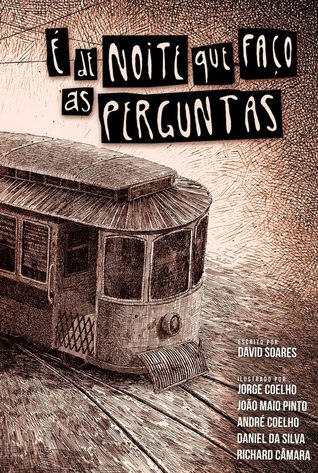
 Quatro anos depois da primeira tentativa, li este livro pela segunda vez. Estou a fazer um projecto de aprender a história portuguesa, portanto, conheço os acontecimentos recontados e tudo fez muuuuuiiiito mais sentido! Antigamente, ficava confuso, mas agora, fico impressionado!
O livro foi publicado para comemorar o centenário da república. Os autores defendem as realizações da primeira experiência de democracia, por mais imperfeito que fosse, para apagar a mancha de analfabetismo e modernizar o país.
A historia é contada pela voz dum homem que vive durante o estado novo. Está a escrever uma carta ao seu filho, que descreve a sua vida como criança logo no inicio da primeira república portuguesa, nos anos antes e durante a grande guerra e, logo depois, anos turbulentos nos quais o poder mexeu-se de uma extremidade para a outra numa serie de golpes e revoluções e a sombra de autoritarismo aproximava-se a pouco e pouco.
With Great Pôr/Dar Comes Great Responsibility
Dar/Pôr Irregular verb deck made. I did it on an ubuntu laptop with a shonky ergonomic mouse so it took an age and drove me to distraction but it’s done!
Exam Prep Review #3
Progress on the list of topics to cover. Depressingly little work done. I really need to pull my finger out.
Speaking Goals
- Build Confidence: I need to speak clearly and confidently even when I get to a bit I’m not sure about. If I don’t know the word, just guess and keep on going rather than fretting and looking confused.
- Conversely, don’t be cocky: talk at a sensible speed to give myself time to think, and don’t go off at a tangent that seems interesting if I’m not sure where I’m going with it. Obviously this is in conflict with the point above. I haven’t really got anywhere with these first two but I’m planning to do a sort of portuguese version of “just a Minute” as a way of making myself do it. One for the next couple of days, I think.
- Speak portuguese for at least 5 minutes every day between now and the exam. On average, yes, but it’s definitely not “every day” – lots on some days, none on others.
Listening Goals
- Listen to videos of people speaking in a range of accents from Alentejo, the rural centre of the country. and the islands (hence that Açoriano video I just posted). Making good progress here. I’ve listened to quite a lot.
- Listen to at least 3 video films with subtitles. Still a grand total of zero. None of the films I own seem to have same-language subtitles on them for some reason.
Get to grips with the Raul Solnado “Guerra de 1908” sketchDone!
Cultural Goals
- Read at the very least:
-
- A Língua Portuguesa (Fernando Pessoa)
Mensagem (Fernando Pessoa)Done!- Brevíssima História de Portugal (A.H. De Oliveira Marques) Nearly done
Maybe even A construção da democracia em Portugal (Kenneth Maxwell) although that seems a bit ambitious. No way is this happening.
-
Make a timeline of portuguese history to get a sense of how it hangs together.Done- Write about portuguese landmarks – the Padrão dos Descubrimentos, Torre de Belém, Mosteiro dos Jerónimos and so on. Assembled some materials for this but not yet put pen to paper
General Language skills
- I need to build my vocabulary – Memrise and Lingq daily goals – Still winning
- I’m getting better at the ver/vir (which was one of the 4 Evil Exes I identified a year or so back) but need to step up my game on some of the other weirder irregulars like Por and Dar Not done
Finish the exercise book I’m on nowDone!- Do a couple of mock exams to get a feel for the speed I need to be working at to get in under the time limit Nope
- Practice writing legibly. I type so much these days I need to get my hand used to forming letters or I’ll be penalised for spelling errors. Some more work done at this.
- Letter format and forms of address I’ve written one formal letter to the Conservatório dos Registos Centrais, which was good practice.
- Learn – actually learn verbatim – one song. Printed out “Dia de Folga” but again, not much actual hard work done.
That’s Sotaquey
Sample videos I’ve been looking at for my listening practice to get some accent and voice diversity into my earholes before the B2 exam
Algarve
Algarve (actually. I don’t think the narrator is from the Algarve, but he definitely falls under the heading of challenging listens)
Porto and the North
Açoreano (Micaelense)
Alentejo #1
Alentejo #2
Alentejo #3
Madeira
Baby It’s Celt Outside
I keep watching this and thinking how incredibly welsh it all seems; a reminder that there’s a strong celtic substrate underneath the various roman, arabic and other influences that have come and gone over the centuries.
Para Inglês Ver
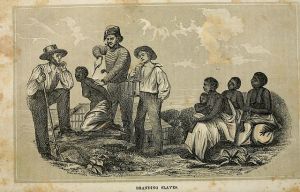
This is a phrase that came up in one of my lessons the other day that I thought had an interesting origin.
As you know, the british and portuguese empires share in common a long, proud history of discovery, exploration, heroism and er… (checks notes) buying and selling other human beings as if they were cattle. In the early nineteenth century, Britain was beginning to develop a conscience. Spurred on by reformers, many of them quakers, it had effectively ended slavery on the mainland at the back end of the eighteenth and was using its power and influence to shut down the slave trade, starting with its own empire (1807) and then in the various colonies or at least the ones that hadn’t already become independent by then (I’m looking at you America) in 1833. Having made some social progress of its own, Britain, as Top Nation, was keen to ensure other countries followed its good example, so it started pressurising its major trading partners such as Portugal and Brazil (independent from 1822) to stop their own slave trades, using economic sanctions and gunboat diplomacy. This was… inconvenient, let’s say. In addition to conscience, economic factors play a part in whether or not people are willing to give up being complete bastards, and the fact is that Brazil, especially, was very reliant on huge pools of free agricultural labour in a way that britain wasn’t.
To keep the gringos off their back, and keep them buying coffee, the brazilian government, in 1831, passed the Lei Feijó, which abolished the slave trade and gave complete freedom to all african slaves disembarking in brazilian ports. Which was great… or at least would have been, except they also passed out a memo to the courts that the law was “para inglês ver” (“For the english to see”) and that they weren’t meant to actually enforce it or anything.
So the phrase “para inglês ver”, applied to a law or rule, still signifies that it’s a high-minded statement of intent, only meant for show, but largely ignored. It doesn’t seem like the kind of thing that would get much use in day-to-day life, but the first chance I get, I’m definitely going to crowbar it into the conversation!
Slavery wasn’t abolished in Brazil until the passing of the Lei Áurea in 1888. Portugal, whose prime minister the Marques de Pombal, had abolished the slave trade in Portugal in 1761, even before britain, joined britain in renewing its commitment to abolitionism in 1807, freed remaining slaves in 1854. However, the catholic church held on to its slaves in portuguese territories for a further two years (well, it’s what Jesus would have wanted) and an illegal slave trade carried on after that until it was finally ended in 1869.
Male And Female He Created Them
Portuguese words with very different meaning according to their gender
o rádio – a radio / a rádio – a radio station
o capital – capital, funds / a capital – the capital city
o caso – the case / a casa – the house
o cargo – someone’s role or responsibility / a carga – cargo
o grama – gramme / a grama – creeping plants such as grass
o caixa – cash book / a caixa – box (caixa can also be a cashier, male or female)
o luto – grief / a luta – fight
o queixo – chin, jaw / a queixa – complaint
o polícia – police officer / a polícia – policy
o bolo – cake / a bola – ball
o carteiro – postman / a carteira – wallet
o cabeço – headland / a cabeça – head
o puto – a kid / a puta – a whore
Dom João I (Projecto da História Portuguesa)

#uncorrectedportugueseklaxon
Dom João I* foi aclamado rei depois dum interregno de dois anos, uma crise causada pelo facto da próxima pessoa na linha de sucessão, Dona Beatriz, ser casada com o rei de Castela. Os Castelhanos queriam aproveitar a situação para agarrar os laços de poder e absorver o país. João, (naquela altura chamado “Mestre de Avis”) foi um dos pretendentes ao trono e ele liderou o exército português com o seu Condestável, Dom Nuno Álvares Pereira na batalha dos Atoleiros e depois na Batalha de Aljubarrota. Este segundo segurou a independência de Portugal.
Depois de se tornar Rei, Dom João mandou construir o Mosteiro da Batalha. Também assinou o Tratado de Windsor, que confirmou um Tratado que já existia com Inglaterra (A sua esposa, Filipa de Lencastre, era também inglesa) e pôs de pé o império ao mandar Dom Nuno para Ceuta com 200 navios e montes de tripas**. Um dos marinheiros, O Infante Dom Henrique, quando voltou para casa, estabeleceu uma escola náutica, e pouco depois, começaram os descobrimentos: portugueses desembarcaram na Madeira e na Ilha de Santa Maria nos Açores.
Hoje em dia, o cognome de Dom Joao é “O de Boa Memória” e isso é apropriado porque ele deixou várias lembranças que permanecem atá agora: O mosteiro ainda existe, o Tratado de Windsor ainda está em vigor, e o país existe, que sem D. João podia-se tornar parte de Espanha.
*=”Dom João o Primeiro” não “Dom João Um”, precisamente tal como em inglês
**= O epíteto de “Tripeiros” que se refere aos Portuenses, tem a sua origem nesta viagem
Exercício PT-PT Nível C1
“Quando está longe do seu país, costuma sentir Nostalgia? De quê?”
_________
Quando estou longe do Reino Unido, e quando a estadia demora muito tempo, sinto saudades* (se é permitido para nós estrangeiros utilizarmos esta palavra a referirmo-nos a nós próprios!) do pão do meu país.
Ainda que a maior parte das nações do mundo tenham pães óptimos (Portugal, França, os Estados Unid… Hum… Ora bem, disse “a maior parte” e nem “todos”), sentimos uma conexão ao pão que comemos quando éramos novos. Dá conforto. É o sabor da nossa terra de mãe, o sabor do nosso lar.
Um escritor inglês disse uma vez “É impossível não amar alguém que te faz uma torrada” e é mesmo verdade: pão e amor andam sempre de mãos dadas.
*=saudades & nostalgia aren’t really the same thing but I don’t think the question makes any sense unless you’re talking about homesickness rather than a longing for the past
Thanks to Jessica for finding my errors. Only one, apparently… 🙂
Exam Prep Review #2
Progress on the list of topics to cover.
Speaking Goals
Not really winning with any of this stuff. 😦
- Build Confidence: I need to speak clearly and confidently even when I get to a bit I’m not sure about. If I don’t know the word, just guess and keep on going rather than fretting and looking confused.
- Conversely, don’t be cocky: talk at a sensible speed to give myself time to think, and don’t go off at a tangent that seems interesting if I’m not sure where I’m going with it. Obviously this is in conflict with the point above.
- Speak portuguese for at least 5 minutes every day between now and the exam. On average, yes, but it’s definitely not “every day” – lots on some days, none on others.
Listening Goals
- Listen to videos of people speaking in a range of accents from Alentejo, the rural centre of the country. and the islands (hence that Açoriano video I just posted). Some done but not enough
- Listen to at least 3 video films with subtitles. One down, 2 to go… oh no, wait, Ramiro doesn’t count because the only subtitles were in English and that’s no bloody good! OK, 3 to go still, then.
Get to grips with the Raul Solnado “Guerra de 1908” sketchDone!
Cultural Goals
- Read at the very least:
-
- A Língua Portuguesa (Fernando Pessoa)
Mensagem (Fernando Pessoa)Done!- Brevíssima História de Portugal (A.H. De Oliveira Marques) Started
Maybe even A construção da democracia em Portugal (Kenneth Maxwell) although that seems a bit ambitious. No way is this happening.
-
- Make a timeline of portuguese history to get a sense of how it hangs together. Got all the gear and made a pretty good start. I’m up to the foundation of Portugal and my daughter is filling in the british side so we can see the parallels between the two.
- Write about portuguese landmarks – the Padrão dos Descubrimentos, Torre de Belém, Mosteiro dos Jerónimos and so on. Assembled some materials for this but not yet put pen to paper
General Language skills
- I need to build my vocabulary – Memrise and Lingq daily goals – Doing alright so far!
- I’m getting better at the ver/vir (which was one of the 4 Evil Exes I identified a year or so back) but need to step up my game on some of the other weirder irregulars like Por and Dar Not done
Finish the exercise book I’m on nowDone!- Do a couple of mock exams to get a feel for the speed I need to be working at to get in under the time limit Nope
- Practice writing legibly. I type so much these days I need to get my hand used to forming letters or I’ll be penalised for spelling errors. Some more work done at this.
- Letter format and forms of address I’ve written one formal letter to the Conservatório dos Registos Centrais, which was good practice.
- Learn – actually learn verbatim – one song. Printed out “Dia de Folga” but again, not much actual hard work done.
By the way, speaking of music, I like this a lot. It’s used as the theme tune of a podcast called “Histórias de Portugal – Saudade e Outras Coisas“, which is well worth a look too.
 Luso
Luso 