Here’s a little traveller’s tale, with thanks to Talures for corrections
O projeto mais recente da minha filha foi dar um passeio no Chess Valley Walk* (Caminho do Vale do Rio… Hum… Xadrez? Não, estou a brincar, o nome do rio é o Chess). Viu-o no Instagram e ficou obcecada. Sendo relativamente desocupado no meu trabalho, aceitei o seu convite para ir com ela.
Antes de mais, não trouxemos água suficiente. O caminho tem 16 quilómetros, mas faz-se devagar por causa do terreno acidentado: entre 4 e 6 horas. Entretanto, o tempo estava quente, mesmo muito quente pelas padrões ingleses. Assumimos que haveria um pub ou um loja por o caminho, pois este passa por várias aldeias. Haveria, de certeza, oportunidade de comprar mais água, não é?
Não houve. Portanto as nossas reservas ficaram esgotadas depois de três horas. Além disso, a coitadinha** da minha filha não está acostumada a andar tanto. Ela já fiz caminhadas com esta distância , hum, duas vezes? Ela arrastou-se e disse muitas vezes “pai, não acho que consiga!” mas não perdeu a esperança por completo. Prosseguimos com a marcha e chegámos finalmente ao nosso destino: um Pub chamado The Queen’s Head em Chesham, onde bebemos água e cerveja e comemos um caril tailendês. Sabia como a comida dos deuses. Sem dúvida, a fome é o melhor tempero.
O caminho é lindo (tirando a parte que passa perto da autoestrada M25!) e apesar da minha filha ter dores nas pernas e ter estado esfomeada e sequiosa durante duas horas, já sabe que és capaz de tal esforço heróico! Mas da próxima vez, vale a pena levar mais água na mochila!
*I wrote this as-is: “We took a walk on the Chess Valley Walk” but as the corrector rightly pointed out, although that’s what that means, it’s a bit repetitive and I probably should have written “fazer o caminho de Chess Valley”
**coitadinha “tem o seu quê de sarcastico”
Tal pai tal filha: full sized picture of us getting our tootsies wet along the way!
A true story, with corrections by Cataphract (thank you!)
Agora que tem 18 anos, a minha filha arrastou-me ao bar para participarmos num “pub quiz”, ou seja uma série de perguntas e respostas organizada num bar perto do nosso prédio.
Havia cinco equipas. Nós éramos apenas dois mas a maior tinha 5 jogadores. Apesar desta desvantagem, conseguimos segundo lugar e ganhámos um prémio: uma garrafa de vinho tinto. Ficámos muito orgulhosos mas ainda não abrimos a garrafa.
It’s time for another translation! This isn’t your avô’s fado, it’s a bit noisier and punkier than most of theportuguese music I’ve heard. “Quero Ser Um Ecrã” by Baleia Baleia Baleia
This is obviously about screens, and it could be any time of electronic screen, but I think it’s mostly used for handheld devices – which is presumably why they’ve got all the spectators in the video to film the whole thing and view it through their screens instead of just watching the performance. Screen is “Ecrã” in this sense. Masculine, despite the a at the end. I gather if it was a PC screen, that would be “monitor”, but tela and visor are also in use for similar kinds of surfaces – I just don’t hear them so often (Brazilian? Slang?). There’s also the word “biombo” which is the kind of screen you might find in a doctor’s surgery for example, for people to have privacy during procedures. Anyway, none of that – we’re thinking social media, mobile phones – all that stuff – happening on a screen.
Quero Ser um Ecrã
I want to be a screen
E a vida, a morte, em fotos no ecrã Os dias compridos e os olhos no ecrã O mundo perdido, achado no ecrã Quero ser um ecrã E os sonhos dos outros cumpridos no ecrã O monstro do visível escondido do ecrã Quero ser um ecrã, quero ser um ecrã
And life, death, in photos on the screen The short days and the eyes on the screen The lost world, found on the screen I want to be a screen And other people’s dreams, accomplished on the screen The monster of what’s visible, hidden on the screen I want to be a screen, I want to be a screen.
E as balas que nunca passam do ecrã A força dos gritos, regulável no ecrã As lendas e os mitos, imortais no ecrã Quero ser um ecrã Medos e incertezas no armário do ecrã Celulite e flacidez no ginásio do ecrã Quero ser um ecrã, quero ser um ecrã
And the bullets that never pass through the screen The force of the screams, adjustable on the screen The legends and the myths, immortal on the screen I want to be a screen Fears and uncertainties in the closet of the screen Celulite and flabbiness in the gymnasium of the screen I want to be a screen, I want to be a screen
[Ponte] E é sempre verão no ecrã E os corpos estão sempre nús E há tantos gatinhos no ecrã E sushi E bolinhos E coisas boas
[Bridge] And it’s always summer on the screen And the bodies are always naked And there are so many kittens on the screen And sushi And little cakes And good things
Text about the stuff You do as a dad… Thanks to Talures for correcting my errors.
Ontem à noite a minha filha estava a caminho de casa quando houve um problema com os sinais do caminho-de-ferro. Portanto o comboio não chegou ao seu destino. Era o último comboio do dia. Passara o dia com dois amigos das redes sociais* que compartilham o seu fascínio pela série televisiva “The League of Gentlemen” e os três ficaram no bar até tarde.
Como resultado, encontrou-se longe daqui e, além disso, a bateria do seu telemóvel morreu**. Ótimo. A última mensagem que a sua mãe lhe enviara dizia “se não houver táxi, fica lá que o teu pai vai ter contigo” mas não sabíamos se recebera ou não, nem se houvera um táxi ou um autocarro. Portanto, agarrei a bicicleta e pus-me a caminho da estação onde ela estava. Claro que não foi preciso (ela chegou a casa às meia noite e meia) mas ficaramos preocupados que ela estivesse sem hipótese para voltar.
*i originally wrote “amigos online” but although “online” exists you can’t really say “online friends”, they have to be friends from the Internet or friends from such-and-such app.
**I originally used faleceu instead of morreu which is not wrong but not idiomatic. In the correction notes the corrector wrote “tem o que quê de piada”. That “tem o seu quê de….” looks like an expression to me. Sure enough, googling it, we find
“Tem o seu quê de bairrista” in the lyrics of “A Marcha da Mouraria” By Amália Rodrigues.
“Tem o seu quê de difícil” in a Ciberduvidas article about the words que and quê (although, unhelpfully it doesn’t explain the expression!
An actual definition in this infopedia page where it just defines it as meaning “something indeterminate” – so. They give a couple of examples eg “tem o seu quê de verdade” means “there’s some truth to it”
This last one looks like the closest I’m going to get to a definitive explanation. I don’t think it’s super-common because I looked at some examples of where it had been used on Linguee and Reverso-Context and the translations it gave looked like pretty random guesses, so maybe not all translators had come across it before (?) but I think the person who wrote the Infopedia article knew what they were on about. Hm, i wonder if it only works in the third person. Like I wonder if I could do something like this…
Update: the verdict is that yes, it does work.
Question corrected by Catalhract – Adivinhei que era uma expressão, sim…hum… Tem o seu quê de expressão. Utilizei-a de maneira certa aqui? Pesquisei várias fontes Online para entender o significado da expressão mais ou menos. Pode-se usar na primeira pessoa? Por exemplo, o meme no fundo [deste blogue]: claro que não é uma tradução perfeita do diálogo (caso não conheças, acho que vem do filme “Spiderman”) mas se alguém falasse assim, faria sentido? Ou será que os ouvintes pensariam “este turista é maluco”
Review of this 500-page beach book which is available from Bertrand. It’s one of my favourite portuguese thrillers even if there was more shagging than really necessary.
Gostei muito deste romance policial. A protagonista é uma agente da polícia, Pilar Benamor, que está a investigar a morte duma adolescente encontrada na praia de Assentiz. Em breve, uma nova vítima aparece, cruelmente esquartejado. A sua investigação revela ligações com crimes do passado e daí constata a malvadez que resultou nestes crimes chocantes. Pilar é uma heroína simpática. É forte mas é realista. A minha única queixa é sobre o seu “defeito fatal”. Não é fora do comum, os autores de thrillers darem aos seus protagonistas um problema pessoal (uma dependência de álcool, por exemplo, ou uma incapacidade de separar o trabalho da vida doméstica). Queremos os nossos heróis a terem de lutar contra os seus próprios demónios, ao mesmo tempo que lutam contra os criminosos, mas, neste caso, a sua falha é adição ao sexo. Isto parece-me parvo. Não tem a mínima relevância para a história. Fiquei com a impressão de que era uma desculpa para inserir cenas de sexo no enredo, que interromperam a história sem revelar nada sobre a personalidade dela.
Translation time! This one is a classic fado, which is mentioned in the book I reviewed the day before yesterday. It also gives us some insight into the Portuguese language’s radical commitment to singular verb endings for collective nouns. The video is majestic and well worth watching, even with the sound off, for the glances between the guitarist and the guy on the guitarra portuguesa. I’d love to know what was going on between them. The song itself is written by Amália but it is really more of an adaptation of a longer poem called “Povo” by Pedro Homem de Mello.
First of all, I think we’re meant to envision people washing their clothes in the river, rather than skinnydipping, in case that’s not obvious! But let’s focus in on how she refers to the noun “povo” here. I’ve highlighted the relevant words in the first verse. As you can se, she’s addressing the “povo” (the people – especially the simple, common people) as “Tu”. In other words, she’s addressing them all, collectively, using the form normally reserved for one singular person who’s familiar to the speaker.
This was really jarring to me. Of course, it’s not that hard to find people referring to “a gente” using third person singular pronouns – I wrote about this a couple of months back – and the portuguese generally take a firmer line on treating the collective as one singular entity (as opposed to using words like eles/them) than we would in english. But to see her speaking directly to the people like this and just address the whoel population like it was her little sister is quite a cultural leap, at least for me.
Povo que lavas no rio
People who wash in the river
Povo que lavas no rio Que talhas com teu machado As tábuas do meu caixão Povo que lavas no rio Que talhas com teu machado As tábuas do meu caixão
Pode** haver quem te defenda Que compre o teu chão sagrado Mas a tua vida não
People who wash in the river Who cut with your axe The boards for my coffin* People who wash in the river Who cut with your axe The boards for my coffin
There might be people who defend you Who buy your sacred land But not your life
Fui ter à mesa redonda Beber em malga que esconda Um beijo de mão em mão Fui ter à mesa redonda Beber em malga que esconda Um beijo de mão em mão
Era o vinho que me deste Água pura, fruto agreste Mas a tua vida não
I ended up at the round table*** To drink from a bowl that hides A kiss from hand to hand I ended up at the round table To drink from a bowl that hides A kiss from hand to hand
It was the wine you gave me Pure water, wild fruit But not your life
Aromas de urze e de lama Dormi com eles na cama Tive a mesma condição Aromas de urze e de lama Dormi com eles na cama Tive a mesma condição
Povo, povo eu te pertenço Deste-me alturas de incenso Mas a tua vida não
Scents of heather and dirt I slept with them in the bed I was in the same condition. Scents of heather and dirt I slept with them in the bed I was in the same condition.
People, people, I belong to you You gave me moments of incense**** But not your life
Ai, povo que lavas no rio Que talhas com teu machado As tábuas do meu caixão Povo que lavas no rio Que talhas com teu machado As tábuas do meu caixão
Há-de haver quem te defenda Quem compre o teu chão sagrado Mas a tua vida não
People who wash in the river Who cut with your axe The boards for my coffin People who wash in the river Who cut with your axe The boards for my coffin
There might be people who defend you Who buy your sacred land But not your life
*=Could this be more emo?
**=Some versionf oe the lyrics use “ha-de” in place of “pode” but this seems to be teh version she’s singing in the video above. I’m pretty sure the há-de version is taken from Dulce Pontes’ rendition.
***=What’s the word “ter” doing here? According to priberam “ir ter a” is a compound verb meaning the same as “ir dar a” or “ir parar a” – um… OK, I’m none the wiser… but according to the Guia Prático de Verbos Com Preposições, that means “terminar em” or “desembocar”. So basically, to lead to something, to end up at something. Hence “ended up at”
****=I must admit, I got confused about this since the incense reference seemed a bit random, and I was trying to make sense of it by looking at alternative meanings of that word. Figuratively, it can mean praise or subservience, but I think I was overthinking it because it looks like she’s just referring to the smells at the top of the verse. OK, right, that makes sense!
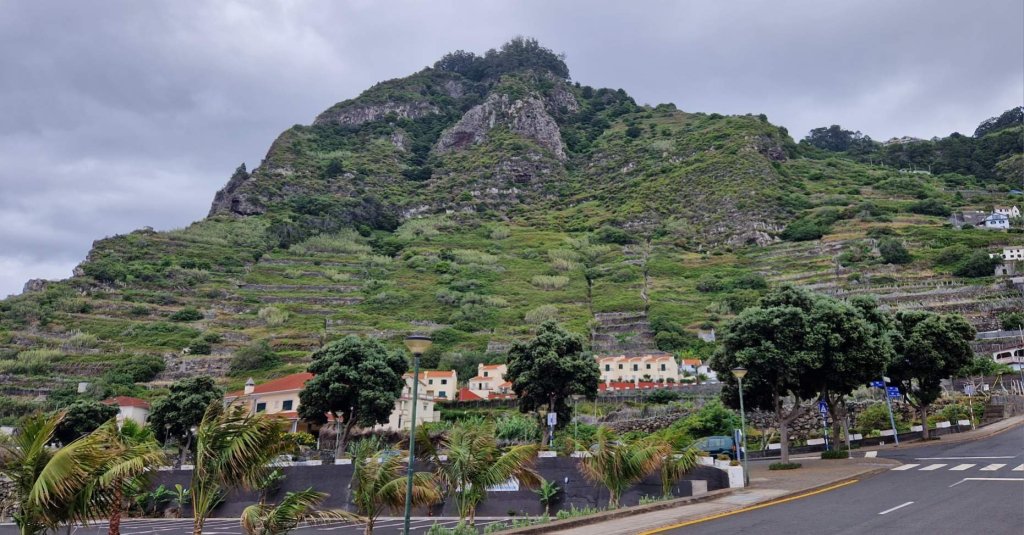
Short text about Madeira. Thanks to Talures for the corrections.
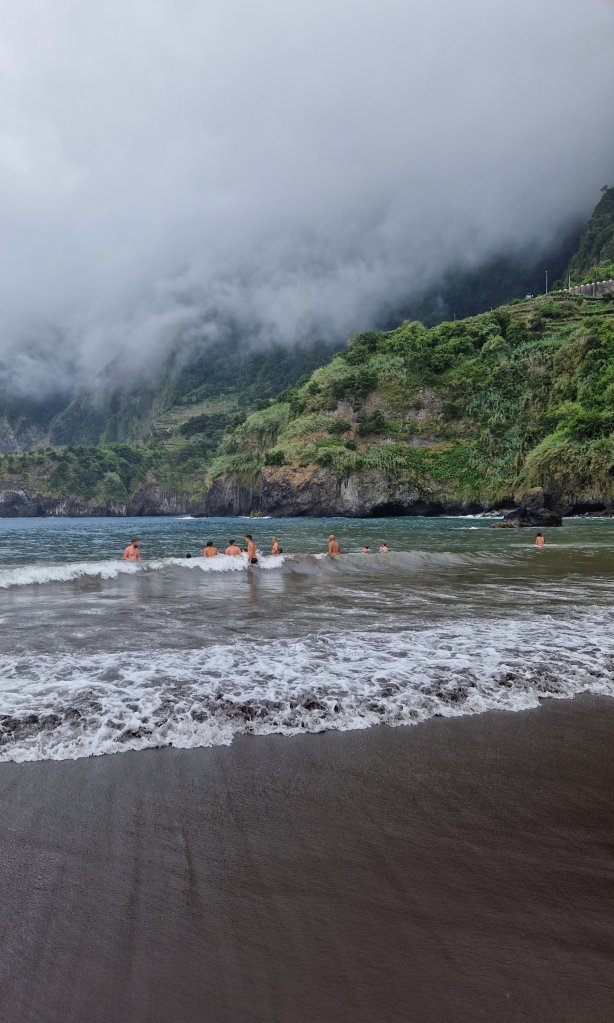
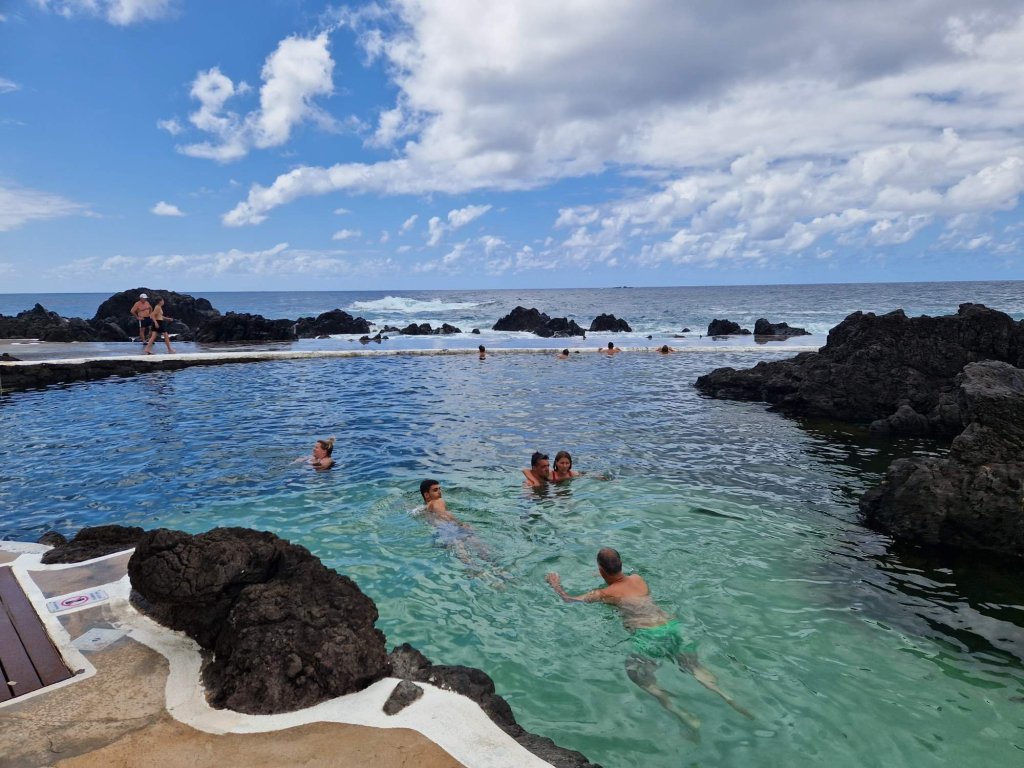
Perdi o meu passaporte. Tem de estar em casa mas não o encontrei. Acho que o escondi subconscientemente, porque vamos de férias à Madeira daqui e a duas semanas, mas há uns dias ouvi um homem a descrever a aterragem, no aeroporto da ilha, do avião em que viajou… Valha-me Deus.
Actually I don’t even know why I said I heard someone say this. I read it in a book: Past Caring by Robert Goddard, which is… Perhaps not his best work but still pretty good. He knows how to spin a yarn. The action begins and ends in Madeira, which is why I fancied rereading it, but most of the meat of it is in Britain and the accents of the few portuguese characters who appear in the audio version have accents midway between Speedy González and Mario the Plumber.
(Regra geral, sempre reescrevo os meus textos quando corrigidos e agradeço os professores logo depois, mas estou tão fora da minha rotina que perdi a noção de quantos textos estão por corrigir. Muitos, acho eu. E há tantos que quase me sinto assustado pelo tamanho da tarefa…)
I’ve finished now though. I’m all caught up. Let’s hope I keep it that way.
Passei 3 dias em Cambridge. Ou melhor, passei um dia em Cambridge e dois dias a andar de bicicleta para Cambridge e depois para casa. Não tive energia o suficiente para escrever, portanto aqui estou novamente no primeiro dia do Streak!
Durante a estadia, li um livrinho chamado “Amália Rodrigues: Um Lugar Misterioso”. É um livro ilustrado que conta a história dessa cantora de forma simples. Explica-se as suas origens familiares e as raízes da sua arte. Apesar da simplicidade, os autores não evitam os aspetos polémicos da vida dela: a maneira na qual o fado fez parte da ideologia da ditadura, e o seu papel ambíguo nessa propaganda. O livro contém exemplos da poesia do seu fado, e as ilustrações são maravilhosas.
Ontem, a caminho de casa, deparei-me com um grupo de ciclistas nus. Estavam a participar no… hum… Dia Mundial de Ciclismo Nu, ou seja o World Naked Bike Ride. Tanto quanto sei, há um evento em Lisboa mas não acho que haja uma tradução “oficial” do título; os participantes tratam-no pelo título inglês. Adoro andar de bicicleta mas confesso que não me apetece participar neste dia. Ainda bem: os meus vizinhos não querem ver nada disso.
More Wittering About Bikes
Por acaso, também dei um passeio de bicicleta ontem mas não foi assim tão interessante: tinha de visitar a sede do governo autárquico cujo projeto ando a apoiar, do outro lado de Londres. O meu portátil estava doente mas o enfermeiro de portáteis salvou-lhe a vida. Podia ter sido um dia aborrecido mas, felizmente, a sede fica ao pé da biblioteca britânica. Registei-me, adquiri um cartão de leitor e passei duas horas, mais ou menos, a ler algumas fontes de informação que têm a ver com a minha pesquisa genealógica.
Segindo o Google, 40 quilometros, mas lentamente, com muitas paragens e intervalos a pé por causa dos engarrafamentos e outros incómodos. Foi stressante às vezes mas passei 50% do tempo à beira do rio, o que equilíbrou tudo muito bem .