Remember Luísa Sobral who used the Lingua dos Pês in one of her songs? Well her brother, Salvador Sobral, a big gangling, ungainly dude with the voice of an unkempt angel, seems to have been picked to be Portugal’s entry in the Festival Eurovisão de Canção this year with a song she wrote. It’s a pretty good song, and I’ve heard a couple of people expressing excitement about Portugal’s chances this year as a result. In live acoustic performances on TV he’s been accompanied by Luísa on the guitar and in a couple of instances (like the one below) he actually breaks out into a trumpet solo. But… he doesn’t have a trumpet, he’s just doing it with his mouth. How much confidence do you need to do a mouth trumpet solo during a live broadcast of a serious love song? Lots, that’s how much. Anyway, it’s the best bit and he should definitely do it in the Eurovision final!
Category: English
AC/DC
While researching Portuguese national hero Viriatus (I’ll post about him later… Ooh, nice teaser, eh?) I noticed the Wikipedia entry gave a date as 147 a. C. That prompted me to wonder whether it meant AD or BC.
BC, apparently. It’s short for antes de Cristo. And its now 2017 d. C. (depois de Cristo).
(Update – I changed the article to match the correct AO spelling. “a. C.” and “d. C.” take a lower case first letter and upper case second letter and even the space between the first dot and the C is obligatory!)
A Célula Adormecida
The Porto Reporto – Epilogue
I have a couple more themes I’m going to write about my time in Portugal when I have a minute. At the time of writing, the text is uncorrected but they are on iTalki so I’ll be able to rewrite them in correct form later. Or maybe they’re all perfect. It seems unlikely, but as they say in Portugal…
Humor – Portugal também já tem um vídeo para conquistar Trump
Mrs Lusk showed me this this morning. The guy doing the voiceover sounds very authentic. I don’t know who they got to do it. (video *mostly* in English with Portuguese subtitles)
http://www.dn.pt/media/interior/portugal-tambem-ja-tem-um-video-para-conquistar-trump-5645581.html
—update—
Ooh look, a nice embedable version with a couple of minutes of introduction in Portuguese
I Passed (Just…)

If you have been following my witterings for a while now (unlikely, I know, but possible) you might remember that I took the pre-intermediate Portuguese exam (“DEPLE”) in May and passed it pretty well, and then in November tried the Intermediate (“DIPLE”) exam but wasn’t too confident of passing because I got tongue-tied during the produção oral. Well, much to my surprise, I managed to pass it anyway, albeit with a not-so-great mark (just “suficiente” instead of the “bom” I got for the earlier one)
Viva! Não chumbei!
OK, well, not great but better than I had feared, so now I just need to knuckle down and work toward the first of the two advanced exams in late 2017, assuming the world hasn’t been destroyed in the flames of a war provoked by Donald Trump’s coked-up 3AM tweets. I will need a full year to prepare, I think, because I have some catching up to do on the intermediate material.
The next exam apparently includes things like appreciation of poetry, and the produção oral is longer and recorded on *gulp* video instead of audio.
Sol Da Caparica
So someone just asked about music on iTalki and I suddenly realised I’d never plugged this gem of a song by the dodgily-named Peste E Sida
It’s a lot of fun, and a good antidote if you’ve ODed on Fado and just want to jump around and shout in Portuguese about listening to the Ramones and drinking beer. I first heard it while doing some listening activities on Nós Falamos Português, which I think I probably have mentioned it before but not for a while so here I go again.
You Have to Laugh or You’d Cry
Quite liking this little snippet from RTP Antenna 1:
“…que daria vontade de rir, se não desse vontade de chorar”
Which means
“…which would make me feel like laughing if it didn’t make me feel like crying”
It’s right at the very end of this podcast from “Contas Do Dia, which you can subscribe to on iTunes
Dia Mundial da Poesia
 Verso Alcançando o Infinito – Tradução
O poema nasce de um impulso,
The poem is born of an impulse
de uma febre, da tirania de uma miragem,
from a fever, from the tyranny of a mirage
da tentação sonora de uma metáfora,
from the sonorous temptation of a metaphor
do vazio que teme transformar-se em nada.
from the emptiness that fears becoming a void
Depois é a escrita, é o trabalho da mão
Then comes the writing, the work with the hand
sobre a matéria incandescente das sílabas.
on the incandescent material of syllables.
E, quando damos por nós, é de corpo inteiro
And when we discover ourselves, it’s the whole body
que estamos na fragilidade do poema
that we are in the fragility of the poem
como se tivéssemos ousado cavalgar numa nuvem
as if we had dared to ride on the back of a cloud
para desafiar todos os poderes do céu.
to challenge all the powers of heaven
Quem ousará explicar este sortilégio?
Who dares explain this sorcery?
Nem sequer os deuses, pois esses
Not even the gods, because they
nasceram da própria erupção do verbo,
were born in their own verbal eruption
da explosão da prece fingindo ser capaz
from the explosion of prayer that claims to be capable
de vencer o sofrimento e o assombro.
of conquering suffering and dread.
O poema nasce, afinal, da ilusão
The poem is born, after all, from the illusion
de que ainda resta algo para ser dito
that there still remains something to be said
e de que o silêncio é um cativeiro fugaz
and that silence is a brief captivity
em que as palavras se amotinam
in which the words rebel
para de novo voltarem a ser voz.
to return to being a voice again.
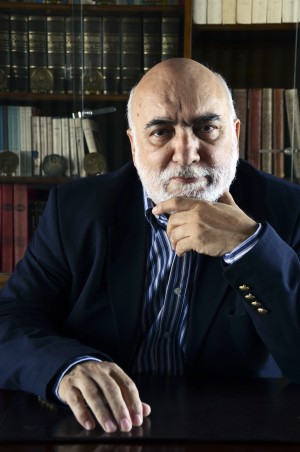
José Jorge Letria, O Livro Branco da Melancolia (2001)
Protein From The Sea

So I placed an order with a company called Delícias for some Portuguese food and it included a pack of salted cod. The Cod was in a bag with a sticker (Autocolante) on it and the word “Crescido”. I was curious about this. It’s the past participle of “crescer” so it means “grown”. Did that mean the cod was grown and not just a little codling? Mrs Colin didn’t know and I couldn’t quite think what to put into Google to get the answer, so I asked around and sure enough, yes, it refers to the size (“Tamanho”-quite a useful word!) of the cod when it’s caught. Bacalhau can be Miúdo or it can be graúdo or it can be especial jumbo.
I’ve since found this page listing various sizes and grades of Bacalhau caught in various parts of the ocean. Crescido seems to be at the lower middle range of the scale. So now you know!
 Luso
Luso 