I keep watching this and thinking how incredibly welsh it all seems; a reminder that there’s a strong celtic substrate underneath the various roman, arabic and other influences that have come and gone over the centuries.
Category: English
Para Inglês Ver
This is a phrase that came up in one of my lessons the other day that I thought had an interesting origin.
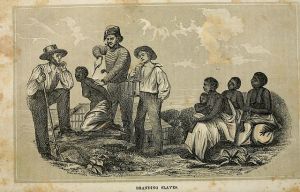
As you know, the british and portuguese empires share in common a long, proud history of discovery, exploration, heroism and er… (checks notes) buying and selling other human beings as if they were cattle. In the early nineteenth century, Britain was beginning to develop a conscience. Spurred on by reformers, many of them quakers, it had effectively ended slavery on the mainland at the back end of the eighteenth and was using its power and influence to shut down the slave trade, starting with its own empire (1807) and then in the various colonies or at least the ones that hadn’t already become independent by then (I’m looking at you America) in 1833. Having made some social progress of its own, Britain, as Top Nation, was keen to ensure other countries followed its good example, so it started pressurising its major trading partners such as Portugal and Brazil (independent from 1822) to stop their own slave trades, using economic sanctions and gunboat diplomacy. This was… inconvenient, let’s say. In addition to conscience, economic factors play a part in whether or not people are willing to give up being complete bastards, and the fact is that Brazil, especially, was very reliant on huge pools of free agricultural labour in a way that britain wasn’t.
To keep the gringos off their back, and keep them buying coffee, the brazilian government, in 1831, passed the Lei Feijó, which abolished the slave trade and gave complete freedom to all african slaves disembarking in brazilian ports. Which was great… or at least would have been, except they also passed out a memo to the courts that the law was “para inglês ver” (“For the english to see”) and that they weren’t meant to actually enforce it or anything.
So the phrase “para inglês ver”, applied to a law or rule, still signifies that it’s a high-minded statement of intent, only meant for show, but largely ignored. It doesn’t seem like the kind of thing that would get much use in day-to-day life, but the first chance I get, I’m definitely going to crowbar it into the conversation!
Slavery wasn’t abolished in Brazil until the passing of the Lei Áurea in 1888. Portugal, whose prime minister the Marques de Pombal, had abolished the slave trade in Portugal in 1761, even before britain, joined britain in renewing its commitment to abolitionism in 1807, freed remaining slaves in 1854. However, the catholic church held on to its slaves in portuguese territories for a further two years (well, it’s what Jesus would have wanted) and an illegal slave trade carried on after that until it was finally ended in 1869.
Male And Female He Created Them
Portuguese words with very different meaning according to their gender
o rádio – a radio / a rádio – a radio station
o capital – capital, funds / a capital – the capital city
o caso – the case / a casa – the house
o cargo – someone’s role or responsibility / a carga – cargo
o grama – gramme / a grama – creeping plants such as grass
o caixa – cash book / a caixa – box (caixa can also be a cashier, male or female)
o luto – grief / a luta – fight
o queixo – chin, jaw / a queixa – complaint
o polícia – police officer / a polícia – policy
o bolo – cake / a bola – ball
o carteiro – postman / a carteira – wallet
o cabeço – headland / a cabeça – head
o puto – a kid / a puta – a whore
Exam Prep Review #2
Progress on the list of topics to cover.
Speaking Goals
Not really winning with any of this stuff. 😦
- Build Confidence: I need to speak clearly and confidently even when I get to a bit I’m not sure about. If I don’t know the word, just guess and keep on going rather than fretting and looking confused.
- Conversely, don’t be cocky: talk at a sensible speed to give myself time to think, and don’t go off at a tangent that seems interesting if I’m not sure where I’m going with it. Obviously this is in conflict with the point above.
- Speak portuguese for at least 5 minutes every day between now and the exam. On average, yes, but it’s definitely not “every day” – lots on some days, none on others.
Listening Goals
- Listen to videos of people speaking in a range of accents from Alentejo, the rural centre of the country. and the islands (hence that Açoriano video I just posted). Some done but not enough
- Listen to at least 3 video films with subtitles. One down, 2 to go… oh no, wait, Ramiro doesn’t count because the only subtitles were in English and that’s no bloody good! OK, 3 to go still, then.
Get to grips with the Raul Solnado “Guerra de 1908” sketchDone!
Cultural Goals
- Read at the very least:
-
- A Língua Portuguesa (Fernando Pessoa)
Mensagem (Fernando Pessoa)Done!- Brevíssima História de Portugal (A.H. De Oliveira Marques) Started
Maybe even A construção da democracia em Portugal (Kenneth Maxwell) although that seems a bit ambitious. No way is this happening.
-
- Make a timeline of portuguese history to get a sense of how it hangs together. Got all the gear and made a pretty good start. I’m up to the foundation of Portugal and my daughter is filling in the british side so we can see the parallels between the two.
- Write about portuguese landmarks – the Padrão dos Descubrimentos, Torre de Belém, Mosteiro dos Jerónimos and so on. Assembled some materials for this but not yet put pen to paper
General Language skills
- I need to build my vocabulary – Memrise and Lingq daily goals – Doing alright so far!
- I’m getting better at the ver/vir (which was one of the 4 Evil Exes I identified a year or so back) but need to step up my game on some of the other weirder irregulars like Por and Dar Not done
Finish the exercise book I’m on nowDone!- Do a couple of mock exams to get a feel for the speed I need to be working at to get in under the time limit Nope
- Practice writing legibly. I type so much these days I need to get my hand used to forming letters or I’ll be penalised for spelling errors. Some more work done at this.
- Letter format and forms of address I’ve written one formal letter to the Conservatório dos Registos Centrais, which was good practice.
- Learn – actually learn verbatim – one song. Printed out “Dia de Folga” but again, not much actual hard work done.
By the way, speaking of music, I like this a lot. It’s used as the theme tune of a podcast called “Histórias de Portugal – Saudade e Outras Coisas“, which is well worth a look too.
Champagne For My Real Friends, Real Pain for My Sham Friends

I made a new Memrise Deck, which I’ll probably add to as and when. It’s about “False Friends” (“Falsos Amigos”) and I’ve been meaning to write it for a while, and not just as an excuse to steal this title which is the name of a song by Fallout Boy.
False friends are words that look like they should mean one thing but they actually mean something else entitrely. It’s here if you’re interested.
Feliz Dia Internacional do Livro
This was yesterday, actually, but still…
Exam Prep Review
Progress on the list I made a week or two back
Speaking Goals
Not really winning with any of this stuff. 😦
- Build Confidence: I need to speak clearly and confidently even when I get to a bit I’m not sure about. If I don’t know the word, just guess and keep on going rather than fretting and looking confused.
- Conversely, don’t be cocky: talk at a sensible speed to give myself time to think, and don’t go off at a tangent that seems interesting if I’m not sure where I’m going with it. Obviously this is in conflict with the point above.
- Speak portuguese for at least 5 minutes every day between now and the exam.
Listening Goals
- Listen to videos of people speaking in a range of accents from Alentejo, the rural centre of the country. and the islands (hence that Açoriano video I just posted). Some done but not enough
- Listen to at least 3 video films with subtitles. One down, 2 to go… oh no, wait, Ramiro doesn’t count because the only subtitles were in English and that’s no bloody good! OK, 3 to go still, then.
Get to grips with the Raul Solnado “Guerra de 1908” sketchDone!
Cultural Goals
- Read at the very least:
-
- A Língua Portuguesa (Fernando Pessoa)
Mensagem (Fernando Pessoa)Done!- Brevíssima História de Portugal (A.H. De Oliveira Marques)
- Maybe even A construção da democracia em Portugal (Kenneth Maxwell) although that seems a bit ambitious. No way is this happening.
-
- Make a timeline of portuguese history to get a sense of how it hangs together. Drawn but not yet filled in. I need highlighters – stat!
- Write about portuguese landmarks – the Padrão dos Descubrimentos, Torre de Belém, Mosteiro dos Jerónimos and so on. Assembled some materials for this but not yet put pen to paper
General Language skills
- I need to build my vocabulary – Memrise and Lingq daily goals – Doing alright so far!
- I’m getting better at the ver/vir (which was one of the 4 Evil Exes I identified a year or so back) but need to step up my game on some of the other weirder irregulars like Por and Dar Not done
Finish the exercise book I’m on nowDone!- Do a couple of mock exams to get a feel for the speed I need to be working at to get in under the time limit Nope
- Practice writing legibly. I type so much these days I need to get my hand used to forming letters or I’ll be penalised for spelling errors. Started working on this: transcribed a song and translated it. It started breaking down when I was low on space but I’ve shown I can do it if I put my mind to it. More practice needed.
- Letter format and forms of address Nope
- Learn – actually learn verbatim – one song. I started looking at a song by Márcia called “Menina” but she writes in a weird, cryptic style that’s really hard to decipher. I thought maybe Deolinda but having dug around a bit, I’m more inclined to go for “Dia de Folga” by Ana Moura because it’s got proper sentences and a wide range of fairly ordinary, everyday language in it, plus it would be good fun to belt it out while I’m doing the housework.
Becoming Fluent – Book Review

In a sense it gives a lot of backing to the strategy often called “language-hacking”, which aims at getting people to grapple with the language more in a range of settings and study it less, but there are important differences. For example, it seems to be against the idea of massive input, and in favour of “little and often”. That’s not something you’ll hear in language hacking circles.
Quite interesting if you like to know the theory behind what you’re doing but if you really want to get stuck into a language you’re probably better off with something more hands-on like Fluent in 3 Months by Benny Lewis

It’s Time To Master “Bater”
I keep seeing constructions like “bater mal” and “bater certo”, and couldn’t quite see why “bater” was being used. I asked and (after a brief kerfuffle with some brazilians who tried to tell me that it disn’t exist and made no sense) found out that it is an informal expression. Bater is the verb used for the beating of a heart or the ticking of a clock, and if it starts going wrong that’s bad, so if someone “bate mal” after – say – a blow to the head, he’s not quite himself. You can also “bater bem” (being in good form) and things can “bater certo” (be exact, precise, spot on).
There’s an example of Bater Mal near the beginning of this song by the Greatest Band Ever
Grammar Smackdown
In a very occasional series entitled “disagreeing with my Portuguese teacher”, here’s a more complicated example of tortuous grammar from the book I’ve just finished that underscores the reason I have to keep struggling with the word “se”.

It’s confusing AF so I’ll highlight the salient words in red in both the original and translations so you can see where they go.
Talvez que o marido da tia Emília se tivesse podido salvar se estivesse na cidade e tivesse dinheiro para o médico e para os tratamentos.
I was convinced one of these was a reflexive pronoun but my teacher said they were both condicionals, not pronouns, which would make it
Maybe Aunt Emília’s husband if he had been able to save and if he was in the city and had enough money for the doctor and the treatments.
I scratched my head over this for a while because there doesn’t seem to be a main verb. I’ve just asked m’wife and she translated it the same way I would have, which makes me feel vindicated
Maybe Aunt Emília’s husband would have been able to save himself, if he was in the city and had enough money for the doctor and the treatments.
It’s confusing because the three verbs underlined in the original quote are in imperfect subjunctive tense, which can be triggered by “se” when it’s used as a conditional, so it’s hard to see if that “tivesse” is triggered by se (meaning if) just before it or by the “talvez” at the beginning of the sentence.
I reckon the first “se” is a reflexive pronoun and I’ve got my wife’s entirely unbiased opinion backing me up. In a less complicated sentence you could write it as “Se tem podido salvar” or “he has been able to save himself”. Or even less complicatesd, “Salvou-se”.
So there you go, if even two portuguese people can’t agree the meaning of a sentence, there’s no need to feel embarrassed if you don’t get it right straight away either.
 Luso
Luso 