Posted in English

Narwhal

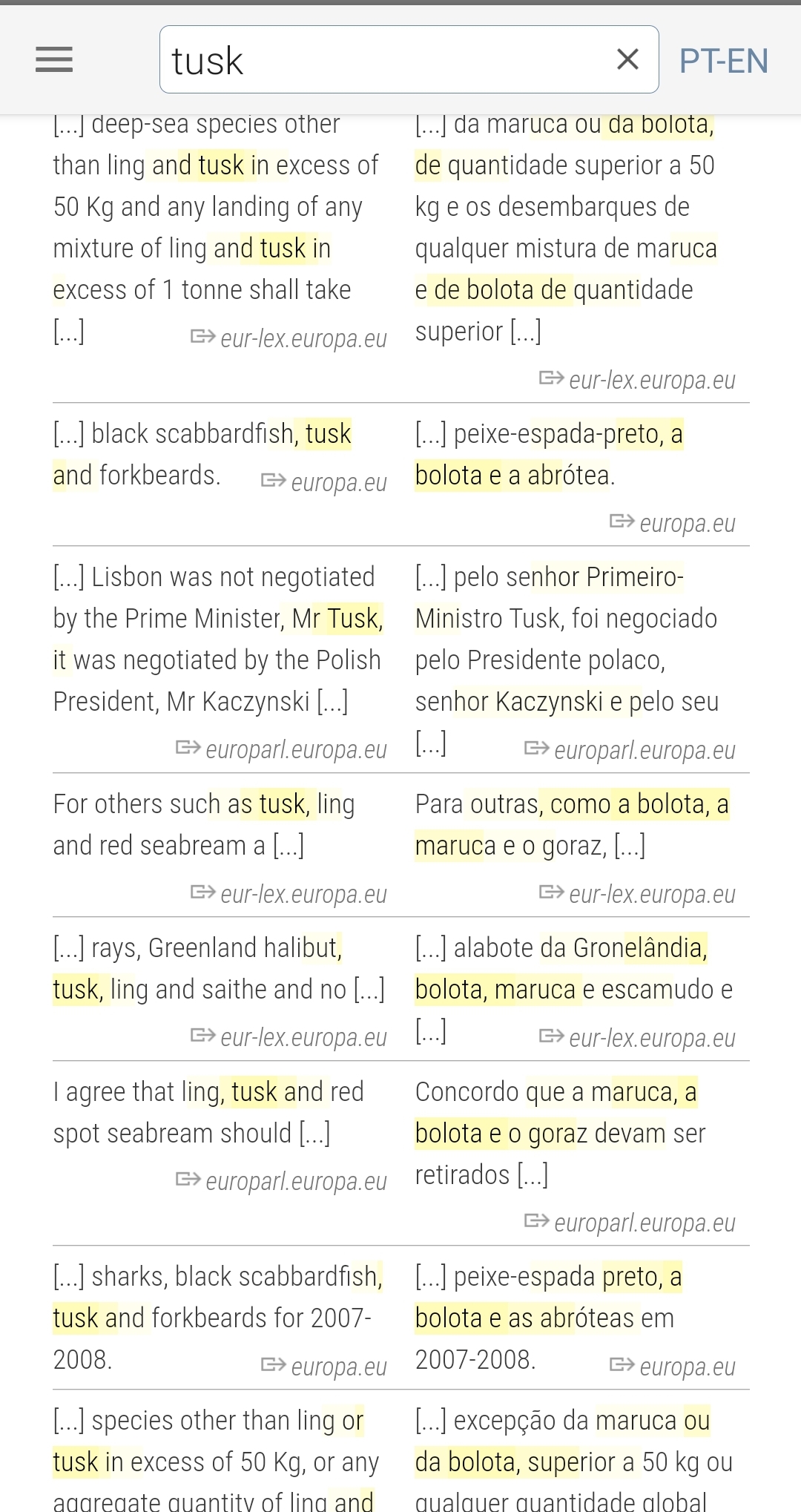
I had a Portuguese lesson via Skype today and during a conversation about current events, tried to use the phrase “narwhal tusk”. My teacher had read about the idiot on London Bridge but hadn’t heard that specific detail so she couldn’t help. I checked Linguee for “tusk” and Linguee, which seems to base a lot of its natural language processing on the contents of translated EU policy documents and not so much on old Tarzan novels, thought I meant a kind of fish called a tusk, so it gave me the word “bolota” which is the word they use apparently. Sadly, bolota more commonly means acorn, so there I was, blathering on about a whale’s acorn. Yes, that’s it, this polish guy grabbed a whale’s acorn, you see, and went to attack the terrorist. What mental image must she have had?

I suppose it could have been worse. Donald Tusk features heavily in those same EU documents and pops up from time to time in the Linguee results, usually without translation, although in at least one “Prime Minister Tusk” is translated as “o Primeiro Ministro turco” which is a massive cock-up if ever I saw one.

In case you’re wondering, Narwhal is just “o narval” and tusk is “a presa”. So as Wikipedia says “Os navais machos são distinguidos por uma presa helicoidal longa e feta que, na verdade, é um canino esquerdo superior alongado” so now you know.
Posted in English, Portuguese

Instagram Language Challenge #IGLC

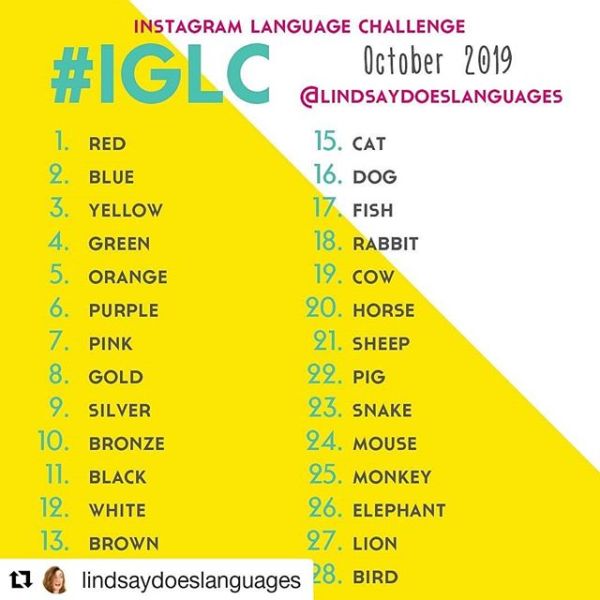
70272748_552544275556410_6700414021527998700_nTaking a break from the lizards today to compile Instagram posts I made as part of Lindsay Does Languages‘ Instagram Language Challenge in October, which I did to stretch myself. I tried to use some basic scientific vocabulary and write some more complicated sentences. It was quite good fun thinking of new stuff to write about, and I ended up doing refraction, buddhism, make-up and dinosaurs as well as some totally made-up bollocks that I just wrote for a laugh. Some have been corrected, others not. It’s a bit tough for people doing the corrections, I think. When I talk about how, before the horse was invented, all the idiomatic expressions involving horses had originally referred to dolphins, guinea pigs and other animals, I think serious-minded teachers must wonder whether I’m joking or just severely misunderstanding the meanings of the words and phrases I’m using.

I’ve also added all the new vocbulary into a Memrise deck so I won’t forget it all immediately

Day 1: Red

Day 2: Blue (The well it mentions, by the way, was repened after its refurbishment by John Bercow. Now if only I knew how to say OORRRRDDAAAAHHH in portuguese)

Bonus Blue

Day 3: Yellow

Day 4: Green

Day 5: Orange

Day 6: Purple

Day 7: Pink

Day 8: Gold

Day 9: Silver

Day 10: Bronze

Day 11: Black

Day 12: White

Day 13: Brown

Day 14: Grey

Day 15: Cat

Bonus Cat

Day 16: Dog

Day 17: Fish

Day 18: Rabbit

Day 19: Cow

Day 20: Horse

Day 21: Sheep

Day 22: Pig

Day 23 + 24: Snake/Mouse Crossover edition!

Day 25: Monkey

View this post on Instagram

O tema do dia 25 do #IGLC é #monkey / #macaco Vimos este livro na montra da livraria @alligatorsmouth . Acho que é baseado na história do macaco de pedra (também conhecida como "Peregrinação para o Oeste"). É uma lenda chinesa que gerou muitas adaptações. Quando estávamos na escola primária, eu e os meus amigos ficámos obcecados com a série japonesa lançada nos anos setenta. No primeiro episódio, o macaco (protagonizado por Masaaki Sakai) fez uma aposta com o Buda. O Macaco gabou de ser o melhor saltador no mundo mas Buda apostou que, se se sentasse na mão do Buda não conseguiria escapar do mão num único salto. Claro, o macaco pensou que isso seria uma obra fácil, portanto subiu até ao mão, e deu o salto mais alto de sempre. Voou até ao fim do universo, onde se deparou com cinco grande pilares. O macaco escreveu o seu nome lá, num pilar, pois queria vangloriar-se, e depois saltou de volta para o lugar onde deixou o Buda. O Buda ergeu a mão e mostrou o macaco os seus dedos. O nome do macaco era escrito lá, no dedo médio. Quando li esta história, fiquei interessado porque não sabia nada sobre o budismo, mas quando vi a série, gostei ainda mais porque, na série, depois de escrever o nome, o macaco fez xixi ao pé do pilar – ou seja, ao pé do indicador do Buda. Que fixe. Ao mesmo tempo, havia uma outra série chamado "The Water Margin" mas nunca ficou tão famoso quando o Macaco.

A post shared by Colin (@18ck) on

Day 26: Elephant

Day 27: Lion

Bonus Lion

Day 28: Bird

Posted in English

Prestável and Prestativo

It’s only just occured to me to wonder what the difference between these two is. They can both be translated as “helpful”, but “prestativo” is used when someone is happy to help others, whereas prestável is more instrumental – when some thing is helpful for achieving an end – so more like useful.

Ignore this, it’s wrong. New version here

Posted in English

Lizard, Lizard, Lizard

youre-a-lizard-harry-36247804One of the exercises in “A Actualidade em Português” is about superstitions and there are five that are similar to “knock on wood” or similar – phrases for warding off the effects of bad luck. By far the coolest is “Lagarto, Lagarto, Lagarto” (Lizard, Lizard, Lizard). I have no idea why that means what it means. Ciberdúvidas isn’t much help and neither is Andreia Vale’s “Puxar a Brasa à Nossa Sardinha”. Even m’wife didn’t know, only guessed that maybe it was because witches use lizards in their spells.

Anyway, while I was researching it, I came across this freaky advert for an art show which uses an old song from the 70s by Banda do Casaco called “A Ladainhas Das Comadres” which includes the phrase. Confusingly the first line is in latin (the portuguese equivalent would be “Afasta-te, Satanás” or “Vai para trás, Satanás”)

Vade retro Satanás [get thee behind me Satan – Latin]

T’arrenego Belzebu [I abjure you, Beelzebub]

A Jesus Cruzes Canhoto [To Jesus, crosses left-handed]

Lagarto, Lagarto, Lagarto! [Lizard, Lizard, Lizard!]

That “Crosses left-handed” is a similar phrase used to ward off evil, sometimes extended to “Cruzes, canhoto! Longe vá o agouro!”

Similar phrases include

  • Isola
  • Diabo seja cego, surdo e mudo
  • Vira para lá essa boca
  • Salvo seja


Posted in English, Portuguese

Dialogue Coach

Spotting interesting ways of describing dialogue instead of just He said, She asked, He replied. These are from Vaticanum by Jose Rodrigues Dos Santos. I’ve just pulled the interesting lines out at random from an extended conversation about corruption in the vatican bank, in no particular order – in other words, they’re not supposed to form a coherent conversation on their own, so don’t even try.

250x“Mas isso não tem pés nem cabeça” explodiu a auditora

“Nunca poderemos ter a certeza” sublinhou

“Como”, admirou-se

“É essa o problema”, reconheceu ela

“Isso já eu sei” devolveu Tomás

“Como queira” retorquiu

“Ah bom”, aprovou o historiador

“Isso é uma chico-espertice indigna de gente séria e de uma instituição de bem” protestou

Tomas empertigou-se: “Como se explica que nada tenha mudado desde os tempos desse bandidolas do Marcinkus?” quis ele saber

“Que ladrão” exclamou ela, escandalizada.

“Isso não é resposta” contestou

“Não foi isso que eu disse”, precisou o português

“Irónico, não é”, observou

By the way, José Rodrigues Dos Santos is sometimes compared to Dan Brown, which is a terrible slur on the poor man, but I think the point of similarity is probably in the way he describes dialogue. Although he doesn’t go as far as “The famous man looked at the red cup”*, in his efforts to avoid pronouns, he seems to describe people in some slightly clunky ways. The dialogue will be peppered with “said the chief of COSEA” or “said the auditor” or “said the french woman” – and those are all referring to the same person and all in the same conversation between two people!

*=yes, I know DB never wrote this, Stewart Lee just made it up, but I wouldn’t put it past him.

Posted in English

Portutrees

54512070_576231809537279_6800739437273309113_nIf you’re reasonably familiar with portuguese names, you’ll notice a lot of them end with “eira”: Pereira (m’wife’s maiden name), Nogueira, Oliveira, for example, and if you’re even more switched on, you’ll know that these, along with a few other names – Carvalho springs to mind – are names of trees*.

It seems as though there’s some doubt over the origin of these names. One theory is that they were adopted by the “Conversos” – Jewish people who converted to Christianity in the late 15th and early 16th century when the inquisition unexpectedly rose to prominence. Doing a little digging, this theory seems to be a bit unsatisfactory. Although a lot of jewish people adopted the names, they already existed before that time, and not all jewish converts chose them either, so… basically, we aren’t much further forward, are we?

While I was looking into this, I found something else that probably should have been obvious: that a lot of names ending in -es such as Nunes, Alvares, Gonçalves and Fernandes were originally patronimics, like Robinson and Robertson. So it wasnt a wasted effort after all.

More here on Wikipedia.

*By the way, can we talk about the fact that “Mangueira” means both “Mango Tree” and “hosepipe”? What sort of well-run language would allow a single word to mean both those things, for heaven’s sake?

Posted in English

A Próclise, A Mesóclise e a Ênclise e o Rock ‘n’ Roll

Próclise, Mesóclise and Ênclise are words used in grammar lessons to describe the position of the adverb relative to the verb. In Brasil, Próclise is far more common than either of the other two, but in Portugal it’s the exception rather than the rule, These notes are taken from a Ciberdúvidas post.

Próclise

The pronoun goes before the verb

  1. After certain common adverbs such as bem, mal, ainda, já, talvez, apenas, também, não, sempre, só (according to Wikipedia, “Hoje” is a pronoun that fits this bill too, believe it or not!)
    • Sempre o vejo
    • Ainda me rio quando penso nisso.
    • Hoje me convidarão para a solenidade de posse da nova directoria
  2. After indefinite subjects such as “ambos” or “alguns”
    • Ambos o odeiam
  3. In subordinate clauses
    • Quando a ouvi, não acreditei
  4. In coordinate clauses – basically where you’ve referred to a thing in a sentence already, then you use a conjunction like “and”, “but” or “or” to join to another clause where you refer to it again
    • Ou tens o bolo ou o comes.
  5. Where the subject of the verb goes after the verb it wold be crowded to have the object pronoun there too
    • Isso te digo eu

Mesóclise

The pronoun goes inside the verb like an insane pronoun sandwich, which seems… peculiar…. until you realise that it was originally because the future and conditional tenses were made up of the infinitive and a form of “havere” the version of latin that eventually became the portuguese language. Actually, it’s still peculiar, but knowing the reason behind it is some consolation, I suppose.

  1. Future tense [where none of the próclise conditions apply]
    • Contar-lhe-ia uma história
    • Comê-lo-ei
    • BUT Quando sairmos do UE, não o arrependerá?
  2. Conditional tense
    • Dar-lhe-ia
    • BUT Se encontrasse Boris Johnson, nao lhe falaria


Ênclise

The pronoun goes after the verb

  1. Basically
  2. All
  3. Other
  4. Times