Posted in English

The Quix and the Dead

Reading a book this morning I came across an example of a word in the wild that I had never seen before
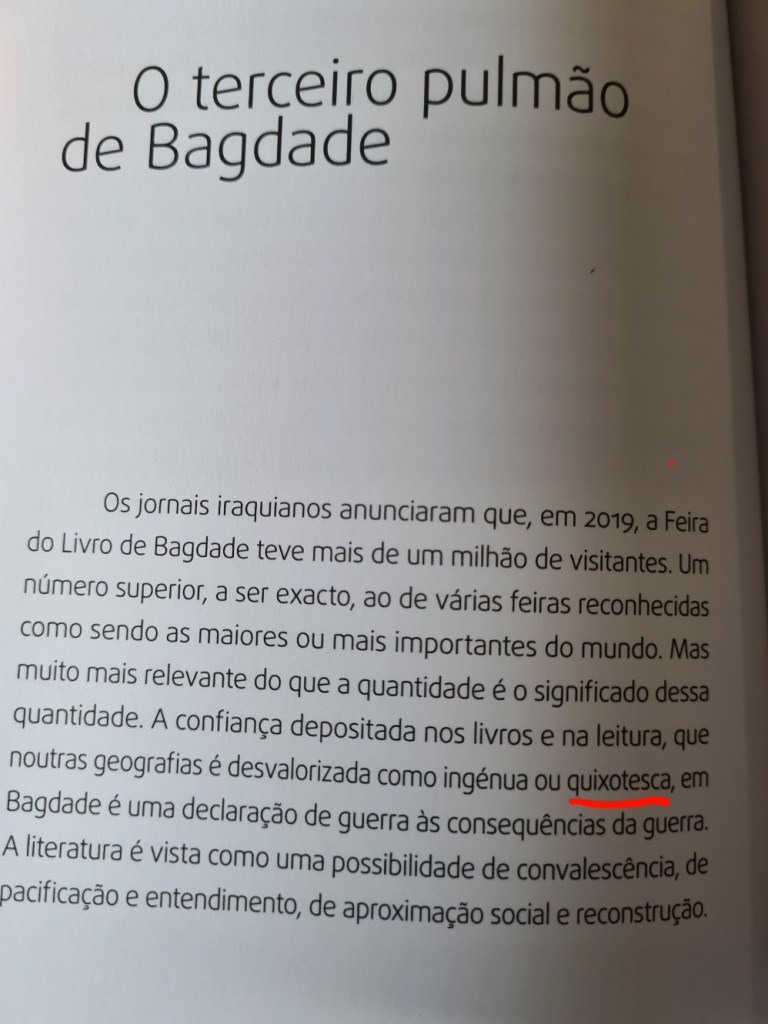
Quixitesco/a – meaning Quixotic. I believe the correct pronunciation is “key shot-esco”, based on hearing Booktubers pronounce the name Don Quixote and the only pronunciation quide I can find backs that up, although it’s Brazilian so there’s still a small shadow of doubt, but I’m fairly confident.

Anyway, it’s not exactly uncommon for me to spot new words in the wild, but I enjoyed this one so I thought I’d share!

By the way, the book is “O Vício Dos Livros” (addiction to books) by Afonso Cruz, one of my favourite Portuguese writers. His work is incredibly diverse, covering everything from children’s books to massive chunky tomes, but this one is very compact, neatly illustrated with short, digestible texts. The grammar is not too taxing, thank god, but the vocabulary is a bit harder so it’s a decent stretch read for a B1 or B2 student who doesn’t mind checking the dictionary from time to time. It’s also new, and very popular at the moment, showing up all over Portuguese bookstagram, and I am always, always on trend. 😉
Posted in Portuguese

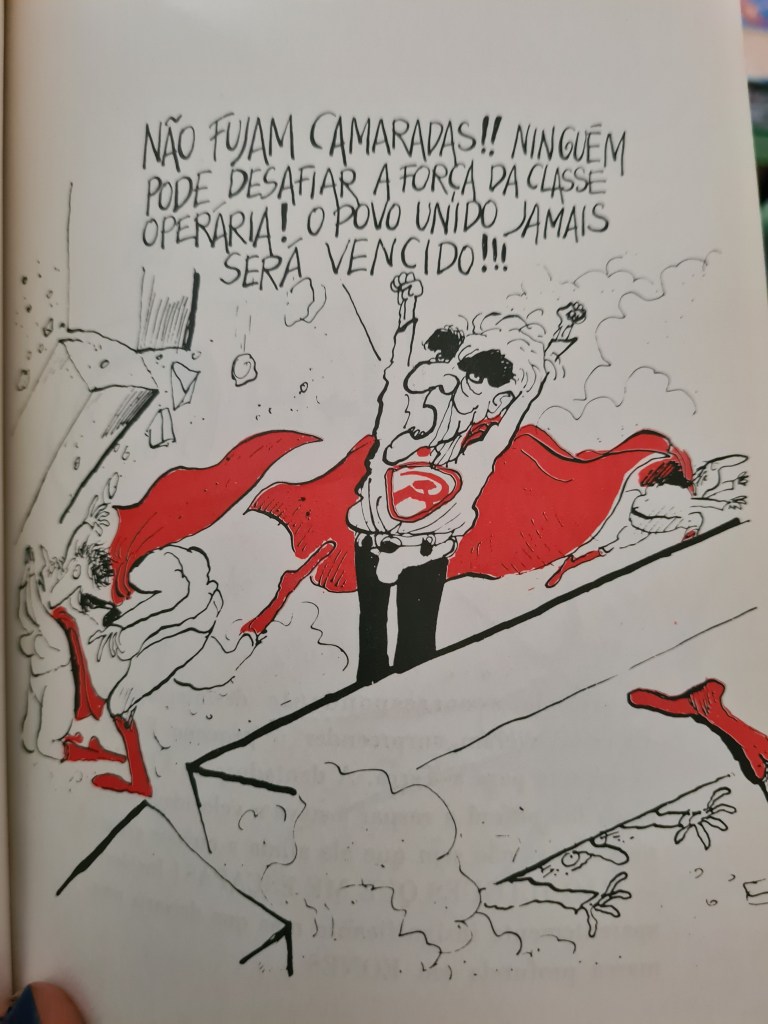
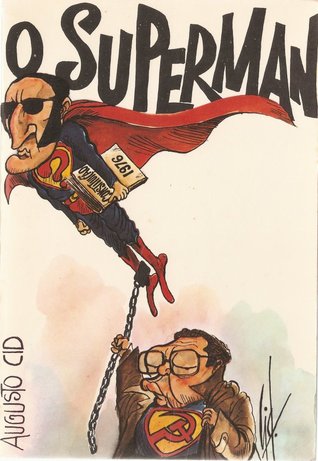
O Superman – Augusto Cid

António Ramalho Eanes (Eones, Superman) and Ernesto Melo Antunes (Melro). The image is, of course, aligned left

Ouvi falar deste livro no instagram. A Ana Luiz li-o há umas semanas. Naquela altura, eu estava a ler A Construção da Democracia em Portugal. “Epá!” pensei (mas confesso que pensei em inglês) “este livro tem bom aspeto e pode ser uma boa sobremesa depois de todo este espinafre não ficção” Comprei um exemplar duma loja de segunda mão porque é antigo e não é disponível nas livrarias online. Vale mesmo a pena. De súbito, todas as personagens da história que tinha lido anteriormente animaram se cá diante dos meus olhos. Eanes (EONES) no papel de Superman, nasceu no planeta CROPCON (baseado em Copcon que realmente na época pós-revolução) e viaja para Portugal onde tenta cumprir a sua missão histórica apesar dos esforços dos seus inimigos e concorrentes tal como Solares (Soares) e Fiasco (Vasco) Lourenço. Augusto Cid é, claro, um artista talentoso. O livro foi lançado em 1978, na época de instabilidade depois da revolução (Abril 1974) e a contrarrevolução (Novembro 1975), mas a sua carreira continuo até o seu falecimento recente. Dá para entender muito sobre o espírito do época, mas é óbvio que o autor tem desgosto do Eanes. A história não tem nada de simpatia pelo seu cargo. Portanto não é justo (mas quem disse que livros satíricos devem ser justos?) Recomendo a opinião de Ana Luiz neste site porque ela sabe mais do que eu e menciona algo da história do livro em si, e a resposta polémica do governo.

I usually put a link to the books I review on here but I don’t think you can get this easily. Augusto Cid has some more recent books though and you can buy those here.

Posted in English

Cushiongate

I’ve just written about O Superman, the satire on the career of António Ramalho Eanes. One of the things the book mentions is his visit to London where he does a typically Portuguese (?) thing: rearranging the cushion before sitting next to the Queen. I didn’t think much of this but you can actually see it happen in this video of the state visit.

Of course, the Queen is not scandalised by this and it doesn’t seem to be much of an issue. I don’t know why the satirist thinks it’s such a big deal but I guess it’s all grist to his mill, showing how uncultured and yokelish the president is that he’s never taken a ride in a royal carriage before!

The video is interesting (to me, anyway), since the announcer conveys the palace’s statement, putting forward Britain’s official stance towards the nascent democracy, which in a few short years had veered from fascism to a vanguardist, near communist junta, via a counter-revolution to a broadly left-wing government, ruling under a democratic constitution. So I’m glad to see they are recognising that process and trying to help it along.

I’m not sure, but I think we british play a larger role in the book. Early on, Cropcon, Superman’s home planet, is destroyed by a rival planet, which the author calls Brybton. Well, I don’t know what Brybton is meant to represent, but it sounds like “Britain” and “Bribe” might be contributing ingredients – in other words, the author reckons the military junta that acted as midwife to the democracy was unable to withstand the corrupting effect of international capital, as represented by England! I might be reading too much into that but it’s a fun historical factoid so I’ll enjoy it at least until someone tells me it’s wrong!

Posted in Portuguese

A Construção da Democracia em Portugal

A construção da democracia (Kenneth Maxwell)

Uff… Levei muito tempo nesta leitura mas valeu a pena. O escritor fez uma obra muito complete. O foco da história é a transição da ditadura para democracia, mas há um capítulo sobre a história mais longínqua do país. Dado este pano de fundo, ele explica os argumentos do General Spínola e os oponentes do regime Salazarista. É daí fora, mergulhamos dentro das águas turbulentos dos anos setenta: a guerra colonial, a revolução, a contrarrevolução, independência de Angola, despolitização das forças armadas, implantação de uma democracia viva, e o novo cargo do país dentro da CE e da NATO. A história mundial é sempre lá, lado a lado com os acontecimentos domésticos porque nada acontece num vácuo.

O que mais me chamou a atenção é a carácter esquerdista de tantas protagonistas nesta história. Claro está que a reação contra a extrema direita haveria de absorver uma influência da ala oposta, mas nunca apreciei antes disto, que o país aproximou-se tanto ao modelo soviético. Ao fim das contas, (nas palavras de autor, a lembrar-nos de uma profecia falhada de Kissinger) “Foi Karensky quem sobreviveu não Lenine. Foi o socialista moderado Mário Soares quem, no final, tornou presidente da República e o militar radical populista Otelo Saraiva de Carvalho quem foi, primeiro para a prisão e, depois, para a obscuridade”

Ups! Spoilers!

Posted in Portuguese

Praça de Londres – Lídia Jorge

Esta leitura fiz parte dum desafio online “Abril Contos Mil”. Já li um livro de Lídia Jorge que me custou muito. Quatro (?) anos e tal depois, com mais experiência, achei este livro mais fácil mas ainda houve muuuuiiito vocabulário desconhecido. A taxa de agarramentos do dicionário foi muito elevada, comparado com Contos do Gin-Tonic (o livro PT anterior) por exemplo.
Mas gostei? Quase esqueci-me de dar a minha opinião. Sim, bastante. Ela escreve bem. Então… Isto chega? Boa.

Posted in English

Watorking

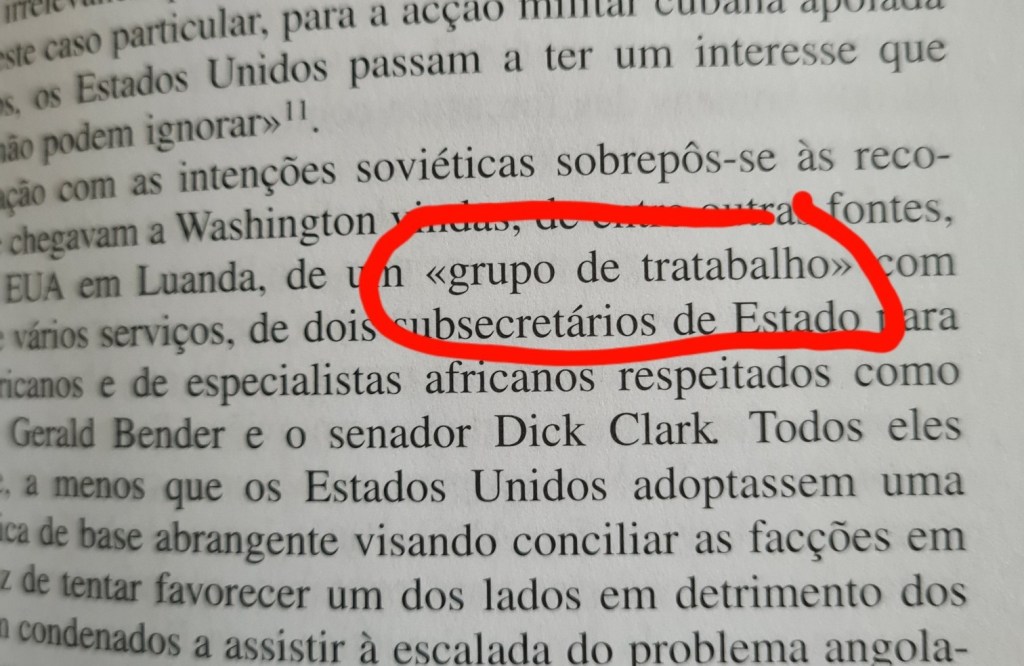
Groan… I’ve just spent ages trying to work out what “tratabalho” means in this paragraph.

The book is “A Construção da Democracia em Portugal“, a translation of “The Making of Portuguese Democracy” by Kenneth Maxwell, by the way

The quotation marks make it look like it’s a deliberate change so I was theorising it might be a combination of “trabalho” and another word like “tratamento”. I was curious because I thought the author was being sarcastic or implying something about their motives.

It’s not though. After a lot of hoo-ha, I finally found a copy of the English version in Google Books and it just says “Task Force”, so it must just be a simple typo. Annoying!

Posted in Portuguese

O Futuro Tem 100 Anos

Esta BD foi lançado para comemorar o centenário da CUF, uma empresa que (nas suas próprias palavras) trouxe a revolução industrial para Portugal on 1908. A história é contada do ponto de vista de uma mulher de 2008, que é a bisneta dum engenheiro francês, um empregado da empresa. Até certo ponto, esta decisão, faz todo o sentido porque o leitor pode ver as ligações entre o mundo de hoje e os eventos do passado. Mas… Para mim, os autores focam demais na protagonista (que é jovem, bonita, mais fácil no olho do que o bisavô dela!) e por isso não temos um entendimento nítido do crescimento da empresa, o impacto dela na vida do país, os raízes dos problemas laborais (tal como a greve), e a evolução da empresa desde o século XX até agora (acredito que se trata de um rede de hospitais hoje em dia não é?)
Ainda por cima o arte não é assim tão incrivel.
Meh. Interessante mas não passa de ser um panfleto de publicidade. 3 estrelas.

Posted in English

New YouTube Channel

If you enjoyed the audiobook post a couple of weeks ago you might also enjoy this new YouTube channel started by Booktuber Silent Wanderer. It’s called Em Voz Alta and it’s looking to release two chapters per week of short stories read by Portuguese readers, many of whom I already know from their own channels. So far, they’ve finished O Principezinho (everyone’s favourite!) and they’re well into The Canterville Ghost.

Don’t forget, you can use the videos as audiobooks even if the screen is off by following the suggestions in my most recent post, Story Hour

Posted in English

Story Hour

One of the things that struck me after posting my list of audiobooks is that there aren’t many that are aimed at younger children, and if you’re a new reader that might be exactly what you need. I did check all the Portuguese children’s stories on Audible but with the exception of O Principezinho they were all Brazilian.

It seems like the best way to listen to stories for children is through videos. There are some on YouTube and some on the RTP Estudo em Casa site under “Hora da Leitura” (Reading Hour).

Here are a few lists you can tap into. If you want to listen to them as audiobooks, with the screen off and your phone in your pocket, there are a couple of settings you need to change on your phone, and I’ll put a video about that down at the bottom if you need it.

Obviously, you might be happy just to follow along with the video, especially since some of them show the actual text, or animations that can be good visual clues, but if you want to treat them like normal audiobooks, here’s a video that will explain how to set your phone up to play the audio only, even when the phone screen is off.

Posted in English

The Greatest Stories Ever Heard

As regular readers (hey, stop laughing – I have regular readers! I do!) will know, I am obsessed with audiobooks, so I have been trying for a while now to compile a definitive list of all the european portuguese audiobooks available, so I have been through every single audiobook in Audible and listened to the accent and I’ve wrestled with Kobo’s completely useless search function to bring a few golden nuggets from among the grit. You can find them all here. I’ll add to the list as new ones become available. If you know of any I’ve missed, please let me know. I feel like I’ve been pretty thorough but I’m just one person and it’s a big internet.

There are affiliate links on the page, by the way: I’m hoping my obsession will pay for itself one day.