Posted in English, Portuguese

Witches! Part 6

Este blogue é o último da série sobre as bruxas de Portugal que começou aqui.

Ai, Jesús, o pior fica para o final… Segundo a Insta de Lola, “durante o século XX, em Aljezur, no Algarve, “mulheres de virtude” praticavam rituais de proteção e feitiçaria e muitos contos populares rel1ata eventos misteriosos na região”. Soa bem, não soa? Mais uma história de mulheres de boa vontade a viver em harmonia com a natureza que acabou mal-entendidas pela patriarquia, certo?

Ui… Nem por isso. Quando pesquisei BRUXA e ALJEZUR, o todos os resultados tiveram como assunto uma notícia de Maio de 1929 de Vidigal, uma vila perto de Alzejur. Os habitantes daquele lugar costumava de participar em “bailes”, onde não havia música mas sim uma poção alucinógena. Sob influência deste liquido, dançavam e participavam em atos de feiticeira incluindo um incidente no qual um gato, que a gente achava era possuído por um espírito maligno*, entrou na sala portanto alguém pegou nele e cortou-lhe as patas, As autoridade religiosas queixaram às autoridades civis, que prenderam cinco pessoas em Abril de 1929 mas. após umas semanas. os detidos, já soltos, foram convidados a mais uma baile.

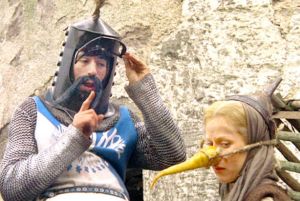
If JK Rowling’s books were more realistic

E foi naquela baile, em Monte Velho, nos arredores de Vidiga, que um deles, Luís Tomé, matou a sua mulher, Adriana Marreiros, de machadada. Estava grávida de quatro meses. A mãe dela, Maria Marreiros tentou salvar-lhe a vida mas a intervenção costou-a a vida. Foi espancado até à morte pelo genro. A filha do Luís e da Adriana, que se chamava Custódia, estava escondido debaixo da cama. Viu tudo e (como é óbvio) recusou de sair. O pai lhe implorou e até encheu um copo com o sangue das mulheres, com qual pintou símbolos no seu próprio peito e bebeu o resto.

O pai foi detido e enforcou-se na cadeia. Bem feito. A filha, cujo terror mal podemos imaginar, não saiu e não morreu, e a filha dela finalmente contou a história da sua mãe aos jornais em 2018, quase um século depois.

E a bruxa? A mulher que organizou as bailes foi Maria Inácia Costa, visto pelos analfabetos daquela zona com uma mulher de virtude. porque sabia ler. Luís tinha a consultado e ela aconselhou´-lhe reunir a família toda porque a mulher tinha traído a bruxa e “era necessário desfazer o enguiço”.

Lê a história completa aqui

English Version

This blog is the last in the series about the witches of Portugal that started here.

Oh, Jesus, I saved the worst for last… According to Lola’s Instagram, “during the 20th century, in Aljezur, in the Algarve, ‘virtuous women’ practiced protection rituals and witchcraft, and many folk tales recount mysterious events in the region.” Sounds good, doesn’t it? Another story of well-meaning women living in harmony with nature that ended up being misunderstood by the patriarchy, right?

Wow… Actually, no. When I searched for WITCH and ALJEZUR, all the results were about a news story from May 1929 about Vidigal, a village near Aljezur. The inhabitants of that place used to participate in “dances” where there was no music, but rather a hallucinogenic potion. Under the influence of this liquid, they danced and participated in acts of witchcraft, including an incident in which a cat, believed to be possessed by an evil spirit*, entered the room, so someone grabbed it and cut off its paws. The religious authorities complained to the civil authorities, who arrested five people in April 1929, but after a few weeks the detainees, now released, were invited to another dance.

And it was at this dance, in Monte Velho, on the outskirts of Vidiga, that one of them, Luís Tomé, killed his wife, Adriana Marreiros, with an axe. She was four months pregnant. Her mother, Maria Marreiros, tried to save her life, but the intervention cost her her own. She was beaten to death by her son-in-law. Luís and Adriana’s daughter, named Custódia, was hiding under the bed. She saw everything and (of course) refused to come out. Her father cajoled her and even filled a cup with the women’s blood, with which he painted symbols on his own chest and drank the leftovers. The father was arrested and hanged himself in prison. Good riddance. The daughter, whose terror we can scarcely imagine, stayed under the bed and didn’t die, and her daughter finally told her mother’s story to the newspapers in 2018, almost a century later.

And the witch? The woman who organized the dances was Maria Inácia Costa, seen by the illiterate people of that region as a “virtuous woman” because she could read. Luís had consulted her and she advised him to gather the whole family together because his wife had betrayed the witch and “it was necessary to undo the curse”.

You can read the full story here.


*This is the only part of the story not mentioned in the article I’ve cited but it is mentioned by Diário das Notícias, just so you know I didn’t make it up!

Posted in English, Portuguese

Witches! Part 5

Este texto é o quinto sobre As Bruxas de Portugal. Veja o primeiro aqui se não te lembras o motivo

No Alentejo, a bruxa mais famosa é a Bruxa de Évora. Hoje em dia, a bruxa está mais conhecida no brasil do que na sua própria terra.

Assim como as outras mulheres descritas nesta série, a passagem de anos anda acrescentando mais camadas à lenda, mas é provável que esta feiticeira, que viveu na época de Dom Afonso Henriques, teve descendência árabe, portanto era também conhecida por “Moura Torta”. Como resultado da antiguidade, a lenda teve tempo o suficiente para crescer e para se enfeitar com novos boatos. Segundo as lendas, ela “fazia os portugueses se arrepiarem” com o seu poder. Falava árabe, português e latim e andou com um mocho no ombro; mandava demónios; voava montada não só numa vassoura mas também em animais como camelos, cães, e carneiros; tinha dois animais de estimação* – um bode e um gato, ambos pretos; era proficiente na magia dos árabes e dos célticos mas ainda por cima sabia ler e fazer matemática, que, no século XII, provavelmente parecia uma forma da magia! E há ainda mais! Em suma, era o Capitão Marvel da bruxaria portuguesa. A poder dela estava quase sem limites!

Convém lembrar que, naquela altura, os invasores árabes tinham sido afastados da terra portuguesa mas permaneceram na vizinhança, na Espanha. Numa época com pouca ciência pouca educação e a ameaça dum exercito ao outro lados das fronteiras, não e admira que havia tanto medo no ar, que acabou por se colar á figura da bruxa de Évora. Por isso, o mais surpreendente é que apesar de tudo a gente buscava a sua ajuda no amor, na vida e para curar doenças.

A Bruxa de Évora confronts one of the few kinds of animals she never dared ride.

English Translation

In the Alentejo region, the most famous sorceress is the Witch of Évora although nowadays, she is better known in Brazil than in her own country.

Like the other women described in this series, the passage of years has added more layers to the legend, but it is likely that this sorceress, who lived during the time of King Afonso Henriques, had Arab ancestry, therefore she was also known as “Moura Torta” (Crooked** Moor). As a result of its antiquity, the legend has had enough time to grow and be embellished with new rumours. According to legends, she “made the Portuguese shudder” with her power. She spoke Arabic, Portuguese, and Latin and walked with an owl on her shoulder; she commanded demons; she flew riding not only a broomstick but also animals such as camels, dogs, and sheep; she had two pets – a goat and a cat, both black; she was proficient in Arab and Celtic magic but also knew how to read and do mathematics, which, in the 12th century, probably seemed like a form of magic! And there’s more! In short, she was the Captain Marvel of Portuguese witchcraft. Her power was almost limitless!

It’s worth remembering that, at that time, the Arab invaders had been driven away from Portuguese territory but remained in the vicinity, in Spain. In a time with little science, little education, and the threat of an army on the other side of the borders, it’s no wonder that there was so much fear in the air, which ended up clinging to the figure of the witch of Évora. Therefore, the most surprising thing is that despite everything, people sought her help in love, in life, and to cure illnesses.

*I checked if the word “familiar” was used in the same way as it appears in english, to describe a witch’s guiding animal, but it seems not.

**Interesting point about translation here. Torto means crooked, but when applied to a person in english “crooked” usually means “dishonest” whereas in portuguese the equivalent, torto, can mean drunk, cross-eyed, disloyal, stubborn or rude. I sort of love the idea that the witch was just a drunk lady of arab heritage walking around shouting mad stuff and being believed by everyone, but my guess would be that it’s similar to the way it’s used in “Que Mulher É Essa” by A Garota Não, when she lists all the kinds of women who are excluded from certain high-status roles.

A preta não entra 
A baixa não entra, não
A velha não entra
A torta não entra, não
Quanto talento gasto em vão

So I think she’s talking about someone with a physical disability or deformity who is looked on as not meeting standards of beauty – but I am not 100% sure. This isn’t a super-original idea. a conventional reading of this would be that women with disabilities would be seen as witches because they were vulnerable and a liability and people wanted to push them out, say, so that they could inherit their house (Marxist interpretation) or because of misogyny (feminist interpretation) or to maintain the invisible power structures within society (postmodern toss interpretation) or because she understood that with very little ability to defend herself physically, cultivating an image of being a powerful ally of the devil is a good way of assuring nobody messes with you in a society where there’s no real rule of law (interpretation I am currently working up into a film script to pitch to Pixar).

Posted in English, Portuguese

Witches! Part 4

Hoje, passamos pela região de Estremadura. Mas afinal, onde fica Estremadura? Porque já não existe na mapa. Estremadura é um território histórico que abrange os atuais zonas de Setúbal, Santarém e Lisboa, que (como a Lola Ramos afirmou) a sede da inquisição que perseguiu tanto as assim chamado “bruxas” quanto hereges, e acima de tudo Judeus.

A Bruxa da Arruda é uma das feiticeiras mais famosas nesta série, a lenda dela fornecendo não só uma atração turística mas também assunto de vários livros (um brasileiro e um português por exemplo) mas o que mais me surpreendeu é quão moderna é a história. A “bruxa”, Ana Loura era ativa durante os finais do século XIX e os primeiros anos do XX e praticou artes comuns a mulheres da sua profissão “curar pessoas e adivinhar coisas”. Deste modo de vida, a questão não está em causa mas ao longo dos anos mais lendas e mais boatos foram acrescentados á história verdadeira. Ela fez sair uma cobra da boca de um rapaz atormentado por doenças misteriosas, por exemplo.

Segundo um livro publicado em 1905, “A bruxa da Arruda, —A celebre bruxa costuma visitar a Ericeira por fins de setembro. É muito respeitada; dizem que é rica, a pobres não leva nada; apresenta-se com muitos ouros. Tem uma filha que já entende de moléstias. Em geral leva 300 reis pela consulta. Receita quasi sempre esfregas de aguardente e papas de pão de milho ralado. Mas isto varia em quantidade, tempo, calor, e no sítio do corpo. Ouvi também chamar-lhe a mulher do Casal das Neves, no termo da Arruda dos Vinhos. Nem precisa ver o doente, levam-lhe roupa do uso do enfermo, uma camisa ou camisola, e ela pelo cheiro conhece a moléstia e logo receita. Costuma pousar numa casa do norte da vila, e a sua chegada consta logo entre a pobre gente que a venera e teme.Já teve questões com padres e médicos, já foi aos tribunais, me disse alguém, e ficou sempre victoriosa!” (Pereira, G. A Villa da Ericeira citado nesta página)

Fico admirado por ouvir que uma bruxa andava ativa, abertamente, sob os olhos da igreja até no século XX!

English Translation

Today, we’re passing through the Estremadura region. But where exactly is Estremadura? Because it no longer exists on the map. Estremadura is a historical territory encompassing the current areas of Setúbal, Santarém, and Lisbon, which (as Lola Ramos stated) was the seat of the Inquisition that persecuted both so-called “witches” and heretics, and above all, Jews.

The Witch of Arruda is one of the most famous sorceresses in this series, her legend providing not only a tourist attraction but also the subject of several books (one Brazilian and one Portuguese, for example). But what surprised me most is how modern the story is. The “witch,” Ana Loura, was active during the late 19th century and early 20th century and practiced arts common to women of her profession: “healing people and divination.” That she chose this way of life is not disputed, but over the years more legends and rumours have been added to the true story. She made a snake come out of the mouth of a boy tormented by mysterious illnesses, for example.

According to a book published in 1905, “The Witch of Arruda—The famous witch usually visits Ericeira at the end of September. She is highly respected; they say she is rich, she takes nothing from the poor; she presents herself with many gold coins. She has a daughter who already understands illnesses. She generally charges 300 reis for a consultation. She almost always prescribes rubs of brandy and porridges of grated cornbread. But this varies in quantity, time, heat, and the location on the body. I also heard her called the woman of Casal das Neves, in the Arruda dos Vinhos area. She doesn’t even need to see the sick person; they bring her the sick person’s clothes, a shirt or sweater, and she recognizes the illness by the smell and immediately prescribes something. She usually stays in a house in the north of the village, and her arrival is immediately announced among the poor people who venerate and fear her. She has had disputes with priests and doctors, she has gone to court, someone told me, and she has always been victorious!” (Pereira, G. A Villa da Ericeira)

I am amazed to hear that a witch was active, openly, under the eyes of the church even in the 20th century!

Posted in English, Portuguese

Witches! Part 2

(Scroll down for an english translation of this one)

Este texto é o segundo sobre As Bruxas de Portugal. Veja o primeiro aqui se não te lembras o motivo

A nossa bruxa semanal é a bruxa lavandeira, nativa à região Trás-os-Montes. A imaginação popular é uma maravilha. Quando inventamos legendas sobre mulheres com poderes sobrenaturais, não conseguimos imaginar nada mais interessante para elas fazerem senão trabalho doméstico. O mais normal é o uso da vassoura como modo de transporte, mas neste caso as controladoras da força mágica focam os seus poderes em fazer lavandaria. Hum,’tá bem avó.

We’re going to be seeing a lot of this scene in this series of posts, aren’t we_

Nas lendas, as bruxas percorrem as aldeias com luzes na mão. São capazes de voar até aos telhados. Por vassoura? Não. Claro que não, seu panhonha. Transformam-se em patos (ah ah ah! patos, á sério!) ou gansos (isso sim, não me admira de todo. Não confio nunca num ganso).

Como o nome implica, estas feiticeiras surgem nas margens dos rios onde gostam de lavar roupas. Ai, Jesus nos protege das servas do diabo que querem (leio as minhas notas) limpar camisas, vestidos e meias.

🇬🇧 English Version (with a bit of help from GTranslate)

Our weekly witch is the washerwoman witch, native to the Trás-os-Montes region. Popular imagination is amazing. When we invent legends about women with supernatural powers, we can’t imagine anything more interesting for them to do than housework. The most common thing is the use of a broom as a means of transport, but in this case, the controllers of magical forces focus their powers on doing laundry. Hmm, okay, Grandma.

In the legends, the witches roam the villages with lights in their hands. They are able to fly to the rooftops. By broom? No. Of course not, you fool. They transform into ducks (ha ha ha! ducks, seriously!) or geese (actually, that one doesn’t surprise me at all. I never trust a goose.)

As the name implies, these witches appear on the banks of rivers where they like to wash clothes. Oh, Jesus protect us from the servants of the devil who want (checks notes) to clean coats, dresses, and socks.

Posted in English, Portuguese

Witches!

(Scroll down for an english translation of this one)

Este post no Insta chamou-me a atenção há uma semana. É mesmo ótimo como obra de arte mas confesso que me deixou insatisfeito porque não explica bem as lendas e eu, como estrangeiro que não sei nada de nada, queria saber mais.

Um bloguista com dois dedos de testa teria lançado um blogue ou uma série de blogues na semana antes do dia das bru… Hum… Antes do Pão Por Deus mas a minha testa não passa de um dedo e aqui estou eu no dia depois a escrever o primeiro texto numa série… Olha, para resumir uma história longa, fiz um compromisso num outro lugar escrever um texto por semana durante as próximas seis semanas sobre bruxas. Não me faça mais perguntas, tá bem? OK, vamos a isto! Hoje abordamos a primeira região na obra da Lola Ramos.

Segundo a Stôra* Google, Melgaço é a vila mais setentrional (ou seja o mais ao norte) do país, perto da fronteira com Galiza. A região é rica com lendas, entre as quais se encontra o mito das “meigas**”, ou “Feiticeiras Raianas”. Há quem achasse que eram seres sobrenaturais sem alma, capazes de se transformarem em mulheres ou em animais como por exemplo serpentes e que desejavam roubar a vida ou a alma das vítimas delas. Mas também existem pessoas com imaginações mais prosaicas que creem que as bruxas eram mulheres normais que praticavam a medicina pré-científica da tradição pagã e como resultado encontraram-se sob o olhar da igreja católica, que praticava as suas próprias rituais pré-científicas!

A Wikipédia acrescenta mais pistas prosaicas ao nosso pano de fundo: O rio naquela zona é perigoso por causa das rápidas a e a falta de um ponte, portanto não raras vezes viajantes acabaram mortos, afogados no rio e os habitantes na região responsabilizaram as bruxas em vez da natureza e do comportamento imprudente do recém-falecido!

A lenda aparece raramente nos estudos etnográficos sobre os portugueses, mas é mais comum entre os galegos. Os dois povos concordam que a melhor estratégia para quem queira atravessar o rio perto de Melgaço ou a sua aldeia vizinha, Arbo, em Galiza, é colocar um seixinho ou uma moeda na boca. Assim, a viajante não se esquece de manter a boca fechada ao se deparar nas feiticeiras.

*If this is the first time you’re seeing this word, here’s some background.

**Weird one this: Wikipedia implies it’s an old word, and maybe it is – maybe it’s related to maga in some way… but meigo/meiga means gentle and very little about their reputation sounds gentle! Priberam offers no clue so I’m not really sure what to make of it!

🇬🇧 English Version (with a bit of help from GTranslate)

Just in case somebody from “the other place” wants to come and check I did my homework…

This Instagram post caught my attention a week ago. It’s really great as a work of art, but I confess it left me unsatisfied because it doesn’t explain the legends well, and I, as a foreigner who knows absolutely nothing, wanted to know more.

A blogger with two fingers of forehead [portuguese expression meaning “with a bit of basic common sense”] would have launched a blog or a series of blogs the week before Hallowe… Umm… Before Pão Por Deus (Portuguese All Saints Day tradition which is gradually getting crowded out by American Halloween), but my forehead is barely a finger’s width, and here I am the day after, writing the first text in a series… Look, to cut a long story short, I made a commitment in another place to write one text about witches per week for the next six weeks. Don’t ask me any more questions, okay? OK, let’s do this! Today we’ll cover the first region in Lola Ramos’ work.

According to Professor Google, Melgaço is the northernmost town in the country, near the border with Galicia (a part of north-west Spain where they speak a language very similar to portuguese). The region is rich in legends, among which is the myth of the “meigas,” or “Border Witches.” Some believed they were soulless supernatural beings, capable of transforming into women or animals such as snakes, and that they wished to steal the lives or souls of their victims. But there are also people with more prosaic imaginations who believe that witches were normal women who practiced the pre-scientific medicine of pagan tradition and, as a result, found themselves under the scrutiny of the Catholic Church, which practiced its own pre-scientific rituals!

Wikipedia adds more prosaic clues by way of background: The river in that area is dangerous because of the rapids and the lack of a bridge, therefore travellers often ended up dead, drowned in the river, and the inhabitants of the region blamed the witches instead of nature and the reckless behaviour of the recently deceased!

The legend rarely appears in ethnographic studies about the Portuguese, but it is more common among the Galicians. Both groups agree that the best strategy for anyone wanting to cross the river near Melgaço or its neighboring village, Arbo, in Galicia, is to place a pebble or a coin in their mouth. That way, the traveler won’t forget to keep their mouth closed when encountering the witches.