Quando escrevi sobre a mudança da marca diacrítica no site do Jazz Café, não tive qualquer plano para lançar uma série, mas olhem, vai continuando a semana dos chapéus. Hoje volto ao tópico do Cante Alentejano.
Desde 2014, este género musical é considerado Património Cultural Imaterial da Humanidade pela UNESCO. Esta honra é compartilhada com mais um género musical português, o fado. Consiste em dois cantores e um coro. O primeiro cantor é o ponto, e o segundo o alto. Mas cuidado, ambas estas palavras tem mais do que um significado. Eu sei menos que nada sobre a teoria da musica portanto fiz uma pesquisa e as definições relevantes do dicionário Priberam são o número 40 de Ponto: “Solista que inicia uma moda* no cante alentejano” e o numero 30 de Alto: “Solista de voz aguda que se segue ao ponto e que antecede a entrada do coro no cante alentejano.”
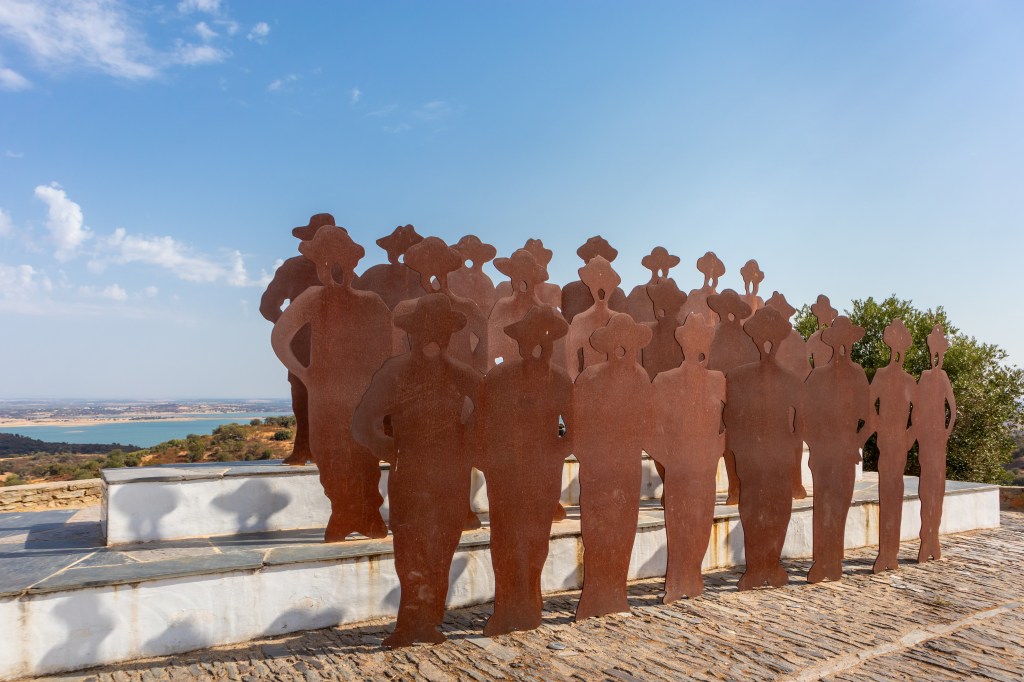
Se virem este vídeo, verem os dois solistas em ação: O ponto, de barba, na primeira fila, canta a primeira estrofe. Depois, o alto, quase escondido na segunda fila, entoa o primeiro verso da segunda estrofe antes do coro (incluindo ambos os solistas) cantarem o resto em uníssono. Este coro é o mesmo que colaborou com Zambujo no vídeo de ontem, O Rancho de Cantadores de Aldeia Nova de São Bento. Neste contexto, um rancho é um grupo folclórico mas a palavra tem mais significados entre os quais “Grupo de pessoas, especialmente em marcha ou em jornada” também descreve o conteúdo deste vídeo!
Quando ouço o cante alentejano, lembro-me sempre do Male Voice Choir (Coro da voz masculina) tradicional do País de Gales. Ambos têm raízes na cultura céltica, ambos nascem entre gente rural em aldeias marginais, longe do capital e ambos são cantados, tradicionalmente, por homens vestidos de roupa domingueira**. No caso do coro galês, isto aconteceu (tanto quanto sei) por preferência, mas em Portugal, a roupa tradicional foi reforçado pela influência conservador do Estado Novo que queria fomentar o património para os seus próprios motivos, mas basta do Estado Novo, já falei a mais daqueles gajos. Arruínam sempre tudo que eles tocam, e não quero associar o cante com o homem que caiu da cadeira.
Apesar das semelhanças superficiais, existem diferenças marcantes. Os galeses harmonizam mais. Não têm os dois solistas e não cantam de chapéu num supermercado. Segundo a Wikipédia, as origens do cante incluem elementos da tradição grega e dos colonizadores árabe.
A página da Wiki fala no seu último paragrafo, da estagnação do cante desde a segunda guerra mundial quando a mecanização da agricultura causou um declínio da tradição de cantar na lavoura. Como resultado o género sobrevive em grupos tradicionais como uma curiosidade ou uma atração turística. Não sou especialista, claro, mas parece-me que a forma não tem tenta flexibilidade como o fado, nem hipótese de se dinamizar por hibridação com outros estilos como aconteceu com o fado nas últimas décadas. E não importa assim tanto. Não precisamos de cante alentejano com um rapper a fazer beats entre as estrofes. Às vezes, podemos deixar a tradição em paz, perfeito no seu próprio nicho.
* AI meu deus, não quero sobrecarregar o texto de definições mas nota bem que “moda” também tem um sentido diferente neste contexto. É uma cantiga!
**Not a word I had come across. It means “relative to Sunday”. So roupa domingueira is your Sunday best! Not that anyone has Sunday best now, it was a dying concept even when I was young but I recognise it as something people had in books and comics written by the generation before!
 Luso
Luso 