I was sent this video by my Brazilian language partner and its a pretty good illustration of the language barrier between the two sides of the atlantic. Note that the Portuguese guy (Caesar Mourão, one of the comedians on the line-up of the comedy festival I mentioned yesterday) understands the tourists because the Portuguese are so used to listening to Brazilian “Novelas” but they have no idea what he’s on about.
Tag: Video
Possessive Pronouns and Round Skirts
So I’m trying to sort out some basic grammar that I probably should have worked out a long time ago. To do this, I’ve been working with a different teacher who lives in the UK, simply because I don’t have the skills to be able to even ask the question in Portuguese and I needed someone who would understand me asking in english
Today: What’s the difference between these ways of exressing possession.
- A sua propriedade
- Propriedade sua
- A propriedade dele
It always seems a bit random and I’ve never quite been able to spot a pattern. The third one is the obvious odd one out because it’s the only one that makes it clear that it’s the property of “him”, whereas the others could all be him, her, them, or, if you’re being formal, the person you’re speaking to, so in a way that helps – you could use when you wanted to be very specific about who it belongs to. In practice, I’m told, it’s also used in less formal, spoken situations.
As for the first and second, the answer seems to be simpler than I thought though: it just depends whether you have a definite article in there. If it’s a specific thing: this is his property, it’s “a sua propriedade”, whereas the second quote, which comes from my review of the film Comboio de Sal e Açúcar is about the subject’s attitude: he treated the passengers as his property.
There are some examples given here on Ciberdúvidas:
- O livro é de um amigo meu [indefinite article: it belongs to a friend of mine]
- O livro é do meu amigo [definite article: it belongs to my friend]
Now, here’s the shock though: I had been thinking of these words – seu, meu, minha, etc as possessive pronouns, but they’re not, they’re determinantes – more like adjectives, really: In “o meu amigo”, “amigo” is the noun and “meu” just determines whose friend he is. Meu can also be a possessive pronoun but only when it stands in for the noun.
“O Donald, as suas mãos são pequenas; as minhas são grandes”. In this sentence, “suas” is another determinant but “minhas” is a possessive pronoun because I’m using it instead of saying the whole noun again “as minhas maãos”. In english it’s doing the job of “mine” instead of just “my”. There are some other examples, explained in portuguese on Ciberdúvidas.
OK, simple, I can understand a couple of simple rules like that. I guess, though, it’s like most rules in english: you obey them only insofar as you can do so without writing something ugly. So I cam across a counter-example within about ten minutes of this conversation happening in the song “Saia Rodada” by Carminho. I’ve pasted the lyrics below and highlighted forms that match in green and the one that doesn’t in red.
Vesti a saia rodada
P’r’ apimentar a chegada
Do meu amor
No mural postei as bodas
Rezei nas capelas todas
Pelo meu amor
Vem lá de longe da cidade e tem
Os olhos rasos de saudade em mim
E eu mando-lhe beijos e recados em retratos meus
Pensa em casar no fim do verão que vem
Antes pudesse o verão não mais ter fim
Que eu estou tão nervosa com esta coisa do casar
Meu Deus
Vesti a saia rodada
P’r’ apimentar a chegada
Do meu amor
No mural postei as bodas
Rezei nas capelas todas
Pelo meu amor
Por tantas vezes pensei eu também
Sair daqui atrás dos braços seus
De cabeça ao vento e a duvidar o que faz ele por lá
São os ciúmes que a saudade tem
E se aos ciúmes eu já disse adeus
Hoje mato inteiras as saudades que o rapaz me dá
(source)
I think all that’s happening here is that she’s stretched the normal rules to make the rhyme with “adeus” work in the next triplet. I’ve added it to my list of questions for next time.
Anyway, as a side note, I wondered what a “saia rodada” was anyway. A round skirt? I googled it and saw a load of pictures of… well… skirts. So I asked online and was told it would all make sense if I searched for videos of “saia rodada danca” but it didn’t work because there’s an insupportable brasilian rock band called saia rodada and this is the first video I got.
But then a portuguese guy mentioned that it was “folclorico” so I added that into my search and had more luck. Apparently it’s a long, swishy skirt that is used in a lot of dances because of the way it moves. Here are some people demonstrating. Tag yourself, I’m the guy in the grey trousers.
WHew! It’s been a long time since I wrote this much about grammar and general musings. Well, come for the determinantes possessivos, stay for the grupo folclórico.
Latest Monkey/Branch News
I came across another reference to monkeys and branches in Bruno Nogueira’s Mata Bicho podcast: “Cada macaco no seu galho”. It reminded me of the one I mentioned a few weeks back. I guess Portuguese speakers must really like monkeys because I can think of at least two other monkey-related expressoes: “Vai pentear macacos” and “macaquinhos na cabeça” (here). This new one means “Each monkey on his own branch” or, less literally “people should mind their own business”.
It’s mentioned in a song here (#braziliandialectklaxon)
By the way, I always thought Mata Bicho meant something like “bug killer”, which it kinda does but it’s an expression that can mean a tip (in some places) or a little drink taken at breakfast time. So I guess “hair of the dog” then…?
Bacalhau to the Future
 Nuno Markl’s comedy series, “1986 A Série” finally dropped today on RTP1. I’ve been excited about it since August last year and I think it might be the first time I’ve watched something in normal TV time instead of on Netflix or DVD since… well, since 1986. I’m not a big TV watcher. I won’t bullshit you by pretending I understood every word but it’s sufficiently close to my era (I was 17 in 1986) that I could relate to the characters, and now I’m past the stage of oohing and ahhing at all the songs, books, films etc crammed into every frame, I think I’ll go back and have another look, armed with the Wikipedia pages about Mário Soares and the Eleições Presidencias de 1986, which form the backdrop to the teenage kicks. If you want to watch it, it’s still up on RTP’s website but I’ve no idea how long it’ll last.
Two Songs Don’t Make A Right
Having given Eurovision one of its best songs ever in 2017, Portugal seems to have gone for the “My Lovely Horse” option this year, with the blandest, pappiest piece of talent-show fodder ever.
Ministério do Tempo
Here’s an interesting-looking thing. It’s a sort of historical-based series. Time-travel involved? Not sure exactly but it seems to have a good reputation so I plan on taking a peek this weekend.
Fado Bicha
I heard this um… bloke? To be honest, I don’t know, but let’s say bloke because beard. So as I was saying, I heard this bloke on Cinco Para Meia-Noite and I think he has a really interesting voice, quite different from most fadistas, and yet, you know, the same. I can’t seem to find any music online other than on Youtube but I’m definitely adding a few videos to my PT Music playlist.
O Acordo Ortográfica
I’ve been meaning to write an article about the 1990 Acordo Ortográfica da Língua Portuguesafor a while now but never really felt up to it. There’s a really good video on YouTube though, of Portuguese humorist Ricardo Araújo Pereira, author of Reaccionário Com Dois Cês in conversation with Brazilian Renaissance man Gregório Duvivier, that makes a pretty good introduction to what it is, why it’s needed and why it falls miserably short. It’s a little hard to follow in places but not as bad as I expected. Both speak pretty clearly and I found I could laugh at the jokes as well as simply learning, which was a nice bonus.
#Youtubing
#uncorrectedPortugueseKlaxon
Ainda continuo gravar videos sobre livros que já li, no Youtube. A minha esposa – e a minha professora – zombam-me.

– Como corre a sua vida como Youtuber? perguntam eles, e eu rio ligeiramente e acrescento-os à lista de pessoas com que não falo quando o canal estiver patrocinado por Fnac.pt e eu for rico e famoso.
Não, quando jantar com a Zoella e o Pewdie Pie e o Owen Jones, não vou convidar-los acompanhar-me.
Não pretendo publicar todos os vídeos aqui, mas o canal tem um novo nome:
28 Days Leitor
Vem visitar se quiseres! O exercício é muito útil, e ando a aprender muito.
Comentário: Europe in Autumn
I finally got around to the actual review of this book instead of just waving it around while talking about other books. I think I made fewer mistakes this time, and fewer pauses too. I’m not quite ready to participate in the Portuguese version of “Just a Minute”, but I think the process is helping my speaking ability somewhat at least… Although, an hour after I made it I had a lesson and was an incoherent mess, so on the other hand, maybe not…
I’ve put a written version (not a transcript but it hits the same points in the same order so it’s pretty close) down below, which has been scrubbed clean of errors (thanks Rubens and Sophia for the help) and there’s a fuller, english version on Goodreads.
Este livro foi escrito por um homem que já conheci através do Twitter. Por isso, fiquei preocupado, caso descobrisse que era um LRTT*. Mas, por acaso não era nada disso: felizmente, o senhor Hutchinson escreve muito bem. Que alívio! Não precisei de me preocupar: os comentários nos jornais são maioritariamente positivos. Foi escrito uns anos, atrás antes do brexit. Este facto será importante como vamos ver daqui a pouco. É um thriller com elementos fortes de ficção especulativa ou seja ficção científica, e de espionagem e com muito humor – algo incomum no género de thrillers. Para resumir: há algo coisa para todos!
O enredo do romance passa-se na Europa do futuro próximo. A União Europeia tem-se desmoronado, com poucos países restantes. Ironicamente, a Inglaterra (mas não a Escócia) é um deles. É quase o oposto da verdade.Isso significa que, nesta realidade alternativa, Nigel Farage, Michael Gove e Boris Johnson seriam muito tristes, ou melhor, seriam prisioneiros na Torre de Londres que é nada mais do que eles merecem.
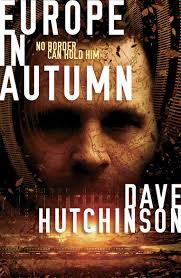 Os restantes da união têm-se desenvolvido a um caos. Regiões, cidades ou até parques nacionais, tornaram-se pequenos estados, que se chamam “polities”, com os seus próprios governos, leis, passaportes e exércitos. O continente é entrelaçado por redes de espiões e criminosos implacáveis. O herói é um daqueles espiões, membro duma empresa privada que faz varias espécies de coisas sombreadas. Não vou dar spoilers mas é muito entusiasmante e perto do fim, durante as últimas quarenta ou cinquenta páginas, ele e os seus companheiros descobrem uma nova conspiração mais profunda, que prepara o resto da trilogia. Mas tive sentimentos mistos sobre isto, porque mudou a atmosfera do livro. A torção do enredo tem a ver com algo quase sobrenatural, que se encaixa melhor no género de fantasia fiquei ligeiramente chateado mas é provável que faça mais sentido no contexto da trilogia. Vou ver porque vou encomendar os outros livros.
*=Livro Realmente Terrível do Twitter.
 Luso
Luso 