Posted in Portuguese

Weird Subjunctive

Lazily recycling a question I asked in another place and turning it into a blog post to help me remember
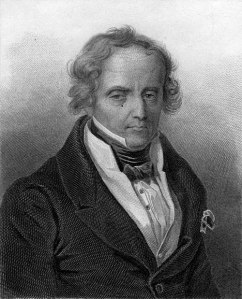
Xavier de Maistre, author of “Voyage autour de ma chambre” approves of this blog post

Logo na primeira página do meu livro (Viagens Na Minha Terra de Almeida Garrett) o autor coloca a seguinte frase.
Mas com este clima, com este ar que Deus nos deu, onde a laranjeira cresce na horta, e o mato é de murta, o próprio Xavier de Maistre, que aqui escrevesse, ao menos ia até o quintal
Graças ao Google, já sei o que é murta* e quem foi Xavier de Maistre mas ainda não faço ideia de porque o autor escolheu o imperfeito do conjuntivo neste contexto. Podes explicar sff?

Segundo os portugueses (e um brasileiro) que responderam, Garrett está a construir uma situação hipotética. “Que”, neste contexto, está a funcionar como “se” ou “caso”, portanto precisamos do conjuntivo.

Noutras palavras, Embora Xavier de Maistre tivesse escrito o seu livro dentro do quarto, se estivesse em Lisboa nos dias do Garrett, iria ao quintal dar uma vista de olhos à beleza das laranjeiras e a murta a florescer nos campos**.

*It’s a plant – a kind of myrtle – if you want to know.

**Thanks to u/yangruoang for paraphrasing the sentence: I have paraphrased his/her paraphrase as an exercise for myself, and if I have introduced any errors, they’re my own, but basically rewriting it helped me understand the whole thing a lot better
Posted in Portuguese

Subjunctive Snooker

Eis uma questão do caderno de exercícios do “Português em Foco”:

Selecione a resposta correta, de acordo com as informações fornecida pela frase

A. Mal estivessem na praia, eles faziam surf.

  1. Eles fizeram surf.
  2. Não sabemos se eles fizeram surf.
  3. Eles não fizeram surf.

Tive de pedir ajuda da gente simpática do r/portuguese para entender porque é que a resposta dada é 2 mas, na verdade, não é assim tão difícil. Fiquei confuso porque a ação tem lugar no passado. Se o narrador falasse sobre eventos um tempo no futuro teria dito “quando estiverem” (when they get to the beach) e não haveria qualquer dúvida de que o narrador não sabia o resultado pois ainda não aconteceu! Mas “estivessem” é pretérito imperfeito, certo? Portanto isto já aconteceu? Sim, mas isso não significa que sabemos a história inteira. Não significa “as soon as they were at the beach they went surfing” (mal estiveram na praia…), mas sim “When they got to the beach they were going to go surfing”. Ou seja, o falante está a descrever os planos que o grupo tinham feito antes de partir, mas não tem a certeza de se vieram a pôr os planos em prática.

Posted in English

Subjunctive Words of Wisdom

I liked what this fella had to say about subjunctives in his recent video. It’s a subject we anglophones don’t really use much, but most latin languages make a much bigger deal of it. I have read a few french books and it definitely doesn’t get as much of an airing in that language as it does in portuguese, but I think the principles and the rationale behind it carries across between languages, so the points he makes here about french, spanish and italian still hold, I think. I won’t try and summarise them – if you’re reading this and you struggling to put some junc in your trunc, have a look for yourself.

Posted in Portuguese

Nossa!

Porque é que estou a queixar-me agora?

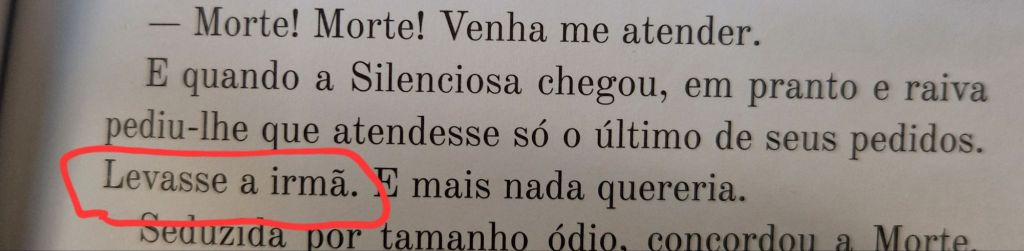
É que… Peguei neste livro porque apeteceu-me ler algo fácil, mas embora seja um conjunto de contos infantis, com 94 páginas e muitas ilustrações, está cheio de palavras desconhecidas e gramática emaranhada.

Ora bem, segundo todos os livros que já estudei, a frase “Levasse a irmã” não deve* existir, mas olha, lá está na página. Que raios? Pensei muito e acho que percebo. A autora está a “reciclar” a gramática da frase anterior: “pediu-lhe que atendesse (…) o último (…) pedido” e depois, esclarecendo a ação implicada, podia ter dito “ou seja, pediu-lhe que levasse a irmã” mas ela não queria repetir as primeiras palavras, portanto limitou-se a acrescentar as palavras reveladoras.

Dito isso, acho que seria melhor se a frase fosse separado da frase anterior com uma vírgula em vez de um ponto final, mas não sou o rei da gramática e talvez esteja completamente errado!

*I originally wrote “deve não existir”, trying to imitate a sort of modern, affected way of emphasising the strength of feeling in english by shifting the “not” to another part of the sentence: “It needs to not exist” instead of “it doesn’t need to exist”. This seems not to be a thing in portuguese. Oh well, it was worth a try.

Posted in Portuguese

Subjunctives

Random witterings based on the subjunctive exercises in the C1 course. Notes below. Thanks to Cataphract for correcting the original

Ainda que tenha tentado muitas vezes entender os tempos verbais mais… Profissionais, digamos assim, deste* idioma, continuo confuso. Já fiz um exercício** hoje de manhã, chumbei (quarenta e dois por cento, que desgraça!) e fiz novamente. Apesar de ter revisto as respostas todas, não conseguiria passar, nem que*** a nota das escolhas múltiplas tivesse aumentado, porque as respostas escritas permaneceram cem por cento erradas (o site não mostra exemplos correctos deste tipo de questão, o que não é muito prestável!).

Decidi deixar o exercício para amanhã. Entretanto, se revir**** as informações sobre os significados, e os graus de probabilidade das várias estruturas (“mesmo que”, “caso” e os outros marcadores que introduzem o modo conjuntivo), talvez fique mais capaz de lidar com este curso do caraças!

*=idioma is one of those Greek derived words that ends in a but is still masculine.

**=for some reason my spellchecker got it into its head that this word was spelled with an s so it kept changing it. Luckily in Android there’s a way of holding down your thumb on a predicted word and telling it never to predict that again, so I’ve done that now.

***=This pair of words, “nem que” comes up a fair bit in this exercise and I hadn’t really been conscious of it before. It means “even if” and its one of those constructions that needs a subjunctive verb.

****=review. I wrote “rever” which os the infinitive but this is a future subjunctive and it looks like the infinitive of a totally different verb!

Posted in Portuguese

Tense, Nervous Headache

Examples of high-octane verb usage based on a C1 exercise that I really screwed up.

Se ela não chegar, depois telefono-lhe.

Lamento que o seu filho não tenha ido à escola a horas na semana passada.

Não acho que a minha filha queira ir à escola hoje.

Caso ela venha tarde, a mãe dela preocupa-se.

Se ela vier tarde, a mãe dela preocupar-se-ás.

Quando for para a universidade ela terá passado os exames escolares todos.

Oxalá ele veja o filme francês que o professor deu como tpc mas acho que não está nada interessado.

Vou perguntar-lhe como se diz “LOL” em português

Se dissesses aos jovens de hoje que vivias num caixote sem água nem comida em* criança eles nunca acreditariam.

Se me disseres que estás a pensar em estudar apicultura, é garantido que faço um trocadilho qualquer sobre “exames de enxames”.

Há quem traga uma bandeira do UE para o concerto..

Ainda não sei se eles touxeram a amiga da filha com eles.

Apesar de ele já ter feito muitos pudins o de ontem não foi um êxito.

Será melhor se vocês beberem um copo de vinho e se esquecerem de tudo.

Diga eu ou que disser**, não me desatem deste mastro.

Ainda que ela ouça mal, está sempre ao pé de mim de cada vez que abro um saco de ração***.

Lamentamos que o senhor não tivesse pedido ajuda quando a cobra entrou no quarto.

Não repitas o que o pai disse na sala de aula.

Falas tão baixo. Podes repetir?

Ainda não faço ideia de quando ela parte para Edimburgo.

A picture that has nothing to do with Portuguese verb conjugations.
Tense nervous headache? Try conjugatin

*=em, not como. In child, not as a child.

**=I managed to get this doubly-wrong. I wrote “diga ou que eu dizer”

***=I wrote “lata de ração” but ração is dried food. Tinned cat/dog food is “comida de gato/cão”

Posted in English, Portuguese

Se, Se, Se What You Want, But Don’t Play Games With Conjugation

I’ve been reading “Doze Segredos Da Língua Portuguesa” with a particular eye to reflexive verbs and verbs with impersonal pronouns, following on from discussions I’ve been having with a portuguese teacher resident in britain, about some of the more complicated aspects of the language that I’m not able adequately to describe to my usual portuguese teacher owing to my inability to express the question in portuguese! The specific point of grammar is the one described in a blog post a few months back.

Anyway, here are some examples that jumped out at me during chapter:

Diga-se o que se disser, a verdade é que os portugueses desprezam activamente tal parente, que, coitado, não merece tal sorte. [2x subjunctive tenses in the passove voices – bringing the grammatical thunder: means something like “whatever might be said, it’s true that the portuguese don’t really care about such a parent that hasn’t deserved such a fate”]

Ora a identidade vai alimentar-se daquilo que distingue os vários povos uns dos outros [True reflexive verb ir+inf: means something like “Now, identity will always feed on that which distinguishes groups of people from one another”]

Que se fale galego na Galiza e espanhol no mundo que isso do português não pode interessar a espanhol que se preze. [2x passive voice present subjunctive: means something like “because galician is spoken in galicia and spanish in the world, the question of portuguese isn’t interesting to a spanard who knows his own worth” but I’m not sure – in fact I’m not even sure I didn’t make a transcription error when I wrote it down!]

…o facto de o Brasil se ter mantido como território unido… [manter used reflexively: means something like “…the fact of brazil having stayed as a united territory…”]

Muitas pessoas que se divertem a apontar os erros dos outros estão a proteger uma ideia de pureza associada a ideia de língua nacional, que deve ser protegida como se dum cristal se tratasse. [two reflexive verbs – one presente indicative, the other imperfect subjunctive: Means something like “many people who amuse themselves pointing out other people’s errors are protecting a notion of purity linked to the idea of a national language which must be protected as if it were a crystal”]

Os exemplos acumulam-se [reflexive: means “the examples accumulate”]

Se olharmos para a lista das dez línguas de Portugal que acabámos de ver, apercebemo-nos de uma grande diferença entre as primeiras e as últimas. [aperceber-se is a reflexive verb that means “notice”so…: Means something like  “If we look at the list of the ten languages of Portugal, we notice a big difference between the first and last”]


Posted in English

Desperate Verb Tenses

So I had this exercise to do in a textbook. It was one of these choose-the-right-verb-tense exercises.

“É uma experiência que eu gostava que os meus filhos, um dia, quando ________ (ser) maiores, ______ (poder) experimentar”

I put in “forem” and “poderão” which was wrong but the answers given (“fossem” and “pudessem”) didn’t make any sense since it seemed to be talking about his (young) children in a hypothetical future, not his (grown) children in a remembered past.

There’s a long, detailed answer by Natan on iTalki in response to the query, spanning no fewer than 8 reply boxes.  It’s pretty strong stuff, but if you’re in the mood for a challenge, it’s worth it. Natan is Brazilian but knows the European variant inside out so don’t worry that he’s going to indoctrinate you into transatlantic heresy.

It probably boils down to this though: Portuguese and English can both use these speculative past/present tenses to talk about events in the future. In one possible translation, it comes out as “It is an experience that I’d be happy if my kids, someday, when they’re older, were able to experience”. As you can see not a future tense in sight: You’ve got “I would” (conditional), “they are” (present) and “were” which is either an imperfect indicative or a present subjunctive*. In Portuguese, the first box could be “forem” but “fossem” sounds more natural and there seems to be agreement that the second one can only be “pudesse”, not “poderão” or “poderiam” or anything else.

As the young people say: “I’m shook!”


220px-Desperate_Housewives_at_2008_GLAAD_Awards

*= present subjunctive would be my bet but secretly, I quite like that my language is relaxed enough that I don’t know or – if I’m honest – care which. We’ve always kept our grammar super-simple so as to allow plenty of linguistic brainpower free to invent new pointless synonyms for stuff.

By the way, I originally wrote the title of the iTalki question as “Tempos Verbais Desesperados” which means “Desperate Verb Tenses” which I think sounds pretty good – like a much nerdier version of “Desperate Housewives”. The current title uses “Inesperados” which is what I should have said: “Unexpected Verb Tenses”

Thanks to Natan – and to Sofia and Kamenko for their contributions too.


Posted in Portuguese

A Encontrar o Senhor Samuel Holberry

(mais um texto do ‘Instagram Language Challenge #IGLC’ Gosto de escrever no Instagram mas infelizmente não existem lá estudantes simpáticos que fazem correcções e por isso, fui ao italki) 
🙂 
Não encontrei ninguém hoje além da empregada que me trouxe um prato de peixe e a puré de batata*. Ela anda a aprender Russo. Por isso falámos de línguas e como aprendê-las (ela é fã de Rosetta Stone mas não gosto disso). Claro que não tirei uma fotografia dela porque não sou um psicopata, mas eis uma fotografia duma placa que comemora um herói local, Samuel Holberry que não encontrei mas tomei conhecimento da história dele pela primeira vez. O Holberry foi um activista no movimento que se chama Cartismo cá em Inglaterra. Os cartistas queriam aumentar os direitos do povo para participarem na democracia. De início a campanha estava pacífica mas depois de alguns anos, instigou uma insurgência contra o governo. Foi apanhado e feito prisioneiro até à data da sua morte.
Os seus métodos foram questionáveis mas hoje em dia, é bom que possamos** lembrar as pessoas que lutaram contra a tirania, e pela liberdade do povo inteiro.

notebook_image_826344

*=I originally wrote “batatas esmagadas” which is literally that, but it’s wrong. I think the people correcting the text thought I meant “batatas a murro” which is a kind of roast potato that has been squished, and it sounds pretty nice to me.

**=more natural with a personal infinitive, as “é bom podermos” but let’s leave it like this because I’m doing a lot of subjunctives this week


Thanks to Gustavo, Larissa, Sofia and Rubens for help with the corrections