In my effort to step up my language learning and get it on a war footing again (only about two months left till the exams FFS!) I have joined a reading challenge called Hot Summer Reading, which is run by a book blogger I follow. I feel slightly out of place in it since the other participants all seem to be young, portuguese book bloggers who arrange their beautifully-colourful books like displays of fruit, and Instagram them to near perfection. My entries are a bit dingy by comparison. The idea is I’ll read two Portuguese books (“O Principezinho” and “O Mandarim”) and one in English (“The Puppet”) and at the end I’ll write a post or record a youtube video, describing them all, in Portuguese, of course.
There are some other challenges but I’m not sure I can fit those in on top of everything else. They mainly consist of making lists of favourite books, but since I’ve only read a handful of Portuguese books I don’t have much to say about those and it seems a bit obtuse to recommend a long list of books in English to a group of portuguese people, so I’ll just stick with doing it in my own way.
Escrevi um comentário sobre “Do Primeiro Quilómetro à Maratona” de Jéssica Augusto (*=”Revista” ou “comentário”? Qual é melhor neste contexto*?)
Gosto muito este livro. Já sou corredor e estou a aprender português. Então, pensei que um livro sobre o meu desporto seria uma boa selecção.
A Jéssica descreve o progresso duma atleta, desde o sofá, passando pelos primeiros quilómetros até as provas mais longas – incluindo a famosa Maratona (26.2 Milhas). Há muitos conselhos sobre o aquecimento, o treino, a nutrição e a motivação.
Eu recomendo este livro a todos aqueles que querem começar a correr
Thanks very much to Paulo and Fernanda for their help in correcting this text when it first appeared on iTalki.
*= Fernanda offered the opinion that in this context “Commentário” or “apreciação” would be the best word for a book review online. A literary criticism would be a different matter. Revista is a false friend. I listen to a podcast called “revista de Semana” which I thought meant “Review of the Week” which is sort-of-correct but not a review in the sense of a book review. It’s a little more formal and bureaucratic than that, and it’s used as the title of some magazines. For a fuller description, look here.
Hoje em dia, ando também ocupado. No meu trabalho ando todo o dia para cá e para lá. Onde volto para casa, tenho de fazer tarefas domésticas e depois, de certeza que devo estudar Português. Talvez, se tiver tempo livre, vou sair para ir dar uma corrida ao longo do rio, mas falta-me de ter tempo para desfrutar dum livro bom.
O meu romance favorito é “The Code of the Woosters” (“O Codigo dos Wooster”) de P G Wodehouse. É a história dum homem jovem de Londres que se chama Bertie Wooster e o seu empregado, Jeeves. No início do romance, a sua tia pede-lhe (hm… vamos aos factos: ela ordenou-lhe!) para ir a uma loja para zombar a um jarro de leite de prata. Enquanto zomba, encontra um magistrado, Watkyn Bassett e o seu amigo, Roderick Spode, um político ambicioso, patrão dos “calções negros” que quer ser ditador da Inglaterra. De alguma maneira, Bertie acidentalmente rouba o jarro e os dois homens correm atrás dele.
Assim começa uma historia louca. Tenho lido-o três vezes, mais ou menos.
Agora, estou a ler um livro sobre os ingleses dum escritor português e um livro sobre os portugueses dum escritor inglês, mas leio muito devagar porque ando também muito ocupado.
Once again, this is ably translated by my teacher, Sophia. There was some confusion about the meanings of some of the words, because going to a shop to “sneer at a silver cow creamer” is not normal behaviour, so better words were suggested. As I explained (and there are a couple of corrections in this too):
Hm, talvez “zombar” não seja correcto. Não é no meu dicionário. É uma palavra brasileira? Todavia, acho que não quer dizer “roubar”. Pode ser “mofar de”. A tia esperou que Bertie fizesse troça dele e afirmou que o jarro é “holandês moderno”, o lojista crê que não se vale muito e venderia-o ao seu marido mais barato.
So once you’ve picked your book, what can you do with it? Well, as I see it, there are three styles of reading in another language, and I vary them depending on what I’m reading and what mood I’m in:
Slow Reading
This is the hardcore, grind-through-it-with-a-dictionary option. The aim is to translate every word and understand every sentence to know exactly what is being said and what tense it’s being said in. You’ll need a good dictionary for this of course, and you’ll need a lot of patience, usually, or at least you will if your vocabulary is as pitifully limited as mine is.
If you are a fan of kindles, this method becomes a lot easier because of course it has a built-in dictionary so you can just highlight the word and it’ll tell you the meaning. I’m not a fan of Kindles but I’ve used this and I can see the attraction.
Fast Reading
The aim with this one is only to practice your accent and your reading skills: read the text out loud and don’t worry too much whether or not you can understand it. Have someone listen to you and correct your pronunciation. Obviously the drawback of doing this with a book you’re actually trying to follow is that it become a black hole in the narrative, and you’ll have to go back and read it properly if you want to retain your grip on the plot, but if you’re reading a book of short texts like the running manual I mentioned in part 1, it won’t matter too much if you just read one section for phonetics, especially if it’s covering something you already know.
Half-and-Half Reading
I saved the best for last. I sometimes like to read the text at a sort of half-and-half pace, without looking up any of the words, but slow enough that I can follow most of what is being said. I use it as practice for understanding the language as a whole, following enough of what’s being said to draw out the general gist. I only really use a dictionary if there is one word that comes up over and over again, and seems key to the text, but other than that I just skip over the gaps in my understanding. It’s a bit like watching actors on stage under a strobe light. There are gaps in what you can see, but your mind fills it in. I don’t think I could read a whole novel like this, but at times it can be quite thrilling and a good alternative to the hard work of looking up every unfamiliar word, and it forces you to think of words in their wider context rather than as individual dictionary-entries. In short, it’s the nearest thing I can really get to “Thinking in Portuguese” producing a stream of language and trying to process it without really having time to translate it all.
Want to know more? If you’ve read this post and the preceding one and you are hungry for even more reading tips, there’s an article on FI3M about reading that has some interesting tips you could look at. Have a look here. And when you’re feeling suitably inspired, go and find out…
Where to Get Books in Portuguese
Amazon have a few of course, but they’re gits who don’t pay their taxes or their workers. Foyles has a better selection and, if you’re in the UK they’re pretty much just as fast
I like reading, and reading in Portuguese seemed like a good way to increase my vocabulary, but do you need to be fluent to read a whole book? I mean, there are a lot of words in a book, right? Well, no is the short answer. The trick is to think about what kind of book you want to read, and to have a flexible approach to how you read. Here are a few thoughts. Here are a few thoughts about different types of book.
Children’s Books
Books Like “Spot’s First Walk” (in Portuguese “O Primeiro Passeio Do Bolinha“) or “We’re Going on a Bear Hunt” (“Vamos à Caça do Urso“) are a good way for children to learn, for sure, because they have a lot of pictures, which not only makes them more interesting, but also give valuable context to help children (and you!) crack the code of the words and their meanings. There’s also a lot of repetition, which can be helpful. They are a bit limited though. In an average children’s book you’re only really getting a few dozen words, so you will probably want to move on to something a bit meatier fairly soon.
Comics and Graphic Novels
Now we’re talking! Comics retain the main benefit of children’s books – the illustrations – but they tend to be longer and have more variety in subject matter, meaning you can read horror stories, comedies or adventure stories this way. When I was learning French at school I cribbed a lot of good words and phrases from Tintin and Asterix comics, and I have continued that habit in Portuguese. Now, there are those who would tell you that Asterix books are children’s books and belong in the previous section. These people are fools and don’t know what they’re talking about. I’m pretty sure Goscinny and Uderzo only started writing the books as a gift to language-learners the world over.
I’ve really been enjoying the Walking Dead series in Portuguese. The european portuguese versions are easy enough to follow but be careful because there are some brazilian translations out there too, including on Kindle (serves me right for trying to read a comic on a Kindle, I suppose)
Novels You’ve Read in English
This can be a pretty good line of attack. You’ve read the book so you know the story and hopefully there won’t be too many surprises and that will save you a few trips to the dictionary. Be careful though: one of the unhappiest reading experiences I had was trying to read P G Wodehouse in Portuguese. I love P G Wodehouse, but what I like best is his playful use of language, and of course that doesn’t survive being translated slowly from Portuguese. It was a complete bust and I stopped after a couple of pages. Likewise, Harry Potter and the Philosopher’s Stone is a book I enjoyed but I’ve seen the movie too and I found myself getting bored quite early on. Matadouro Cinco (Slaughterhouse 5) by Kurt Vonnegut, the first book I managed to finish in Portuguese, is another favourite book, but it’s a novel of ideas and I hadn’t read it for years and years, so it was easy to follow along but I still had a few nice surprises along the way.
New Novels
Why not? You’ll have far fewer clues along the way, so it’ll be tougher going, but if you feel up to it, it might be a fun thing to do, and just as exciting as reading any other new novel. Just make it a good one.
Non-Fiction Books
Reading a basic introductory book about a subject you enjoy can be a very good way of starting out in reading. I recently finished “Do Primeiro Quilómetro à Maratona” (“From the First Kilometre to the Marathon”) by Jéssica Augusto. It’s a running book, and I’m a runner, so it had a few advantages:
I was familiar with the jargon so I could get a lot of words from context.
I learned a lot of words that I can use in my everyday life when discussing my interests
I actually learned some new things about running too
It’s broken down into easy, manageable sections that I could read in a lunch-hour without having to worry about following the thread of a novel
Non-fiction can cover a variety of topics, of course, from car-maintenance to three-volume histories of the world, so maybe this section needs to be broken down more, but I haven’t tried to read Das Kapital or “Eats, Shoots and Leaves” (hm, what would that be? “Come, Tire e Parte” I suppose, but I bet there isn’t a translation) so I can’t speak with much authority.
Classics From the Language You’re Learning
I have shied away from this so far but it is definitely on my list of things to do when I am a bit stronger in the language because it’s a good way of getting to know more about the culture as well as the language. Are the two even separable? Discuss.
In Portuguese, I think the big four (as far as my limited understanding goes) would be
Luís Vaz De Camões, author of “Os Lusíadas“, and very much the Portuguese equivalent of – say, Shakespeare, Dante or Cervantes. If that sounds interesting but daunting, there’s a children’s version you could try. There’s even a sort of graphic novel version but it’s brazilian and I can only find it in ebook format.
Fernando Pessoa, author of The Book of Disquiet (O Livro Do Desassossego), who wrote as four different people, any of whom, on their own, could rank among the best poets in Europe.
Eça de Queirós, author of “Os Maias“. He isn’t well known outside of Portugal these days, as far as I know, but he certainly was once . I just looked at his Wikipedia page, and it says that Zola once regarded him as greater than Flaubert, which is pretty high praise.
Jose Saramago, author of Blindness (O Ensaio Sobre Cegueira), among many others, and a recent winner of the Nobel Prize for Literature.
I’m definitely going to read all four eventually, but I’ll stick to the poems of Pessoa and the novels of Saramago at first. E de Q can wait a while, and Camões… well, I don’t know that I’ll ever be up to reading his stuff, I’m afraid. As for The Book of Disquiet, I believe it’s quite existentialist, so I am probably going to wuss out and read it in English. There are braver souls out there though, and there’s a guy on Memrise who has made a course based on new vocabulary he has learned by dictionarying his way through it.
I have some other books written by Portuguese writers too, like “Bichos)” (“Beasts”) by Miguel Torga and Bifes Mal Passados by João Magueijo, and m’lovely wife has a lot more. If there are any Portuguese people reading this, I’d love to hear your suggestions for other books to try.
 Escrevi um comentário sobre “

 comics, and I have continued that habit in Portuguese. Now, there are those who would tell you that Asterix books are children’s books and belong in the previous section. These people are fools and don’t know what they’re talking about. I’m pretty sure Goscinny and Uderzo only started writing the books as a gift to language-learners the world over.
 is a book I enjoyed but I’ve seen the movie too and I found myself getting bored quite early on.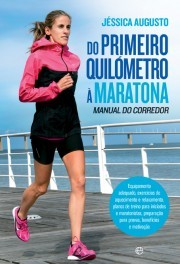
 “, and very much the Portuguese equivalent of – say, Shakespeare, Dante or Cervantes. If that sounds interesting but daunting, there’s a
  (
( ), who wrote as four different people, any of whom, on their own, could rank among the best poets in Europe.
 “. He isn’t well known outside of Portugal these days, as far as I know, but he certainly was once . I just looked at his Wikipedia page, and it says that Zola once regarded him as greater than Flaubert, which is pretty high praise.
 (
(
 ” (“Beasts”) by Miguel Torga and
  by João Magueijo, and m’lovely wife has a lot more. If there are any Portuguese people reading this, I’d love to hear your suggestions for other books to try.
 Luso
Luso 
