Tag: piadas secas


Anatomy of a Dad Joke
My plot to demoralise the Portuguese Republic by inflicting terrible puns on its citizens until they are unable to function continues apace. Here’s one I did yesterday – with a translation and explanation below.
Fui expulso da Sociedade Geográfica por ter insistido que o Terramoto de 1755 foi causado por moluscos marinhos. A partir daí, os sócios recusaram de falar comigo.
Foi um ostrasismo.
So the translation is:
I was expelled from the Geographical Society for insisting that the great earthquake of 1755 was caused by marine molluscs. From then on, the other members refused to speak to me.
It was an ostracism
It’s probably obvious *where* the pun is. Ostracism is the word that sticks out as unusual. So why is it meant to be funny? Ostracismo is supposed to be spelled with a C, not an S, as I’ve written it. Ostra means oyster and Sismo is another word for earthquake. So… Ostra Sismo.

I’m Quite Pleased With This One
My Portuguese twitter account in action making terrible dad-jokes
The structure of the joke is borrowed from O Caderno Das Piadas Secas. It’s equivalent to the “What do you call a….” format in English. What I’m trying to say – and I’ve no idea if it works – is “4 militants killed in a shipwreck caused by a bazooka being fired by mistake. What’s the country?” and then the punchline is Afogarnistão (Afeganistão =Afghanistan obviously and afogar =drown)
Piadas de Tiozão
Apparently piadas de tiozão (“big uncle jokes) are what Brazilians call dad jokes. Older subscribers who have endured three or more years of this blog (I raise a glass of Licor de Beirão in your honour) may remember that the European equivalent is “Piada Seca“
I inflicted two in the world today.
Como se chama um cantor que tem muita sede?
Justin Beber
Como se chama um cantor que tem um leque e um tambor?
Justin Tamborleque
Her Name Was Lula, She Was a Shoegirl
Another joke from the Caderno that I didn’t get at the time but have since had explained to me
Estão um pargo e uma lula a conduzir e o pargo ultrapassa a lula de maneira brusca. Vira-se a lula:
-Tás pargo, pá?
-Calula
A Lula is a squid (I knew that) and a pargo (well, o pargo, but you know what I mean) is a red snapper (I didn’t know that but guessed it some kind of marine creature). And the unpunned version of the dialogue would be
-‘Tás parvo, pá?
-Caluda!
or
“Are you stupid, mate?”
“Shut it!”
Thanks to Fernanda for deciphering this fishy confusion for me
Rir and Loathing in as Pages
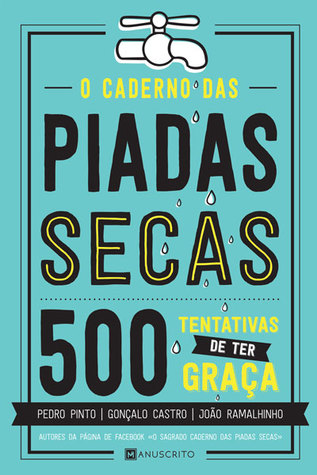
Here are a few thoughts about the jokes in this popular joke book, and a few things I have learned from reading it. I won’t trot out every new word, of course, but I noticed a few patterns and formats that came up again and again, and I thought it was worth noting them down. Being able to tell a good joke in another language is real jedi-level language skill, so I think it’s useful to know what the “rules” are.
Piadas Secas and “Dry Humour”
First of all, “Piadas Secas” doesn’t seem to be the same as what we would call “Dry Humour” (jokes told with a straight face, often with a slightly dark theme), it seems more to be “stale jokes” or perhaps just “old jokes”. Not quite Christmas-cracker level but close. If you’ve ever read a rag mag you’ll know the sort of thing. However, whereas university students tend to be very careful to avoid offence (even in the late eighties when I was at UEA) these are really in Bernard Manning territory, full of fat girl jokes, leper jokes, dumb blonde jokes, knob gags, and a little light racism. I’m not the sort of person who hurls a book across the room for that sort of thing but like… dude, it’s 2018.
Anyway, let’s look at a few examples of the jokes (don’t worry, I’ll stick to the less icky ones because the icky ones are less interesting from a language perspective):
Playground Classics
There were a lot of jokes that were so similar to old chestnuts from my youth that I’d be pretty sure they were translated from english rather than having sprung up independently
-Sabes qual é a diferença entre um rolo de papel higiénico e um cortinado de banheira?-Não, diz-Ah, então foste tu, javardo!
So the format for a “What’s the difference” joke is
Sabes qual é a diferença entre… or just Qual a diferença entre…
followed by Nao, diz (No, tell me)
Javardo, by the way, is like Javali (which comes up in Asterix comics when they are hunting wild boar) and seems to be more-or-less equivalent to “dirty pig”
-Quantos Psicólogos são precisos para mudar uma lâmpada-Uma, mas a lâmpada tem de querer mudar
There were only three lightbulb jokes though. Also, no knock-knock jokes, although I did find this one that’s very similar in format but uses a telephone metaphor instead of a door-knocking one:
Estou? Quem fala?NoéNoé quê?Noé da sua conta
And here’s one that’s basically a recycled “Yo mamma so fat” joke,
Era uma vez uma mulher tão gorda, mas tão gorda que um dia que um dia vestiu-se numa camisola com um “H” e um helicóptero aterrou-lhe em cima
Note the “Era uma vez” at the start, which is equivalent to “There was…”. You can also use “Havia…” to start the joke and introduce your characters. And the “tão gorda, mas tão gorda” (or “tão preguiçoso” or “tão pequeno” or whatever it might be) seems to be a pretty common stand-by in this kind of joke too. Here’s another. Same format but with “Havia” at the front and a different adjective
Havia um homem tão pequeno, tão pequeno que não andava de metro. Andava de centímetro
OK, I’m getting away from playground standards a little bit here, so let’s try some spicy foreign stuff.
Portuguese Wordplay
For me, the most interesting ones were the ones that relied on a specific portuguese puns that required me to work out how the joke worked. I assume these are old chestnuts too, in their own country.
– Boa tarde, tenho uma consulta Duarte Matos– Ai, você deve ser mesmo altruísta vir aqui doar tomates
It hinges on your knowing that “tomates” is the portuguese equivalent of the english “plums” – i.e., slang for testicles. They’re mentioned in quite a few of the jokes.
Here’s another name-based pun:
Uma freira tinha de por supositórios em três bebés. Meteu no primeiro, depois foi atender o telefone e esqueceu-se em qual tinha posto. Qual o nome da freira-Madre Teresa de Cal-cu-tá
I think “Cal-cu-tá” = “Qual cu ‘tá” (“which bum is it?”). This seems to be a reasonably common joke format: describe a person or a film, or something and then ask the person to guess what it is. Here’s another
Um homem entra num bar, pede uma imperial e leva-a para casa. Qual é o filme?
– Roub-ó-copo
Then there’s:
Vira-se o computador grande para o pequeno:– Olha para ti, tao pequeno e já computas
It uses the word “putas” that I think is a bit disrespectful of women but I’m not 100% sure because between Brazil and Portugal there seem to be many words to refer to girls having various shades of meaning that are fine in one country and basically mean “whore” somewhere else, so I’m not sure how offended your maiden aunt would be if you cracked it out at the dinner table. Considered as a straight up pun, though, it’s pretty sound. It also uses “Vira-se… para” , which is a format that’s used quite a lot in these jokes. One character turns to another and says something.
The next one relies on you being able to turn the phonetic sounds of numbers into words.
Quem 60 ao teu lado e 70 por ti, vai certamente rezar 1/3 para arranjar 1/2 de te levar para 1/4 e te dizer-20 comer
I put it on iTalki to ask people to help explain them and it turned out to be a lot ruder than I thought, so I was blushing slightly I decoded it. “Comer” (eat) has sexual connotations which might be the obvious, or might be something more general – I’m not quite sure. It comes up in about 5 jokes.
This one:
Era uma vez uma mulher que partiu a perna ao filho
Não tinha canela para pôr no bolo.
is another I needed iTalki’s help for. I knew “canela” means “cinnamon” but I didn’t know it was also the equivalent of the english word “shin” – a colloquial name for the tibia.
And this one:
-Artur, estás tão diferente!-Eu não sou Artur
isn’t interesting in itself, but I noticed “Artur” comes up many, many times in jokes, so I wondered if it was a stock name in portuguese jokes or just something the author happens to like. Still waiting for iTalki’s verdict on that one.
Another standard Portuguese joke format seems to be one starting “Qual é o cúmulo…” which seems to be roughly equivalent to “what’s the ultimate…”
Qual é o cúmulo de preguicaCasar-se com uma mulher grávida de outro
Pretty low-grade stuff, eh?
OK, here are my two favourite jokes in the whole book
The Cream of the Crop
O que é invisível e cheira a cenoura?O peido do coelho
and
Entra uma mosca num restaurant:
-Qual é o prato do dia?
-Arroz com cocó
-Xiiiii, que nojo, todos os dias arroz!
 Luso
Luso 