Posted in English, Portuguese

Inter-City Rivalry

This song was released a year ago but I haven’t got around to translating it. It was written by Capicua, who says on Instagram that Ana Bacalhau had challenged her to write a sort of “Let’s Call The Whole Thing off” based on different ways of speaking between Lisboa and Porto.

Hm, I thought it would be fun to translate but now I think it might be a struggle. It’s mainly giving words that mean the same in the two cities, so the translations will all be like “cheese is cheese” won’t they? Oh god… oh well, let’s see how it goes.

In the orange corner, representing Lisboa, Ana “I used to be in Deolinda, you know” Bacalhau and in the green corner, representing Porto, Cláudia “I made a forgettable Eurovision song” Pascoal.

Imperial é Fino

PortuguêsIngês
Ah, e quê?
Ah, então?
Ah, o quê?
Que algo se perde na nossa tradução?
Ah, e quê?
Ah, então?
Ah, o quê?
Ó bacalhau, eu vou-te explicar
Hum, conta!
Ah, and what?
Ah, so?
Ah, what?
That something gets lost in our translation
Ah, and what?
Ah, so?
Ah, what?

Hey, Bacalhau, I’m going explain to you
Er… bill please!
Dizes que não tens qualquer sotaque
Isto não é um ataque, mas tens falta de noção
E depois dizes
Pra não ser de surpresa
Eu tufono-te às dezoito pra marcar a reunião
Olha quem fala, tu dizes à minha beira
Com pronúncia da ribeira quando estás ao pé de mim
Dizes pega em vez de toma
Dizes bufa em vez de sopra, olha a lana, gola ialta e coisa assim
You say you don’t have an accent
This isn’t an attack but you’ve no clue
And then you say

For it not to be a surprise,
I should “tuphone” you at 6PM to arrange the meeting
Look who’s talking, you say “à minha beira”
With your ribeira accent when you’re next to me
You say grab instead of take
You say puff instead of blow, “look at IAna
, “gola ialta”* and things like that
Imperial é fino, tênis é sapatilha
Bica é cimbalino, chicla é pastilha
Aloquete é cadeado, e capuz, carapuço
Estrugido é refogado, chapéu de chuva é chuço
Se trolha é pedreiro, bueiro é sarjeta
Sertã é frigideira e cabide é cruzeta
Beer is beer, Trainer is trainer
Espresso is espresso, chewing gum is chewing gum
Padlock is padlock, Hood is hood
Fried is fried, umbrella is umbrella
Stonemason is stonemason, gutter is gutter
Saucepan is saucepan and hatstand is hatstand**
Ah, e quê?
Ah, então?
Ah, o quê?
Que algo se perde na nossa tradução?
Ah, e quê?
Ah, então?
Ah, o quê?
E mais te digo!
Oh pá!
Ah, and what?
Ah, so?
Ah, what?
That something gets lost in our translation
Ah, and what?
Ah, so?
Ah, what?

And another thing
Oh blimey!
Já tu dizes são quaise treuze
E já ouvi várias vezes tira o téni do sófá
O lisboeta come letras
Tira o u pra dizer pôco, diz óviste, é muita lôco
Assim não dá!
Tretas, pra ti mãe tem cinco letras
Dizer cumo é o cúmulo e tu sabes que assim é
Tu dizes testo e eu tampa
Eu digo coxo e tu manco e quando dizes tótil, eu bué
You just say it’s arlmust thorteen
And I’ve heard a few times take your shoe off the sófá
Lisboetas swallow letters
Takes the U away t say pôco, say óviste and very lôco
It’s no good like that
Rubbish! For you, mum has 5 letters
To say “cumo” is the accumulation and you know that’s how it is
You say lid and I say lid
I say lame and you lame and when yiou say tótil***, I say bué
Imperial é fino, tênis é sapatilha
Bica é cimbalino, chicla é pastilha
Aloquete é cadeado, e capuz, carapuço
Estrugido é refugado, chapéu de chuva é chuço
Se trolha é pedreiro, bueiro é sarjeta
Sertã é frigideira e cabide é cruzeta
Beer is beer, Trainer is trainer
Espresso is espresso, chewing gum is chewing gum
Padlock is padlock, Hood is hood
Fried is fried, umbrella is umbrella
Stonemason is stonemason, gutter is gutter
Saucepan is saucepan and hatstand is hatstand
Contigo o tão vira tom, contigo o são vira som
E depois bom vira bão
Pra mim o v vira b, para ti lesboa é com e
Oblá e então?
Ouve, não sou eu que falo torto, toda a gente me entende
Não é meu o defeito
S’eu falo à porto é meu direito e se o teu ouvido é mouco
O meu sotaque é perfeito
Se digo fala bem é pra tu seres meiguinha
Como eu sou também, no meu jeito alfacinha
E quando eu digo “bem” eu tou-te a dizer para “bires”
E eu até te falo bem, só é pena não me ouvires
E quando eu digo vem eu tou-te a dizer para vires
E eu até te falo bem, só é pena não me ouvires
With you, tão becomes tom, with you são becomes som
And then bom becomes bão
With me, the V becomes a B, for you Lesboa is with an E
Oblá so what?
It’s not me that talks weird. Everyone understands
It’s not my problem
If I speak Porto-style, it’s my right
And if your ear is deaf
My accent is perfect
If I say speak properly it’s just to make you more amenable
Like me, with my Alfacinha style
And when I say well, I’m just doing it to make you come to me****
And I speak really well. It’s just a shame you can’t hear me.
And when I say come I’m saying you should come.
And I speak really well. It’s just a shame you can’t hear me.
Ah, e quê?
Ah, então?
Ah, o quê?
Que algo se perde na nossa tradução?
Ah, e quê?
Ah, então?
Ah, o quê?
Imperial é fino, imperial é fino
Imperial é fino, imperial é fino, fino, fino-
Ah, e quê?
Ah, então?
Ah, o quê?
Que algo se perde na nossa tradução?
Ah, e quê?
Ah, então?
Ah, o quê?
Ah, and what?
Ah, so?
Ah, what?
That something gets lost in our translation
Ah, and what?
Ah, so?
Ah, what?

Beer is beer, Beer is beer
Ah, and what?
Ah, so?
Ah, what?
That something gets lost in our translation
Ah, and what?
Ah, so?
Ah, what?

*I couldn’t work out what was going on here so I asked about it on Insta and Capicua herself answered my question! Apparently in Porto if one word ends in A and the next word starts in A, they put an I in between so Olha a IAna = Olha a Ana, Gola Ialta = Gola Alta (a polo neck or turtle neck). I like Portugal. I’m pretty sure an equivalently famous person in Britain wouldn’t take time out to explain linguistic quirks to old farts on Instagram!

**Did somebody say hatstand?

***How have i never seen this word before?

****Not sure about this, My reasoning is that it’s vires (personal infinitive of vir) with the v changed to a b. I don’t know if the next-but-one line confirms or refutes the theory though!

Posted in Portuguese

Estou De Volta

Ai que dia desgastante! Olhem, vou contar uma história mas têm de me prometer não a contar à minha esposa porque ela irá gozar comigo.

Acordei cedo, tomei o desjejum e chamei um táxi. Infelizmente, quando cheguei no aeroporto, enfiei a mão no bolso em busca do meu telemóvel mas não estava lá. Deixei-o no táxi. Entrei em pânico porque ninguém consegue sobreviver sem telemóvel em 2024. Após cinco minutos de não saber o que fazer abordei um grupo de agentes de PSP e expliquei a situação. Ligaram para o telemóvel. O taxista ouviu-o e atendeu e em breve voltou ao aeroporto com o meu dispositivo. Dei-lhe uma gorjeta generosa pelo seu transtorno.

Regra geral, sou um passageiro nervoso mas depois de quase perder o telemóvel, a possibilidade de cair do céu e morrer numa bola de fogo parecia-me menos ameaçador, e o resto da viagem passou-se sem incidentes.

Posted in Portuguese

O Último Dia em Lisboa

Estou muito contente com o número de experiências consegui cumprir durante a minha breve estadia na cidade capital.

Hoje, comecei com um passeio na feira da Ladra. Uau! Não comprei nada mas adorei ver tanto lixo misturado com tesouros escondidos. Até houve um tipo com dois braços de um manequim. Quem é que imagina vai comprar tal coisa?

Absolute legend

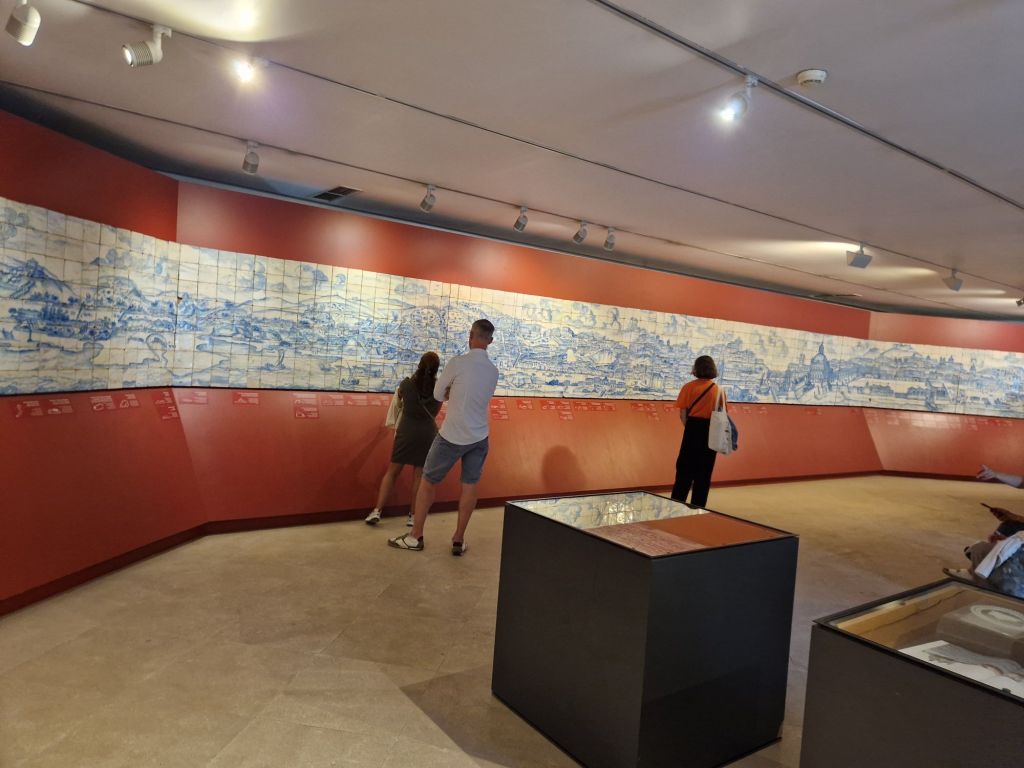
Depois, fui a pé para o Museu Nacional do Azulejo. Sem dúvida é mais impressionante do que o Museu do Fado. Gostei tanto que caminhei na direção certa.

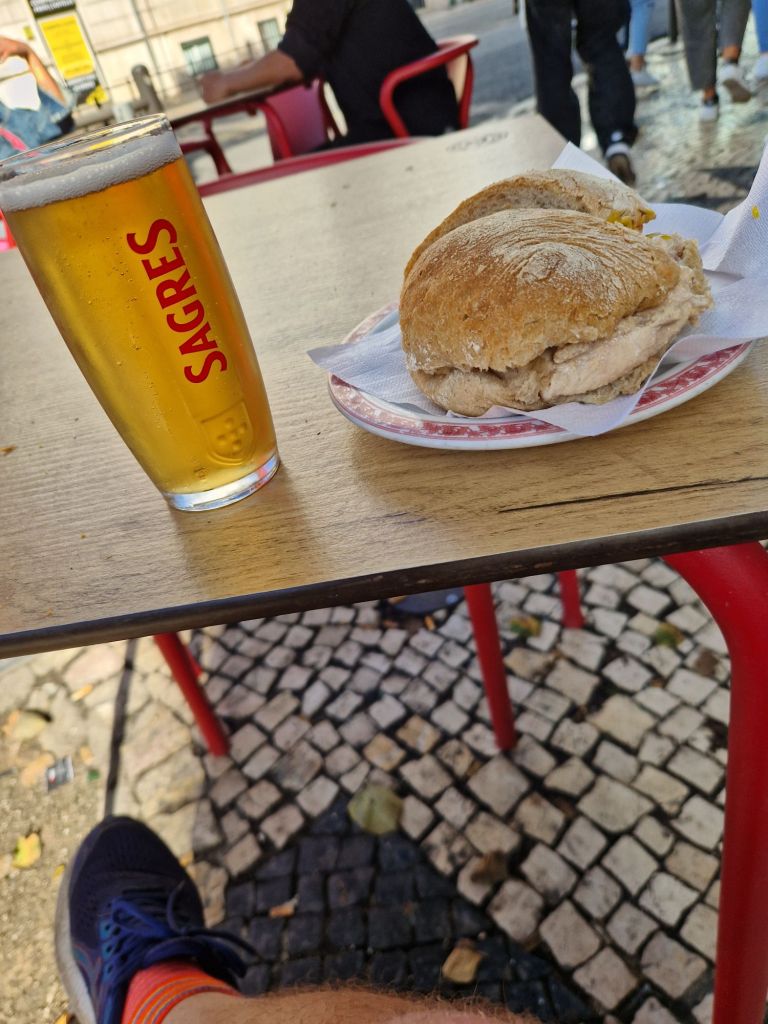
A rota prescrita pelo Google Maps sugeriu uma mudança de autocarro para comboio na estação de Arroios. Por acaso, a pastelaria Aloma, premiada em Setembro de 2024 por fazer os melhores pastéis de nata, fica lá perto, portanto fiz uma pausa, comi uma bifana num “snack bar” e depois provei um pastel. Concordo com os árbitros mas comi mais um para ter a certeza. Também tomei um cafezinho. Os três custaram menos do que um café e mais nada em Londres. Apesar do prémio, o café tinha poucos clientes. Acho que os influenciadores não ouviram falar do concurso. Ainda bem. Dei uma espreitadela a uma livraria na mesma rua mas estava encerrada. Falei com um português que também queria entrar na loja. Vivia em Somerset durante algum tempo. Acabei por desistir antes dele.

“Hey man, when in Rome” – Fantastic

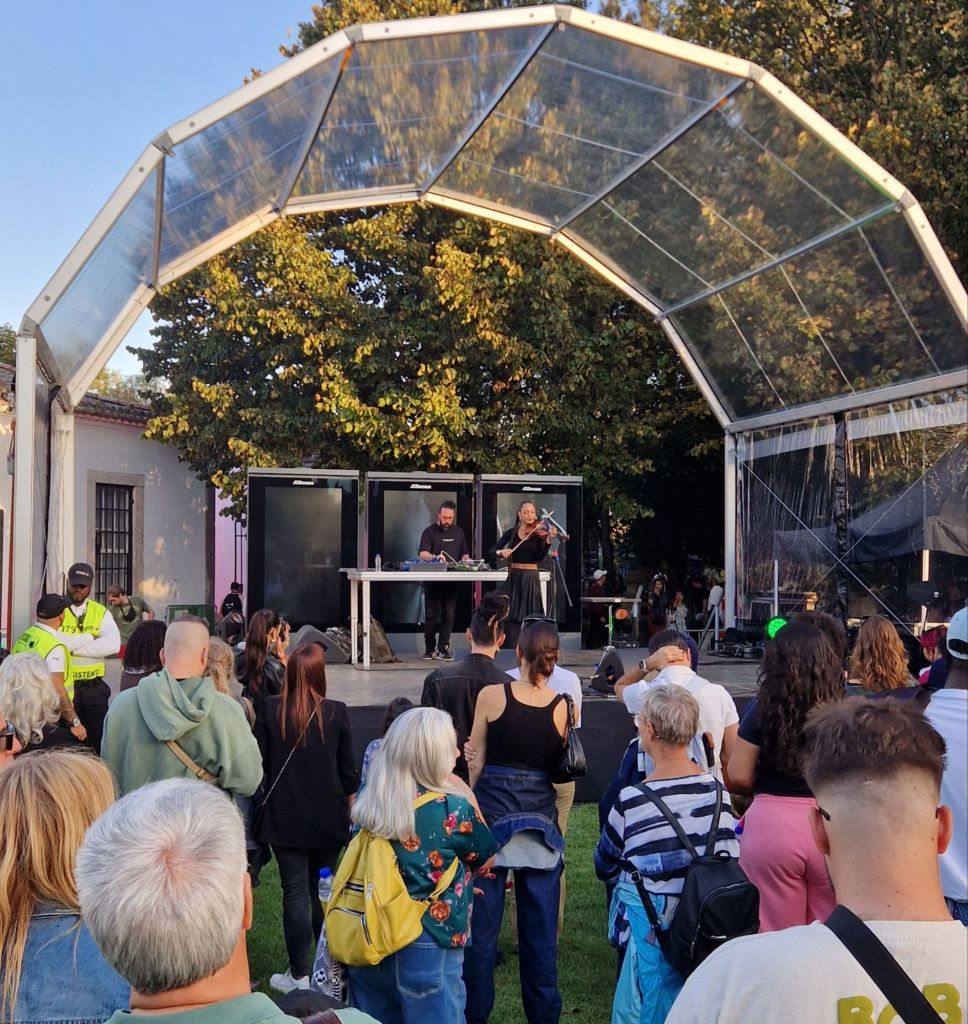
O último destino** foi o jardim do museu de Lisboa onde decorria o Festival Iminente. Estava um ambiente incrível apesar de ser mais pequeno do que pensava. Havia centenas de pessoas numa zona limitada com dois palcos. Assisti a alguns mini-concertos. Gostei acima de tudo da Suzana, a mulher nesta foto

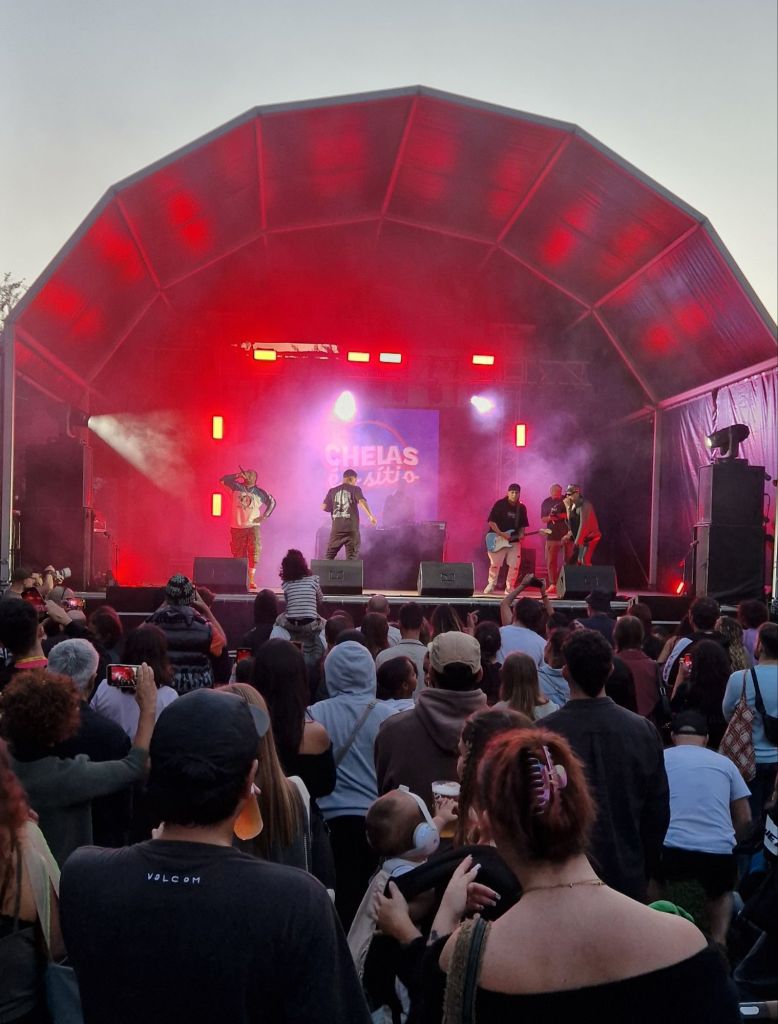
Quanto aos grupos de homens, gostei menos. Pareciam-me mais estereotipicos, como rappers americanos com muito orgulho mas pouca imaginação (mas nota-se bem que esta é apenas a minha impressão). Disseram “façam barulho” muito. Já faziam barulho o suficiente, obrigado.

Até os bebés bebem cerveja

Mas gostei de percorrer o evento e ver a felicidade dos participantes. Bebi um “Maracujão” (sumo de maracujá+Licor Beirão) e assisti ao breakdancing, comprei um livro (que surpresa) da artista Tamara Alves e vi as esculturas de Robert Panda. Saí após uma hora e meia. Gostei muito, mas o fumo dos charros alheios era tanto tanto que não suportei mais.

E aqui estou eu, pronto para dormir, a ouvir as buzinas dos carros na rua

*Destino can be destiny or what we think of as a destination. Destinação exists too and apparently can mean the same as destino in some circs, but only as a secondary meaning and it doesn’t sound right. It’s main meaning is the act of setting a destination.

Posted in Portuguese

O Primeiro Dia em Lisboa

Tendo feito check-in, fui a pé para a* Lx Factory que estava muito movimentada, cheia de pessoas em busca de lugares para tirar selfies.

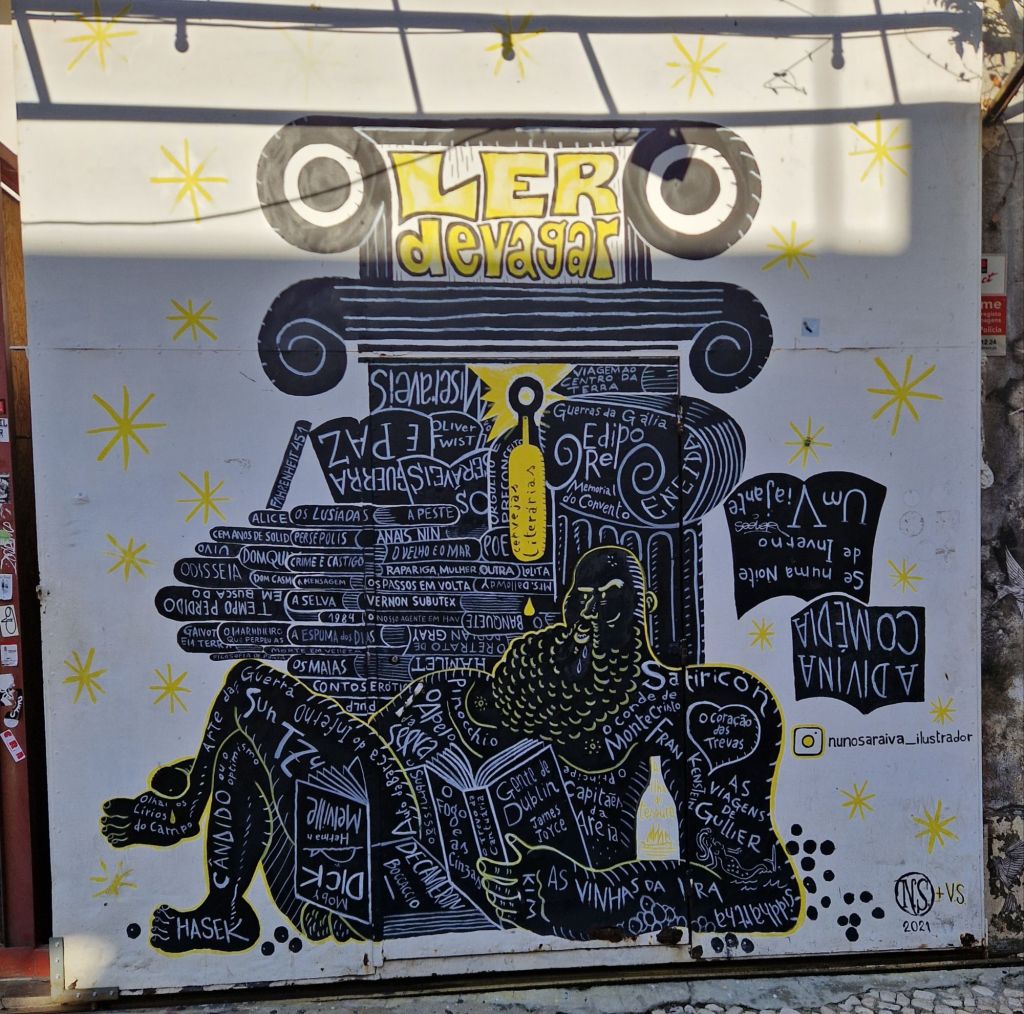
A LX Factory é umaa zona muito fixe de Alcântara, com  restaurantes e cafés e lojas, mas o rei de todos é a Livraria Ler Devagar. Está livraria nasceu em 1999 numa fábrica no Bairro Alto, mas mudou para um prédio que antigamente era uma fábrica de jornais com uma enorme impressora que ainda está lá na loja. A sala tem tecto muito alto e como resultado as prateleira de livros são inacessíveis. O chão também é inclinado, que impossibilita o uso das escadas móveis em determinados lugares. E tudo isto não soa promissor, pois não? Como é que uma livraria permanece aberta num espaço feito para produção industrial? Sabe-se lá, mas apesar destas desvantagens todas, a Ler Devagar não deixa de ser uma das livrarias mais encantadoras que já visitei.

Deparámos com a loja durante a nossa primeira estadia em Lisboa, por acaso, há 8 anos, no ano de lamentação**, 2016. Estávamos hospedados num AirB&B perto da Lx Factory. Mas naquela altura não estava capaz de ler livros portugueses portanto não apreciei a sua glória.

Mas voltemos para o presente: comprei uma meia dúzia de livrinhos.

Depois, caminhei de Alcântara para o Parque Mayer para assistir a uma peça no Teatro de Variedades. Este teatro abriu em 1926 mas um declínio de lucros nos anos 90 levou ao seu encerramento. E permaneceu encerrado durante 30 anos até o dia 5 deste mês – ou seja, 6 dias atrás. Imagina! 30 anos de silêncio mas reabriram o Teatro na mesma semana na qual estou aqui! Dado isto, achava que o Teatro estaria cheio de fãs de teatro entusiasmados por participar na reabertura desta sala histórica mas lamento que não estava. Quase uma metade dos bancos estavam vazios, o que é pena porque o espectáculo é muito divertido.

A peça, “Entraria Nesta Sala” é uma homenagem ao cinema do passado. Os 4 protagonistas são (tanto quanto sei) personagens do filme “Canção de Lisboa” – Vasco Leitão (Vasco Santos), Alice (Beatriz Costa), Alfaiate Caetano (António Silva) e… Hum… A Tia do Vasco (Teresa Gomes)? Mas os quatro vivem no Costa do Castelo (mais um filme de António Silva) e reconheci pelo menos duas referências ao argumento do “Pátio das Cantigas” (que incluiu Vasco Santana é António Silva no seu elenco) , principalmente um monólogo, recitado pelo elenco em uníssono, com um candeeiro da rua.

Houve elementos do absurdo (por exemplo, falam com a nossa senhora do Costa do Castelo, mas ela fala espanhol e parece não saber que não se fala espanhol em Portugal. Ri-me.) e até da ficção científica (viajam numa máquina de teletransporte para assassinar Hitler e levar a cabo o quinto império).

Não fiquei desencorajado pela falta de entendimento. Aproveitei o que consegui entender, mas havia canções e piadas e tanta atividade frenética que não era possível ficar aborrecido.

Depois, fui a pé para uma casa de fado mas não havia disponibilidade. Havia mais uma casa de fados por perto mas neste caso havia disponibilidade a mais: a fadista cantava numa sala deserta com vinte-e-tal mesas vazias. Um restaurante sem clientes é uma cena triste, mas há-de haver uma razão pela falta clientes. Não entrei. Cambaleei para o hotel até encontrar um restaurante acolhedor onde quatro músicos tocavam jazz. Jantei bem e voltei para o hotel.

*feminine, presumably because fábrica (factory) is feminine.

**I still remember feeling slightly sheepish about the whole Brexit thing. And Trump hadn’t even been elected yet so we didn’t even know the half of it. Fuck. 2015 seems like a hundred years ago now.

Posted in Portuguese

Welcome to the Hotel Inglaterra

Pode-se fazer check-in a qualquer hora mas não se pode sair.

Passei a noite no Hotel Inglaterra no Estoril. O preço é igual a um Premier Inn em Londres mas é o hotel mais luxuoso onde estou hóspede. Havia queijo brie, favo de mel e vinho espumante na sala de pequeno almoço. Fiquei espantado.

Após a aula semanal de português, (a aprendizagem nunca dorme!), mudei de cidade para Lisboa onde estou hóspede num hotel menos pretensioso (ou pelo menos pretensioso de outra maneira!) Cheguei cedo e não consegui fazer check-in. Não querendo caçar gambozinos, fui em busca de uma lavandaria para lavar e secar os calções suados e as meias sujas. Há muito tempo que não entrava numa lavandaria pública. Não é preciso levar detergente em pó hoje em dia. É tudo automático!

Falei com várias pessoas mas o empregado do restaurante onde tomei o pequeno almoço no fim era britânico. Quando voltou à mesa, falou com um sotaque fortamente inglês. Parabenizei-o por falar tão bem. Nem sequer percebi que não era português quando encomendei a comida.

Procurei informação num ginásio. Há aulas de ioga, pilates, spin e mais mas há tantas estrangeiras neste bairro que decorrem todas em inglês.

Depois, voltei à lavandaria para levar as roupas limpas. Estou a escrever isto durante os últimos minutos de secagem. Há cá um tipo a queixar-se que não se pode fumar aqui dentro e ele deseja “um cigarrinho”. Pá, a porta está mesmo aí! 

Em breve, volto ao hotel para deixar a bagagem e depois começa a caça aos livros em segunda mão!

Posted in Portuguese

Lisbon I Am In You

Cheguei em Lisboa (quase) sem stresse. Estou a passar a primeira noite num barco no Tejo. O barco é um canal boat, construído em Liverpool. O nome do “hotel” é Tagus Marina e eu achava que Tagus era uma concessão às turistas anglófonas (nós também o chamamos Tagus) , mas (como devia ter adivinhado) foram os Romanos que deram a Olisipo o nome do seu rio.

Posted in Portuguese

Olisipografia

Olisipografia é mencionada nas Crónicas de Lisboa das quais escrevi há umas semanas. Apesar de não gostar assim tanto, o livro contém muitos bons bocados suculentos para o caçador de novas histórias e palavras.

Olisipografia é uma espécie de arte definida não pelo modo de criação, mas sim pelo assunto dela: a cidade de Lisboa! Mas por quê “Olisipografia” em vez de “Lisboagrafia”? A palavra tem raiz no nome romano da cidade, “Olissipo“. Etimologia é muitas vezes um jogo de palpites, mas tanto quanto consegui constatar, deriva de “Allis Ubo” ou seja “Porto Seguro”. Daí, Olis(s)ipo-grafia é a arte que tem como inspiração a capital de Portugal. Embora artistas tivessem feito obras de arte inspiradas por Lisboa durante séculos, aceita-se que o inventor da olisipografia foi Júlio de Castilho, cujo “Lisboa Antiga: Bairro Alto” retratou aquela zona histórica. Desde então, uma olisipografia é um estudo ou um conjunto de estudos sobre Lisboa, de qualquer forma: literatura, arte plástica, música.

O nome Olissipo/Olisipo ainda vive nos logotipos das empresas de Lisboa moderna: nos primeiros resultados do Google, encontram-se um hotel, uma agência de profissionais da informática, um projeto da biologia computacional, uma sauna de luxo*, uma marca do vinho, um exportador de café e até um cabo submarino.

*quase caí na armadilha de usar um falso amigo: Luxury (inglês “luxo”) = luxúria. Uma vez que a sauna faz parte da cena gay na cidade, isso teria parecido vergonhosamente mal-educado** da minha parte – ainda bem que percebi o meu erro antes de publicar!

**Footnotes within footontes! OK, so obviously luxúria means lust, so it’s definitely a false friend to avoid, but it was weirdly difficult to pin down a adjective to describe how it would come across if I called it a Sauna of Lust (great name for a band, by the way). I originally wanted to say it would come across as “santimonial” (Sanctimonious) but that seems to be very unusual in portuguese . So I went in another direction and said “bruto”, which I thought meant rude, but that appares to be more like coarseness than rudeness, so I changed it again. Hopefully this covers it.

I could play it safe and say “Ofensivo” of course but the problem isn’t in the fact that it causes offense, but in it being just rude on its own merits if you see what I mean. Something is wrong because it’s wrong, not because other people think it’s wrong. There are always people who think things are wrong, but what matters is are they actually right? And in this case I think they would be. Julgador (“Judgemental”) would be an option, but I get the feeling that it isn’t really used in the same sense, and anyway, I don’t think judgements are bad per se. Bad judgements are bad. God, this is long-winded isn’t it? Sorry. Why am I having an existential crisis over an adjective?

Thanks as ever to Cristina of Say It In Portuguese for the corrections but of course she is not responsible for the adjectival meltdown.

Posted in Portuguese

Mais Um Festival da Canção

Esta imagem faz parte da mesma BD de há uns dias. É mais um retrato autêntico de um evento na crónica de Lisboa que tem a ver com um festival da canção, mas neste caso, não é o Festival Eurovisão da Canção que tem lugar anualmente. Este é uma publicidade* a uma revista, ou seja, um espetáculo de variedades.

Existe um vídeo a preto e branco desta revista no site da RTP. Segundo o autor da vinheta**, o espetáculo foi renomeado depois da revolução porque deixou de ser necessário calar na época da liberdade de expressão.

PS – Um dos atores, Henrique Santana, é filho da estrela do filme “A Canção de Lisboa“, Vasco Santana

*Publicidade for an event, anúncio for a product

** a vinheta is a single square in a BD. I’d heard “quadrinho” for the same thing

Thanks to Cristina of Say it in Portuguese for pointing out the various errors and temporal paradoxes

Posted in Portuguese

Fintech

Vejo que a Websummit está a decorrer* em Lisboa onde, todo os anos os convidados apresentam novas ideias  sobre tecnologia, a Internet e fintech. Embora saiba o significado de “Fintech” (utilizamos a mesma palavra cá em Inglaterra) “fin” significa “barbatana” e acho isso muito engraçado.
Tenho uma imagem mental de um golfinho no palco a dar palestras**.

“k-k-kkk-k-k” diz o golfinho (porque não fala português) e depois o tradutor explica “No futuro toda a gente será capaz de nadar”

“kkkk-k-kk-k’k”

“com as nossas barbatanas robóticas”

(salva de palmas e barbatanas)

“kk-k-k-kkkkk”

“adeus Lisboa e obrigado pelo bacalhau todo”

This dolphin would like to tell you about his startup
His only porpoise in life is to disrupt the market

*=I used “passar-se” but “decorrer” or “ter lugar” (literally “take place”) work better for events

**=I used “dar discursos” but it’s “fazer discursos”. The corrector also suggested “dar palestras” where a palestra is a verbal exposition on. A specific theme so I switched to that cos it’s a new word.

Posted in English

Urban Legends

I thought this graphic blog post by José Smith Vargas was really interesting. I can’t actually remember now where I heard about it – presumably in the blurb in the back of a printed magazine, but it was a few weeks ago now and my mind basically gets wiped every 3 days or so. I like to see cartoons, BDs, graphic novels, whatever you want to call them, being used to tell stories about people’s lives and environments in creative ways. This one has enough palavras desconhecidas in it that I thought I’d translate it into english for the learns.

1

A Square in the Centre of the City

Demolitions in the Mouraria to make way for Martim Moniz Plaza, 1946

2

With the urge toward progress and social cleansing, the Estado Novo [Salazar’s Dictatorship] demolished the lower part of the Mouraria neighbourhood

The urban regeneration of the city was working through the plan to link the airport to Rossio Square via an almost straight line… a continuous link.

One of the oldest neighbourhoods in Europe, and the Bohemian centre of the city of Lisbon was thus broken up, stone by stone.

…Which wasn’t interrupted by widespread confusion and difficulties affecting people’s quality of life in ways that were hard to control*

3

Simultaneously, the artists and poetic icons of the area were depicted in films and in respectable theatres, thus completing the santisation of urban culture.

4500 people left

The neighbourhood was reduced to an insalubrious hill, an open wound that would never heal.

The plans for the square were repeatedly frustrated for a wide variety* of motives

For more than 50 years, this hole was a cadaverous gap in the architectural continuity of the capital.

4

The Plaza of Martim Moniz was finally ready in 1997.

Having always been a zone of transition since the 70s, a flow of migration, largely from Africa and Asia established itself in the surrounding area to live and work

“Tell me, Shifat, are you still working for your cousin?”

“Yes, God help me!”

“International calls?”

“Oink”

“This place is impossible – it’s all blacks and asians**”

The square began to gain its own character in this context – a multiplication of communities using it and at the same time, becoming part of the landscape.

5

The local council installed a series of kiosks to try and revive the area but, not having achieved much success, the ended up being withdrawn.

Now that the area was less cluttered, the kids started skating, and playing cricket and football there.

And demonstrations took place there for the rights of immigrants, out of which grew the 1st of May Procession organised by the CGTP***

[Documents for Everyone]

And there were also processions for neighbourhood festivals, the procession of Our Lady of Health and the commemorations of the end of Ramadan

Life breaks out however it can and with whomever wants it. But for the local council, the square was still unfinished business

6

The neighbourhood of the Mouraria, which was still pretty run down, was an obstacle in the downtown area. With tourism on the rise, it was a no-go area.

“Where are we? I don’t feel good here”

In 2011, another enormous plan was put into action by the council using funds from a European program

“This is also a way to combat povery and social exclusion”

The streets were put in order and the construction companies and real estate agencies got to work.

The Plaza of Martim Moniz was a strategic point, essential for the execution of the plan. The Lisbon Public Works Agency, EPUL, tendered for a concession. NCS, a company linked to the entertainment industry was the only bidder.

“Since I was little I has a dream of a world hand-in-hand”

“I know that it’s a naive idea”

“At the time, I thought of being a volunteer in Africa or Asia but then I discovered this plaza that had been thrown out with the rubbish…”

7

“…and I understood that my calling was the Fusion Market” ****

The result would be to show the multicultural plaza to a younger audience, well disposed and with more money, attracted by the plan to regenerate the city.

The few kiosks that remain in the square were used as a streetfood zone

“This is like any commercial centre anywhere. You go and get some food and sit down here in the middle”

And at the weekends, there would be an arts and entertainment fair and the drinks would be laid on by NCS

NCS had a concession contract with EPUL until 2022.

“Look! the beanbags are free!”

“Aaah”

Despite the brutal growth of tourism in the city, Martin Moniz still hadn’t begun to be used for business.

8

In 2018, NCS had got behind with the rent to the tune of €150,000 and left the scene. However, its CEO got together with members of some other property development companies and founded Moon Brigade. The new company renewed the contract with the council to install a new shopping centre in shipping containers.

The failed Fusion Marker transformed itself into Martim Moniz Market

[Hipster Containers]

The space would have private security and would be sealed off at night

In no time, protest movements arose and other ideas were put forward for the future of the square.

[We don’t want Martim Moniz rented out to private companies]

[Martim Moniz Gardens now!]

A movement was established to plant Martim Moniz Garden with the support of the inhabitants, neighbourhood associations and the parish council.

The owners of the joint venture reacted

“You want a garden? You’re crazy!”

“It’ll be a den of prostitution and drugs!”

“There’s a car park under the plaza. You can’t plan tanything!”

“This area is dangerous. Vandalism everywhere!”

“I have a lot of money invested here. You can’t annul the contract”

“I’m the one who’s bringing true social integration”

9

The municipal assembly stopped the project and grilled the president of the city council about the controversy

“That isn’t good or bad. It’s shit but it’s better than what was there before.”

“What is this going to become in the end?”

In 2019, 73 years after the first demolitions to make way for Martim Moniz Plaza, the interventions continue…”


* = The word “entulho” can mean an abundance but also seems to mean the rubble from demolition so this seems like it might be a pun…?

** = I think the words he uses are a bit more deprecatory than these simple descriptors but I’m not about to try and find english words with the same weight for fear of over-egging it.

*** = Portugal’s largest trade union federation: Confederação Geral dos Trabalhadores Portugueses

**** = No, I don’t know who that guy is either.