Posted in English, Portuguese

Corridinho Português

Translation time! This one of from Cara de Espelho, the new band I mentioned in yesterday’s post about Perdo da Silva Martins. This is one of the singles from the album, or would be if singles were still a thing. It’s a track that got released early. I have to hold my hands up, I totally misunderstood the title, but if you follow the footnotes you’ll see how I gradually came to understand what they meant by Corridinho.

I also wasn’t sure at first what they were saying about “separating” all these different types of people. If you just read the first verse it sounds like he’s complaining about there being too many immigrants or tourists in the country. Of course, that doesn’t tend to be the way Pedro de Silva Martins thinks: his work with Deolinda gave the impression that he was fairly left wing and had quite an open attitude to other people, so it would be surprising if he was now backing CHEGA, but who knows, we all get more right wing as we get older. And of course he’s entitled to his point of view. By the end though, it seems pretty clear that he’s saying “there’s more that unites us than divides us”, which I think is probably a healthier way to look at life, and certainly more fun.

PortuguêsInglês
Separando o africano do cigano
Do chinês, do indiano, ucraniano,
muçulmano, do romeno ou tirolês
Como vês
Sobra muito, muito pouco português, ó pá
Separating the african from the gypsy
From the chinese, the indian, ucranian, muslim, from the romanian or tirolean
As you see
There’s very, very little portuguese left, oh man!
Separando o cristão do taoista,
do judeu do islamita, do ateu ou do budista,
do baptista mirandês
Como vês
Sobra muito, muito pouco português, ó pá
Separating the christian from the taoist,
from the jew, from the islamist, from the atheist or from the buddhist,
from the mirandese baptist
As you see
There’s very, very little portuguese left, oh man!
E que tal juntar a malta numa boa*
A um corridinho** de Lisboa
Volta e meia*** e roda o par****
Triste é quem fica a ver dançar
And how about we get all the cool people together
For a Lisbon corridinho
From time to time and spin the pair
Anyone who just watches the dance is sad
Separando o celta do visigodo,
O huno do ostrogodo, o romano do suevo, ou o mouro do gaulês
Como vês
Sobra muito, muito pouco português, ó pá
Separating the celt from the visigoth,
The hun from the ostrogoth, the roman from the suebian, or the moor from the gaul
As you see
There’s very, very little portuguese left, oh man!
Se tu queres ainda separar o gay,
Da lésbica, do straight, da mulher, gente de bem,
Ou de quem sofre de gaguez
Como vês
Sobra muito, muito pouco português, ó pá
If you stull want to separate the gay,
From the lesbian, from the straight, from the woman, good people,
Or from people who stutter
As you see
There’s very, very little portuguese left, oh man!
E que tal juntar a malta numa boa
A um corridinho***** de Lisboa
Volta e meia e roda o par
Triste é quem fica a ver dançar
And how about we get all the cool people together
For a Lisbon corridinho
From time to time and spin the pair
Anyone who just watches the dance is sad
Ora tenta separar o teu genoma,
tu tens tanto de Lisboa como de Rabat ou Doha,
tudo soma no que és
Como vês
Sobra muito, muito pouco português, ó pá
Se ainda te faz muita confusão
Well try and separate your genome,
You have as much of Lisbon as of Rabat or Doha,
It all adds up to who you are
As you see,
There’s very, very little portuguese left, oh man!
Vai, separa o fótão do protão, do electrão
Até desvaneceres de vez
Como vês
Sobra muito, muito pouco português, ó pá
If it still really confuses you
Go, separate the photon from the proton, from the electron
Until you disappear for good
As you see
There’s very, very little portuguese left, oh man!
E que tal juntar a malta numa boa
A um corridinho de Lisboa volta e meia e roda o par

Pois…
And how about we get all the cool people together
For a Lisbon corridinho
From time to time and spin the pair

Sure…

* Numa boa seems to be an expression like “na boa” and “de boa” – basically, cool. OK, I hadn’t heard of that

**OK, I’ll put my hand up, I thought corridinho was related to corrida and that they were talking about some sort of group run. LOL. No, running is quite popular in portugal but in a song about bringing everyone together, a group run would be a bit of a weird way to do it.

***Volta e meia is another expression, meaning once in a while

****It took me a while to work this one out. Roda o par….? Wheel the pair? A pair of wheels? Are they going on a bike ride? What? It doesn’t even flow into the next line. Then I realised, obviously, roda is a verb, so it means “spin” or “rotate”. Rotating the pair: it’s a dance move, I think. I can only really find it in descriptions of brazilian dances like the chupim (part way down this page for example), but there aren’t that many written descriptions of dances so the fact that I couldn’t find an example from portugal doesn’t mean it doesn’t exist.

*****And so we come full circle: Corridinho is a kind of dance popular in the Algarve. The Wikipedia entry for it doesn’t include the phrase “roda(r) a par”, but both words appear individually multiple times. You can see examples on youtube like this one – which has some excellent saia rodada action.

Posted in Portuguese

Angola

Então, ainda não falei da rainha, Cesária Évora? Tive a sorte de assistir a* um espetáculo dela em… hum… 2001, se não me engano. Naquela altura, não falava nem uma palavra de português mas mesmo se falasse não me teria ajudado porque a maior parte da obra dela está em Crioulo Cabo-Verdiano. Fomos com a tia da minha esposa. A minha esposa nasceu no Cabo Verde e viviu lá durante os seus primeiros anos, antes da família dela ter voltado para a Madeira. A cantora tinha uma maneira muito relaxada de se apresentar na sala de concertos. Não parecia ser muito animada. Só cantou de pés descalços**. Havia uma mesa no centro do palco e, durante o seu intervalo, a banda continuou a tocar enquanto ela sentou-se numa poltrona, acendeu um cigarro, deitou um pouco de vinho num copo*** e ficou tranquila, nem sequer olhando o público durante 3 ou 4 minutos até à abertura da próxima música.

Queria fazer uma tradução da sua canção “Angola”, que é empolgante, mas claro que preciso da ajuda de um português que entenda o crioulo. Roubei as letras deste site, mas acho que o homem que fez esta tradução parafraseou um pouco. Por exemplo, aquela primeira linha tem uma conjugação do verbo “viver”, sem dúvida. Acho que ela diz “Essa vida boa que os senhores estão a viver”. Existem vários sites online onde se explicam estas línguas parecidas com o português padrão – por exemplo, aqui está a descrição de “nhôs” no Infopedia . E tenho as minhas dúvidas sobre a interpretação de “Ami nhos ca ta matá-me” porque parece-me tão descabido no contexto… mas tenho de confiar no tradutor porque ele afirma que é fluente!

A música é linda. Eu não sei nada de teoria da música e se calhar, estou completamente errado, mas parece-me influenciado pela música do Brasil, com um ritmo sincopado que me lembra o**** Samba, mas é mais do que só uma cópia: muito mais. Tem um som único, e a voz dela é… Ouso dizer “ouro sobre azul”? O efeito da voz e da música é esmagador!

*I need to smack myself in the head with a frying pan a few times till I remember to put the “a” after “assistir”

**I’m only talking about the concert but I could easily have said the same about her career.

***I really screwed this sentence up – I tried to use the verb “derramar”, which isn’t even the right verb (it means spill) but then I managed to get it even wronger and wrote “derrubar”. I think deitar is the right verb even though it sounds weird – I usually associate it with laying something down or chucking it away. I also wanted to express the idea that she poured out a few sips worth, but that didn’t go any better. Hopefully this works. the easy way would be to say “encheu um copo” because why wouldn’t you want to fill it all the way up? But I was trying to be more specific than that. Sigh. This seems like a very basic thing to be confused about when I’m meant to be at C1 level.

****Not “do Samba”: “it reminds me of” doesn’t have de, whereas “i remember” does – so the preposition use is pretty much the opposite of english, really!

CrioulaPortuguêsInglês
Ess vida sabe qu’nhôs ta vivê
Parodia dia e note manché
Sem maca ma cu sabura
Angola angola
Oi qu’povo sabe
Ami nhos ca ta matá-me
‘M bem cu hora pa’me ba nha caminho
Ess convivência dess nhôs vivência
Paciência dum consequência
Resistência dum estravagância
Essa vida boa que vocês têm
Paródia dia e noite até de manhã
Sem mágoas, com alegria
Angola, Angola
Oh que povo alegre
A mim não me matam
Venho com hora para partir
A convivência na vossa vivência
Paciência duma consequência
Resistência duma extravagância
That good life you’re living
Parodies, day and night, until morning
Without pain, but with happiness
Angola, Angola
Oh what a happy people
They don’t kill me
I come when it’s time to be on the way
The way living together is a way of life
Patience of consequence
Resistance of extravagance

Thanks to Cristina of Say it in Portuguese for correcting the text description above the video.

Posted in English, Portuguese

Eu E O Meu País

Her’s another translation – this time “Eu e o Meu País” (me and my country) by Oquestrada. It has a weird bit of anglo-french wittering at the start and I’ll just pretend that doesn’t happen. I wish I had a video of them doing it live but every one I’ve found has been shonky fan footage.

The song itself isn’t that deep either. The bit I really like is the very beginning. Freguesia is one of my favourite words for some reason, and that second line is great, plus the sense you have of her dashing around everywhere trying to hug the whole country. So that’s the only reason for the translation. If you want an objectively better video of them playing an objectively more stompy song, check this out.

PortugueseEnglish
De distrito em distrito
de freguesia em freguesia
e quando os teus braços chegam aos meus
nós somos só um, somos um só
nós somos um só, somos só um
eu e o meu país
District by district
Parish by parish
And when your arms reach mine
We are one, we are one
Me and my country
Ouvi dizer que me amavas, adoravas, entendias
ouvi dizer que me querias, me estimavas, percebias
e se à noite me sorris
de dia pouco me falas
mas se à noite me sorris
de dia pouco me falas
I heard you loved me, adored me, understood me
I heard you wanted me, esteemed me, noticed me
And if at night you smile at me
By day you hardly talk to me
And if at night you smile at me
By day you hardly talk to me
I wanna dancing with myself
e é tanta a rotunda
que já nem sei chegar a ti
neste silêncio, neste pantanal
sou turista acidental
neste anúncio, neste postal
sou turista acidental
mas e tu, tu oh tu meu país
mas e tu, tu oh tu meu país diz-me
diz-me onde ficas tu neste postal
I wanna dancing with myself
And there are so many roundabouts
I don’t even know how to get to you
In this silence, in this swamp
I’m an accidental tourist
In this advertisement, in this postcard
I’m an accidental tourist
But you, you, oh you, my country
Tell me where you are on this postcard
Posted in English

Pica do Sete

I’ve already done a translation of an Antonio Zambujo song – Flagrante – but it was in the context of a grammar lesson so I thought I’d come back and have a go at one of his others – Pica do Sete. I mainly chose it because it always bothers me. I think he’s singing about a woman who’s punching his ticket but in the video the woman is a passenger and he’s… well, stalking her, really. And at the end there’s a male conductor, so maybe she’s supposed to be narrating? I dunno, maybe spending some time really getting into the lyrics will straighten it out in my mind.

First of all, the title. As far as I understand it, “o Sete” is the number 7 tram. Pica is a bit trickier and I suggest being careful how you use it because it can mean lots of different things including a spliff (in portugal) or a penis (in brazil) so you know… handle the word with care! Anyway, in this context, it’s the ticket inspector. I think it comes from the verb picar which means to puncture something. You can read more about the life of a “pica” on Lisbon trams in this really good blog post written at around the time the song was released.

PortugueseEnglish
De manhã cedinho
Eu salto do ninho e vou pra paragem
De bandolete à espera do sete
Mas não pela viagem
Eu bem que não queria
Mas um certo dia vi-o passar
E o meu peito cético
Por um pica de elétrico voltou a sonhar
Early in the morning
I jump out of my nest and go to the tram stop
Wearing an Alice band, waiting for the number 7
But not for the journey
I didn’t really want it
But one day I saw him pass by
And my skeptical heart*
Went back to dreaming about a tram conductor
A cada repique
Que soa do clique daquele alicate
Num modo frenético
O peito cético toca a rebate
Se o trem descarrila o povo refila e eu fico num sino
Pois um mero trajeto no meu caso concreto é já o destino
Every time the bell rings
When that clipper makes its clicking sound
In a frenetic way
The skeptic heart sounds the alarm
If the tram derails, the people complain and I’m quite happy**
Because, in my case, the route is the destination.
Ninguém acredita no estado em que fica o meu coração
Quando o sete me apanha
Até acho que a senha me salta da mão
Pois na carreira
Desta vida vão
Mais nada me dá a pica que o pica do sete me dá
Que triste fadário e que itinerário tão infeliz
Cruzar meu horário com o de um funcionário de um trem da carris
Nobody believes the state my heart gets into
When the number seven picks me up
Until I think the ticket will jump out of my hand
Because in the path
That this life takes
Nothing pierces me like the conductor on the number 7
What a sad fate, what an unfortunate timetable
To cross my schedule with that of a tram employee
Se eu lhe perguntasse
Se tem livre passe pró peito de alguém
Vá-se lá saber talvez eu lhe oblitere o peito também
Ninguém acredita no estado em que fica o meu coração
Quando o sete me apanha
Até acho que a senha me salta da mão
Pois na carreira desta vida vão
Mais nada me dá a pica que o pica do sete me dá
If I asked him
If he had a free pass for someone’s heart
Who knows, maybe I’ll invalidate*** his heart too
Nobody believes the state my heart gets into
When the number seven picks me up
Until I think the ticket will jump out of my hand
Because in the path
That this life takes
Nothing pierces me like the conductor on the number 7
Ninguém acredita no estado em que fica o meu coração
Quando o sete me apanha
Até acho que a senha me salta da mão
Pois na carreira desta vida vão
Mas nada me dá a pica que o pica do sete me dá
Nobody believes the state my heart gets into
When the number seven picks me up
Until I think the ticket will jump out of my hand
Because in the path
That this life takes
Nothing pierces me like the conductor on the number 7

* The actual word is “chest” (peito) but “skeptic btreast” sounds weird

** Refilar and Sino both have multiple meanings. I originally thought the passengers are leaving the tram and queuing for the next one, but she is staying in, ignoring everything (metaphorically under a glass bell jar) because she wants to stay where she is. That doesn’t seem to case. Refilar usually means to grumble and complain and that’s what it means here. “Estar num sino” just means to be well-disposed and calm, according to this page. It doesn’t seem to be a very well-known expression though, judging by people’s reactions when I asked.

***Obliterar obviously sounds like obliterate and usually means the same but one of the meanings Priberam gives is to invalidate something by means of a stamp or a mark or by piercing it – so basically what a tram conductor does to a ticket then!

OK, well I think we can be pretty sure that the narrator of the song is the female passenger and she’s got the hots for the male conductor. The singer is just voicing her interior monologue, not stalking her. I’ve highlighted the two words that give the clue: she says she’s wearing a bandolete – an alice band or hairband. Well, men can wear those but it’s unusual, and the woman in the video has one but Zambujo doesn’t. Then fuurther down he says “um pica” not uma pica, so it’s a male conductor.

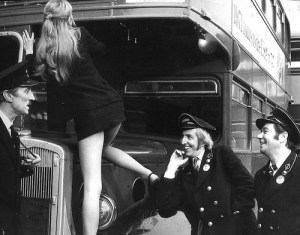
If I were portuguese and wanted to study the equivalent male phenomenon, I guess I’d have to analyse the old sitcome “On the Buses”. Coincidentally, I’ve recently watched my first episode of that. My daughter is obsessed with Reece Shearsmith at the moment and apparently they are planning to do an On the Buses parody in the current series of Inside Number 9. I’m old but even I’m not old enough to remember it when it was first broadcast.

Further musings about the expression “estar num sino”

I gently pointed out in reddit that it was surprising that quite a well-known song had an expression in it that hardly anyone understood and people seemed to be fine with not knowing what he was in about. Obviously there are plenty of songs in English that are the same (try listening to the lyrics of “Whiter Shade of Pale” sometime for example) so it’s not really surprising, but I thought it was fun to ask if people were actually listening to the lyrics.

Fiz uma pergunta ontem sobre a letra de uma música do António Zambujo. Há uma expressão na canção que diz “Fico num sino” que mal entendi*. O que mais me marcou foi o facto de os** respondentes também não saberem o significado da frase. Mas… É uma canção bem conhecida não é? Será que grande parte das pessoas ouviram a música e pensaram “Pois é, está presa*** numa campainha. Faz todo o sentido”

* mal entendi meaning I barely understood it. Maybe should have written “entendi mal” (i misunderstood it) or não entendi (i didn’t understand it) to be more accurate.

**de and os are separate here because “o facto de” is a sort of standalone expression.

*** apesar do cantor ser masculino a narradora da canção não é.

Posted in English, Portuguese

Canção de Engate

I haven’t done a song translation for while and I fancied having a go at “Cancao de Engate” by António Variações. There aren’t many decent videos of it and anyway he’s a bit hard to follow because of his distinctive singing style so if you don’t know it, try this orchestral acoustic version by Tiago Bettencourt

Cancão de Engate

My sense, going into it, is that it uses a lot of slightly oblique language so this is going to be a tricky one, but here goes…

Tu estás livre e eu estou livre
E há uma noite p’ra passar
Porque não vamos unidos
Porque não vamos ficar
Na aventura dos sentidos
You’re free and I’m free*
And there’s a night to get through
Why don’t we get together
Why don’t we get
Into the adventure of the senses
Tu estás só e eu mais só estou
E tu tens o meu olhar
Tens a minha mão aberta
À espera de se fechar
Nessa tua mão deserta
You’re alone and I’m alone too
And you have caught my eye
You have my open hand
Ready to close
On your lonely hand
Vem que o amor não é o tempo
Nem é o tempo que o faz
Vem que o amor é o momento
Em que eu me dou
Em que te dás
Come, because love is not time
Nor is it time that makes it
Come, because time is the moment
In which I give myself
And you give yourself
Tu que buscas companhia
E eu que busco quem quiser
Ser o fim desta energia
Ser um corpo de prazer
Ser o fim de mais um dia
You who are looking for company
And me who is looking for whoever wants
To be the end of this energy
To be a body for pleasure
To be the end of another day
Tu continuas à espera
Do melhor que já não vem
Que a esperança foi encontrada
Antes de ti por alguém
E eu sou melhor que nada
You keep waiting
For something better that isn’t coming
Because what you hope for has already been found
By someone before you
And I am better than nothing
Vem que o amor não é o tempo
Nem é o tempo que o faz
Vem que o amor é o momento
Em que eu me dou
Em que te dás

x3
Come, because love is not time
Nor is it time that makes it
Come, because time is the moment
In which I give myself
And you give yourself

x3

* I’m sorry, but I am a man of a certain age but I am already reading this in a Mr Humphries voice

Hey, well that wasn’t as bad as I thought it would be. One of the easier ones I’ve done, in fact!