Posted in English, Portuguese

Homework Corrected

I published this a few days ago and the corrections to my corrections were pretty extensive so I thought rather than quietly correcting the original, I’d repost the whole thing with notes in red showing what I got wrong for ease of reference.


I hope I can quote a whole article here under… what? Fair use? It’s Manuel Cardoso, writing in the Expresso under the headline “Os portugueses lêm bem” and I’m not stealing it, I’m fixing it because – unless I am making a massive idiot of myself by misunderstanding, he has deliberately put lots of errors in it, and that’s the joke. Even the title has an error in it. It should say “leem“, not “lêm”. What’s really interesting about this is that most of these are the kinds of mistakes a native speaker would make, and they are usually different from the mistakes we made as learners. They are mistakes you make when you’ve learned a language by listening instead of by studying books.

Anyway this is a learning blog so I’m going to use it as an exercise and try to fix it. I WILL DEFINITELY GET A LOT Wrong yep so rather than erase the original text, I will put what I think are the right answers in the footnotes and then if any other students are reading this you can play along and see if you get the same answers as me, and, if not, tell me about it in the comments!


Segundo a OCDE, a literacia dos adultos do nosso país está abaixo da média. Talvez póssamos(1) refletir um pouco sobre o assunto. Dizer(2) que não confio nada nestes resultados. Houveram(3) pessoas a afirmar que não ficaram surpreendidas, mas eu fiquei perplexo. Na minha opinião pessoal (This is a redundancy too – you don’t need “pessoal” when you’re talking about your opinião) , os portugueses têm excelentes capacidades de interpretação de texto. Acreditaria neste estudo se tivesse sido feito à(4) cinquenta anos atrás, mas a verdade é que, nas últimas décadas, avançámos muito para a frente(5).

Julgo que tudo isto é muito suspeito, porque o esforço para aumentar a literacia em Portugal tem partido de ambos os dois(6) lados políticos. Este atual governo (atual is a redundancy because “este governo” implies it’s the current one alresdy) até já interviram (plural verb, singular noun – and in top of that, intervir is based in vir not ver so it should be intervier(am)) no sentido de(7) resolver os problemas de fundo da educação. Certamente que a OCDE vai retratar-se(8): os resultados devem estar errados, derivado a erros. Caso contrário, não vejo outra alternativa senão sair para fora dessa organização. Se tivesse nas minhas mãos, eu faria-o(9).

É óbvio que a divulgação deste estudo causou mau-estar(10). Esta notícia estragou-me o dia, que até estava solarengo(11). Não tenham dúvidas: condeno veemente(12) a postura da OCDE. É ofensivo que um organismo(13) internacional trate os cidadões(14) portugueses como uns analfabetos quaisqueres(15). Aonde(16) fica a dignidade? A mim, pessoalmente, admira-me que isto não tenha despoletado manifestações. Para receber resultados como estes, para a próxima nem vale a pena partilhar os dados. Hades(17) cá vir, OCDE.

Não nego, há pequenos pormenores a afinar. No que toca à avaliação dos alunos, temos de subir para cima (redundancy – subir implies you’re going up) os indicadores(18). Por exemplo, os exames de matemática deste ano podiam ter corrido mais bem(19): não houve poucas(20) notas negativas. De facto, dá vontade de perguntar uma questão (redundant – fazer or colocar uma questão. You don’t need to use perguntar with the nouns questão or pergunta in Portuguese) aos nossos estudantes: o que é que fizes-te(21) no ano lectivo(22) passado? Em todo o caso, temos concerteza(23) capacidade para inverter esta situação e sair deste ciclo vicioso(24). Confiem, OCDE: a gente vamos(25) dar a volta a isto.

(1) possamos doesn’t need an accent

(2) I think he means “diz-se” “diria

(3) Looks like the wrong tense. Educated guess would be that he means “Haverão” No, you berk, it’s haverá because haver should always be third person singular when it’s used in this sense, as a substitute for “existir”

(4) Should be há. The “atrás” later in the sentence is redundant too, I think

(5) Hmmm…. this looks fishy too. Avançar implies the frente so that seems redundant, and “para” instead of “em” seems surprising so I think this is another mistake

(6) Tem partido seems to be OK (it looked wrong in the first version) but “ambos os dois” is a redundancy of course.

(7) Not a grammar error, I think but seems like a misuse of the expression “In the sense of”. It gets misused a lot in english too.

(8) Surprisingly not an error. Retratar-se can mean tratar-se novamente. Pre-AO it would have been retractar-se But it has been changed. Hm… Confusing. OK, I’m blaming the AO for this. It’s like para all over again.

(9) Looks like we’re in mesoclise territory: Fá-lo-ia

(10) Mal-estar

(11) I’m starting to get paranoid and feel like I’m missing loads. I don’t quite know what the joke is here but this is such an odd word that it has to be a wrong. I know it can mean sunny, but its just not a word I’ve heard before so I smell shenanigans.

(12) Ha! It hadn’t really occurred to me but although veemente is an adjective, the presence of the “-mente” at the end makes it look like an adverb. It should be veementemente! Vehemently.

(13) Organização, presumably

(14) Cidadãos

(15) Popular general knowledge quiz answer, which is the only word in the language that is pluralised in the middle, not the end, quaisquer, not quaisqueres!

(16) Just onde

(17) Getting a bit lost here. I know it’s quite common that people write “há des” instead of “hás de” but I haven’t seen it without a hyphen so maybe he really means Hades is coming. Oh wait, no, apparently people really do write Hades – example here. The sentence immediately before this one seems impenetrable and I feel like there’s something wrong with it but I don’t know what

(18) So it looks like the indicators/standards have to go up but he starts off saying “we have to go up…” so I think maybe it’s just that the verb doesn’t match what I take as being the subject of the verb…?

(19) Melhor

(20) There weren’t few… seems like a double negative, no? (OK, looking at it again, it’s a triple negative There were not a few bad marks meaning there were a lot of bad marks, which is in keeping with what he’s saying. Fair enough. I’m my opinion, this many switchnacksnin a sentence is bad form because it’s confusing but fair enough, not an actual error!)

(21) Fizeste is a common mistake apparently (see here for example) but it’s been pointed out that he might be addressing all the students at once, instead of one at a time, and reading for the vós form: fizestes. Not how o imagined it, but yep i can see that.

(22) Looks like a pre-AO spelling

(23) Com certeza

(24) The expression is “Circulo vicioso” not “ciclo vicioso”

(25) A gente takes third person singular verb endings: a gente vai, not vamos

Posted in English

Another Brick In Na Qual

Getting driven mad by the sense that although I usually know roughly when to use (o) qual and when to use que, I don’t really know why and I sometimes used to get pulled up by Dani on the Portuguese subreddit for getting it wrong, so I’m doing a data dump in a post to get it straight in my head. It’s going to be rambling. If you found this page on Google and you think I’m a teacher, LOL, go back to the search results, buddy, because I’m not that reliable.

The examples I’m thinking of are when que and qual are being used as “relative pronouns”. In other words, they are mostly dealing with situations where in English you would use “which”, when taking about a person or thing. “The parlous state to which American democracy has sunk”, “enjoy the tax breaks for which you have traded your freedom”. That kind of thing

There are other uses of qual (“Qual é a dúvida” for example) and lots of other uses of que (“o que é que é?”) but they are easier to deal with so I won’t be going into those. Nor do I have any trouble with words like quem, onde and cujo, which sometimes to the same job in English but only when dealing with people (quem =who), places (onde =where) or ownership by people (cujo=whose).

Está bem, vamos meter as mãos na massa. Começo com as notas no livro Qual é a Dúvida

Que

Used after monosyllabic prepositions – em que a que, com que, de que, por que. So “in which”, “to which”, etc

Qual

Used after other prepositions “para o qual”, “sobre o qual” (“for which”, “about which”). So far so good. It is “partitive” in other words, it singles something(s) out for discussion from among a larger group.

Here’s an example of o qual from…. Um… Somewhere:

“O lavrador sobre o qual falei” O qual is a relative pronoun here. The speaker has mentioned a ploughman earlier and he wants to refer to him again so he says “The ploughman about which (sobre o qual) I spoke…” The relative pronoun is a way of singling him out without having to do all the work of reintroducing him in the story.

So, relative pronouns usually come after prepositions but be careful, because there are some things that look like relative pronouns but aren’t. For example:

Confuso sobre qual palavra usar“. Qual seems like a relative pronoun here but it’s not. He is wondering “qual palavra usar?” and he’s confused about that, and the qual ends up being after sobre, but it isn’t doing the same job. In English it’s the difference between “I’m confused about which word to use” and “Ah, so this is the new Fado about which the critics are losing their shit”.

O qual differs from que in these situations because it always has an article (‘o’) tacked on, which means it’s going to change with the gender and number of the thing it’s referring to, so it could be “a qual” or “as quais” or whatever, whereas que is always que.

Hm, ok, we’ll, moving on, let’s see if we can find anyone else with some light to shed.

This Ciberdúvidas page discusses em que and no qual as substitutes for onde in a sentence. So you might choose to say “the University in which I studied” instead of “the University where I studied”. The correspondent reckons it comes down to what sounds best.

This (Brazilian) teacher advises that o qual  is mainly useful for avoiding constantly repeating the word “que” every five seconds. Que is a very overused word in Portuguese and there might be situations where you’ve used it so often in a sentence that using it again is going to confuse things, perhaps…?

This page for school-age children focuses specifically on “no qual” but doesn’t shed much light except to show examples of cases where o qual is basically synonymous with que, and you can check whether you are using it correctly by substituting “que” and seeing if the sentence works.

So is that it then? At bottom, it’s not really a grammar rule as such, just a question of what sounds gooder?

I poked around some more because I couldn’t quite believe it. This Ciberdúvidas page gives a few situations where it’s important to use one or the other, and I thought maybe he would be more rulesy, but, on closer inspection, he was just ruling out some of the other uses of qual and que discussed above:

O rapaz que tinha medo do escuro venceu os seus obstáculos

O qual wouldn’t fit here, but that’s because it isn’t really acting as a relative pronoun anyway. It’s a determiner I think. In English we would use “that” or “who” instead of “which”

And he goes on to talk about prepositions of one syllable…

‘A verdade é um postigo/ A que ninguém vem falar.’ (Pessoa)

Versus prepositions with two…

‘Tinha vindo para se libertar do abismo sobre o qual sua negra alma vivia debruçada.’ (Torga)

And that’s really just a question of which sounds better, again.

Well, that was a bit of an anticlimax. I thought it would be more complicated than this, but that’s OK. I feel a bit more confident in using them after this deep dive.

Posted in English

A Feel For It

I don’t really know what the rule is here, so was expecting at least one to be knocked back but got them all right first time. I suppose it’s one of those things where reading books just makes it “feel right” in a particular order.

Posted in English

Tals of the Unexpected

I thought I’d try and collect together some of the uses of the word “tal”. Nothing definitive, but a sort of mood board or a pinterest page, gathering together some examples, because I know what it means, basically, but it’s quite a spongey word and it keeps popping up in unexpected places. Like here for example:

What is going on?

The standard meaning of tal given in most books when we first come across it is “such” but such is the confusion over words like “such” that its meaning only overlaps about 50% with the meanings of the english equivalent.

Hear are the meanings listed online. (“tal”, in Dicionário Priberam da Língua Portuguesa [em linha], 2008-2024, https://dicionario.priberam.org/tal.). I have colour-coded them by how “suchy” they are. Green = very like “such”, orange = similarish, red = nope.

quantificador existencial

1. Tão grande (ex.: a simpatia foi tal que voltaremos certamente). = TANTO [In english “the reaction to the announcement was such that the prime minister withdrew the policy 3 minutes later]

determinante e pronome demonstrativo

2. Igual, semelhante (ex.: nunca vi tal coisa; acho que nunca tal ouvi). [In english “I’ve never seen such such a thing!]

3. Este, esse, aquele, isto, aquilo.

4. Certo, não bem definido.

nome de dois géneros

5. Pessoa de que se fala sem nomear (ex.: este é o tal de que te falei).

I think this last one is the one in use in the meme. She could just say “who is that Uefa”, but but ading the “tal” it becomes more like “who is that Uefa person?” as if it’s slightly beaneath her to talk about such a person. You can imagine her curling her lip with distaste.

Asking around about this most people seemed to be sure that it would only be used if both the speaker and the listener already knew who was being talked about. Like in the António Zambujo song, Lambreta. “Come for a ride on my Lambreta … and stop thinking about that Vilela dude”. You know him, I know him, but really, I’d rather not.

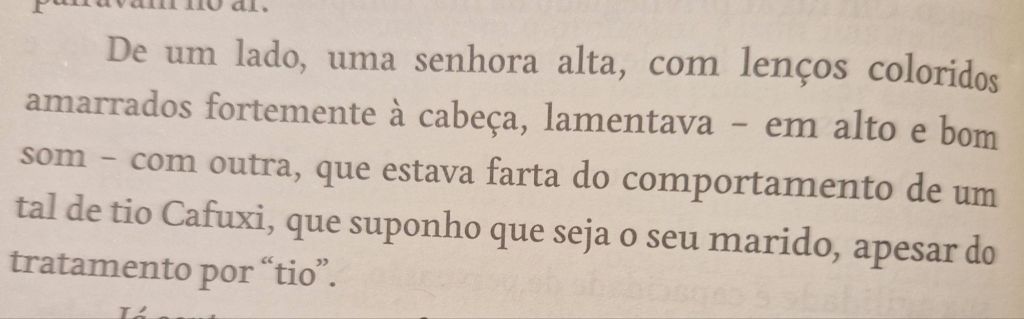
This next case is quite similar but the person isn’t known to the speaker. He’s describing someone complaining about a certain tio Cafuxi. I think this might be definition 4: Certo, não bem definido.

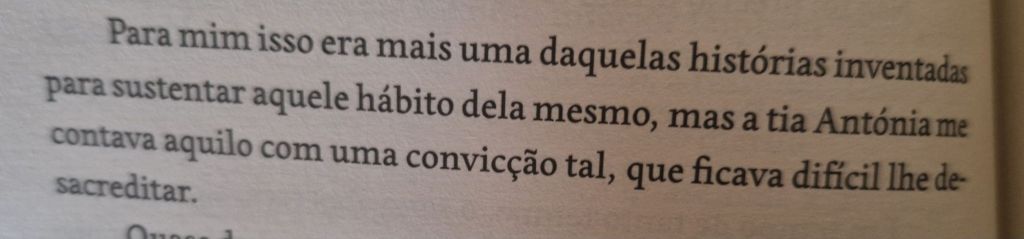
This next one is definition 1. Her conviction was such (so much) that it became hard to disbelieve her-

Tal also forms part of lots of little phrases that crop up in conversation

como tal

•Nessa qualidade, por esse motivo. (“as such”)

e tal

• [Portugal, Informal] Usa-se para indicar quantidade ou número indeterminado que excede um número redondo (ex.: ele tem trinta e tal anos; chegaram a casa às duas e tal da manhã). (in english this would be “Twenty-odd” or “Twenty or so”)

não há tal

•Isso não é verdade. (I guess we have “There’s no such thing” but it’s a bit of a stretch)

que tal!

•Exclamação para exprimir surpresa.

que tal?

•Expressão usada para questionar o estado ou a qualidade de algo. (What d’you think?”)

tal como

•Da mesma forma que ou à semelhança de. (In english “Such as”, but more often than not when you want to say “such as” you’re better off just writing “como” without the tal)

🤦 I assure you, we do not.

tal e qual

•Exactamente; do mesmo modo; assim mesmo.

tal qual

•O mesmo que tal e qual.

There isn’t really one translation for the word, or any one way of understanding what it means, you just have to sort of get used to the situations where it arises, I think.

Posted in English

What the hell is this?

Esta gente nova não tem ponta por onde se lhe pegue! Francamente!

This sentence flummoxed me for two reasons. Firstly because the overall gist didn’t seem to make any sense and secondly the grammar was baffling. I had to ask an expert to explain some it to me.

It’s from Uma Aventura nas Férias da Pascoa, and the lady who’s speaking is exasperated that some kids are making a lot of noise outside her door. The “Francamente!” is there to underscore her disapproval.

Let’s do the grammar first.

So firstly, obviously, we have the usual anglophone confusion of “gente” meaning people but it’s a singular word because of course it is. That’s pretty basic though, so didn’t throw me too badly.

“Pegue” is subjunctive present. Why? Good question. It seems to be a statement about the general qualities of something, nested in a dependent clause, but it doesn’t fit neatly into my subjunctive flowchart, even though it’s recognisably the same kind of sentence structure as sentences that do. I think that’s because “por onde” (“at where”) is doing the job that would normally be done by “que”. [Caveat – I’m pretty sure I’m right about this but didn’t specifically ask so I might be misunderstanding why they’ve used this tense]

And finally, the pronouns, se and lhe right after each other. Lhe means “them” but it is singular because – again – it’s referring to gente, and se is present as an indefinite pronoun*, which is a hard concept to grasp in English. I’ve had a stab at it in this post, but I’m sure it wouldn’t hold up to much scrutiny from an expert.

So if you were to translate it word-for-word in the most literal way possible, the whole sentence is something like “These young people don’t have a place at which one might get hold of them”. Well, that could refer to something that’s so dirty that we’re afraid to touch it for fear of getting our hands dirty, but here it’s referring to people so it must be some sort of expression, right?

The expression “não ter ponta por onde se lhe pegue”,  or “estar sem ponta por onde se pegue” or variations of either, seem to be translated as “to be utter nonsense” on bab.la, and I can see it used in roughly the same way in a few places around the interwebs.

What would be an equivalent expression in English? Since it’s talking about getting a hold of something, I guess something like “I can’t get a handle on it” would be pretty close. It’s not an exact equivalent though, since if you “can’t get a handle on” something in English, you’re leaving open the possibility that you just aren’t clever enough to understand, whereas this is more in the direction of “it can’t be understood, because it doesn’t make any sense”.

More than anything else, what impressed me is that it has been ages since I have come across a sentence that has caused me this much puzzlement, and yet this is a book written for children!

Well done, you’ve made it this far. Reward yourself with this music video.

*I has a query about this so here’s a bit of self-justification! First of all, I wrote “impersonal” in the first draft of this which isn’t quite the right word so I’m sorry I got that wrong. “One” is an indefinite pronoun and in very correct, posh english you use it… ahem… or rather “one uses it” as a neutral pronoun when one wants to use a verb in a very general way, without having anyone specific in mind. I think that’s the closest analogue of what “se” is doing here. Priberam defines it as a “pronome indefinido” (4th and 5th definitions here) and this page gives more detail although confusingly refers to it as a partícula (particle) which I think is incorrect. Or at least in english a pronoun isn’t a particle, but maybe portuguese grammarians have a slightly different taxonomy…?

Posted in English

Gender Wars 4: The Pronoun Menace

I’ve been working on this post since I was in primary school and this is now the fourth incarnation. The last version, written 3 years ago, was given the once-over by my teacher (Cristina of the excellent Say it in Portuguese podcast) who has fine-tuned it, adding some tweaks, and suggesting a few exceptions other than the ones on my original list.

OK, so if you’re a new learner, you’ve probably come across a few explanations of how gender works in Portuguese, and how to work out if a given word is masculine or feminine just by looking at it. Different teachers have slightly different rules so I sat down to road-test them and see which versions were reliable and which had so many exceptions that they weren’t worth bothering with. I used a list of the 1000 most popular portuguese nouns (details in Appendix 3 below) and used excel formulae to see what rule *should* apply vs what gender it actually has.

How To Use The Rules

More specific rules nearer the top override more general ones further down. So for example, Avó is feminine because it meets the “Male and Female people” rule even though it ends in an O and “Programa” meets the “Greek words” rule so doesn’t need tobe referred to the ending-in-A rule. Sorry about the colour-scheme, but… well, you know… just trying to harness my cultural stereotypes in a way that makes it easier to follow.

Rule Examples Exceptions
Dependent:
Male and Female animals/people depend on individual’s sex*
  • o touro / a vaca
  • o irmão / a irmã
  • o dirigente/a dirigente
  • o autor/ a autora
  • o rapaz/ a rapariga
  • o socialista/ a socialista
  • o alemão/ a alemã
  • o chefe
Dependent:
Ordinal numbers depend what’s being counted, because they are effectively adjectives!
  • o primeiro (dia)
  • a segunda (noite)
 
Masculine:
Nouns ending in
-o (but not -ão though)
-r
-l
-u
  • o lugar
  • o amigo
  • o chapéu
  • o papel
  • o final
  • a tribo
  • a dor
  • a cor
  • a flor
Masculine:
Names of Lakes, Rivers, Mountains etc
  • o Tejo
  • os Himalaias
  • o Brasil
  • o Atlântico
  • o Tamisa (despite the -a ending!)
 
Masculine:
Compass points
  • O Leste
  • O Oeste
  • O Norte
  • O Sul
 
Masculine:
Car brands** & types of wines
  • o Madeira
  • o Ferrari
  • a Mercedes (but only the brand. The car is “um Mercedes”)
Variable:
The seasons obey their last letter rules o=masculine, a=feminine
  • o verão
  • o inverno
  • o outono
  • a primavera
Variable:
Week days obey their last letter rules o=masculine, a=feminine
  • o sábado
  • o domingo
  • a segunda feira
  • a terça feira
 
Masculine:
Words from greek, usually ending -a: most usually in
-ema
-grama***
-eta
  • o programa
  • o problema
  • o sistema
  • o poema
  • o cometa
  • o planeta
  • o mapa
  • o telefonema
  • o drama

Fake greekery:

  • a gorjeta
  • a gema
  • a alfazema
  • as algemas
Masculine:
Letters
  • o a
  • o p
 
Masculine:
Cardinal numbers
  • o um
  • o cento
  • o milhão
  • a dezena
  • a centena
  • o avo
Feminine:
Words ending in
-ção
-são
-ião
  • a acção
  • a actuação
  • a administração
  • a alteração
  • a aplicação
  • a aprovação
  • a associação
  • a atenção
  • a avaliação
  • a canção
  • a classificação
  • a colecção
  • a comissão
  • a competição
  • a composição
  • a comunicação
  • a concepção
  • a conclusão
  • a condição
  • a constituição
  • a construção
  • a criação
  • a decisão
  • a declaração
  • a definição
  • a designação
  • a dimensão
  • a direcção
  • a discussão
  • a disposição
  • a distribuição
  • a divisão
  • a edição
  • a educação
  • a eleição
  • a emoção
  • a estação
  • a evolução
  • a excepção
  • a expansão
  • a explicação
  • a exploração
  • a exportação
  • a exposição
  • a expressão
  • a extensão
  • a federação
  • a formação
  • a função
  • a fundação
  • a geração
  • a impressão
  • a inflação
  • a informação
  • a instalação
  • a instituição
  • a intenção
  • a interpretação
  • a intervenção
  • a investigação
  • a ligação
  • a manifestação
  • a missão
  • a nação
  • a negociação
  • a obrigação
  • a observação
  • a ocasião
  • a opção
  • a operação
  • a opinião
  • a oposição
  • a organização
  • a orientação
  • a paixão
  • a participação
  • a população
  • a posição
  • a preocupação
  • a pressão
  • a prisão
  • a privatização
  • a produção
  • a profissão
  • a protecção
  • a publicação
  • a reacção
  • a realização
  • a redução
  • a região
  • a relação
  • a religião
  • a representação
  • a resolução
  • a reunião
  • a revisão
  • a revolução
  • a secção
  • a selecção
  • a sensação
  • a sessão
  • a situação
  • a solução
  • a televisão
  • a tradição
  • a transformação
  • a união
  • a utilização
  • a variação
  • a versão
  • a visão
  • a votação
  • o avião
  • o coração
Masculine:
Other words ending in
-ão
  • o alcatrão
  • o algodão
  • o balcão
  • o cão
  • o capitão
  • o cartão
  • o chão
  • o cidadão
  • o escaldão
  • o feijão
  • o órgão
  • o padrão
  • o pão
  • o patrão
  • a gestão
  • a mão
  • a questão
  • a razão
Feminine:
Most words ending in
-a
  • a dúvida
  • a água
  • a palavra
  • a terra
  • o clima
  • o dia
Feminine:
Words ending in -ez
  • a estupidez
  • a gravidez
  • a viuvez
  • a surdez
  • a vez
  • o xadrez
Feminine: 
Words ending
-dade
-ie
-tude
-gem
-ice
  • a cidade
  • a viagem
  • a garagem
  • a juventude
  • a espécie
  • a velhice
  • o índice

Vaguely Feminine:
Cities**** 

  • Londres bela
  • Lisboa antiga
 Places specifically named after things:
  • O Rio de Janeiro
  • O Porto
Feminine:
Names of the Academic Arts and Science subjects*****
  • a medicina
  • a matemática
  • a biologia
  • a física
  • a geografia
 

*=Note that some of these change their endings but some – like dirigente, cientista, keep the same ending.

**= Jeremy Clarkson would love this, I’m sure

***= Some guides say anything ending in -ama, but loads of portuguese words ending in -ama are red herrings and not from greek: chama, cama, lama, fama, ama and on and on.

****= “Vaguely” because they don’t take articles. Some sources say this means they have no gender. At the risk of claiming to know more about portuguese than Ciberdúvidas, or my own teacher, I don’t really agree with this though. OK, I know the lack of article makes it less obvious, but if you have to apply an adjective, you’re going to have to commit to an A or an O on the end of it. As near as I can tell, this usually seems to be an A, maybe because the word “cidade” itself is feminine, and I think if I was in an exam situation I would try and phrase it in such a way that I was saying “Coimbra is a beautiful city” instead of “Coimbra is beautiful” to avoid any ambiguity. 

*****= It might be redundant, this one: virtually all of them end in -a, apart from a  few -ção words, so they would all be feminine anyway.

Rules I Have Deleted in this Version

à – There used to be a rule here about -ã words being feminine, but after seeing a list of exceptions, I did a little digging and I reckon it’s more-or-less fifty-fifty. It might not matter very much because they’re quite rare (there are zero in the top-1000 list) and I think the only reason it’s a rule at all is that most of the words you come across day to day are words like alemã, capitã, irmã, anfitriã, cidadã: in other words feminine forms of words that would normally have -ão on the end and be masculine! I’ve already got this covered with the very first rule in the list so I don’t think the rest of the rule is needed

Countries – Countries are a special case, and rather than list them, it’s probably best to point you to this map on WIkipedia.

Z – Like Ã, Z-endings are fairly rare, but it seems like there are so many exceptions that I can’t really treat it as a reliable rule. 

Appendix 1: Not-So-Easy E

A few of the rules in the table have endings like “-ice” or “-ade”, but what if the word ends in an e and none of the other rules apply?

Some teachers say that nouns ending in E are split between abstract and concrete. However, as you can see, contrary to the textbook rule, it’s mixed pretty evenly on both sides. Conclusion: the rule is bollocks, I’m afraid, and we’ll just have to learn these the hard way.

Masculine Feminine
In theory, these should all be concrete (things you can see and touch) In theory these should all be abstract (ideas, emotions)
o acidente
o ambiente
o ataque
o barrete
o breve
o clube
o combate
o continente
o controle
o corte
o costume
o crime
o debate
o dente
o destaque
o empate
o exame
o filme
o gabinete
o golpe
o horizonte
o instante
o interesse
o legume
o leite
o limite
o mestre
o monte
o nome
o nordeste
o padre
o parque
o peixe
o príncipe
o regime
o romance
o sangue
o telefone
o teste
o transporte
o vale
o volume
a análise
a arte
a árvore
a ave
a base
a carne
a chave
a classe
a corte
a crise
a estante
a face
a fase
a fome
a fonte
a frase
a frente
a gente
a gripe
a hipótese
a mãe
a metade
a morte
a noite
a parede
a parte
a pele
a ponte
a posse
a rede
a saúde
a sede
a sorte
a tarde
a torre
a vontade

(NB Corte appears in both sides because it can mean either “The court” or “The cut”, both reasonably common but having differing genders just to be bloody awkward)

Apprendix 2: Mistakes, Mis-Shapes, Misfits

When I’d counted all the words that fit the rules and the exceptions, there was a short list left over of words that met none of the rules. The majority seem to be masculine, apart from fé, lei, ordem and nuvem.

  • a fé
  • o fim
  • o gás
  • o jardim
  • a lei
  • o mês
  • a nuvem
  • a ordem
  • o país
  • o pé
  • o som
  • o tom

Appendix 3: the List of 1000 Most-used Portuguese Words

I got the list from a site called Hackingportuguese (now defunct) but I took out a couple of words that I saw that were Brazil-specific and a couple that looked like they were (at least in European Portuguese) only used as adjectives, and replaced them with random nouns from a Memrise deck, to bulk it up to a thousand again. I subjected the survivors to extreme torture in an excel spreadsheet in order to see how many exceptions there were, using Excel formulae to check the ending against the supposed rule. My version of the list is available as a spreadsheet here in case you want to play with it and check my work.

Appendix 4: Twinsies

Here are a few words that can have different genders but their meanings change depending on the gender:

o rádio – that device on your kitchen counter 

a rádio – the radio station

o moral – morale

a moral – morality

o capital – the stuff that keeps capitalism working

a capital – where the politicians are busy running capitalism

o polícia – a copper (a female police officer is a mulher-polícia)

a polícia – the cops.

Appendix 5: Notes for People Who Are Insufficiently Confused

There are a few words that are a bit ambiguous and change between regions. I don’t have a definitive list but if you follow the comments under this reddit post you’ll get a few different opinions. Ignore the bloke who says the AO has eliminated all differences between PT-BR and PT-PT, he seems to be high on crack.

Genders can change a little over time. If you ever have an urge to be unhappy, here is a paper you can read about that.

Finally, you might like to check out a series of three texts I wrote about some weird edge-cases for grammatical gender, and especially about gender neutral pronouns. The most recent one is here but it’s a bit short. Probably the best, most informative is this one

Posted in English

Article Garfunkicle

What could be more basic than whether to say “The dog”, “A dog” or just “Dog”? It doesn’t get much simpler than that. The words “The” and “A” (or “An”) are called articles in grammar, and their portuguese equivalents are used in a roughly similar way, but there are a few areas where you can get tripped up if you’re not paying attention. So today’s blog post is one of those broccoli-and-good-intentions posts where I’m going to try and concentrate into one post everything I know (or think I know) about the use of articles.

OK, ground rules: I’ve copied the basic outline of this italki article to make sure I don’t miss anything. I’ve rewritten it though and given my own examples and ended up adding so many bits into it that even that outline is more-or-less unrecognisable. Point 6 was the hardest to rewrite because I think it’s a blind-spot for english speakers so I’ve gone off on a long digression, trying to tease it out and it’s been a very helpful exercise!

Introduction

First of all, what do we mean by definite and indefinite articles?

Definite

A definite article is used to signal that we are talking about a specific subject that is already known to the listener. If I say “the dog buried a bone”, it’s probably because you and I both know what dog we’re referring to. If not, you’d be thinking “ummm… what dog?”

Indefinite

An indefinite article is used when we’re discussing just some random thing – so in the example above, “the dog buried a bone“. So it’s just some random bone. If I’d already mentioned the bone but I referred to it as “a bone” again 10 seconds later, you’d be thinking “eh? What happened to the original bone?”

Neither

Words that don’t have an article at all are usually general ideas or generic categories of things like “love”, “humanity” or “animals”.

How is Portuguese Different from English?

The most obious way is that they are more variable because they tell you the gender and number of the noun:

Definite – Os homens, o homem, as mulheres, a mulher

Indefinite – Uns homens, um homem, Umas mulheres, uma mulher

Both types of article can be contracted with prepositions like de and em and por of course, and I’m not going to get into that but you can have a look at Mia Esmeriz’s video on the subject if that’s news to you.

When to Use Indefinite Articles in Portuguese

We use indefinite articles when:

1 Talking About Some Non-Specific Thing

Uma gaivota devorou as minhas batatas fritas

There are lots of seagulls. We’re not talking about specific one, or at least we couldn’t tell it apart from the others, it was just a casual acquaintance.

2 Mentioning The Thing For The First Time

Um homem caminhava ao longo da estrada.

The first time the man is introduced he’s just one of a mass of humans so he’s introduced as a man, “um homem”. Arguably, this isn’t really different from the first example, but in this case we’re singling out one example that will go on to be referred to using definite articles later on, whereas in the first example it’s just a passing event.

When to Use Definite Articles

3 Talking about specific things

I’m going to break this into three sections because I think there are different types here:

3a Where the Noun has Already Been Introduced or it’s Known Anyway

Um homem caminhava ao longo da estrada. O homem estava a ouvir um audiolivro

O Estado Novo foi uma ditadura

3b Possessives

This is the first difference between english and portuguese so far. Unlike in english you cant say “my dog” you have to say “the my dog”

O meu cão fala latim

Tenho de pagar uma multa à minha professora por causa das minhas erros de concordância*.

This ciberdúvidas article gives some exceptions, but these are all super-fancy and not the sort of thing that will come up every day.

  • Where the possessive goes after the noun, behaving like an adjective – ‘Aguardo notícias tuas
  • Where it forms part of a “forma de tratamento – ‘Sua Excelência’
  • When it’s part of a vocative (in other words, someone is calling to someone or trying to get their attention) – ‘meu amo’
  • When it’s part of a fixed expression – ‘por minha vontade’
  • When it follows a demonstrative pronoun – ‘Mostra-me esse teu sorriso transparente.’

3c In Front of Ordinary Names (First) Names

O João é um humorista

There are lots of Joãos, but we’re talking about a specific one. And for the sake of completeness:

O João é um humorista?

This time I’m talking to João and asking if he’s a comedian.

Very famous people like Colombo (the sailor, not the detective), Jesus and Maria don’t need the article because they’re above all that.

Jesus é o meu co-piloto

You’ll also use them in front of certain forms of address

O senhor

A Sra Dona Amália Costa

4 Ahead of Continents, Rivers, Islands, Most Countries

A Madeira

O Tamisa

A Europa

5 In Front of Days of the Week

Odeio As Segundas-Feiras

6 When Talking About Generic Nouns

According to the article I started with, this is a straightforward case – where you’re talking about a generic class of something, you use a definite article. He gives the following examples

Os leões vivem em África.

O álcool é mau para a saúde

Note that we are not referring to specific lions here – this isn’t a discussion about Geoff the Lion and Timmy the Lion, and nor is he saying that the alcohol in the bottle in front of him is the only alcohol that’s bad for him. He’s talking about lions in general and alcohol in all its delicious but naughty forms.

It’s sheer hubris for me to disgree with a native speaker, but I am going to do it anyway: I don’t think it’s as simple as this. I’m sure the two examples are correct, but I don’t think he’s thought through every situation where these kinds of words arise. “Os leões vivem em África” is correct, but the Wikipedia page for “Leão” includes the sentenceLeões vivem por volta de 10-14 anos na natureza, enquanto em cativeiro eles podem viver por até 30 anos.” Why no definite article there? It seems like the exact same kind of sentence. And there are dozens of examples of the word appearing without a preposition to chaperone it, so what’s going on?

Checking my favourite grammar book, I find it says to drop the article “when you’re generalising” and gives two contrasting examples

“Eu adoro flores” and “au adoro as flores perfumadas”.

That’s more like what I was expecting, but it’s a textbook and it’s not very clear on what constitutes generalising. How can we differentiate these two things

This Ciberdúvidas article tries to explain using the examples of “Ricardim gosta de música popular” and “Ricardim gosta da música popular“. Using “de” makes it a generalisation; you’re just saying what he thinks of pop music. The second one is more focused though, and it might be the answer to a question like “what’s his favourite kind of music?” You need to pick out a genre from among many, and that makes it concrete enough that it needs an article. Whew! That’s not really a distinction that exists AT ALL in english grammar.

There’s a very similar example about horror films in this Ciberdúvidas article and a couple of slightly different ones that might help illustrate the difference further:

‘Adoro desportos.’ is a generic statement about my opinion of sports that can be used in any situation, but ‘Adoro os desportos e as atividades intelectuais.’ is a more concrete statement, maybe implying that of all the possible activities, those two are being singled out.

‘Odeio pessoas arrogantes.’ is just an opinion about arrogant people in general, but ‘Odeio as pessoas arrogantes como a Rita.’ sounds more like a judgement of some annoying people among a group.someone being catty about someone in their social circle.

In found a home-grown example in this post. The title is “Ansiedade de fim de ano” (End of year anxiety). That’s a mood that can arise at any end of any year. But in the first line I talk about being “perto do final do ano” – Close to THE end of THE year, ie, the current one.

So, returning to our lions, I think “Os leões vivem na África” would work in some situations, but “Leões vivem na África e comem turistas” seems like an acceptable sentence too.

If this all feels very unfamiliar, the last two paragraphs of the second Ciberdúvidas article offer some comfort:

Hoewever it’s said that, in everyday conversation, the speakers don’t usually associate the specific or general forms with the use or absence of an article. And besides, often a sequence of words with a definite article is interpreted as generic.

So we can conclude that this difference often depends on the preference of the speaker and with other variables that don’t always have anything to do with grammatical reasons.

Carla Marques, Ciberdúvidas

When to Drop the Article Entirely?

We’ve already seen how some generic nouns sometimes go commando without a pronoun, but there are a few other cases to watch out for too:

7 Some Places On the Planet (Or Off It)

7a Most planets – but not the earth or the moon

Elon Musk quer viver em Marte

Infelizmente Elon Musk vive na Terra

7b A Few Countries

As it says in point 4, most countries DO need an article but there are some that don’t. Opinion seems divided on this one, but as far as I know the correct list is Portugal, Marrocos, Angola, Moçambique, Cuba, Israel. There are also a few where it’s optional: Espanha, Itália, França, Inglaterra

Lisboa é a capital de Portugal

Elas vivem na/em França

7c Most Towns

Most towns, on the other hand, DON’T need an article, unless they are names after some actual identifiable thing like O Porto (the Port) O Rio de Janeiro (The January River) O Funchal (the fennel patch)

Lisboa é a capital de Portugal

When is a town not a town? Well, sometimes it might be a football team. “Centenas de Adeptos Cantam Pelo Braga“. Why “Pelo” and not “Por”? Because Braga is a Clube as well as being a city, and Clube is masculine, so “o Braga” means The Football Club of Braga and that’s why it has the article.

And there’s another odd exception, given by Marco Neves in the course I took a few years ago: you can talk about “O Preston da minha adolescência” (The Preston of my youth), if you’re discussing a specific instance of the town at a point in time, for example. That’s a really niche use though and it won’t come up often.

7d Streets

Ainda há uma ciclovia na Avenida Almirante Reis?

8 When Talking About Academic Disciplines, Languages or an Instrument You Play

Falo português

O meu pai toca gaite de fole

A minha filha está a estudar informática

But if you’re talking about a specific object instead of a skill, it’s just like any other noun:

“Comprei uma gaita de fole.”

9 Means of Transport

Adoro andar de bicicleta

But of course if you’re talking about a specific vehicle, it’s just like any other noun:

Comprei uma bicicleta

10 Full Names

Since full names are more specific than first names, you don’t really need the article

Nuno Markl é o meu tio.

The grammar book says you can use an article if you want to be slightly disdainful and gives the example

O Gulbenkian tinha rios de dinheiro

11 After Other Words That Indicate Number

Words like “Qualquer” or “Vários” or just a number like “duas” usually (but not always) render the article unnecessary, just as they would in english. You don’t need to say “I’d like two the beers please” or “I drank some a beer earlier”

É provável que tenha feito vários erros neste post.

Oof, Well What a Palaver That Was!

Luckily, most of the weird stuff comes up very rarely, so don’t be put off by all the exeptions, but I am definitely going to look out for examples of abstract and generic nouns with or without articles.

Finally, I’d love to tell you that all the errors I have made have been the result of subtle linguistic distinctions like this, relating to abstract nouns, but I did an analysis and these are the facts:


* I think this is what’s called a self-fulfilling prophecy

Obrigada Cristina pelos correções, mas não corrigi o erro deliberada. 😉

Posted in English

This is the End, Beautiful Friend

Various bits of vocabulary relating to things happening finally, at long last or in the end. I sometimes pick the wrong one. I don’t want to screw it up so I am just going to plunder the internet for examples instead of inventing any. As a basis, I have copied a lot of examples from the very helpful but slightly mind-blowing answer on this page so unless otherwise stated, that’s where they are all from, but I’ve added some other words that seem like they’re in the same area

Por fim – used to present the final result of an account: “Disse, por fim, que tudo tinha corrido tudo bem”. This seems to be pretty similar to a locution like “em resumo”

No fim – used to summarise something “Ele é muito discreto, mas, no fim, só procura a máxima diversão.” In english we might use “basically” or “deep down”

No final – a bit more straightforwardly “at the end” of something: “Ele estava no final de carreira.”

Em fim – can be synonymous with “no final de” when discussing time passing, but can also be used to discuss position in space “fica em fim da rua”. No fim can also be used to be more specific

Ao fim – used to discuss arrival at the end of a road, say. Whether you use em or a or some other preposition will depend on the verb.

No fim – similar to no final – “No fim de tanto esforço, nada conseguimos” – no final would work just as well in this sentence

Enfim is essentially em and fim glued together but it’s not a contraction in the way that “pelo” or “noutra” are; it’s an adverb that’s more or less equal to finalmente: “Chegou enfim a chuva” (from here), and it can also be used in conversation when you want to sum things up and get down to brass tacks: “Enfim, como dizem na Guerra das Estrelas, que a força esteja contigo!” (from here)

Finalmente – Finally, as in “Thank god, finally there’s an easy word to define”

Afinal – In the end. It seems to be often (but not exclusively) used at the start of the sentence, because it has a sort of summing-up effect, a bit like “at the end of the day” in english. ATEOTD is not a phrase I’m a huge fan of, but there are people who scatter it about like parmesan at an italian restaurant run by mice and my sense is that when they do it they’re more-or-less saying “afinal”.

No fim das contas or No final das contas or No fim de contas or even, god help us, Afinal de contas – there seem to be a few versions of this used by portuguese speakers and I’m sure I’ve used them all at one time or another but “no fim de contas” is the only one Priberam recognises and that’s good enough for me – it’s something like “When all is said and done” or “In the long run”: “No fim de contas, os principais ganhos em termos de desenvolvimento resultarão de uma abertura ambiciosa do comércio”

Posted in English, Portuguese

Errant Preposition Hearts Club Band

Corrections from Português Outra Vez

Frustrating that there isn’t a preposition that sounds more like “George”. Oh well.

Ele entrou na igreja, aproximou-se dum ícone, beijou-o, persignou-se e saiu, balbuciando algo. I wrote “aproximou-se a”. Also, persignar-se (genuflected) was a new word for me!

Vocês vão para o Egito?! Só podem estar a entrar connosco (I hadn’t the faintest idea what this was even meant to be saying so took a total guess on both the verb and the preposition)

Se quisesses ser menos obeso, obedecerias às prescrições do doutor Nunes. (I used the imperative tense, but that doesn’t make sense following in from the imperfect subjunctive)

Em 2003, eu formei-me em Filologia Eslava pela Universidade de Bratislava. (i used “na” as the second preposition)