Someone I follow in twitter showed a picture of his lunch which he described as “Bolos de bacalhau com uns ciclistas, molhinho verde e um outro ‘molhinho'”. Cod-cakes, with cyclists, green sauce and another ‘sauce’. The other sauce was wine, in case you’re wondering. What about the cyclists though? It looked like a plate of black-eyed beans to me – I couldn’t see any meat that looked like it has been carved off an oil-smeared leg, but my daughter is obsessed with cannibalism at the moment (that’s normal for a teenager, right?) so my interest was piqued.
Further down the comments, he explains that he’s always referred to black-eyed beans as cyclists but wasn’t sure why. Cue another bout of research… Yeah I know, “Research” is one of those words that gets misused a lot on the Internet: it sounds like it involved a lot of hard work in a library but let’s be real: it just means the person did a bit of googling. “Do your own research” says some bro on twitter who’s just skimmed a medium article written by an seventeen year old who shared the exact same prejudices as him. OK, OK, I’m not writing a PhD thesis here, or trying to get a university professor sacked, and a Google search will do, so here are the fruits of my Extensive Academic Research.
The first link I found said something about how in the old days, there were always little bugs (“Bichos”) that used to turn up in bean salads and people would describe the bugs as cyclists (eh?) and after a while the name got transferred to the beans themselves.
This sounded like absolute bollocks to me so I carried on looking and came across this link on a blog called Rodas de Viriato, which seemed a lot more believable. First of all, the guy who wrote the tweet didn’t quite have it right: the name “ciclistas” seems to have originated not with black eyed beans (“Feijão Fradinho”) but with another kind of bean native to Alentejo which doesn’t even have an official name, but which has two different nicknames – “Feijão Ciclista” or “Feijão Boneco”. Its easy to see, if you look at the pictures on the site, why it might have got those names – the pattern on it looks like a cyclist seen face-on, or like a doll. I don’t have permission to use the images and they are watermarked so I won’t reproduce them but click through and see for yourself.
Sadly, the bean is pretty rare these days – it’s a “heritage” variety and apart from this blog there is almost no mention of it anywhere. If you search for “feijão boneco” Google shows you lots of beany babies – dolls stuffed with beans, not beans with doll patterns on them. And maybe that’s why the name has transferred to the more common black-eyed bean.
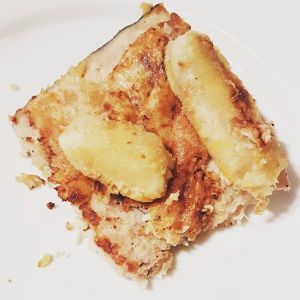 Hoje de tarde, fiz um prato novo, usando
 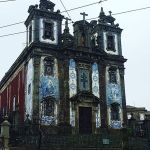 Com rosto pálido e unhas roídas, desci do avião e dei o meu primeiro passo na terra de Portugal do Norte. Era o aniversário da minha esposa, e estávamos a fazer um fim de semana longo para celebrar. Tínhamos saído de casa às 5:00 da manhã e chegámos no Porto ao meio-dia. Após de recolher as nossas malas, fomos de táxi para o hotel. Meus deuses! Não fiquei nunca num hotel tão elegante! Cada detalhe era perfeito: os edredons estava fofos, os lençóis suaves, o café de boa qualidade e tudo limpo e a com um cheiro doce.
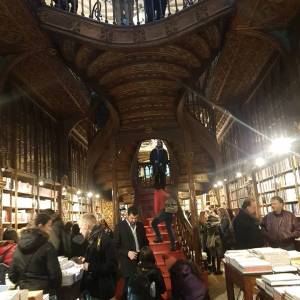 Então, a minha esposa e filha regressaram ao hotel para descansar e eu fiz uma peregrinação à Livraria Lello.
 À noite, fomos a um restaurante e comemos delicias locais: polvo grelhado (o polvo quase nunca é servido aqui em Inglaterra) e uma sobremesa que consistiu em queijo, nozes e chocolate com mel servido num prato de madeira. Sendo ingleses*, chegamos às 19:00 e o restaurante estava vazio. porque os portugueses jantam mais tarde do que nós. Quando saímos, todas as mesas estavam ocupadas.
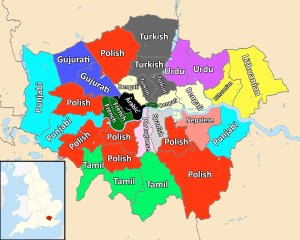 Anyway, in case you’re interested, here’s a map that did the rounds a year or two back of the languages most spoken in my home town of London, other than English of course. I live in LB Richmond where the second language is Polish. To be honest, I wouldn’t have guessed this as it’s so diverse around here that there isn’t one dominant group. Just thinking of children in my daughter’s class at primary school and their parents (maybe 40 kids in total over the years): Poland, Portugal, Brazil, Finland, Denmark, Sweden, America, Canada, Thailand, India, Pakistan, Jamaica, Iceland, um…. Oh Lordy, I’m sure I’m forgetting a few… she shared a class with three times as many children with Portuguese language ties as Polish, for what it’s worth.
 Luso
Luso 