Posted in Portuguese

A Letter

Formal letter – I’m rewriting this with some pointers. This text will probably still have a few errors in it because I’m typing it on a phone from terrible handwriting and referring to someone’s else’s notes at the same time. I hope it won’t be too terrible though, and the somos to make me think about the mistakes, so if there are a few typos, well, tanto faz.

Exmo Senhor

Venho por este meio pedir a sua atenção urgente no assunto do estado dos prédios na minha rua.

Quando eu e a minha família* mudámos de casa para este bairro, or prédios tinham paredes e portas de cores harmoniosas**. Ao longo dos anos, perderam a sua beleza. Ficámos envergonhados qia do convidámos os nossos amigos para jantar connosco em casa onde estamos rodeados por um amontoado de riscos, assinaturas e desenhos multicolores. Onde havia azulejos, hoje encontramos um quadrado vazio onde os azulejos desapereceram.

Considero isto um flagelo e um atentado à propriedade privada. Falamos com os nossos vizinhos que concordam, quase todos.

Por isso, encontrar-se anexado a esta carta uma lista de assinaturas. Todos nós pedimos que estabeleça uma sistema de segurança. Quer consistia em câmaras de vigilância, ou de agentes de segurança privada, as facínoras*** que cometem estes atos de vandalismo devem saber que não vamos tolerar seu comportamento.

Tendo estabelecido lei e ordem, mande uma equipa de empregados para pintar os prédios, encher os vazios e concertar as vidraças.

Para além disso, pedimos uma devolução dos custos do manutenção porque parece-nos que não foram bem gastos os últimos anos.

Sem outro assunto e agradecendo antecipadamente a sua atenção, subscrevo-me****

Colin

xxx

* This is a pretty bad start, actually, because the letter I’m supposed to be writing is meant to be on behalf of a residents group and I am whiffling on about my family here and don’t even remember to mention the group till much later because I hadn’t noticed that bit. Oh well… Never mind, but note to self: read the bloody question first, not half way through!

**Not a word I use often but I used Mr Bennett’s top tips and recycled a lot of words from the questions here and I’m the following paragraph.

***Bit of a strong word, this, but I was channeling Mel Smith’s energy from this sketch.

**** The opener and closer are off-the-shelf phrases to use in formal letter but there’s nothing to tell you how many kisses to put at the end so I’ve just guessed.
Posted in English, Portuguese

Vazios

I did the compreensão da leitura test from the DAPLE (C1) exam yesterday. It’s the one available on the Universidade de Lisboa site at the bottom of the course description here. I did pretty well on most of it but the wheels really came off on the last exercise so I’m going through the answers and trying to work out why it is the way it is.

Complete o texto com as palavras que faltam nos espaços 1-20. A cada espaço corresponde apenas uma palavra. Escreva as palavras na folha de respostas.

André Nave, Diogo Madeira e Bruno Nunes são três amigos que lançaram em novembro passado um sítio na Internet [1] podemos conhecer sugestões diversas sobre a cidade de Lisboa.

O sítio, chamado Onde Lisboa, [2] recordes de popularidade. A ideia surgiu quando os
três amigos [3] a necessidade de criar um espaço virtual onde os estudantes, os
residentes e os turistas pudessem encontrar informação que não [4] dos guias turísticos, por exemplo a questão do estacionamento gratuito.

O sítio dispõe de um separador [5] exclusivamente aos estudantes. Desde locais para
fazer impressões à lista de cantinas [6], os estudantes conseguem aceder a um conjunto de informações úteis em qualquer situação. [7] além disso, há um espaço dedicado ao desporto, à cultura e ao comércio.

O André e o Diogo fazem pesquisa de campo, sendo responsáveis pela [8] de informação e de fotografias que ilustram os artigos. Acabam [9] envolver os amigos nesse processo e estão sempre disponíveis para aceitar sugestões de [10] visita o sítio. Bruno Nunes diz que é comum encontrar espaços que não se [11] referenciados na Internet.

Nesses casos, o Onde Lisboa passa a [12] uma referência na divulgação desses espaços. À [13] que os proprietários do sítio vão fazendo pesquisas, vão descobrindo [14] vez mais coisas e aí constroem novos conteúdos.

O projeto está em permanente autoavaliação e os três amigos não sabem, ainda, [15]
proporções o projeto poderá atingir. [16] que vamos ter, em breve, um Onde Porto ou um Onde Coimbra? O tempo o [17].

Para já, Bruno, Diogo e André, os três mentores desta ideia já considerada genial, [18] as suas atividades profissionais com este projeto. Não têm uma ambição desmedida para o projeto e preferem que ele [19] crescendo aos poucos. Afinal, Roma e Pavia não se fizeram num dia. E é melhor [20] pelo seguro, para não dar razão ao ditado popular “quem tudo quer tudo perde”.

in http://www.ruadebaixo.com/

  1. “Onde” or “Em que” are given as answers, but since the instructions say only one word per space, I am declaring the second one bullshit and the correct answer is Onde
  2. Bateu. It beat the record. Embarrassingly, I got the point of the sentence wrong and thought “recordes de popularidade” was the actual content of the site so I wrote “contem”. This was moronic and I like to think if I’d gone back and checked my answers I’d have spotted the idiocy, but I didn’t
  3. viram/identificaram. Straightforward enough
  4. consta. This word constar has a few different meanings here but I think the relevant one is “to be written in”. Note that it’s folled by “de” and not “em” though. I stuggled to think of a single word that fit here and ended up writing “veio” – the information didn’t came from, the tourist sites. Nope.
  5. dedicado. I wrote “reservado” which isn’t a million miles away but it’s not right
  6. disponíveis. I wrote “baratas” but there’s no need to assume they’re only talking about value for money of course. A lot of people like to travelin luxury.
  7. Para. For some reason, madness seized me and I wrote “por”. Ugh.
  8. atualização. I said “escolha” – the choice of information. Hm… I don’t think this is a terrible answer, but atualização (“update”) definitely sounds better
  9. por. Acabar por means “to end up doing…” so this makes sense
  10. quem. This is a relative pronoun referring to person so it makes sense too
  11. encontram. I didn’t notice the “se” and wrote “for”. Lack of attention there. Always read the question carefully!
  12. ser. Passar a ser means it comes to be, so this makes sense
  13. medida. “À medida que” makes a lot of sense – it means something like “to the extent that…”. For some reason, I blanked and ended up writing “proposita” instead. Wild guess, and it doesn’t even make sense because the a wouldn’t have an accent on it if it was “a propósito” (“By the way”)
  14. cada. Cada vez mais means “increasingly” or “more and more” so this makes sense
  15. que. I wrote “quantas” for reasons which seemed to make sense at the time
  16. Será. “Será que” is a sort of impactful way of leading into questions where you’re maybe a little skeptical or want to build up some expectation.
  17. dirá. the expression is obviously equivalent to “time will tell”, but I used “contar” which is used for telling a story and it should be dizer: O tempo o dirá”. Time will say it!
  18. conciliam. This verb can mean conciliate, and something like “synchronise”, but I think the sense it means here is “combine elements that are apparently divergent or incompatble” according to Priberam.
  19. vá. I wrote Anda, which is on the right lines. According to this Ciberdúvidas page, andar+gerundio is valid (it’s example 5 on the page) but ir+gerundio has more examples and it explains that teh ir+ version is more like a slow development over time, where as andar+ was more like a repetitive action, so that must be ahy anda wasn’t the correct answer
  20. jogar. Jogar pelo seguro: play it safe! Should have guessed that one, although I’d never seen it before.
Posted in English

A Wobble and a Change of Direction

I’ve had a bit of a crisis of confidence recently, but it’s been quite useful in prompting me to reexamine my routine and make some changes.

I’ve been feeling for a while that, as much as I was enjoying the portuguese writing subreddit, I wasn’t really challenging myself very much. I tend to write the same kinds of things and yet I was making a lot of the same mistakes. Not only that, but the fact that it takes an hour or so each day means that I didn’t really have time for much else. Recently, some of the teachers have taken a well-earned break from correcting. There aren’t really enough to keep up with the number of students and so it seemed like a good time for me to withdraw, let some newer learners benefit from the experience, rather than hog it all for myself. Maybe I’ll go back to it later but for now, I think it’s time for a pause.

In the meantime, what I’ve decided to do is focus much more on book learning. I’ve been doing a couple of hours of grammar exercises in “Qual é a Dúvida” per day, just trying to get the nuts and bolts of the language right and firm up some of the things I’m still crap at.

I also – and I know I’ve said this a thousand times before – need to spend more time talking. It remains the achilles heel of my language learning. I’m an introvert anyway, so my smalltalk game is pathetic, even in English. When I try to speak Portuguese it’s even more stilted and unnatural. Actual, proper lessons are called for!

I’d like to do the DAPLE exam (that’s the C1, advanced diploma) in about 5 weeks but the experience on the podcast a few days ago has really shaken my confidence.

Posted in English

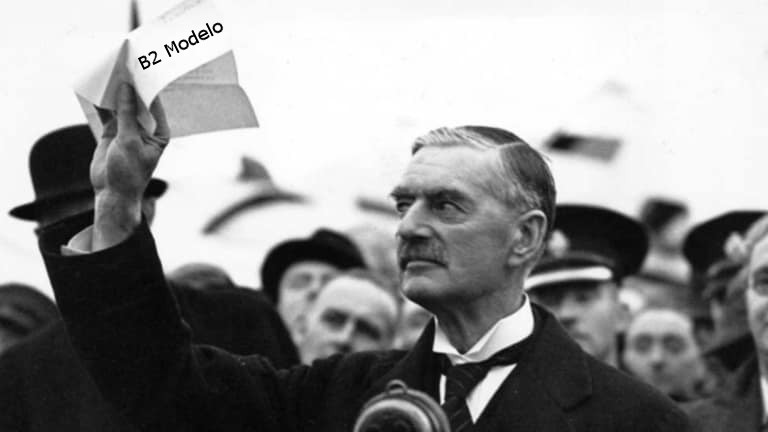
I Hold In My Hand A Piece Of Paper

I was asked if I have a copy of past exam papers. Sadly, no I don’t because I scribbled answers on them all during revision and then recycled them when I finished the exam. There are a few scattered around the web but it’s not always easy to find them because they could be on pages of any language, not just english or portuguese. Here are the ones I know about:

Firstly, straight from a boca do cavalo, there are samples of the three sections of the paper, including an audio file of the compreensão oral test on the University of Lisboa’s site (click on the name of the exam you want to take and scroll down to the “Exemplo do exame”) . The audio part is essential. As I’ve said in my descriptions of the tests in other blog posts, you definitely need to do some practice with this and figure out your strategy for reading the questions and answering them while listening in the very short time available. They play each one to you twice, but the amount of time for each one is pretty small, so it’s not the sort of thing you can just wing it through.

This site, Ensino Basico, has some dummy exam papers for levels A1, A2 and B1. They don’t look like official documents but they seem pretty realistic and they have sound files too, which is great.

This site has some different specimens of three of the four sections. The page is in italian but the papers themselves are in portuguese of course so it doesn’t matter. If you scroll down, there are three links in red. You can use ctrl+F to search for “interazione” if you want to go straight to it. No audio files, sadly.

Google also turns up a few if you are prepared to sift through the various results a bit.

This one from TELC is a pretty professional looking B1 test template. It’s not quite in the same format as the official exam but it has a similar level and some of the same exercises, at least. It feels a bit wrong that I can see it. I think these exam templates are supposed to be for sale, and I’m not sure if they even realise that this one is searchable via Google, but it is so take full advantage, I say.

This one purports to be a B1 test. It’s definitely not in the format used for the official CAPLE/DEPLE exams but it might be something extra if you need more practice.

If you want to take this to the next level, I’d advise getting one of the books of exam papers. Here’s the one that covers A2, B1 and B2, for example

You can get it online from Bertrand and download the audio files here by entering the ISBN number (9789897524622) and publisher (Lidel). Bertrand also sell a book of B2 test papers with an accompanying CD from the same company called Exames de Portugues B2, Preparacao e Modelos which might be useful if you are looking at intermediate level, but bear in mind that it covers several different flavours of B2 level test including DIPLE Escolar, which is the test given to school-age children, Celpe-Bras, the brazilian equivalent of DIPLE and half a dozen others I don’t even recognise. It’s not specific to the standard CAPLE test framework, in other words, so although it is quite chunky, it may not be as useful as it seems.

The hardest thing to simulate is the fourth part of the test, “produção e interação orais”. You should probably work with a portuguese language teacher if you’re not already, or at the very least ask a portuguese friend to grill you to develop your conversation skills. Think about how to talk about yourself, practice talking about your favourite aspect of portuguese culture – food, music, books, and practice just looking at photographs and thinking about how you would describe them if you had to. It isn’t as long or as scary as you think it’ll be but it’s definitely worth getting used to that environment.

Posted in Portuguese

We Was Robbed!

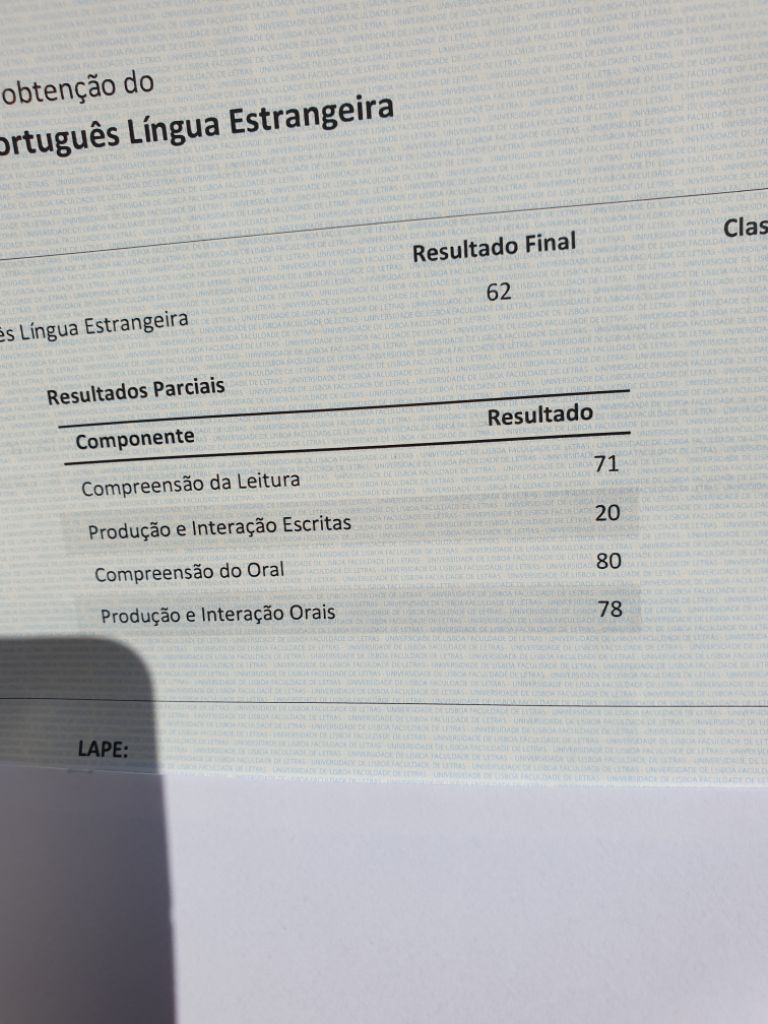
I went on a misson to Hyde Park this morning to collect my exam certificate from the portuguese embassy. They won’t mail it, you have to go in person. I think I mentioned a few weeks ago that I’d been disappointed to only receive a “suficiente” and not a “bom”. The cut-off is at 70% and I felt like I’d done really well, so when I got the result I assumed I’d hit the high sixties and just missed it. Disappointing but not the end of the world.

So, fast forward back to today. The teacher handed me the paper and I could see the marks I got for wach of the four of the components. For three, I was in the 70-80 range, which would have been fine, but the written component – usually one of the easiest bits – was well below that level at a pitiful 20%.

Twenty!

I said to the guy that it was a bit difícil a acreditar, undermining my case somewhat by tripping over my tongue and making a ton of mistakes through sheer nervousness. My written work definitely isn’t bad enough to hit 20 per cent though. I probably made some errors, but I finished both pieces and they were decent enough. One of the things about the exam, though, is that each paper has a candidate number on it, not a name, and I suspect mine might have got switched with someone else’s. Either that or they meant to give me 200% but ran out of ink before the second 0. Either way, I’m definitely appealing the mark.