Posted in English

Abreijos

I saw someone on Twitter signing off a tweet with “abreijos” which is obviously a mixture of “beijos” (kisses) and “abraços” (hugs). I love it! I did a post a few years ago about equivalents of “frenemy“, and in general I am very pro-splicing, but this was a new one on me.

Looking around for other examples, I found plenty, including these ladies who were less impressed with the idea of these frankenwords…

Abreijos - screenshot from Twitter

But woah, there’s a bonus one in there: namorido, which looks like a mix of “namorado” (boyfriend) and “marido” (husband). Seems to just mean a long-term, live-in boyfriend who hasn’t actually bothered with the whole ring thing. I asked about it on reddit and everyone agrees it’s a neologism from Brazil. True, it looks like everyone using Namorido on twatter is Brazilian, but Abreijos is used widely by Portuguese tweeps, so I am definitely going to pull that one out when I get an opportunity.

Posted in English, Portuguese

Lisboa Não é Hollywood

Here’s an attempt at translating the song “Lisboa Nao é Hollywood” by Os Azeitonas. It doesn’t seem to haave a translation on lyricstranslate so I thought I’d make one. Seems like quite a simple song but it’s really, really tricky!

Chega Cândida de capeline 
Cândida arrives wearing a capeline*
Como ela respira saúde**
She's glowing with health
Quase que parece a Marilyn
She almost looks like Marilyn
Ao chegar*** a Hollywood
On her arrival in Hollywood
Mas sem tapetes encarnados
But with no red carpets
Sob os seus pés de dama
Under her ladylike feet
Os seus sapatinhos delicados
Her delicate little shoes
Apenas pisam na lama
only step in the mud
Lisboa é paleio de Aljube****
Lisbon is well known to criminals
Por entre ruas, esquinas
Among its streets and corners
Também tem suas colinas, mas
It has its hills too, but
Lisboa não É Hollywood
Lisboa isn't Hollywood
Lá vai Cândida a correr atrás
There goes Cândida, chasing
Seu peito diz sorria
Her spirit***** says smile
Mas nos seus dentes nunca brilha o flash
But the flash of a photograph has never
Da fotografia
Lit up her teeth
Lá vai Cândida a mandar beijinhos
There goes Cândida, blowing kisses
Com o seu jeito rude
In her rude way
Como quem atalha caminho
Like someone taking a shortcut
Para chegar a Hollywood
To arrive in Hollywood
Lisboa é paleio de Aljube****
Lisbon is well known to criminals
Por entre ruas, esquinas
Among its streets and corners
Também tem suas colinas, mas
It has its hills too, but
Lisboa não É Hollywood
Lisboa isn't Hollywood
Como ela cai na trama
How she falls into the trap******
E vai esbanjando******* virtude
And squanders her virtue
Pelo passeio da fama mas
On the walk of fame, but
Lisboa não É Hollywood
Lisboa isn't Hollywood
Olha Cândida na solidão
Look at Cândida, all alone
De capeline, rouge e baton
In her Capeline, rouge and lipstick
Não foi parar ao panteão
She didn't end up in the pantheon
Morreu na vala comum
She died in the gutter
Lisboa é paleio de Aljube****
Lisbon is well-known to criminals
Por entre ruas, esquinas
Among its streets, and corners
Também tem suas colinas, mas
It has its hills too, but
Lisboa não É Hollywood
Lisboa isn't Hollywood

* = It’s a kind of hat apparently. Never heard of it!

**=Respira Saúde = Literally “breathes health” so visibly healthy, confident and in good form, not just “is healthy”. Researching this on the web, there’s some use of it in a more loreal way, meaning “breathing in a healthy way”, eg giving up smoking, but it is used as an expression too.

*** = I wrote about this “Ao + infinitive” construction a couple of months back and I seem to have seen it everywhere since.

**** = This line is a real enigma. The word aljube with a small letter can be a dark prison or a cavern. The fact that it’s written with a capital letter in all the sources I can find seems to imply that it’s a reference to A Cadeia do Aljube, which was the name of a prison (cadeira) that has been in existence since the peninsula was colonised by the muslim imperialists in the 8th century. The name Aljube comes from the arabic for a well. After the reconquista, its use changed but certainly by the twentieth century it was being used for political prisoners of the fascist Estado Novo, and had a pretty terrible reputation. These days, it’s a museum of resistance and liberty. “Paleio” means gossip or small talk, so the sentence “Lisboa é paleio de Aljube” doesn’t make a whole lot of sense. My wife didn’t know what they were driving at. I asked around on reddit and had four different replies, all different. The two closest guesses were along the lines of “a rumour in the prison”, meaning it was something lowlifes and criminals talk about, which is why I’ve translated it as “well known to criminals” but others have suggested “A trick in a cavern”, or even “pillow talk” (because Aljube can also mean alcove, and “de alcova” in Brazilian Portuguese can imply something relating to sex). Meh, its slightly odd that there’s a lyric like this that no two listeners can agree on the meaning, but there are plenty of songs on English that are obscure and ambiguous so I suppose I shouldn’t be that surprised!

***** = Not sure about this one either. “her chest says smile” just sounds weird but one of the lesser meanings of peito is “ânimo” so I’m interpreting it as she’s making an effort of will to smile…? But at least one of the people who replied to my question about paleio said that there was an implication that Cândida is a prostitute so maybe there’s some sort of implication that people are smiling at her cleavage…?

****** = Another iffy one: Trama can be a thread, either literal or in the sense of a unifying plot-line of a book (in fact, I think I used it in a a book review a couple of days ago!) or even a tram line. I wondered if we were supposed to imagine her literally tripping on a tram track but it didn’t seem to fit well with the next line.

******* = fantastic! I only learned this word a week or two ago, doing one of Paulo Freixinho’s old crosswords and here it is again!

By the way, I see Os Azeitonas are candidates for this year’s Eurovision but they’ve come down a long way since they lost their most talented dude, Miguel Araújo, and the song is vanilla AF.

Posted in English

The Utopia Portuguese Film Festival

The Utopia Portuguese Film Festival usually takes place on the UK but this year, owing to travel restrictions, I guess, it’s only available on the web. Its free though, and that’s my favourite price so I’m definitely in!

Utopia Portuguese Film Festival

It takes place this coming week: the 12th to the 19th and you can sign up for the films here. I feel like the first one is probably going to be the most useful for my studies but I’ll be out all day so I’ve no chance. The offerings on the following Sunday look good too though, especially the very last presengation: Cinzas & Rasgança.

Posted in English

Early Impressions of the Official C1 Course

I said, a few days ago, that the official C1 course I was taking through the Camões Instituto de Cooperação e da Língua was being hampered by network troubles. They’ve been sorted out now. It must just have been a temporary glitch. I’m still not convinced though. It’s not hugely expensive as these things go, so I’m not too traumatised or anything but it’s worth setting out the pros and cons for the benefit of anyone who is considering following the same path.

First of all, the pros: the course is designed by the same people who design the exams, so the topics it covers are likely to come up as discussion topics in the exam. So it’s a good way of getting familiar with that kind of vocabulary. It has several hours’ worth of content, intended to be studied week by week, but it’s delivered on demand so you can go faster if you like.

Now the cons: the app is broken. That’s OK though, you can take the course in a web browser and there have been a few times I’ve had to do that just to progress, because I simply couldn’t scroll to the answer in the app, or because it gave me an error message every time I tried to move onto a page. Just don’t even bother with it. Save yourself the headache and do it in the web browser instead.

The actual content isn’t especially challenging. For example, I’ve just done a quiz about health. You’re supposed to start with a text about healthy lifestyles then answer a series of questions like “Physical activity is essential for a healthy life – True/False”. Well um, I don’t really need to go back to the text to answer that, thanks.

The introductory lecture of the Camões Institute C1 course
The introduction to the first unit

Maybe the reason for the ease of the questions is that there’s quite a strong emphasis on culture. The health topic is perhaps not the best example to use, but in the very first section, there’s an exercise about local shops and their role in poor communities. The questions were sort of ridiculous, considered purely as a matter of language. In one, we’re shown a picture of a man, standing in a shop holding a book with people’s names and the various things they’d been given in credit, so he could keep track of who owed what. The challenge was to pick out words from a list that could be used as a caption for the picture. You’re not told how many to pick. I chose “mercearia” and “comerciante” but I should also have picked “proximidade”, “bairro” and “comércio local”

In the next question, you’re asked what makes it possible for a neighbourhood to feel like a large family. And the options are a confiança, o afeto, a proximidade or o tempo. The answer is not given in the text, you just need to think about it. The correct answer is “o afeto”

So… Okay… It felt a little random, and didn’t really challenge my vocabulary skills, but I suppose they’re trying to get you to think of what neighbourhood means in Portugal, and to understand the ties that bind local communities as well as just purely being able to use grammar correctly. So there’s an element of comprehension of the text, but also an expectation that you’ll use empathy to comprehend the actions of the individuals.

So I think my early review would be that the course is worth taking if you intend to take the exam seriously and want to be prepared for the conversation topics, and it’s definitely worth taking if you are considering citizenship and want to get to know the culture. But I don’t think it’s enough on its own, at least to judge from what I’ve seen so far, you’d also need to go through a textbook, because you’ll need something else to really stretch you linguistically and, from what I’ve seen so far, this ain’t it.

Posted in Portuguese

A Banda das Três Ordens

Thanks to ThisCatIsConfused and Dani Morgenstern for corrections

Provavelmente já alguma vez viste alguma vez uma fotografia do presidente da República portuguesa, Marcelo Rebelo de* Sousa ou um dos seus antecessores, vestido de modo formal durante uma cerimónia qualquer. Há um item muito curioso de roupa enfiado entre a camisola e o casaco: uma banda constituída por três faixas: uma roxa, uma vermelha e uma verde.

Presidente Marcelo Rebelo de Sousa e a Bandas das Três Ordens
Presidente Marcelo Rebelo de Sousa

Porque é que o presidente se veste assim? Tem a ver com o Natal**? O Senhor Rebelo de Sousa é um pres(id)ente que alguém vai desembrulhar? Espero que não. A banda é uma condecoração chamada A Banda das Três Ordens. Cada faixa representa uma das três antigas ordens monástico-militares: a de Cristo, de Avis e de Sant’Iago da Espada. As três ordens têm as suas raízes na idade média e o Grão-Mestrado de todas foi concedida à coroa portuguesa pelo*** Papa Júlio III. Após a implantação da República, no início do século XX, esta honra passou para a presidência após uma um intervalo de 8 anos (1910-18). Acho isso ligeiramente estranho: o povo rejeitou a monarquia mas reteve os sinais de uma estrutura ainda mais antiga e ainda mais obscurantista, mas talvez faça sentido: demonstra a continuidade do estado português e a sua autoridade, apesar do afastamento da monarquia…?

A banda foi concedida a vários outros chefes de estado estrangeiro ao longo dos anos, incluindo Francisco Franco da Espanha, a Rainha Isabel II, Hailé Selassié da Etiópia, é o Rei Leopoldo III da Bélgica mas a partir de 1962, a banda passou a ser exclusiva do chefe de estado português.

*=I wrote this with a capital D but that’s a no-no.

**=natal with a lower case n is also a no-no. Or a No-No.

***=pelo, not por. Not “By Pope Francis”, but “By the Pope Francis”

Posted in Portuguese

Alcina Lameiras

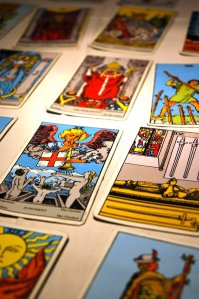
Tarot

Alcina Lameiras era uma personalidade televisiva durante os anos noventa. Há poucas informações sobre a carreira dela na Internet e ainda menos vídeos mas tanto quanto eu consegui constatar, ela… Dava notícias sobre o futuro através de… um telefonema…? O único vídeo que encontrei foi um anúncio promovendo uma linha telefónica que “funciona todos os dias a qualquer hora”. Não tenho certeza mas não acho que ela fosse uma apresentadora com o seu próprio programa mas apesar disso, a gente do Twitter lembra-se dela e uma pesquisa dá luz a posts de Guilherme Duarte e entrevistas com Fernando Alvim nos quais ela é mencionada. Como perguntou o Senhor Duarte, “O que é feito dela?”

Na mesma altura, cá na Inglaterra, havia um crescimento de tais charlatães devido ao decreto lei de 1993 que pôs fim à antiga tradição de queimar os bruxos. Tínhamos a nossa Mystic Meg mas acho que Alcina é lembrada com mais afeto.

Dani, who kindly marked this, tells me there’s was another tarot reader at the same time called Maya who was a bit more showy. Alcina was less self-aggrandizing so people look back on her as more genuine… insofar (and this is me editorialising now) as someone whose job is saying nonsense can ever be regarded as genuine.

Posted in English

An Incident

I was interested in this passage from Maremoto, the book I finished the other day. In the passage, the protagonist, Boa Morte, is standing around near a bus stop when a guy he’s never met comes up and starts accusing him of stealing and generally giving him a hard time. Xingar is a good word here: to verbally abuse someone. O homem está a xingá-lo

Djaimilia Pereira de Almeida

“Chamou-me preto de Guinea, farrusco vai para a tua terra, escarumba eu sei lá que mais, aqui na rua há quem diga que pareço realeza, não sei se é verdade, o povo Cuanhama é conhecido pela sua majestade”

Maremoto – Djaimilia Pereira de Almeida

It’s obviously got a strong racial angle: preto being a word for black that is not exactly polite (“negro” is the more acceptable word). I’ve heard it described in a news program as the Portuguese equivalent of the N word, but it certainly doesn’t seem to be that, judging from the contexts I’ve seen it in. It definitely has a charge to it though. Likewise, Farrusco is related to skin colour, but its literal meaning is more like “sooty”. “Vai para a tua terra” means go back to your own country and Escarumba is just a general, derogatory term for a black person.

I was initially confused as to why he then goes on, in the second part of the sentence, to talk about royalty, but I was probably being stupid: he’s just turning the situation around. The guy haranguing him can only see his colour and is making all kinds of assumptions about him, but he says among people who know him better, he is considered to have a regal bearing. It seems quite a good way of dismissing the idiot as an irrelevant know-nothing.

When I asked about this online, quite a few people said it wasn’t necessarily a racist incident. Say what now? It’s true that the book doesn’t say for sure that the aggressor in the situation is white, but everything about the terms he’s using – three words in quick succession that make specific reference to Boa Morte’s skin colour – just make me think that the speaker doesn’t share that skin colour. I pointed this out, but the Portuguese peeps replied that there were rivalries and snobberies between black Portuguese people and Africans and then within the African community between different nationalities and tribal groupings and that it’s not unheard of for different groups to say ostensibly racist things to each other as a result. Nobody from within Portugal contradicted this point of view; nobody said it sounded like a racist incident. Every Portuguese person who expressed an opinion said it seemed ambiguous to them.

Mmweellll, I’m from outside the culture so I’m reluctant to flat out contradict them but I must say that gets a big 🤔 from me. If anyone else reading this knows the book, I’d love to hear how you read it and whether or not you agree.

Anyway, it all sounds a bit grim, doesn’t it, but Djaimilia Pereira de Almeida is a good enough writer that she can handle a pretty heavy subject with a lightness of touch. It’s quite a funny scene, believe it or not!

Posted in English, Portuguese

The New New Normal

Since “The New Normal” has been a theme today, here’s Sergio Godinho with a song of that name, written in August last year and containing obvious references to the long nightmare from which we hope we will soon awake (although I’m writing this the day after “Freedom Day” and I am regning in my optimism…)

Dadas as circunstâncias Given the circumstances
Mantenha as distâncias Keep your distance
Respeite os espaços Respect the spaces
Controle essas ânsias Control your urges
De beijos e abraços for kisses and hugs
Refreie as audácias e as inobservâncias Refrain from risks and non-observances

Posted in English, Portuguese

Rústica – Florbela Espanca.

I mentioned a few days ago that I was trying to memorise poems in both English and Portuguese. Well, today’s is a Portuguese one: Rústica by Florbela Espanca. As with so many of these poems, reading it through once a couple of years ago, I was my usual poetry-reading self: “Yes yes, very poetic. Next!” But now that I’m immersing myself in them, I’m starting to get the point of poetry. Here is the original:

Rústica

Ser a moça mais linda do povoado.
Pisar, sempre contente, o mesmo trilho,
Ver descer sobre o ninho aconchegado
A bênção do Senhor em cada filho.

Um vestido de chita bem lavado,
Cheirando a alfazema e a tomilho…
– Com o luar matar a sede ao gado,
Dar às pombas o sol num grão de milho…

Ser pura como a água da cisterna,
Ter confiança numa vida eterna
Quando descer à “terra da verdade”…

Deus, dai-me esta calma, esta pobreza!
Dou por elas meu trono de Princesa,
E todos os meus Reinos de Ansiedade.

Rústica, Florbela Espanca, from Charneca Em Flor

Florbela Espanca

There are a few unfamiliar words in it so I’ll have a go at translating it:

Rustic

To be the prettiest girl in the village
To walk contentedly on the same trail
To see descending on the cosy home*
The blessings of the Lord on every child 

A calico** dress, well-washed
Smelling of lavender*** and thyme 
With the moonshine quenching the thirst of the cattle****
Giving the doves the sun in a grain of corn

To be pure as the water in the cistern
To believe in a life eternal 
When I go down to the land of truth*****

God, give me this calm, the poverty
I’ll give them my princess throne
And all my kingdoms of anxiety

*=The word used in the original is “ninho” which means nest, but I think in this context its just a folksy way of saying home.

**=my paper dictionary says chintz, but I think chintz is made of calico (?) and that calico goes more with the vibe of the poem. But I’m not an expert in cloth, so I could easily be wrong.

***=I’ve been saying “lavandas” for lavender but I think that might be a brazilism because according to the wiki this is the word used in Portugal.

****=matar a sede means kill the thirst, literally, but quench seems better. And it’s not “a sede do gado” (the thirst of the cattle) but ao gado (to the cattle) , another example of Portuguese speakers using prepositions in a way that are just a little different to what an english speaker would expect.

*****=Descer in this sentence is the future subjunctive, not the infinitive, and I believe its “when I go down” not “when he/she/it goes down” but I can only get that from context since there no way of telling grammatically! I’m not sure what the land of truth means here either. If it’s heaven, why is she descending and not ascending? I’ve read the bible and spent a lot of time in church but this makes no sense to me I’m afraid.

Here’s an analysis I wrote of the poem, in Portuguese, for today’s writing challenge (thanks to Dani Morgenstern for the help)

O Poema de hoje é Rústica de Florbela Espanca. O poema fala do anseio da poeta por uma vida mais bucólica, numa aldeia onde ela seja “a moça mais linda” e o ar seja perfumado de ervas e flores.
Este desejo, esta saudade duma vida sem ansiedade e sem problemas é, no entanto, pouco realista porque a vida numa aldeia tem as suas próprias ansiedades e nem todas as moças podem ser a mais linda. Mas isso não contraria a mensagem do poema nem a vontade que todos nós temos de afastar-nos da vida moderna.
O poema tem quatro versos: dois de quatro linhas e dois de três, e tanto quanto sei, este padrão é muito comum na obra desta poeta. Usa imagens da natureza (o que é pouco surpreendente neste caso!) e temas religiosos. Aliás, a religião não é apenas um tema: a saudade da religião faz parte da saudade da vida simples. É como se Deus não tivesse poder nenhum na cidade e só soubesse tocar o coração de quem vive nalguma quinta.

Posted in Portuguese

Scarecrow

Text with corrections from Dani Morgenstern. Notes at the bottom

Isto é uma tradução duma explicação ao lado de um quadro da exposição da qual eu falei ontem

O Espantalho
Litografia

Paula Rego tomou inspiração do dramaturgo Martin MacDonald. Na perspectiva dela “[…] a peça de teatro mexe* com religião… E a menina que queria ser Jesus… Que tinha muito a ver com o tema português também.” Esta litografia pode também representar a natureza paradoxal das consequências das nossas acções dentro dos nossos assuntos infelizes.
O Espantalho não é uma representação directa duma das cenas mais macabras da peça mas, com a sua imagem central dominadora dum espantalho crucificado, refere-se àquela parte da peça na qual a menina certinha, que faz sempre boas acções como se quisesse ser Jesus, perde os pais por causa dum acidente pelo qual, em** última análise, ela é que é culpada.
Ela é transferida para uns pais adoptivos sádicos*** que a tormentam com uma coroa de espinhos, uma chicotada e um cruz de madeira que ela tem de carregar (ela tem apenas 6 anos). Eles a perguntam se ou não ela quer ser Jesus e quando ela responde que sim, pregam-na ao cruz e voltam a perguntar se ou não ainda quer ser Jesus. A esta questão ela responda “Não, não *quero* ser Jesus, sou Jesus mesmo, caralho!” portanto, enfiam uma lança nas costas dela e o resto da história da crucificação desenrola-se no palco como antes.

*=hum… Na minha opinião “meddles with religion” não está bem traduzido porque ninguém fala assim em inglês. Julgo que é tradução de “mexer com” e não “interferir em”, e deve ser “touches on” em inglês, mas não faço ideia propriamente porque não li/ouvi as palavras originais da artista.

** =”em” not “na”. I was literally translating “in the final analysis” but it doesn’t need the article.

***=not “sadisticos”