Posted in Portuguese

Tamanho, Tamanho, I Love Ya, Tamanho

Escrevi este texto em inglês porque estou a ficar preguiçoso mas isso não chega, portanto aqui vou eu novamente em português.

“Tamanho” É uma palavra daquelas que surge de vez em quando nas minhas leituras e sempre entendo o significado mas não consigo usar nos meus textos com confiança. Tentei várias vezes no reddit na era de r/writestreakpt. De certa maneira é fácil. Aprendemos a palavra “tamanho” quando aprendemos o vocabulário para ir ás compras, não é? O tamanho de uma camisa refere-se à grandeza dela. És alto? Gordo? Então, talvez precises de uma camisa do tamanho XL.

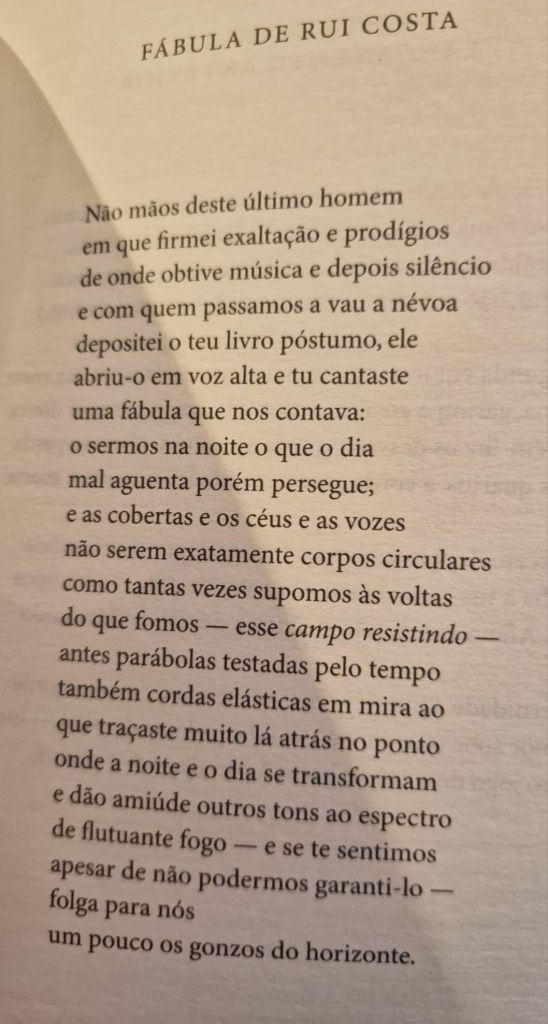
Mas tamanho também tem uma vida secreta*. É um substantivo de dia mas de noite assume a identidade de adjetivo e aparece em canções tipo Fado Português e em diálogos como o da imagem infra:

Excerto d’ A Farsa de Inês Pereira de Gil Vicente

É óbvio nesta situação que a palavra significa “tão grande” ou “tão notável” ou algo do género. Mas tentei experimentar este tipo de frase no Reddit e falhei. Não me lembro como. Talvez tenha feito um errozinho de tradução literal de inglês, e usei num contexto que não faz sentido em português. Às vezes usamos grandeza figurativamente para descrever a intensidade de um som, ou a duração temporal, e pode ser que tenha usado assim, mas sem encontrar o(s) texto(s) em questão, não faço ideia.

*Tempting to think that because segredo means a secret (noun) it will also mean secret (adjective) but no, the noun is secreto/a. i wrote segreda here and it passed spellcheck but only because segreda is part of the verb segredar (which, pleasingly, means to tell a secret or whisper something in someone’s ear.)

Posted in Portuguese

Alcindo Monteiro

Speedy note-taking on what seems like a sort of Portuguese equivalent of the Stephen Lawrence case. I think this guy has a series on the radio where he talks about the lives of people of note who have now died. I think the segment is quite light-hearted so in a way it was a brave choice to take on something so recent and so raw.

(Edit: rapid note taking = more errors than usual. Thanks as ever to Cristina for correcting)

1995 – morreu com 27 anos

Tinha imigrado de Mindelo em Cabo Verde em 1991, a família moraram em moravam no Barreiro. Bom filho, bom amigo, divertido. Foi cozinheiro na tropa e dançava.

No dia de Portugal (dia 10 de Junho) foi jantar com amigos no bBairro aAlto mas havia um grupo de racistas a jantar por perto.

O Hugo lembra-se de ver tais pessoas na mesma zona naquela altura.

Os racistas espancaram várias pessoas mas o Alcindo era o mais ferido de todos e foi para o hospital. Entrou numa em coma e faleceu duas dois dias depois no dia 12.

Uns membros do grupo de racistas foram presos e processados: dois absolvidos e os outro receberam penas leves.

A morte destae rapaz é divisória e há quem desprezem a memória do jovem, sobretudo (como podemos adivinhar) os neo-nazistas!

Hm… still writing in complete sentences aren’t I. I need to focus more on content and less on form for this stuff because I miss details while I’m writing

Posted in English, Portuguese

Melhor de Mim

This is the song Mariza sang as an encore at the concert. It’s more motivational-poetry-ish than I’m really comfortable with, but that’s OK, each to their own, and a lot of people really seem to like it. There are a few versions on youtube but I think I like this live, acoustic version better than the official video (which is definitely trying too hard imho)

Hoje a semente que dorme na terra
E que se esconde no escuro que encerra
Amanhã nascerá uma flor
Ainda que a esperança da luz seja escassa
A chuva que molha e passa
Vai trazer numa luta amor
Today the seed that sleeps in the earth
And that hides in the enclosing darkness
Tomorrow a flower will be born
Even though the hope of light is scarce
The rain that wets and moves on
Is going to fight to bring love
Também eu estou à espera da luz
Deixou-me aqui onde a sombra seduz
Também eu estou à espera de mim
Algo me diz que a tormenta passará
I’m waiting for light too
He left me here where the shade seduces
I’m waiting for myself too
Something tells me the torment will pass
É preciso perder para depois se ganhar
E mesmo sem ver, acreditar
É a vida que segue e não espera pela gente
Cada passo que demos em frente
Caminhando sem medo de errar
Creio que a noite sempre se tornará dia
E o brilho que o sol irradia
Há-de sempre me iluminar
You have to lose so you can win
And even without seeing it, believe it
It’s life that goes on and doesn’t wait for people
Every step forward that we take
Walking without fear of going wrong
I believe the night always becomes day
And the light the sun gives out
Will surely always shine on me
Quebro as algemas neste meu lamento
Se renasço a cada momento
Meu destino na vida é maior
I’m breaking the handcuffs in this my lament
Of rebirth in every moment
My destiny in life is greater
Também eu vou em busca da luz
Saio daqui onde a sombra seduz
Também eu estou à espera de mim
Algo me diz que a tormenta passará
I too am in search of the light
I’m getting out of here where the shade seduces
I’m waiting for myself too
Something tells me the torment will pass
É preciso perder para depois se ganhar
E mesmo sem ver, acreditar
É a vida que segue e não espera pela gente
Cada passo que demos em frente
Caminhando sem medo de errar
E creio que a noite sempre se tornará dia
E o brilho que o sol irradia
Há-de sempre nos iluminar
You have to lose so you can win
And even without seeing it, believe it
It’s life that goes on and doesn’t wait for people
Every step forward that we take
Walking without fear of going wrong
I believe the night always becomes day
And the light the sun gives out
Will surely always shine on me
Sei que o melhor de mim está pra chegar
Sei que o melhor de mim está por chegar
Sei que o melhor de mim está pra chegar
I know the best of me is yet to come
Posted in English

Ladybullers

I keep learning new words from Quina. They are mostly useless, obscure words, but I was interested that there’s a feminine form of Touro because I always thought Touro was the masculine form of Vaca. Maybe that’s a hangover from English though, where the feminine is the default because you learn cow first, as a child, and only later find out that there’s a daddy cow called a bull, who is always in a bad mood, and that people in other countries like to wave red capes at him for reasons that are difficult to fathom.

Anyway Toura (or “toira”, because it’s one of those words that can be spelled with an ou or an oi) refers to a young or sterile cow. It can also be an irascible woman (informally – and I’ve no idea how someone would react if you called them that so would not recommend) or a handled cooking pot (tacho) but only in some regions.

So if there’s a feminine form of Touro, is there a masculine form of Vaca? No, no there is not, not even in 2024, but as soon as the Americans find out about this they’ll have an entire academic department writing papers about it, I’ve no doubt.

Posted in English

When is a Mistake not a Mistake?

Like Alexander Fleming failing to keep his room tidy, William Webb Ellis getting away with handball or Christopher Columbus getting lost on the way to Japan, sometimes we fuck up, but the result turns out to be a kind of victory. Apparently I did this in yesterday’s post. I referred to Salena Godden as a “poetesa” thinking it was the feminine form of poet. It isn’t.

But it doesn’t matter. Why? Well, as you probably already know, poeta just means poet, and is masculine by default despite the -a ending. The equivalent of poetess is poetisa. In English almost nobody says poetess and it sounds a bit antiquated because we’re moving to a world where a job is a job and doesn’t need to change with the gender of the person performing it. Portuguese is a more gendered language generally, and if pens, TVs and hats can have gender, maybe it seems less obvious why gender has to be eliminated in words that refer to people. As a result, poetisa persists and is still used. But even though it is less of an endangered species that poetess is, don’t be surprised if you meet a poetisa who describes herself as uma poeta because why not?

But why is poetesa not a mistake then? I was baffled when I was told it actually sounded better than the right word, so I dug around, and I think it’s because of this. Esa is a suffix from latin which, when used as part of a feminine noun designates status and dignity. Well that’s good then. I don’t really know Salena Godden’s work but I bought a copy of her book Mrs Death Misses Death to read later and she signed it and I’m happy to have accidentally given her a respectful title!

Posted in Portuguese

O Podcast

Ontem fui assistir a uma gravação de um episódio do Podcast “Backlisted”. O assunto do dia era “A Parábola do Semeador” de Octavia Butler, um livro de ficção científica escrito nos anos noventa do século XX, cujo enredo se passa em 2024!

Adorei o livro e adorei ainda mais ouvir as opiniões dos participantes na discussão a falarem sobre o livro que tinha fechado meras horas antes do evento.

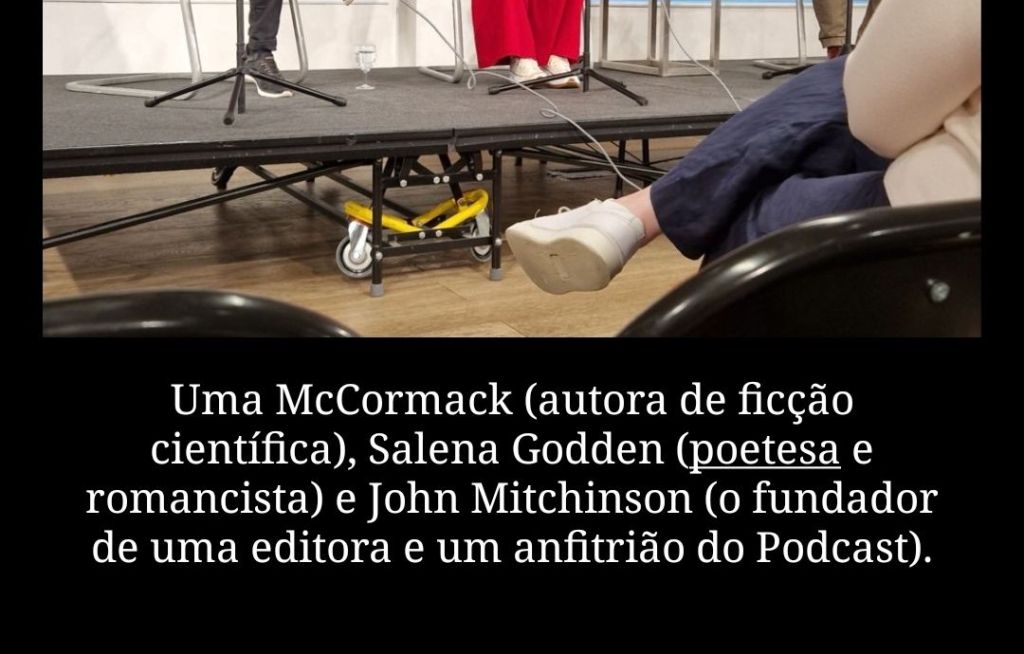
Uma McCormack (autora de ficção científica), Salena Godden (poetesa e romancista) e John Mitchinson (o fundador de uma editora e um anfitrião do Podcast).

Posted in Portuguese

Atirar Para o Torto – Margarida Vale do Gato

Já me queixei deste livro noutros lugares mas isso não significa que o livro não seja ótimo, só que tenho mais olhos que barriga e escolhi um livro demasiado difícil. Li-o todo mas deu água pela barba. O meu dicionário está completamente gasto. Como resultado não gostei do livro assim tanto, mas aprendi algumas coisas.

Enfim, não recomendo este livro aos meus camaradas nesta viagem linguística mas se és português, o livro tem 3.3 estrelas no Goodreads e os leitores que o classificaram por lá terão opiniões mais úteis do que a minha!

Posted in Portuguese

Primeiro Eu Tive Que Morrer – Lorena Portela

Hum… Já li montes de livros brasileiros neste verão, não é? Li este como Audiolivro no app Kobo no meu telemóvel enquanto tratava dos arbustos no jardim da minha mãe.

O livro conta a história de uma mulher que trabalha numa empresa cuja cultura é machista e “tóxica” (palavra de jovens, mas parece-me apropriada neste âmbito) e quer afastar-se de tudo e descansar. Durante esta viagem de autodescoberta, encontra novas amigas que a ajudam a entender a si própria. As mulheres partilham os seus traumas*, contam as suas histórias e dão conselhos umas às outras. Segundo o prefácio, a autora imaginou os seus leitores principalmente como mulheres, e é provável que as leitoras acharão mais fácil identificar-se com as experiências da protagonista. Para falar como homem, gostei da história mas não me marcou de mesma maneira como esta brasileira descreve no seu vídeo, o que não é surpreendente!

E falando como estudante de PT-PT, o sotaque da narradora é estranho, e a gramática também, claro, mas apesar disso achei a gravação muito fácil de entender. Não perdi o fio à meada tanto quanto como no último audiolivro brasileiro que li – O “Memórias Póstumas de Brás Cubas”

*New masculine-word-ending-in-A unlocked!

Posted in English, Portuguese

Chamem O FBI do Coração

Cuca Roseta is coming to play in London soon. It really has been an excellent year for portuguese entertainment here. I’m sure there are a lot of fair-sized towns in Portugal that haven’t had as much choice of big name acts visiting them as we have. Anyway, I’d never heard of her, as far as I remember, but I looked her up and found one of the craziest song titles ever: Call the FBI of the Heart. It’s mid but I thought I’d try and translate it. It didn’t make me like it any more, I’m afraid.

PortuguêsInglês
Tirem-me às palavras o sentido
Se é p’ra ser sonante ao ouvido
Do que é certo ou do que tem mais valor

Tenso assalto aos meus neurónios
De uma espécie rara de demónios
E que ninguém saiba que se chama amor
Take the meaning of my words
If it sounds better to your ear
Of what is right or has more value

Tense assault on my braincells
by a rare kind of demon
And that no-one knows it’s called love
Tirem-me as palavras à cigana
Que de faca e de mão na trama
Saem da boca sem lhe dar a permissão

Eu bem que me tento comedir
Penso em trocá-las ao sair
Mas sou sempre ultrapassada p’la emoção
Take my words from the gypsy
Who, with knife and a hand in the plot
come out of her permission

I’m trying to contain myself
I’m thinking of swapping them on the way out
But I’m always overtaken by emotion
Chamem o FBI do coração
Façam sindicato da paixão
Tragam-mе as algemas para a boca
Estou a ficar louca
Levem-mе para a prisão da Cuca
Call the FBI of the heart
Make a love syndicate
Bring me handcuffs for my mouth
I’m going crazy
Take me to Cuca-prison.
Tirem-me as palavras que desato
Quando chegas perto e eu relato
Digo tudo o que não queria dizer

Venho a mastiga-los pela boca
De uma outra eu que é meia louca
Que faz sempre o que eu não queria fazer
Take my words that I untie
When you get close and I report
I say everything I didn’t want to say

I come to chew them in the mouth
Of another me who’s half crazy
Who always does what I didn’t want to do
Ao meu lado
Dorme a tristeza
Gota a gota dessa vil certeza
De não te poder tirar do coração
At my side
Sadness is sleeping
Drop by drop of this criminal certainty
of not being able to take it from my heart
Chamem o FBI do coração
Façam sindicato da paixão
Tragam-me as algemas para a boca
Estou a ficar louca
Levem-me para a prisão da Cuca
Chamem o FBI
Chamem o FBI
Chamem o FBI
Do coração
Call the FBI of the heart
Make a love syndicate
Take these handcuffs off my mouth
I’m going crazy
Take me to Cuca-prison.
Call the FBI
Call the FBI
Call the FBI
of the heart