Posted in English

I Make Years

It’s my birthday today. Actually, unless I can finish writing this in the next minute and a half it was yesterday. Anyway… In Portuguese you can say this in two ways:

“Hoje é o meu aniversário” just means “Today is my birthday”

“Hoje faço anos” literally means “Today I make years”. I love this! It’s like my life is a machine for making time.

By the way, the Portuguese words to happy birthday are:

Parabéns a você
Nesta data querida
Muitas felicidades
Muitos anos de vida

Hoje é dia de festa
Cantam as nossas almas
Para o(a) menino(a) [Insert Your Name Here]
Uma salva de palmas

I can remember the first verse, but the second… never.

I ordered a big bag of Portuguese swag from Fnac.pt and I’ll blog about that when it arrives.

Posted in English

Practice Portuguese (Again)

I mentioned a while ago that Rui and Joel’s European Portuguese podcast, Practice Portuguese was still a thing and that I was going to sign up for a paid subscription. Well, I’ve been finding it very helpful. I already had all the podcasts on my ipod, of course, but I find it hard, sometimes, to follow everything that’s being said. Being a pro member gives you access to subtitled video versions, with a complete transcription, key vocabulary, and a quiz at the end. Well, there’s a section on the DEPLE exam that involves listening and answering questions, and I’m nervous about it, so this is enormously helpful for me, and I am working my way through them. Once you’ve looked at the video features for an episode, listening again to the audio is a lot clearer and I find my level of understanding goes up a notch the next time I listen to it on the iPod at the gym or while wrestling a filha’s stick insects.

You can try out the subscription service by going to the subs page on their site and scrolling down. No, further than that.Ignore the video of Rui talking to his Avó. Go about half way down. The video is called Diálogo 10 – Encomendar uma Pizza. That. Try that.


Posted in English

Speaking Without Conversing

I eavesdropped on a webinar by Lindsay Dow and Shannon Kennedy in which they talk about how to start speaking and producing language when you aren’t ready to actually go head-to-head with another human yet. It’s something I’ve written about in an earlier post, because there is so much emphasis on speaking straight away in a lot of the language learning advice out there, so it was reassuring that two badass polyglots had dealt with the same issue too. They give some useful tricks for coaxing language out of yourself and developing some confidence.

The seminar is here for now but sadly it won’t be up for very long. Hi ho. You might be interested enough to follow up Shannon’s course on the subject, which is called “Say Goodbye to Shy

Posted in English

It’s Riry Funny

My First Actual, Proper Portuguese Joke

I had this idea for a joke in Portuguese yesterday while I was studying and I decided to turn it into a tweet. The verdict seems to be that it’s a bit crap.

One guy on iTalki liked it when I put it up for corrections but everyone else said “I can see what you’re driving at but I didn’t actually laugh”. And it got zero retweets on Twitter.

The english translation, though, got 54 (and counting!)

…which is more than any other tweet I’ve ever done with the exception of a photograph of a train cake I made for my daughter’s birthday party that was so bloody awful that it briefly catapulted me to Twitter-fame. I’m not really sure what this means. I mused on iTalki…

Fiz uma “tweet” com a piada em português e então fiz um outro com uma tradução em inglês (a piada corre bastante bem em inglês também: “Arctic”/”Article”). O tweet inglês retweetou-se cinquenta-e-dois vezes, e o português… nada! Talvez este facto mostra que a piada não é engraçada em português, mas provavelmente somente mostra que a maioria dos meus seguidores não falam português!

…but I wonder is it purely because so few lusophones saw it or is there something specific about the humour that gets lost in translation?

Tickling the Lusophones

Obviously, some things are never going to translate because the humour hinges on a pun that wouldn’t exist in the other language. Like these:

p: qual é o animal que tem mais que três olhos e menos que quatro? r: piolho

p: qual é o instrumento musical que tem mais que três e menos que quatro anos? r: piano

(taken from here)

These jokes only work because the portuguese words pi+olho=piolho (π+eye=louse) and pi+ano=piano (π+year=piano). That’s a total dead-loss if you wanted to translate it.

In other cases, joke formats are specific to a time and place. The Portuguese don’t have lightbulb jokes, for example, so when I sent this to my teacher, she didn’t recognise it as a part of a wider tradition.

Quantos Brasileiros precise para mudar uma lâmpada? Nenhum. Lâmpada não mudou por causa do acordo ortográfico

To be honest, I think I’m a long way from understanding whether there is some impassable barrier to fully understanding what tickles another nation. I’d love to find out though!

Mnemonics

In the meantime, jokes and puns are a great way of brushing up your language skills and helping you remember stuff in a way that isn’t boring. Along the way, you get an insight into what makes people laugh in other countries. Here’s a guy getting his head around an old joke in English, for example. I happened to see it on iTalki today. They can be bilingual or just in the target language.

One of the simplest examples of puns as language-learning tools would be a mnemonic. Maybe you didn’t even realise that’s what you were doing when you came up with a mnemonic, but it’s all about the word play, baby, whether it’s acrostics, poems or puns. For example

You use a puxador when you want to push a door open

A puxador is a door handle and it is pronounced “pushadoor”. This is great until you find out that “puxar” actually means “pull”, not “push”. Push is “empurrar”, but even as you’re telling other people about this annoying fact, and tweeting “FML” about it, you are actually embedding all three new words in your mind in a single bad-luck anecdote, so it actually works better for being misleading.

5580857-160309235311One of my favourite apps, Memrise, encourages users to make “mems” – pictorial mnemonics – to help each other remember words. I have only done one because although I have ideas, who has that kind of time?

Here…

*points right*

…is my Mem for “As Cuecas”


Consoantes Perdidos

Another favourite joke format is the Lost Consonant. This is a format developed by Graham Rawle of the Guardian, back in the late eighties. He used to write a sentence that had one consonant omitted from one word, totally changing the meaning of the sentence. What I like about these is the challenge of making the grammar of the sentence work properly with or without the missing letter. That makes it a fun challenge for a person learning to write sentences in other languages, and to be honest, I suspect that I haven’t got it right every time when I have tried it. For example

which means

Increase the battery life of your mobile phone by not washing it in bleach

with the added c in “bateria” you get

Increase the life of the bacteria on your mobile phone by not washing it in bleach

But does the grammar actually make sense in either or both of these sentences? Christ knows, and I can’t even think how I would explain all this to a Portuguese person so they could judge. They’d think I was off my head.

There are some examples of original Graham Rawle Lost Consonants here.

Twitter Lost Consonants in English (#lostconsonants)

Twitter Lost Consonants in Portuguese (#consoantesperdidos)

Cartoons

I have already banged on at length about Astérix cartoons as the gateway to better vocabulary, but there are plenty of cartoons out there on the web if you know where to look and they can be quite instructive. Like this for example:

8e893c3da23b8d7451c20d03ef608b87

It works because “nada” means “nothing” but it’s also the second person singular imperative form of the Portuguese verb “nadar” – so it means, “hey, person I know reasonably well – you need to swim now!” And there’s no better way of remembering that fact than by laughing at this joke!

I found a new comic I like called Zorg & Borges recently. I think it’s on this page but the Publico website seems to be horrifically slow right now so apologies if this sends you to the wrong place. There’s a single example of it on here for sure though!


Posted in Portuguese

Uma Experiência Inglesa de Quase-Morte

Tento usar o vocabulário sobre o clima/tempo e também praticar expressões idiomáticas.

Quando levantei-me, estava com a pulga atrás de orelha. Alguma coisa estava errada mas não sabia o quê. Tudo parecia normal, mas… ainda sabia que era rés-vés Campo do Ourique*. Vesti-me com cuidado, olhando em volta de mim com olhos de lince. E também com orelhas de coelho. Como gostaria de ter asas dum pássaro. Voaria deste apartamento para morar numa árvore e ser feliz. notebook_image_686272
Onde estava? Ah, sim.
Finalmente, fui à sala de jantar e cozinhei ovos com cogumelos para o meu pequeno almoço Enquanto estou a cozinhar, a minha esposa apanhou-me com a boca na botija, a comer Nutella do frasco com uma colher grande. Tinha de pagar o pato. Enquanto comi, li o jornal “The Guardian”.
O boletim meteorológico disse “O sol vai brilhar todo o dia”.
“Que bom”. pensei, mas ainda tinha o sentimento de receio. Saí do apartamento, vestido em calções, um t-shirt, ténis e óculos de sol. Andei de bicicleta ao longo do rio até ao centro de Londres. O caminho é longo e o dia estava quente. O meu rosto ficou vermelho**. Quando cheguei, o céu tinha mudado. Estava acinzentado. De repente, o ar tornou-se frio e começou a chover. Que horror! Liguei à minha esposa. “Fofinha!”, eu disse, “estou com frio”.
Ela respondeu “Podes tirar o cavalinho da chuva”.
“Mas não há cavalinhos aqui. Andei de bicicleta!”
Por enquanto, chovia a cântaros.
“Vai chatear Camões!” gritou, desligando.

Entrei numa loja para comprar uma chapéu-de-chuva. Quando saí, a temperatura abaixou e estava a nevar. Lembrei-me da minha sensação péssima desta manhã. Tinha feito um erro terrível. Tinha acreditado num boletim meteorológico inglês e agora estava convencido que me aconteceria um morte de coisas horríveis. Foi um osso duro a roer. O granizo batia no meu corpo gelado e as minhas pernas azularam.
Liguei à minha esposa outra vez. “Vou bater as botas, fofinha”, disse eu. “Adeus… Ó… Não faz mal, o sol voltou a brilhar.”
Pus a guarda-chuva no lixo e voltei para casa. Quando estava a meio caminho de lá, começou a relampaguear e a trovejar.

*= This phrase isn’t quite right in this context

**=Originally “avermelhou”

Thanks to Sophia for her Portuguese corrections and Rubens and Belo for their Brazilian ones. Rubens also put me wise to verbs made from colours, of which there are three examples here – avermelhar (to turn red), acinzentar (to turn grey) and azular (to turn blue). They seem to be used more widely in Portuguese than their English language equivalents – redden, blacken, etc. For example, “It’s highlighted in yellow” is just “amarelou” (perfeito pretérito simples de “amarelar”)

Posted in Portuguese

Dois Artigos

This iTaki notebook entry is pretty thin stuff as politics goes but it was a good way of challenging my vocabulary, so…

25abrilHoje, dois artigos no jornal “Publico” chamaram a minha atenção. Nos dois o objecto é Portugal e a sua lugar em Europa. O primeiro artigo se publicou ontem, no aniversario do “revolução dos cravos”. Este artigo diz que um quinto da população do Portugal têm saudade do “Estado Novo” (o governo de Salazar e, depois dele, Marcelo Caetano, que dominaram o pais entre 1933 e 1974). Surpreendi-me. Não entendo como tanta gente num pais como Portugal podem sentir simpatia por um governo que tinha muitas características do fascismo! O artigo sugere que uma razão importante atrás desta simpatia de autoritarismo está a crise económica. E esta conclusão parece razoável: Nos tempos difíceis, as vezes, algumas pessoas voltam-se aos partidos que oferecem respostas fáceis, mensagens claros e uma imagem de força. Felizmente, a maioria dos Portugueses não concordam. Eles orgulham-se do seu pais e da sua revolução.
Entretanto, um outro pais de Europa, nomeadamente Polónia, já há um governo da direita. O partido Lei e Justiça ganhou as eleições de 2015, prometendo as medidas fortes contra a imigração. Eles afirmam que os migrantes muçulmanos do meio-oriente ameaçam o seu modo de viver. (Como se diz em Português “Pffff!”?) De qualquer maneira, alguns dias atrás, um estudante Português do programa “Erasmus*” foi atacado por um homem. Este homem (um militar) chamou-lhe “lixo” e lhe puxou pelo cabelo e pela roupa. O motivo, segundo o artigo, foi racismo. Pode ser que o homem não gostou do seu sotaque, sua pele… não sei.
Este artigo é o mais popular no website de Publico hoje. É um lembrete a todos para que as nações da Europa rejeitaram o fascismo muitos anos atrás. Somos melhores, mais fortes, quando trabalhamos juntos, ajudando uns aos outros.

Os Artigos
Crise leva um quinto dos portugueses a terem saudade dos tempos antes do 25 de Abril
Estudante português terá sido vítima de ataque racista na Polónia

*= Erasmus é um programa do UE para deixar as estudantes aprenderem nos outros países da união.


Thanks to Rubens for the corrections.

Posted in Portuguese

O Sistema de Transporte Em Lisboa

Hoje li este artigo no website do jornal Portugues “Publico”
http://p3.publico.pt/actualidade/ambiente/20282/rede-de-metro-alargada-e-seis-mil-novas-bicicletas-nas-cidades

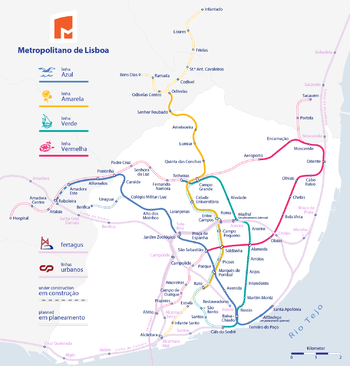
O artigo afirma que tanto Lisboa como Londres vão aumentar o seu sistema de transportes. Especificamente, o governo decidiu alargar as redes do Metropolitano e promover outras formas de transportes, incluindo veículos eléctricos e “car-sharing” (no que os trabalhadores que conduzem até ao local de trabalho dão uma boleia uns aos outros e por isso usam um carro em vez de três ou quatro) para melhorar o ar e reduzir níveis de dióxido de carbono e outros poluentes desagradáveis.
Além disso, a coisa que mais me interessa é onde o artigo menciona a intenção de melhorar as condições para o uso de bicicletas. Como muitas cidades no mundo desenvolvido, Lisboa reconhecer o problema de der demasiados automóveis nas ruas. Esta situação é prejudicial para o ambiente e para a saúde pública, e pode atrasar o crescimento da economia local por causa de impedir do movimento livre dos trabalhadores entre a sua casa e o seu emprego. 350px-Metro_Lisboa_with_suburban_railway_lines

Mas infelizmente, como
mostrado por a experiência em Londres, marcar um novo caminho de bicicleta com tinta azul não basta. Se a gente não nos sentimos seguros para dar uma passeio de bicicleta, não vamos usá-las. É importante fazer caminhos segregados, e considerar o desenho de todo o sistema de transportes na cidade, para criar um ambiente onde todos os utentes da estrada possam viajar em segurança.

Espero que estas medidas deem certo e melhorarem as condições nas cidades mais importantes de Portugal

Thanks Sophia, Rubens and Bruna for helping me with corrections when this appeared on iTalki.


Posted in English

A Revolução

It’s quite rare that I actually understand tweets in Portuguese. Something about the condensed format, I suppose. I enjoyed these ones though.

Posted in Portuguese

O Prefeito De Londres

No dia cinco de Maio, haverá uma eleição aqui em Londres, para escolher um prefeito novo. Os dois candidatos maiores chamam-se Zac Goldsmith e Sadiq Khan.
Sadiq Khan representa o Labour Party (o partido dos trabalhadores). Se estivesse perfeitamente cândido, não sei muito dele. Hoje o primeiro ministro acusou-o de ser associado ao daesh porque é muçulmano e tem o apoio dum pregador radical muçulmano, mas quando as alegações estavam a ser investigadas, pareciam vazias (obviamente!).
Entretanto, o seu rival, Zac Goldsmith é interessante. É riquíssimo, jovem e um bom falador. Tem um compromisso forte com o ambiente, que o faz estranho no seu partido, o Conservatives (o partido de centro-direita). Muitas pessoas admiram-no, mas nesta eleição, a sua campanha é horrível, divisionista e com um ar de racismo.
As principais questões da eleição são os preços dos imóveis (porque ninguém pode comprar uma casa a menos que tenha um trabalho muito bom) e a infraestrutura do transporte (para evitar engarrafamentos, mortes de ciclistas, e falta de tempo de trabalho).


kg

Posted in Portuguese

Uma Quinta Pequenininha Na Cidade – Parte 3

Hoje, voltei outra vez ao lote com a minha filha e a sua amiga. Trouxemos algumas ferramentas (tínhamos ido à loja sexta-feira para comprá-las). Conseguimos plantar as batatas, e fazer algumas outras obras. Enquanto elas puseram as batatas sob a terra, subi um escadote com uma serra e comecei a cortar os ramos das árvores ao lado do lote para deixar a luz chegar às folhas das plantas na terra.
Depois de três horas, bebemos um copo do sumo benemérito, evoltamos a casa.

notebook_image_682962

Além disso, passamos uma plante do ruibarbo para fora do solo para um balde, onde pode crescer sem problemas. Este é o balde preto na esquina do lote nesta fotografia.