Bordalo Segundo é um artista plástico – literalmente! Faz esculturas de animais com materiais do lixo e principalmente, trabalha com plásticos de alta densidade, como cadeiras, caixas e embalagens. Se visitares Lisboa, é provável que vejas algumas obras dele: um texugo, uma abelha ou um macaco, fixado ao lado de uma loja ou uma casa. Talvez a sua obra-prima seja o lince ibérica no Parque das Nações. É muito fixe! Mas a sua arte tem uma mensagem também: convém lembrarmo-nos que toneladas deste tipo de lixo estão a ser deitadas fora dia após dia e se não se torna arte, torna-se poluição.
You Say Patati, I Say Patatá, Let’s Call The Whole Thing Off
One of my favourite booktubers recently started a new channel in Portuguese, after switching to English on her main channel. It’s called “As Revoltas da Manganet” if you’re interested. In the middle of the debut video she makes a noise that jumped out at me like “e pa ta ti pa ta ta”. It didn’t sound like anything that made sense but on the other hand, it sounded a bit too deliberate to be a random noise, so I hunted around and it turns out that the expression is “patati patatá”. It is roughly equivalent to “yada yada” or “blah blah blah” or just “and so on and so forth”.
The reason it took a little bit of digging was partly because it seems to be used in French and Spanish too, and partly because there’s also a Brazilian TV show called Patati Patatá, so on some sites it seems like they’ve translated it using the names of better-known (to English audiences) double-acts like “Frick and Frack”. But I think “yada yada” fits best in the context of the video, so I’m mentally shelving it as a useful little phrase to have up my sleeve for later…

Acame, Açore, Aconquered
I liked this video. It’s challenging (that açoriano accent! Holy crap, it’s like another language!) but it’s quite funny so it’s good, entertaining listening practice. He’s talking about english words that sound like Portuguese words and he gets a lot of mileage out of the idea.
Camões Conseguiu Escrever Muito Para Quem Só Tinha Um Olho
Comprei este livro porque achei que fosse uma piada. Em inglês existem alguns livros cómicos que mostram erros feitos por alunos nos exames de várias disciplinas. Não há dúvida que há alguns erros reais nestas colecções, mas tenho certeza absoluta que a maioria são piadas inventadas pelos autores, e o efeito dá para rir muito.

Cada erro tem a sua própria explicação.Seja como for, este livro não é propriamente a mesma coisa. É verdade que existem respostas engraçadas, tal como o título do livro mesmo, mas o propósito do livro é mais elevado: a autora é uma professora e quer ensinar os leitores a escrever bem português e para mim, claro, isto é ainda melhor porque quero aprender mais e isso é um bom método de aprender. Assim como o “101 Erros de Português Que Acabam Com a Sua Credibilidade”, muitos erros são erros de preguiça ou de péssimo hábito que, paradoxalmente, eu, como estrangeiro, provavelmente teria menos risco de fazer do que um nativo, mas há muitas dicas úteis. Já escrevi algumas publicações no meu blogue e fiz duas notas de publicações futuros.
Don’t Believe the Híf
More from “Camões Conseguiu Escrever Muito Para Quem Só Tinha Um Olho”. Its very good. Not at all what I expected (I thought it’d be much more like those toilet books like “F in Exams”) but very educational for intermediate Portuguese learners. I’m writing out this list of compound words in the hope that it’ll help me remember when to use a hyphen. They’re words commonly written incorrectly, with or without hyphens (hífens)
Abaixo-assinado and Abaixo assinado: The first is basically a petition, whereas the second is more like “the undersigned”
Antiacordo and pró-acordo. Pró-acordo needs an accent because the stress is on the prefix. A lot of words prefixed Pró, Pós or Pré seem to be like this. Antiacordo doesn’t need a hyphen because when the second part of the word begins with a consonant (other than h) or a vowel that’s different from the last letter or the prefix it doesn’t need one. The other examples she gives include autoevaliação, extraescolar, hidroeléctrico and plurianual.
Anti-inflamatório takes a hyphen because anti ends in an I and inflamatório begins with one.
Antirrugas and antissocial don’t need a hyphen but the r/s gets doubled to preserve the pronunciation, much as we’d do in English.
Bem-vindo: bem and mal tend to be hyphenated in situations where they’re joined to words that begin with vowels or Hs. When there stem word starts with a consonant it’s a bit more iffy. Mal tends to be joined to the stem word more often (malmandado, malcriado) whereas bem is more likely to be hyphenated (bem-mandado, bem-criado) but some conjoined words starting with bem do exist, like be feito and benquerente. Benvindo (capitalised) can also be a surname, apparently.
Coautor: co- is generally not hyphenated.
Contrassenha : as with some of the examples above, the s gets doubled to preserve the pronunciation.
Cor de laranja/Cor-de-rosa: she explains this in terms of one being a locution with its own meaning and the other not. I guess one is “the colour of an orange” and the other is “rose-coloured” but this just looks very inconsistent to me.
Ex-marido: words prefixed with ex in general have hyphens
Dia a dia, unlike day-to-day, has no hyphens
Efeito de estufa (greenhouse effect) and Fogo de artifício (fireworks) are “locuções nominais” and don’t need hyphens
Fato de banho (bathing suit), gaita de foles (bagpipes) and Fim de semana (weekend) don’t need hyphens because they’re a “locuções substantivas”
Febre-amarela (yellow fever) is a compound word and needs a hyphen
Galinha-da-Índia, louva-a-Deus, ouriço-do-mar are zoological species and all need hyphens. Could also have mentioned estrela-do-mar and porquinho-da-Índia
Grão-de-bico mad noz-da-Índia are examples of botanical species and behave the same way as the zoological species above.
Georreferenciação is another compound word that needs a double r to preserve the pronunciation.
Hás de /hei de: this is a bit niche. It used to be correct to write some forms of haver+de with a hyphen between them but in the acordo ortográfico it ceased to be correct, so you’ll see both forms. There’s a ciberdúvidas question about it here.
Hiper-rugoso: hiper needs a hífen when the stem word begins with an r.
Infraestrutura: if the word following “infra” begins with a consonant or a different vowel, it can be joined as one word
Infrassom: of the stem word starts with an r or an s then it gets doubled for the sake of pronunciation.
Intra-abdominal has a hyphen because the stem word starts with an a.
Limpa-para-brisas is a compound word (windscreen wipers) and takes two hyphens
Mais-que-perfeito: where this refers to a verb tense (ie, it means “plu-perfect” not “more than perfect”) it takes hyphens.
Micro-ondas: takes a hyphen because ondas begins with a vowel
Microrradiografia: the r is doubled to preserve the pronunciation where “micro” is followed by an r.
Minissaia: if the prefix Mini is followed by an s then it’s doubled to preserve the pronunciation.
Neorrealismo: if the prefix Neo is followed by an R it is doubled to preserve the pronunciation
Pós-graduação and pré-historia: pós and pré always have hyphens
Recém-nascido (newborn): likewise, any compound word starting with recém takes a hyphen
Sem-abrigo (homeless): likewise, any compound word starting with sem takes a hyphen
Semirrigido and semisselvagem: where “semi” is followed by an r or an s, it is doubled to preserve pronunciation.
Super-homem /supermulher: this immediately struck me as inconsistent like the example of cor de laranja and cor-de-rosa but in this case there’s a decent reason: homem begins with an h, and a lot of prefixes like supra and extra and contra and infra take a hyphen when they are followed either by an h or by the same vowel they end with. Anti-higiénico, anti-homofobia, extra-humano for example. Supermulher has a nice solid consonant so it’s immune.
Supraestrutura is the same story as infraestrutura.
That was a really useful list because I find those a bit random, so it’s good to know there’s some method to the madness!
Close Encontros
Another nugget from the book I’m reading: this time, it’s two phrases that are similar and can be easily confused
Ir ao encontro de = to agree with – “A minha opinião vai ao encontro da tua” (my opinions agree with yours)
Ir de encontro a = crash into – “O ciclista foi de encontro ao muro” (The cyclist went into the wall)
So in the mistake: “Concordo com o narrador e a minha opinião vai de encontro ao que ele afirmou” the student is saying they agree with the author and their opinions collide with his
Leve a Minha Sogra… Se Faz Favor
Mais uma personagem que gostei no programa é a mãe abelhuda do Ivo, a Zélia. Confesso que não entendi tudo o que ela disse porque tem um sotaque forte, mas as primeiras palavras dela foram basicamente “Quem vai escolher a mulher perfeita para o meu filho sou eu!”
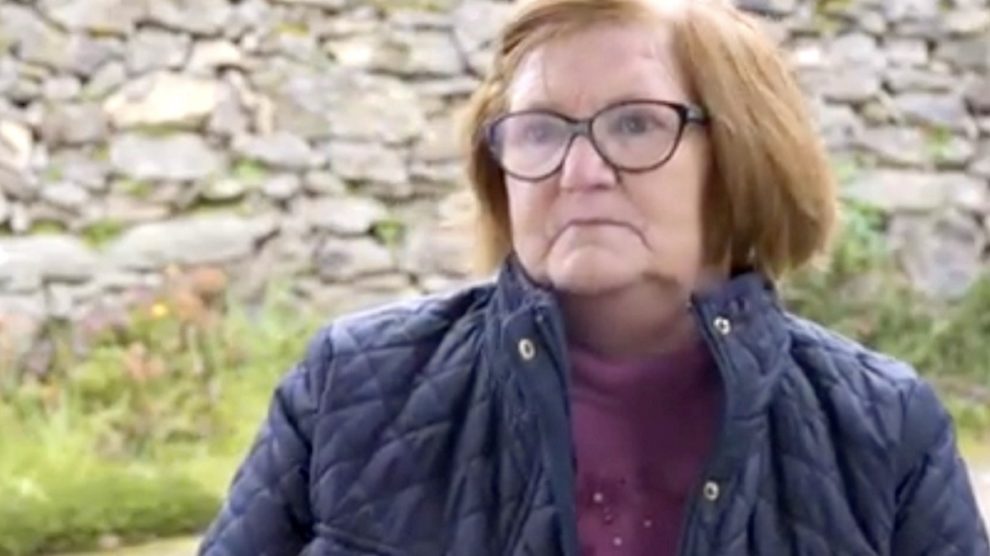
Depois, ouvimos mais pensamentos tal como que a nora dela deveria de ser carinhosa tanto para ela quanto ele, e deveria presenteá-la com netos o mais cedo possível. Não há dúvida que os realizadores do programa repararam na personalidade controladora dela e pediram-lhe para dizer coisas ultrajantes para acrescentar drama à cena. Mas por mais que ela diga coisas típicas da sogra estereotipa, não ultrapassou os limites da simpatia. Ou seja, uma determinada nível de “sogrice” empresta tempero ao programa mas ninguém quer que todas as potencias noivas bazem por ódio ou medo de uma mulher insuportável.
Ela é um pesadelo mas acho que será a estrela escondida do programa.
Thanks, Sophia, for the corrections
Voltei A Escrever Sobre Agricultores e Amor
No início da semana, escrevi um texto sobre um programa parvo chamado “Quem Quer Lutar Contra Outras Meninas Para Engatar O Agricultor” ou algo do género, e tinha a intenção de voltar ao tópico mas ando atarefado portanto, até hoje, não tive tempo.
O que mais me chamou à atenção era a rivalidade entre as mulheres na festa na casa de campo, em meados do episódio de estreia. Havia um agricultor que ainda por cima de tudo que era muito jeitoso, com olhos cheios de alma e uma história cheia de drama, com roupas de moda e um penteado fixe. Em redor dele, as mulheres mais novas e mais giras pairaram. Às vezes, uma delas “roubava” o agricultor lindo para ter uma conversa privada mas quando as outras percebiam, andavam atrás deles e diziam, de modo delicado “podemos atrapalhar?” (por quê “atrapalhar*”? Nunca ouvi a palavra neste contexto mas entendo a essência da frase!)
A Raquel é quem tem a minha simpatia. Parece que ela fez um grande esforço para estar sozinha com ele mas depois da primeira tentativa ser cortada, havia uma cena desconfortável e, afinal, o jeitoso não a escolheu. Antes preferiu escolher duas loiras idênticas. Ficou com o coração despedaçado e eu também fiquei.

*=as my teachers would always say: “Look it up!” https://dicionario.priberam.org/atrapalhar
Thanks, Sophia, for the corrections
Apenas Um Minuto
Before my B2 exam I tried playing “Just A Minute” on video to get used to speaking fluently under pressure since the exam has an oral component, conducted on video and it’s my weakest link, so into the exam prep plan it went. At the time I didn’t think much of it and editing it for YouTube seemed too much of a faff, but then yesterday we heard that the presenter of the show, Nicholas Parsons, had died, so I decided to dust it off and post it online. I was glad I did. My grammar is all over the place – absolutely terrible – but I quite like the video as a whole, especially since my daughter agreed to help so you can hear her in the background.
Collective nouns
I wish I could remember half the things I write in here. I sometimes use it to collect thoughts and nuggets of homework but it doesn’t always help it stay in my brain.
Anyway, here, from a book I’m reading called “Camões Conseguiu Escrever Muito Para Quem Só Tinha Um Olho” are some collective nouns for things
- Alcateia – Lobos
- Arquipélago – Ilhas
- Boiada – Vacas, Bois
- Cáfila – Camelos
- Coro – Cantores
- Enxame – Abelhas
- Feixe – Lenha (a bundle of firewood)
- Frote – Navios, Aviões Carros
- Girândola – Foguetes
- Laranjal – Laranjeiras
- Magote – Pessoas
- Manada – Bois, Búfalos, Elefantes
- Molho – Chaves, Lenha, Verdadura
- Nuvem – Gafanhotos, Moscas, Mosquitos
- Olival – Oliveira
- Pomar – Árvores de Fruto
- Ramo – Flores
- Récua – Animais de Carga
- Regimento – Soldados
- Sobral – Sobreiros
- Turma – Alunos
- Vinha – Videiras

