I joined in one of the Bertrand training courses I mentioned a couple of weeks ago. It’s part of a series on feminism, looking at the subject of the portuguese suffragette movement. I thought I’d try and listen in on the lecture and learn something about history. However, the person running it asked people to put on their cameras and mics so they could participate and I thought well, I don’t really want to be the only foreigner and in all likelihood the only bloke if it’s going to be a round-table discussion, so I scarpered. Oh well, that’s fifteen euros down the drain!
O Meu Método de Aprender
Practice text with notes. Thanks again, Dani, for the help
Quando comecei a aprender português há muitos anos, pus-me a memorizar as conjugações de verbos, e as regras e uma pilha de cartas de vocabulário. Este método é mais ou menos o mesmo que usámos na escola quando eu e os meus colegas da escola da escola aprendemos francês. Mas infelizmente é uma grande seca. Fiquei farto de flexões! Não fui capaz* de superar o obstáculo de aborrecimento, portanto não consegui aprender assim tanto.
Mais tarde, decidi assumir um comprimisso**: “aprender português ou morrer na tentativa!”
Comecei a ter aulas com uma professora aqui em Londres mas só mais tarde, quando ouvi um CD “Português com Michel Thomas” e depois li o livro do Benny Lewis***, cheguei a um nível de competência mais alto através de “Language Hacking”. Leio livros, vejo vídeos de Booktube português, oiço músicas… É mais divertido e por isso é mais provável que não desista!
*=não ser capaz, meaning “to be incapable” always seems like an unwieldy way of saying you can’t do something so in usually go for “não consigo” or “não posso” but it’s often a more natural way of saying it.
**=I wrote “fazer um compromisso” (make a compromise) but “assumir” is the better verb to use
***=I’m not sure if I’ve mentioned this book before even when I wrote a whole blog post defending him from some guy who criticised him a couple of years back, but it’s good stuff. I think the idea of language hacking is pretty mainstream these days, but if you haven’t already come across it, that’s a pretty good place to start.
Breakfast
I’m enjoying the Portuguese reaction to Gordon Ramsay’s “Portuguese Breakfast” tweet
Church of the What Now?
Listening to A Morte do Papa earlier today I had a bit of a double take thinking they were talking about the Church of “A Mãe do Rebentor”. Rebentar means “burst” or “explode” so rebentor would be an exploder, I suppose. It was a weird image until a couple of minutes later my braincells kicked in and I realised it must be “redentor” (redeemer)

A Vacina
Annotated text about getting vaccinated with some notes at the bottom. Thanks ThisCatIsConfused for the corrections
Eu e a minha esposa estamos na fila fora do centro de lazer*. Estamos à espera da segunda dose da vacina contra covid 19. Ficamos muito contente por finalmente estarmos** protegidos do vírus que causou tanto transtorno durante o último ano e meio. Há quem tem*** dúvidas, ou até desconfia das**** vacinas por causa de falta de entendimento da ciência e isso é compreensível mas errado!
Claro está que esta situação apanhou os nossos governos mal preparados. Ninguém no oeste previu esta doença embora muitos cientistas tivessem avisado que uma pandemia é sempre um risco neste mundo de trânsito aéreo e fronteiras abertas.
Ainda que tenhamos falhado completamente neste primeiro teste, ao menos os cientistas reagiram sem hesitação e os serviços de saúde, com ajuda dum exército de voluntários***** conseguiram aceitar o desafio de lidar com os problemas logísticos causados pela necessidade de colocar duas dozes da vacina em cada braço esquerdo em cada país!

*=the correction changes this to Centro de Saúde, which makes sense, but it actually was a leisure centre! Weird but true!
**=I wrote sermos because we’re permanently (?) protected. Bad Call!
***=”há quem” is one of those phrases that I always want to pluralise. “There are those who have doubts” sounds like it refers to many people but in Portuguese it’s “há quem tem dúvidas” as if it was just one person or if that mass of people were acting as a unit.
****=my natural inclination was to write this as “desconfiar a vacina” (distrust the vaccine) or maybe “desconfiar na vacina” (lack trust IN the vaccine) but the correct way is “desconfiar da vacina” (distrust OF the vaccine) which ties back to previous remarks bout differences between PT and EN uses of prepositions…
*****=I did wonder if “An army of volunteers” would be an expression in Portuguese, but the corrector seemed to know what I was talking about so that’s OK. It’s intuitive enough, I guess.
Se Eu Fosse Um Livro – José Jorge Letria
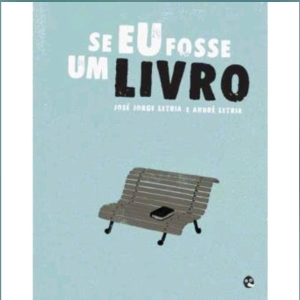
Quick review of this one. As it says in the text, you can enjoy the repetitive use of the imperfect subjunctive and call it homework for the B2 exam. It’s pretty basic apart from that though because it’s a children’s book.
Este livro fala da leitura. Repete-se em cada página a frase “se eu fosse um livro…” e logo a seguir um desejo que um livro poderia sentir. Muitas vezes este desejo é uma dica para os leitores de como apreciar livros ao máximo, tal como “…não gostava que me lessem só por obrigação, ou por estar na moda”
É divertido e ainda por cima, pode ser útil para quem quiser praticar os tempos verbais conjuntivos 🙂
Um Excesso de Politicamente Corretismo?
Summary of an article in Observador with notes at the bottom
Este artigo no site do jornal Observador lembra-nos que determinadas temas surgem em todas as sociedades modernas hoje em dia. Há quem prestam atenção às letras de cancões infantis e detetam os traços de um passado mais cruel que a presente. O artigo fala destes traços sob a rubrica de “politicamente incorreto” mas para ser mais exato, as letras contêm referencias a violência domestica, crueldade para com os animais* e racismo. Há muitos exemplos no artigo, alguns triviais (tal como “atirei o pau ao gato”) e alguns mais nojentos.

Claro que cancões, rimas e brincadeiras que fazem parte da cultura de cada pais contém ecoas de uma época menos simpática e não queremos reforçar a opinião que assedio contra mulheres é aceitável por exemplo. E é evidente que qualquer professor de pré-escola que ensinasse aos alunos aquela lengalenga** sobre “o preto do Guiné” perderia o emprego e poucas pessoas sentiria simpatia nenhuma. Isso não se trata de uma questão de o que é que é politicamente correto, nem de censura, nem até de branqueamento*** mas sim de não repetir os insultos do passado nas orelhas dos estudantes negros em 2021.
Mas por outro lado, as tentativas bem-intencionadas para tornar as letras mais aceitáveis dá frequentemente em cancões pirosas e sem esforço. Até certo ponto, um bocadinho de choque, um pedaço de horror nos nossos contos de fada e nas cancões não magoa ninguém. Isso do gato não vão tornar ninguém psicopata, e não é preciso entrar em pânico ma afinal concordo com Dora Batalim: “mais vale não a cantarem, têm muitas por onde escolher”, ou seja, estas rimas racistas merecem desbotar e desaparecer. Não precisamos deles.
*=”crueldade para com os animais” is an interesting contruction. There are two prepositions in there. Literally, it would be “cruelty for with the animals”, which sounds weird to anglophone ears, but does seem to be legit. A bit of research and a question on a r/Portuguese shows that it’s a prepositional phrase meaning “in relation to” – Ciberdúvidas article here. It appears in the wikipedia article about cruelty but the main title of the article is just “Crueldade Com Animais” so obviously both make sense. By the way, it’s worth noting that brazilians spell “pára” (meaning “stop”) without the accent and in theory portuguese people should spell it that way too now, but it’s the most-ignored aspect of the Acordo Ortográfico because it’s so confusing. However, you might come across a phrase like “para com isso” which means “stop that”, so try not to get confused if you do!
**=I struggle to come up with a good translation for “lengalenga”. I’ve seen it explained as a kind of rhyming mnemonic, but I don’t think it’s that: it seems to refer to repetitive chants like rhymes that aren’t quite nursery rhymes – like “ip dip sky blue, it is not you” or “i see England, I see France, I see Colin’s underpants”. That kind of thing, I believe.
***=hm, branqueamento = whitewashing or sanitising something but in the context of imposing racist songs on black students it sounds like a pun which wasn’t my intention when I wrote it
The Best Lidl Workout in Tejo
For no real reason, I decided to look for a portuguese workout channel to use instead of my normal Joe Wicks routine for a change. What I found was that the market seems to be dominated by Lidl, the supermarket chain. It’s quite a canny way to build a relationship with your customers, I suppose, during lockdown. There are dozens of videos on there. Here’s a basic playlist for example, but there are loads more, each with a long list of workout videos from little shorties like this guy doing power curtsies with his very patient dog…
…through yoga and pilates
…to half hour circuit sessions
They even have a few hosted by this guy Jorge Fonseca who is an actual world Judo champion who… what? Runs the deli counter at the weekend for a bit of extra cash? I dunno.
If you prefer your workouts without any unexpected items in the bagging area, the only other channel I know is “Dicas do Salgueiro”. He has the same beard/long hair combination as Joe but he’s got a slightly different style – he does crossfit videos rather than mucking about at home with his kids in the shot, dressed as Scooby Doo. I was having a laugh at how seriously he seemed to be taking himself in this video but then the last few seconds of it when he goes to put the sword away made me warm to him.
So I think I might see if I can go through one of his (hour long!) videos from the Treino em Casa Quarantena playlist one day when I’m feeling energetic.
A Semiótica Do Palavrão
(Description of an article about swearing in Porto: there are some grammar and vocab pointers down at the bottom for anyone who needs them. The portuguese is uncorrected and might contain errors but hopefully not many! Thanks to Dani and “Iznogoud” of the r/WriteStreakPT subreddit for helping me tidy up a few errors in the original text)

Acabo de ler um artigo no site do jornal Público intitulado “A Semiótica do Palavrão“. O autor, Paulo Moura, defende que a língua do Porto é rica porque a gente de lá usa muitas expressões com palavrões. Estas expressões não se trata de insultos como seria noutras regiões, mas sim de uma filosofia da vida. Acho que ele está a brincar, ou pelo menos está a escrever numa maneira ligeira. Parece que ele tem muito carinho pelos cidadãos daquela cidade e a sua maneira de falar. Apesar das obscenidades, acha-os acolhedores e simpáticos.
Já ouvi falar desta tendência portuense de usar palavras feias. Tenho uma amiga lisboeta que considera os portuenses bárbaros por isso mesma! Fica escandalizada quando vê vídeos online ou programas televisivas de tripeiros e o seu calão.
Notes on the text.
I’ve referred to Porto residents in three different ways
- “a gente de lá” (the people from there). Gente is a collective noun so it’s treated as a singular (“a gente… usa” instead of “a gente… usam”)
- “portuenses” is just a standard adjective meaning “from Porto”
- “tripeiros” means tripe sellers, and has a couple of origin stories, both dating back about 600 years into the early history of portuguese navigation. You can read more about the most common version here
If you’re reading the article, hopefullly you’ll realise that the missing words are all rude
- c=cu in every case, meaning “arse”. There are ruder c words in Portuguese like “caralho” (cock), “cagar” (verb meaning to shit) or “cona” (cunt) but I don’t think any of these are the c in any of the expressions on the page
- p=puta which is a word for a prostitute. You occasionally see the abbreviation pqp online, meaning “puta que pariu” or “puta que te pariu” which is the whore who gave birth to you
- b= I’m less sure about this one. “Bico” possibly? That just means beak but has a lot of alternative meanings, one of which is “Prática sexual que consiste em estimular o pénis com a boca ou com a língua. = FELAÇÃO”
Checking the theory in the last post, dealing with gender of – ão nouns, just to make sure it isn’t leading me astray:
- Palavrão (swear-word) – masc: fits the rule
- Expressão (expression) – fem: fits the rule
- Razão (reason) – fem: doesn’t fit the rule, but it’s listed as one of the exceptions in the article so that’s no surprise
- Regiao (region) – fem: fits the rule
- Cidadão (citizen) – masc: fits the rule
- Calão (slang) – masc: fits the rule
- Felação (fellatio) – fem: fits the rule
Gender Wars 3: Attack of the Nouns

OK, so if you’re a new learner, you’ve probably come across a few explanations of how gender works in Portuguese, and how to work out if a given word is masculine or feminine just by looking at it. Different teachers have slightly different rules so I sat down to road-test them and see which versions were reliable and which had so many exceptions that they weren’t worth bothering with. I used a list of the 1000 most popular portuguese nouns (details in Appendix 3 below) and used excel formulae to see what rule *should* apply vs what gender it actually has.
This third version of the list has some new refinements for nouns ending in -ão. As you know they are very variable. I usually hear abstract nouns are feminine and concrete nouns are masculine but that’s a bit vague and there are lots of exceptions. But then I came across a video where some guy (I wish I could remember who so I could credit him!) said the thing to do is to look at the letter immediately before the -ão. Verbs ending -ção, -são and to a lesser extent -ião are the ones that are treated as abstract and feminine. They tend to be similar to english words ending -tion or -sion. The rest are manly and butch. Once you split the rule like this, it makes more sense and there are very few exceptions. So… I’ve updated the table below
Portuguese Noun Genders – All The Rules I Know
More specific rules nearer the top override more general ones further down. So for example, “dezena” is masculine because it meets the “all numbers are masculine” rule even though it ends in A. And Avó is feminine because it meets the “Male and Female people” rule even though it ends in an O. Sorry about the colour-scheme, but… well, you know… just trying to harness my cultural stereotypes in a way that makes it easier to follow.
| Rule | Examples | Exceptions |
|---|---|---|
| Dependent: Male and Female animals/people depend on individual’s sex* |
|
|
| Dependent: Ordinal numbers depend what’s being counted, because they are effectively adjectives! |
|
|
| Masculine: Nouns ending in -o (but not -ão though) -r -l -z -u |
|
|
| Masculine: Names of Lakes, Rivers, Mountains etc |
|
|
| Masculine: Compass points |
|
|
| Masculine: Car brands** & types of wines |
|
|
| Variable: The seasons obey their last letter rules o=masculine, a=feminine |
|
|
| Variable: Week days obey their last letter rules o=masculine, a=feminine |
|
|
| Masculine: Words from greek, usually ending -a: most usually in -ema -grama -eta |
|
“Gorjeta” is the only word with these endings that doesn’t match but Priberam says it’s not greek |
| Masculine: Letters |
|
|
| Masculine: Cardinal numbers |
|
|
| Feminine: Words ending in -ção -são -ião |
a acção a actuação a administração a alteração a aplicação a aprovação a associação a atenção a avaliação a canção a classificação a colecção a comissão a competição a composição a comunicação a concepção a conclusão a condição a constituição a construção a criação a decisão a declaração a definição a designação a dimensão a direcção a discussão a disposição a distribuição a divisão a edição a educação a eleição a emoção a estação a evolução a excepção a expansão a explicação a exploração a exportação a exposição a expressão a extensão a federação a formação a função a fundação a geração a impressão a inflação a informação a instalação a instituição a intenção a interpretação a intervenção a investigação a ligação a manifestação a missão a nação a negociação a obrigação a observação a ocasião a opção a operação a opinião a oposição a organização a orientação a paixão a participação a população a posição a preocupação a pressão a prisão a privatização a produção a profissão a protecção a publicação a reacção a realização a redução a região a relação a religião a representação a resolução a reunião a revisão a revolução a secção a selecção a sensação a sessão a situação a solução a televisão a tradição a transformação a união a utilização a variação a versão a visão a votação |
o apresentação o avião o coração |
| Masculine: Other words ending in -ão |
o alcatrão o algodão o balcão o cão o capitão o cartão o chão o cidadão o escaldão o feijão o órgão o padrão o pão o patrão |
a gestão a mão a questão a razão |
| Feminine: Most words ending in -a |
|
(likely also greek) |
| Feminine: Words ending in -ez |
|
|
| Feminine: Words ending -dade -ie -tude -gem -ice -ã |
|
|
| Feminine: Names of towns & countries |
|
Places specifically named after male things:
Places consisting of a male noun + adjective
|
| Feminine: Names of the Academic Arts and Science subjects |
|
*=Note that some of these change their endings but some – like dirigente, cientista, keep the same ending.
**= Jeremy Clarkson would love this, I’m sure
Appendix 1: Not-So-Easy E
Some teachers say that nouns ending in E are split between abstract and concrete. However, as you can see, contrary to the textbook rule, it’s mixed pretty evenly on both sides. Conclusion: the rule is bollocks, I’m afraid, and we’ll just have to learn these the hard way.
| Masculine | Feminine |
|---|---|
| In theory, these should all be concrete (things you can see and touch) | In theory these should all be abstract (ideas, emotions) |
| o acidente o ambiente o ataque o barrete o breve o clube o combate o continente o controle o corte o costume o crime o debate o dente o destaque o empate o exame o filme o gabinete o golpe o horizonte o instante o interesse o legume o leite o limite o mestre o monte o nome o nordeste o padre o parque o peixe o príncipe o regime o romance o sangue o telefone o teste o transporte o vale o volume |
a análise a arte a árvore a ave a base a carne a chave a classe a corte a crise a estante a face a fase a fome a fonte a frase a frente a gente a gripe a hipótese a mãe a metade a morte a noite a parede a parte a pele a ponte a posse a rede a saúde a sede a sorte a tarde a torre a vontade |
(NB Corte appears in both sides because it can mean either “The court” or “The cut”, both reasonably common but having differing genders just to be bloody awkward)
Apprendix 2: Mistakes, Mis-Shapes, Misfits
When I’d counted all the words that fit the rules and the exceptions, there was a short list left over of words that met none of the rules. The majority seem to be masculine, apart from fé, lei, ordem and nuvem.
- a fé
- o fim
- o gás
- o jardim
- a lei
- o mês
- a nuvem
- a ordem
- o país
- o pé
- o som
- o tom
Appendix 3: the List of 1000 Most-used Portuguese Words
I got the list from a site called Hackingportuguese but I took out a couple of words that I saw that were Brazil-specific and a couple that looked like they were (at least in European Portuguese) only used as adjectives, and replaced them with random nouns from a Memrise deck, to bulk it up to a thousand again. I subjected the survivors to extreme torture in an excel spreadsheet in order to see how many exceptions there were, using Excel formulae to check the ending against the supposed rule. My version of the list is available as a spreadsheet here in case you want to play with it and check my work.
 Luso
Luso 