Posted in English

Is This The Most Confusing Verb in the Portuguese Language?

Image of a "Soul Reaver" from some game called Legend of Kain, listed as under a fair use license on Wikipedia. It has nothing whatsoever to do with the article
Frankly, this image is not helping. If anything, it is adding to the confusion.

So I came across this freaky verb today: “Reaver“. No, not rever, reaver. It’s based on the verb “haver” but with the re- prefix. Its h disappears because it would be silent anyway: re+[h]aver=reaver.

Haver is a weird verb to start with because it’s almost always used in the third person singular and it means something like “exists” or “there is”, but it has another meaning, which is “to have” or “to possess” and that’s the sense that’s used with reaver. It means “have again”, “recoup” or “get back”.

Cool, cool, cool, so let’s look for examples of it in use? Most likely form we’ll come across will be re+[h]á=reá, right?

Wrong! Reaver is a defective verb, meaning it doesn’t have a full conjugation. So even though the most-used form of haver is the third person singular present indicative form, that form doesn’t even exist for reaver. The only two forms Priberam’s conjugation allows in the present tense are the nós and vós forms.

Some examples of legitimate use are given in the dictionary entry

  • Ainda não conseguiu reaver o dinheiro que gastou (he still hadn’t been able to get back the money he’d spent)
  • Por duas vezes, eu perdi óculos escuros que nunca reouve (Twice I lost a pair of sunglasses that I never got back)
  • Paradoxalmente, era quando reavia as forças que a certa altura julgava exíguas (paradoxically it was while he was rebuilding his forces that, at some point, he judged them to be too weak)

But if you look at some of the examples Priberam gives of the past-tense use of reaver you come across a citation of a page by Portugal rebelde blog:

  • Cada vez que se reouve uma canção corre-se o risco de reparar em aspetos musicais ou poéticos de que não nos tínhamos apercebido. (Every time one hears a song anew, one runs the risk of noticing a musical or poetical aspects that we hadn’t recognised before)

Well… that’s *not* an example of the past tense of reaver though. That’s the present tense of “reouvir“, meaning to hear again, surely…? And so is this citation from a blog called French Kissin’, also cited by Priberam

  • O disco não tenta sistematizar o tema, muito menos esgotá-lo. Talvez por ser tão despretensioso, ouve-se e reouve-se sem cansar. (The record doesn’t try to systematise the theme, let alone exhaust it. Maybe because it is so unpretentious, one can listen and relisten without getting tired of it)

Googling what I thought would be common forms of the verb, I didn’t really find many examples of it being used in the wild. So… It’s useful to know this exists in case it crops up in books but I don’t think I will be rushing to try and use this one in conversation!

If you’re hungry for more pain and suffering, you can find out more about reaver in this Ciberdúvidas article.

Posted in English

Portugalist

Portugalist is a sort of lifestyle and travel site with an informal, magazine vibe aimed at english-speaking visitors and residents in Portugal. I’ve tended not to pay much attention to it since I don’t travel much and don’t live there. I’ve just spent some time poking around though, and I must say, there’s some good stuff on there. Their bread-and-butter content is practical and seems very up-to-the-minute: how to get a covid vaccine, navigate finances and bureaucracy and so on. For those of us exiled beyond the sea and just wanting to learn the language, they have a modest-sized language section which doesn’t have much direct learning material but acts as a directory out to other sites and channels where you can find the right course.

Here are a few things I liked, in case you’re not already familiar with it

Posted in English

Double Participles

Some verbs have two past participles: one that forms part of compound verbs and one that is used primarily as an adjective

InfinitiveStandard ParticipleShorter Participle
AcenderTens acendido a vela?A vela está acesa
AceitarEle tem aceitado as desculpasAs desculpas foram aceitas
ElegerOs americanos têm elegido TrumpO palhaço cor de laranja foi eleito
GanharEu tenho ganhado muito dinheiroO jogo contra Ucrânia já está ganho
PagarMuito obrigado por ter pagado a contaNão te rales, pai, a contas está paga
ExpulsarO governo tinha expulsado o embaixadorNão trabalhei e acabei por ser expulso
Posted in Portuguese

Scarecrow

Text with corrections from Dani Morgenstern. Notes at the bottom

Isto é uma tradução duma explicação ao lado de um quadro da exposição da qual eu falei ontem

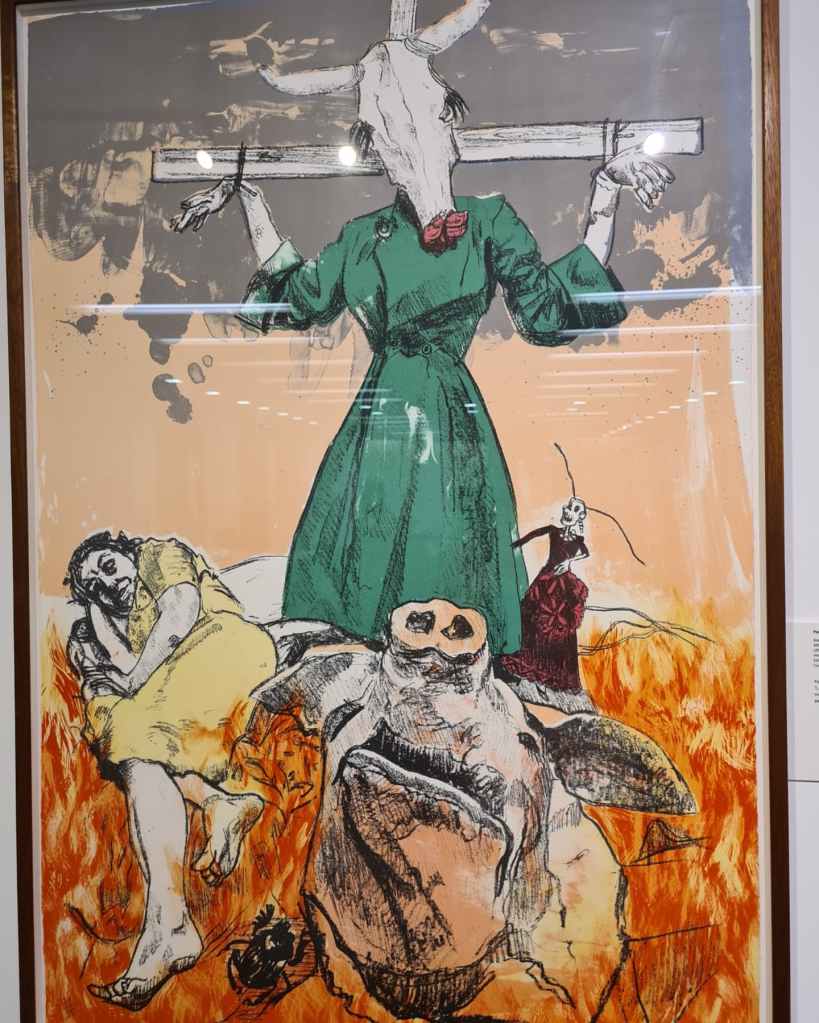
O Espantalho
Litografia

Paula Rego tomou inspiração do dramaturgo Martin MacDonald. Na perspectiva dela “[…] a peça de teatro mexe* com religião… E a menina que queria ser Jesus… Que tinha muito a ver com o tema português também.” Esta litografia pode também representar a natureza paradoxal das consequências das nossas acções dentro dos nossos assuntos infelizes.
O Espantalho não é uma representação directa duma das cenas mais macabras da peça mas, com a sua imagem central dominadora dum espantalho crucificado, refere-se àquela parte da peça na qual a menina certinha, que faz sempre boas acções como se quisesse ser Jesus, perde os pais por causa dum acidente pelo qual, em** última análise, ela é que é culpada.
Ela é transferida para uns pais adoptivos sádicos*** que a tormentam com uma coroa de espinhos, uma chicotada e um cruz de madeira que ela tem de carregar (ela tem apenas 6 anos). Eles a perguntam se ou não ela quer ser Jesus e quando ela responde que sim, pregam-na ao cruz e voltam a perguntar se ou não ainda quer ser Jesus. A esta questão ela responda “Não, não *quero* ser Jesus, sou Jesus mesmo, caralho!” portanto, enfiam uma lança nas costas dela e o resto da história da crucificação desenrola-se no palco como antes.

*=hum… Na minha opinião “meddles with religion” não está bem traduzido porque ninguém fala assim em inglês. Julgo que é tradução de “mexer com” e não “interferir em”, e deve ser “touches on” em inglês, mas não faço ideia propriamente porque não li/ouvi as palavras originais da artista.

** =”em” not “na”. I was literally translating “in the final analysis” but it doesn’t need the article.

***=not “sadisticos”

Posted in English

Grammarspotting

I have an evernote page containing interesting and curious sightings of grammar in the wild that I wanted to think about later. I’ll try and make sense of them if I can, but I’m not absiolutely sure what they all mean to be honest, so if you’ve any suggestions I’d love to hear about them in the comments!

Cento e tantos degraus de escada é obra, mesmo para quem se apresenta com o cóccix em condições 

I can’t remember where I turned this one up, but it mostly struck me because of the phrase “em condições” which obviously means “in good condition”, so that’s an idiomatic expression to keep in mind. It’s quite a grammatically interesting sentence though really. If I were to try and say that I’d be much more fromal and use more words. I would love to be confident enough to be this relaxed and groovy with my writing. “Cento e tantos” is unusal too. I’ve only ever seen “cento e tal” for “a hundred or so”.

Sabe que eles se podem desligar quando se quer, não sabe?

This sentence by Mario Zambudjal has two instances of “se” which seem to be different. In “se podem desligar” it’s reflexive: they can doisconnect themselves. And in “quando se quer” it’s putting the verb into passive mode, if I’m reading it correctly. “When required”. So putting it all together, “You know they can disconnect at will, don’t you?

Fiz figas para que não me esperassem situações semelhantes às que levaram o Valquerença, sete anos atrás, a riscar-me do quadro do pessoal

I think this is another one from Zambudjal. “Fiz figas” is interesting. It literally means “I made figs” but Gtranslate translates it to “I crossed my fingers”. Fazer figas is more like this in fact, according to the description in Priberam. The meaning is the same as crossing the fingers though: it’s meant to ward off bad luck.

A tua resposta pôs-me a cabeça à roda 

This line from Lúcia Vaz Pedro’s Camões Conseguiu Escrever Muito para Quem Só Tinha um Olho… exemplifies an aspect of grammar that I can never quite get right. I’ve tried to use it a few times but screwed it up every time. It’s got the reflexive pronoun with Pôr but… why? It’s the head that’s spinning so why doesn’t she say “pós a minha cabeça a roda”? Why does it have a reflexive pronoun instead of a posessive pronoun? I asked my wife about this and she just said it’s how it works.

O que lhe passou pela cabeça…

This isn’t reflexive but in other ways, it’s similar to the one above. Why isn’t it just “passou pela cabeça dele/dela?” Why does it need the indirect object “lhe” when it looks like it needs a possessive? The possessive would give you more information. “Passed to him through the head”? Again. my wife just says that how it’s done. It’s a sense of actively passing through the person’s head and it is more grammatically accurate than using the possessive. I might need to sit and meditate on this for an hour or two, I think

Um teste às defesas da sala.

This sentence appears in Z by Manuel Alves. A test to the defences of the room. It’s an example of a preposition that’s used very differently in portuguese than it would be in english.

A perseguição aos Judeus

This one turned up in a history book. I would have expected it to be “dos” instead of “aos” for “The persecution of the Jews

Envolveu-o em operações especulativas tão ruinosas que o atirou para a bancarrota 

This is from Vaticanum by Jose Rodrigues dos Santos. “Para” can be used for “to” in some contexts and “for” in others. In this one, it’s used for someone being thrown to bankruptcy. The guide unhelpfully defines “atirar para” as “lançar para”

Demasiado fatigado para se meter em explicações

Another one from Vaticanum. “meter-se em…” is equivalent to “get involved in”. he was too tired to get drawn into explaining himself to the cops.

Posted in English

Poetry

One of the things I’ve been doing in my non-portuguese life is trying to learn poems. I had some idea that it would be nice to have more poetry in amongst the clutter of my brain, and also good mental exercise now that I’m well into middle age and finding myself forgetting stuff all the time. In the last couple of weeks I have memorised two. I can now recite Weathers by Thomas Hardy or The Subaltern’s Love Song by John Betjeman by heart. I like the Betjeman best; the rhythm of it is amazing, and it really conveys the sense of being giddy and excited and in love.

Anyway, I was thinking of doing “Mar Português” by Fernando Pessoa next. It’s shorter but I’m expecting it to be harder in anotgher language. So I was really excited to see this video drop into my Youtube recommendations today. Mar Português is the fifth of the five poems she reads. I have been subscribed to the channel for a while but not really following it closely but I can see I am going to have to keep a closer eye on it from now on, because I like this a lot!

Posted in English

ExcitedFace

I put up a “Buy Me a Coffee” link on the right-hand-side a few weeks back to cover costs of making this an ad-free blog and haven’t looked at it since but I went over there today and found that I’d been bought a coffee. Three weeks ago, actually, and I hadn’t seen the notification so I’m a bit embarrassed at how long it took me to thank the person for her generosity. I won’t embarrass her by naming her but thanks again!

This is a new milestone for me though and I have been smiling ever since! I will try and keep a better eye on it in future.

Posted in English

More About Paula

If you’re in London and want to learn more about Paula Rego, I can’t really recommend the exhibition I went to for the reasons I mentioned in the post: it’s a pain to get into and not a great seeing. But there’s a big retrospective of her work at the Tate starting later this month so if you can make it to that it’ll be well worth your while. It’s really intense.

Click here to go to the Tate Gallery site.

Posted in Portuguese

Paua Rego and her Contemporaries

Here’s a text describing my visit to this exhibition in London. Butt_roidholds gave me some really detailed corrections and I’ve written the most instructive ones in footnotes at the bottom.

Fui ontem ao* Europe House (um prédio em Londres que pertence ao parlamento europeu) para ver uma exibição de arte chamada “Paula Rego and her Contemporaries”. Consiste numa coleção de obras de três artistas portugueses que moram/moraram no Reino Unido.

Ana Palma

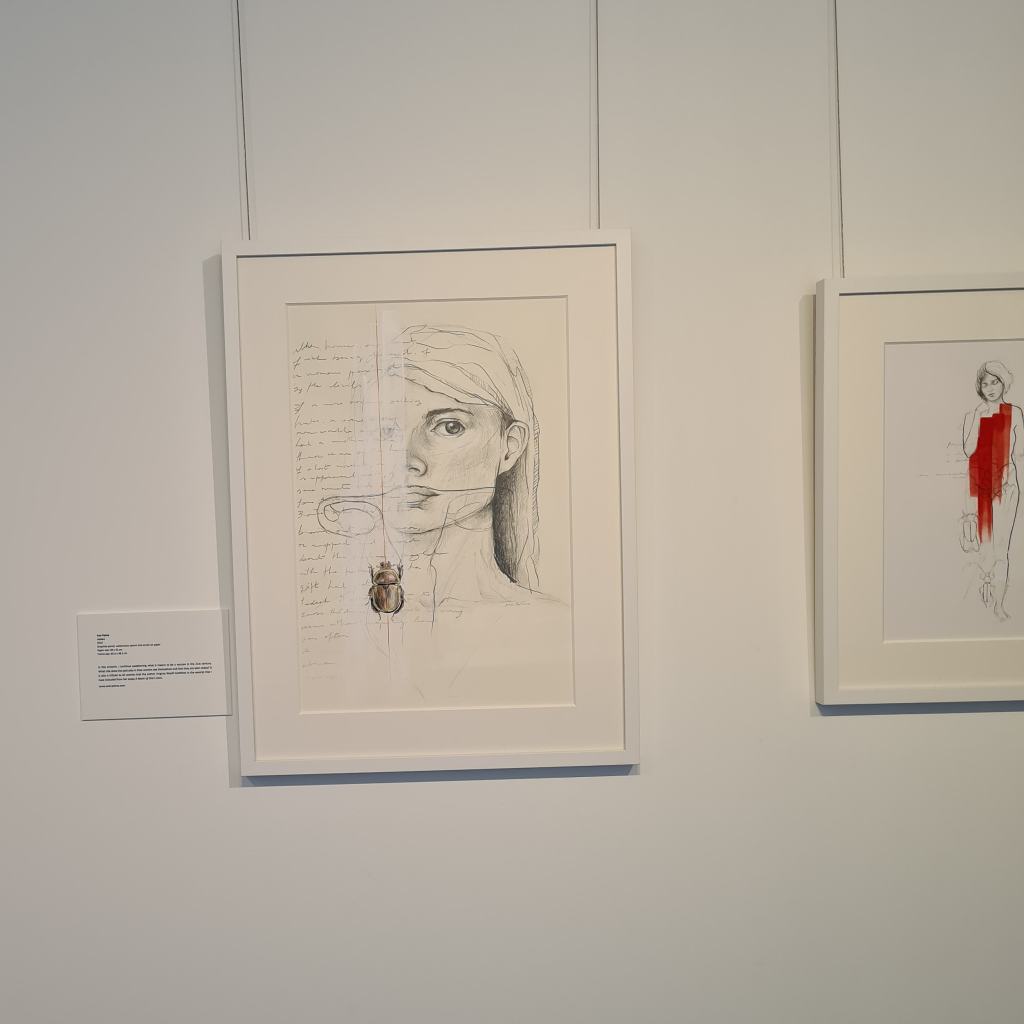
Ana Palma faz arte sobre a temática** da feminilidade*** e do corpo feminino. O estilo dela lembra-me de… Sei lá… De ilustrações num livro sobre a natureza: corpos e rostos com tons de aguarela e lápis**** coloridos, sobreposições de diagramas biológicos (esqueletos, órgãos) e outros animais (principalmente besouros).

Um Desenho de Ana Palma

Cliff Andrade

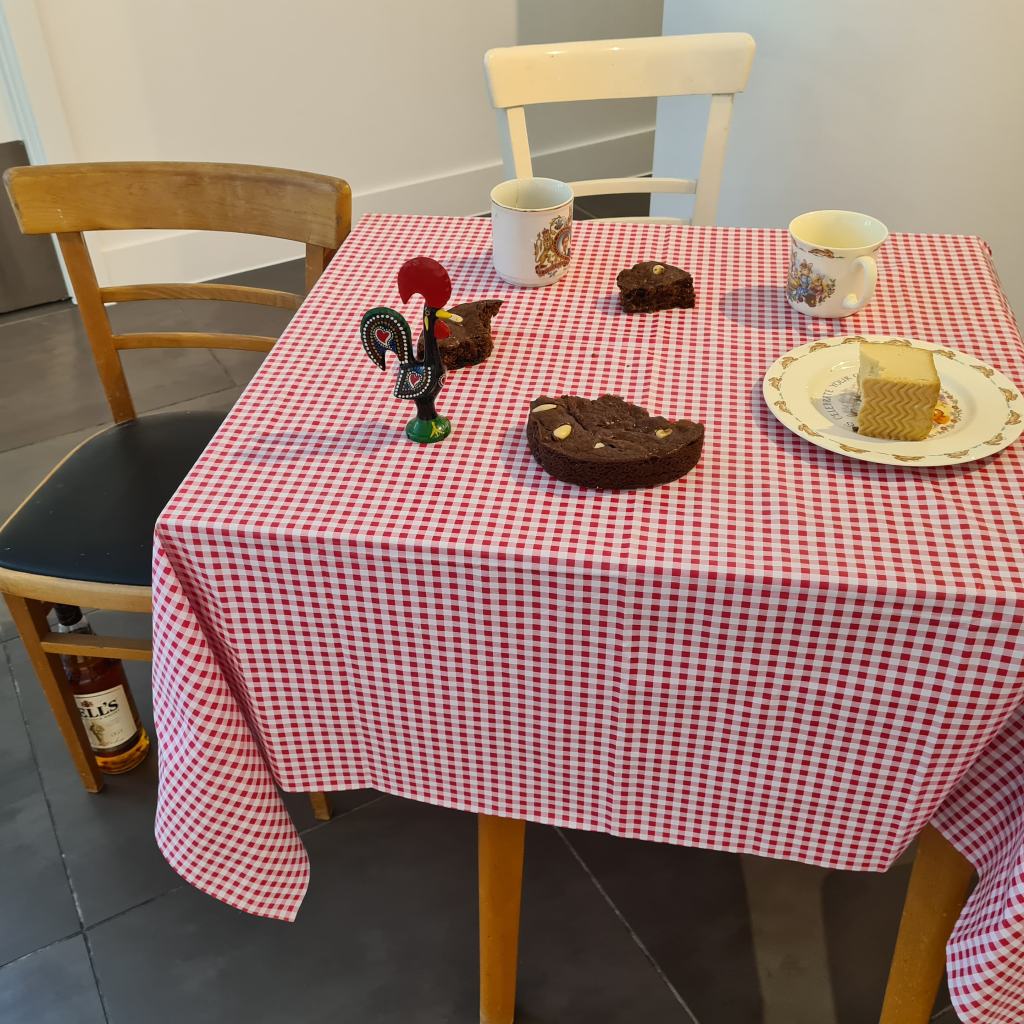
O que mais me agarrou na secção de Cliff Andrade foi “A Tale of Two Madeira Cakes”. A obra consiste numa mesa com um bolo de mel (um bolo madeirense) e uma peça de Madeira Cake (um bolo inglês que antigamente foi bebido com vinho daquela ilha) e várias coisas quotidianas do dia a dia em Inglaterra e em Portugal. Fez-me rir porque algumas coisas (uma caneca do casamento real, uma outra dos “flopsy bunnies” , e hum… Uma garrafa de uísque escondida sob a cadeira por algum motivo!) existiam na minha casa quando era jovem em Preston mas hoje em dia estou casado com uma madeirense. É mesmo um crossover episode das nossas vidas nos anos 80!

A Mesa de Cliff Andrade

Paula Rego

E finalmente… Fico sem palavras para descrever os desenhos da terceira artista, Paula Rego. É incrível. Ela é a mais conhecida dos três artistas e quando vi os quadros, soube instantaneamente porquê!

Scarecrow by Paula Rego

Que pena que o sítio onde foram expostos era pouco acolhedor. Um visitante de cada vez, muito barulho, segurança rigorosa na entrada… Mas vale a pena apesar de tudo isto. Haverá uma exibição de obras da PR daqui a pouco na Galeria Tate mas sou hipster e não quero ir com os turistas onde está tudo fácil e conveniente!

*=As so often, I made the mistake of using “para”. Ir+para is used for permanent or long term moves. As this is just a quick visit it’s ir+a.

**=temática is better than tema because tema is one of those annoying words that’s masculine even though it ends in an a.

***=I’d expect this to be “femininidade” because -dade endings até usually cognate with the same word in English with a -ty ending like “eternidade” and “liberdade” but in this case its slightly different.

****=the plural of lápis is lápis

Posted in Portuguese

O Fim do Mês do Orgulho LGBTetc

Another daily writing challenge. The theme was set by someone else and as usual I’m going along thinking of what I know how to say, and what would stretch my grammar, and at the end of the “drunkard’s walk” of linguistic progress, what I’ve ended up with is a bit questionable. A bit negative and a bit simplistic. I don’t think I’d stand by it in an argument, so if you want to read the notes at the bottom and use it as a learning exercise, do, but don’t @ me about the content. I’m sure whatever you have to say is probably right. Thank you Dani_morgenstern for the corrections.

Me after too long on LinkedIn this month

Hoje em dia, o mês de orgulho LGBT em Inglaterra tem mais a ver com publicidade empresarial* do que propriamente com orgulho em si. Uma espreitadela no LinkedIn pode acabar em cegueira por causa de tantos logótipos com cores do arco íris.

O significado do evento mantém-se**, claro, porque o homofobia ainda existe, mas o efeito é menor: limita-se a homófobos individuais. As leis já mudaram e não existem obstáculos para quem quiser casar-se com alguém do mesmo sexo ou ser eleito ao parlamento tendo*** um parceiro do mesmo sexo. Ainda bem. Tudo isto é óptimo!

Acho que o próximo passo deve estar mais “internacionalização” do movimento porque há leis noutros países contra o sexo gay. No Irão, por exemplo, se dois homens quiserem namorar, um deve passar por uma cirurgia de redesignão sexual ou os dois serão executados. E o Irão não é o único país a desprezar os direitos da comunidade gay assim. Nem sequer perto de ser o único!

Em vez da internacionalização, o movimento anda a acrescentar mais letras ao seu nome. As pessoas com defeitos genéticos (o “I” em LGBTQIA+) e as que não querem fazer sexo (o “A” em LGBTQIA+ e as “freiras” na igreja católica****) já fazem parte do arco íris, por exemplo. É por isso que o comediante Dave Chapelle lhes chama “as pessoas do alfabeto”. E… Isto pode parecer pouco simpático mas acho que ele não tem falta de respeito nem de simpatia para as individuais gay em si, mas só quer ridiculizar determinados aspectos da narrativa em redor deste assunto.

*=seems to be better than “corporativo” which was my first choice.

**=I put “continua”. It continues relevant but “mantém-se” is better. It maintains itself relevant.

***=rare sighting of the lesser spotted European Portuguese present participle

****=strictly speaking, this should be capitalised but I’m feeling very atheist today so sod them.