Posted in Portuguese

Preguiça e Política

Estou a perceber que estou numa fase de preguiça: escrevi muitos blogues nas semanas passadas que tratam de aprender português, mas são escritos neste idioma feio chamado “inglês” que nem sequer distingue entre “estar” e “ser”. Chegou a hora de escrever mais na língua de Camões* e menos na língua do Shakespeare.

Na próxima semana, pretendo fazer um projeto sobre a política portuguesa. Vem aí umas eleições legislativas. Planejo escrever um texto por dia. Esbocei uma agenda:

  • Ouvir uma debate entre dois líderes dos partidos principais (escolhido de modo aleatório desta série) e tomar notas durante a conversa
  • Discutir os problemas dos jovens em Portugal, segundo este artigo.
  • Discutir uma política menos central à agenda nacional, mas que tem paralelos com outros países ocidentais – identidade de género – porque estou interessado no atual formulação do género e o seu progresso dos EUA para o resto do mundo e há um novo decreto-lei que é semelhante a um lei proposto pelos nacionalistas escoceses no meu país
  • Transcrever um breve discurso de um líder dum partido menor: estou a pensar em Rui Tavares porque li um livro dele e imagino-o como um “pai centrista” português. Encontrei um vídeo dele a falar sobre a democracia. Dois minutos. Vamos a isto!
  • Resumir o escândalo na ilha mais bela do mundo
  • Resumir o escândalo inacabável do resto do país e as estantes por todo o lado
  • Atualizar este blogue de 2019 dando mais informações sobre os partidos principais e falar sobre o aumento de poder dos partidos populistas ou simplesmente esquisitos que estão a explorar a crise política

E quem sabe, se calhar, pode continuar após o fim de semana

*De vez em quando, acho que estou quase a ficar acostumado a este teclado mas acabo de passar um minuto a tentar escrever Camões com o til no E. Ainda bem que não me permitiu porque o meu pedido de dupla cidadania teria sido cancelado!

Posted in Portuguese

From Rui With Love

Estou a ver um vídeo antigo de Rui Tavares a falar na Assembleia da República mas há uma espiã* por trás do deputado. Passou despercebida porque andava disfarçada, com óculos escuros e um bigode falso.

*It’s a weird one, this. Espiã is technically the correct feminine form of espião, but apparently most people use espia, so much so that in this ciberduvidas article someone asks if espiã is just a typo. Note that espia is a nome de dois generos – in other words it replaces both espiã and espião. There’s also a purely feminine word espia, which means a cable. TBH, I’d prefer to use the accented words because it’s less ambiguous, especially when describing espionage in a naval setting, but obviously not everyone in Portugal is going to change the way they speak and write just because of what I say, so I’ll have to make space in my brain for both.

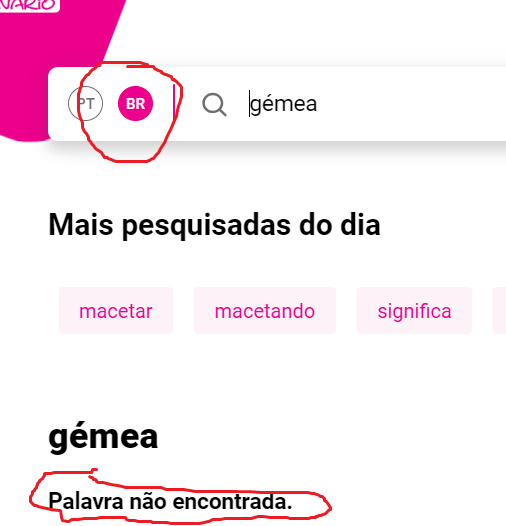
Posted in Portuguese

D’oh!!!!

Então é por isso que a definição de “equipa” fez tão pouco sentido (neste blogue). Andava com modo Brazuca* ativado!!!

*Não acho que esta palavra seja ofensiva mas peço desculpa se estou a dizer asneiras

Posted in English, Portuguese

Efe(c)tivamente

O blogue de hoje é mais uma tradução. O título não segue o acordo ortográfico mas não me importa. A palavra “efe(c)tivamente” é cognata com a palavra inglesa “effectively” mas tem um valor ligeiramente diferente porque é usada muitas vezes em situações nas quais usamos “really”. Lê a segunda definição nesta página para mais informações.

PortugueseEnglish
Adoro o campo as árvores e as flores
Jarros e perpétuos amores
Que fiquem perto da esplanada de um bar
Pássaros estúpidos a esvoaçar
Adoro as pulgas dos cães
Todos os bichos do mato
O riso das crianças dos outros
Cágados de pernas para o ar
I love the field, the trees, the flowers
Jugs and everlasting loves
That are close to the tables of a bar
Stupid birds, fluttering
I love the dogs’ fleas
All the woodland creatures
The laugh of children and others
Terrapins with their legs in the air
Efectivamente escuto as conversas
Importantes ou ambíguas
Aparentemente sem moralizar
Effectively, I listen to important and ambiguous conversations
Apparently without moralising.
Adoro as pegas e os pederastas que passam
Finjo nem reparar
Na atitude tão clara e tão óbvia
De quem anda a enganar
Adoro esses ratos de esgoto
Que disfarçam ao pilar
Como se fossem mafiosos convictos
Habituados a controlar
I love the whores* and the pederasts who pass by
I pretend not to notice
In the clear, obvious attitude
Of one who is being deceptive
I love those sewer rats
Who hide behind the pillar
As if they were convicted mafiosos
Used to being iin control
Efectivamente gosto de aparência
Imponente ou inequívoca
Aparentemente sem moralizar
Effectively I like imposing or unequivocal appearance
Apparently without moralising
Efectivamente gosto de aparência
Aparentemente sem moralizar
Aparentemente escuto as conversas
Effectively I like appearance apparently without moralising
Apparently I listen to conversation
Efectivamente sem moralizar
Efectivamente, sem moralizar
Aparentemente, sem moralizar
Efectivamente
Effectively without moralising
Effectively, wothout moralising
Apparently, without moralising
Effectively

*This could be translated a few different ways but I guess this is the one he means, unless the paedos were chasing a magpie!

Posted in Portuguese

Frases de Engate

Claro que, como estudante desta língua, não tenho tempo para praticar a arte de sedução e ainda por cima a minha esposa não me permitiria, mas o Dia dos Namorados está quase a chegar e achei que alguns de vocês, os meus caros leitores, podiam gostar desta lista de frases de engate que roubei desta página do Observador de há oito anos.

Confesso que gosto muito da terceira (ah ah, soou como um daqueles anúncios de Clickbait “A terceira vai te chocar!”) mas concordo com o cabeçalho; são mesmo horríveis. Este julgamento não visa criticar o machismo implícito nas frases. Isso seria aceitável se fossem engraçadas mas…. eh pá… “Posso pagar-te um copo ou preferes dinheiro?” Boa sorte em limpar a Sagres da tua camisa depois de dizer essa merda!

Vou explicar cada uma em inglês para quem não sabe, mas estou demasiado constrangido para pedir ajuda de um professor , portanto pode haver alguns erros. Desculpem. (Obrigado pela ajuda, Cristina)

  • Que pernas tão bonitas. A que horas abrem? [“What great legs. What time do they open?”]
  • Ó fêvera! Junta-te aqui à brasa! [fêvera = febra, so “Hey, fresh meat, come over here to the charcoal”]
  • Ó joia! Anda aqui ao ourives. [“Hey, jewel, come to the goldsmith”]
  • Usas cuecas TMN? É que tens um rabo que é um mimo! [“Do you wear TMN knickers? Because your bum is a treat” (TMN seems to be a brand of undercrackers, but it used to be the name of a telecoms company who used a mime (“mimo” can mean both “mime” and “treat”) in its ads. You can see an example here. Considering how old it is (the ad gives prices in Escudos!) I can’t imagine this is going to get you very far in 2024]
  • Ó flor… Dá para pôr?! [“Hey, flower, can you be laid?” Not sure about this one: por can be used for laying flowers eg on a grave, and there’s obviously a double meaning, so I think this is probably the closest I can get] [No, apparently it’s even cruder than that. It means “Hey, flower, can I put my dick in you?” Fuxake, rapazes, não têm rizz nenhuma?]
  • Ó estrela, queres cometa? [“Hey, star, do you want a comet?” I guess this is meant to sound like “comer esta”]
  • Andas na tropa? É que já marchavas. [“Are you in the army? It’s just that you were looking really good” Assuming this is the fifth, informal definition of “marchar” here)]
  • Contigo… era até achar petróleo! [“With you… it was like striking oil” This is a weird one because it sounds like something you say after you’ve slept with someone, not before]
  • Posso tocar no teu umbigo… por dentro? [“Can I touch your navel… from the inside?”]
  • Tens um rabo que parece uma cebola. É de comer e chorar por mais! [“You have a bum like an onion. You eat it and cry for more”]
  • Sabes onde ficava bem essa roupa? No chão do meu quarto… [“D’you know where those clothes would look good? On my bedroom floor”]
  • Com umas boias dessas o Titanic não tinha ido ao fundo. [“With floats like that, the Titanic would never have sunk”]
  • Posso pagar-te um copo ou preferes dinheiro? [“Can I buy you a drink or would you prefer money?”]
  • Tanta carne e eu em jejum… [“So much meat and I’m fasting”]
  • Não és ave-maria, mas és cheia de graça! [“You’re not a hail Mary but you’re full of Grace”]
  • Estou a lutar desesperadamente contra o impulso de fazer de ti a mulher mais feliz do mundo. [“I’m desparately struggling against the impulse to make you the happiest woman in the world”]
  • O teu pai deve ser terrorista porque és cá uma bomba! [“Your dad must be a terrorist because you are da bomb!”]
  • Perdi a chave da minha casa, posso ir dormir na tua? [“I’ve lost my house key. Can I sleep at yours?”]
  • Com uma montra dessas… Imagino como é que é o armazém! [“With a shopfront like that, I’m picturing what must the storeroom be like!”]
Posted in Portuguese

Foyles

Estávamos no centro de Londres para assistir a uma peça de teatro. Como o teatro fica perto da livraria Foyles, entrámos para que eu pusesse vasculhar nas estantes portuguesas. Antigamente, esta livraria era a melhor fonte de livros portuguesas, mas a secção portuguesa tinha encolhido ainda mais desde a minha última visita. O Império francês devorou mais estantes e sobram três e meia. 😢

Posted in Portuguese

Maria Cachucha

Escrevi um texto na segunda-feira, que terminou com “tinham batido a bota longe antes”. Infelizmente esta frase está errada porque “longe” é uma palavra que descreve distâncias físicas. Por exemplo, a Ilha da Madeira fica longe de Portugal continental.

A substituição sugerida foi “no tempo da Maria Cachucha”. Quem é, ou quem foi, esta senhora? Ninguém! Ou seja, “ela” não era um ser humano, mas sim uma dança (igual ao corridinho! Que maravilha que quase todos os mistérios da língua portuguesa se resolvem da mesma maneira: “é uma dança”!

A cachucha era oriunda da Espanha mas segundo o Ciberdúvidas “teve uma certa voga na França” e depois, em Portugal, foi escrita uma letra gracejadora e zombeteira, a Maria Cachucha para acompanhar a música. Portanto, no século XIX, as pessoas dançavam os passos espanhóis ao seu som. Daí “no tempo da Maria Cachucha” significa muitos, muitos anos atrás.

Posted in English, Portuguese

Falem Agora

I don’t know how this song by Fábia Rebordão ended up on my playlist, but Spotify is convinced it’s something I should listen to. Good shout, Spotify, it’s pretty good. The theme is not wanting to listen to malicious gossip. It’s light and fluffy and fun to listen to.

PortugueseEnglish
Não ouço essas conversas
Isso é banal
Por serem tão perversas
Fazem-me mal
I don’t listen to those conversations
That’s boring
By being so perverse
They make me ill
Falem agora
Que eu estou por fora, e até já
Não se incomodem, deixem lá
Que eu já estou fora
Speak now
I’m outside and for the time being
Don’t bother, it doesn’t matter
Because I’m outside
Conversas de café
Não quero ter
Falar de outros não é
Só mau dizer
Conversations over coffee
I don’t want to have
To talk about others, it’s not
Just nasty talk
Falem agora
Que eu estou por fora, e até já
Não se incomodem deixem lá
Que eu já estou fora
Speak now
I’m outside and for the time being
Don’t bother, it doesn’t matter
Because I’m outside
Quem diz que viu, quem mente
Essas coisinhas
Nas costas de outra gente
Eu vejo as minhas
Whoever said they saw, whoever lied
Those little things
Behind other people’s backs
I watch mine
Falem agora
Que eu estou por fora, e até já
Não se incomodem deixem lá
Que eu já estou fora
Speak now
I’m outside and for the time being
Don’t bother, it doesn’t matter
Because I’m outside
Um caso mal contado
E outros que tais
Desligo passo ao lado
Leio jornais
A badly explained case
And so on
I switch off and step aside
I read the newspapers
Falem agora
Que eu estou por fora, e até já
Não se incomodem deixem lá
Que eu já estou fora
Speak now
I’m outside and for the time being
Don’t bother, it doesn’t matter
Because I’m outside
Posted in Portuguese

Coisa Que Não Edifica Nem Destrói – Ricardo Araújo Pereira

Ricardo Araújo Pereira - Coisa que não Edifica Nem Destrói

Neste livro, o humorista Ricardo Araújo Pereira fala da sua vocação: o humor. Não admirará ninguém que o livro é engraçado e que dá motivos de reflexão nos tempos de hoje, como grande parte da obra dele. Fala sobre as raízes de humor e os métodos que os mestres usam para o produzir. Também fala sobre a tendência das pessoas, tanto nesta época quanto no passado, para ficarem zangadas e não aceitarem as piadas feitas sobre elas próprias. O exemplo mais recente é o de Chris Rock, mas há muitos ditadores e ainda mais terroristas que querem matar quem não obedece às regras aleatórias que eles querem impor à gente.

O autor dá muitos exemplos e citações selecionadas da história incluindo Roland the Farter e Ronnie Corbett (da Inglaterra), Mark Twain e Bill Hicks (dos EUA) e Dario Fo e Rabelais (de outros países europeus) para demonstrar a natureza universal do humor.

Depois de comprar o livro, percebi que existe um podcast com o mesmo título que contém não só os textos do livro mas também mais capítulos e entrevistas com comediantes e escritores. E não custa nada… Ora bem, não faz mal, tenho um livro bonito e uns conteúdos extras. É um bónus.

Thanks as always to the ever-patient Cristina of Say it in Portuguese for eviscerating my linguistic infelicities before they could be unleashed upon an unsuspecting world.

Posted in English, Portuguese

Casei Com Uma Velha

This song is actually by Maximiano de Sousa (aka “Max”) but I don’t think there’s a video of him performing it so I went with this cover by Raul Solnado instead. Max is from Funchal, and he says his wife is from Ponta do Sol, a few miles up the south coast. Another nearby town – Camacha – is mentioned too.

As you can see – or maybe you can’t – Solnado is wearing a hat that I recognise as a Maderian style, and I think the clothes are specific to the island too. The set shows a traditional house and I’m pretty sure the musical instruments the guys at the back are using are Brinquinhos*. Solnado is a mainlander from Lisbon so this is definitely cultural appropriation and he would be cancelled if he did this today. Quite right too. Throw him in jail!

I am publishing this on the 3rd of February to commemorate the birthday of another island girl – my wife. Since my birthday is on the 6th of May, she is numerically an older woman for the next 3 months. Feliz Aniversário, velha linda!

PortugueseEnglish
Casei c’uma velha
Da ponta do sol
Deitei-a na cama e o raio da velha rasgou-me o lençol
Tornei-a a deitar
Tornou a rasgar
Perdi a cabeça e atirei co’a velha de perna p’ró ar
I married an old lady
From Ponta do Sol
I laid her in bed but that blasted old lady
Tore my sheet**
I laid her down again
She ripped the sheets again
I lost my head and threw the old lady and she landed upside down
A tua mãe foi às lapas
O teu pai aos caranguejos
Ficaste sozinha em casa, fui*** dar-te abraços e beijos
Ó menina da Camacha
Diz de mim o que quiseres
Menos que não tenho jeito p’ra agasalhar as mulheres
Your mother went to the limpets
Your dad to the crabs
You stayed at home alone, I went to give you hugs and kisses
Oh girl of Camacha
Tell me what you want from me
Unless I’m just don’t have the knack of taking care of women

*More about traditional Madeiran instruments here if you’re interested.

**I had a little trouble following the action here: When he says “rasgou-me o lençol” did she actually make a hole in the sheets or just tear them away from him? I checked on r/portuguese just to be sure and it’s the former. And then how am I supposed to understand “atirei (com a) velha“? Is he throwing himself on her? No, apparently not. “Atirar com” isn’t in my handy guide to verbs with prepositions, but “atirar-se a” is, and that means to throw yourself at someone in an attack. No, my informant told me atirei com means that he just threw, shoved or otherwise propelled the old lady away. The “com” emphasises the force and “brusquidão” of the “sova” or “arremesso” he gave her (3 new items in the word hoard!), so she ended up “de pernas para o ar” – upside down. Probably not literally, but it wasn’t a graceful landing. Hmm… I think it’s one of those songs that’s really fun to listen to but just try not too hard to think about what it is he’s actually describing.

UPDATE – Well, i was joking about the violence and really imagining it as a kind of slapstick scene, but I am told I should consider it might be much more suggestive. That the legs in the air and the ripping of sheets and the warming up of the women could all be interpreted as taking about his sexual prowess, broadcast in an age when you couldn’t really say this sort of things directly. OK, well, that gives a whole new spin on things!

***Online lyrics say “foi” but I think that’s a typo because it doesn’t make any sense. Oh wait, it says fui in the subtitles doesn’t it! Oh well, glad to know I was right about that!